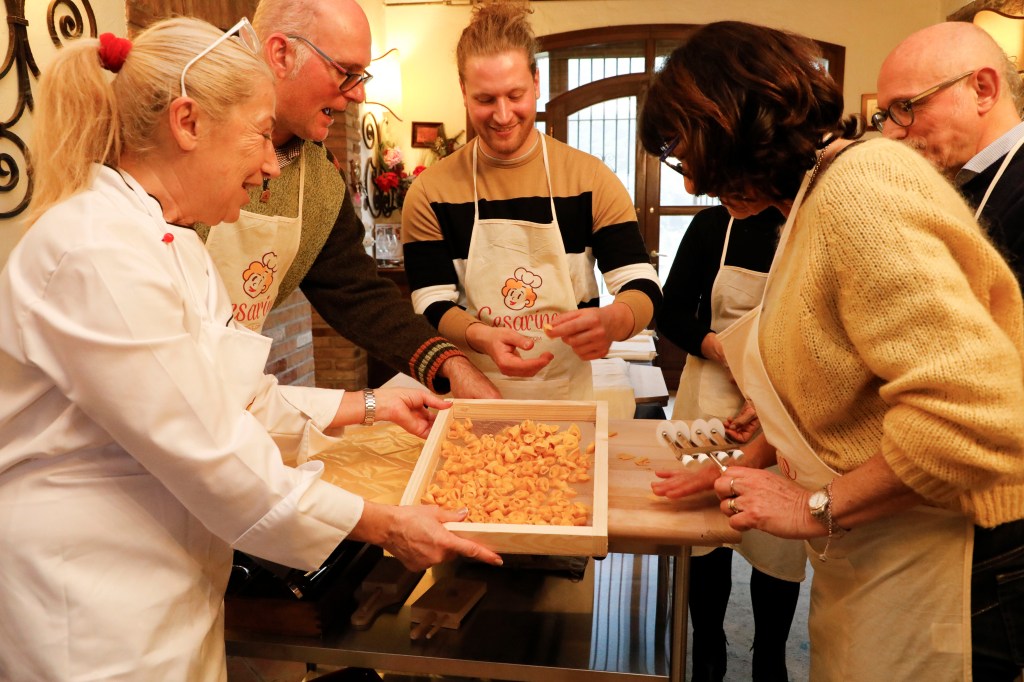
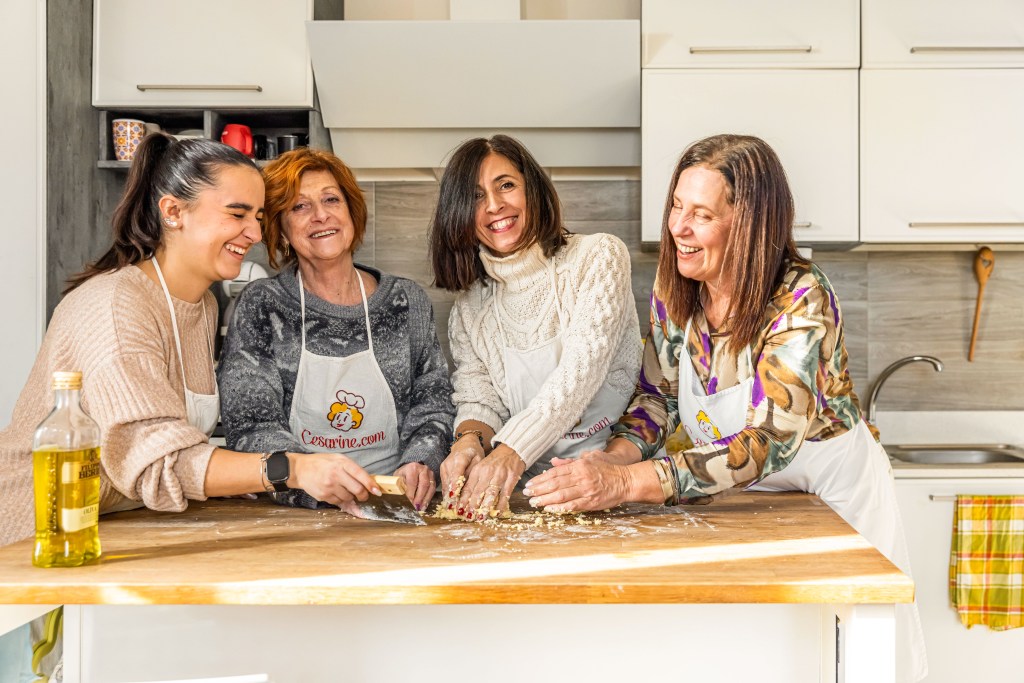
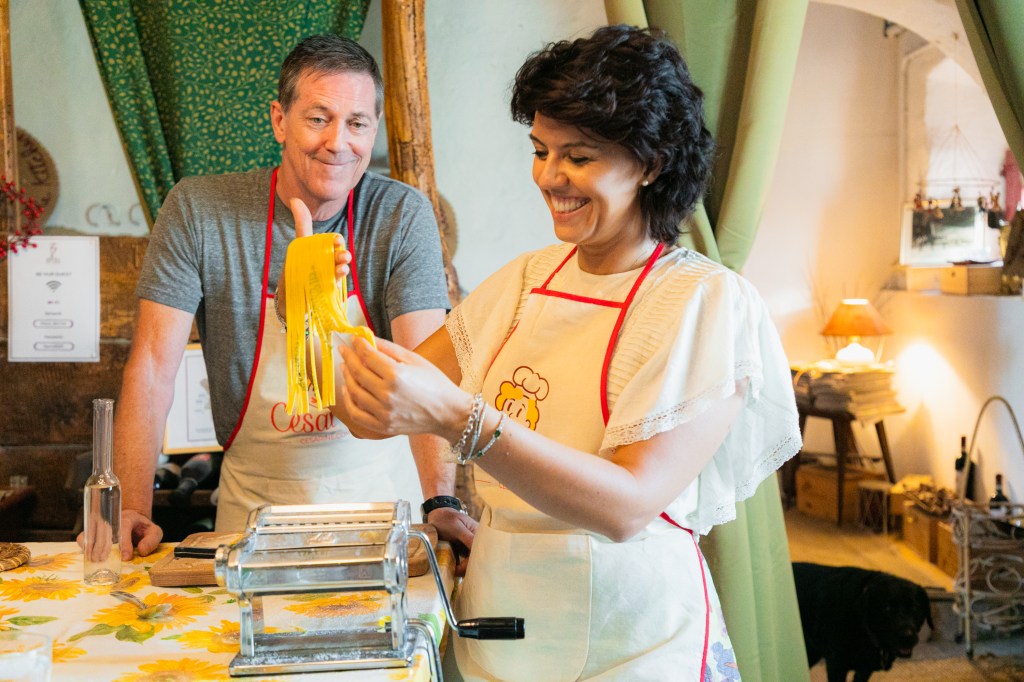
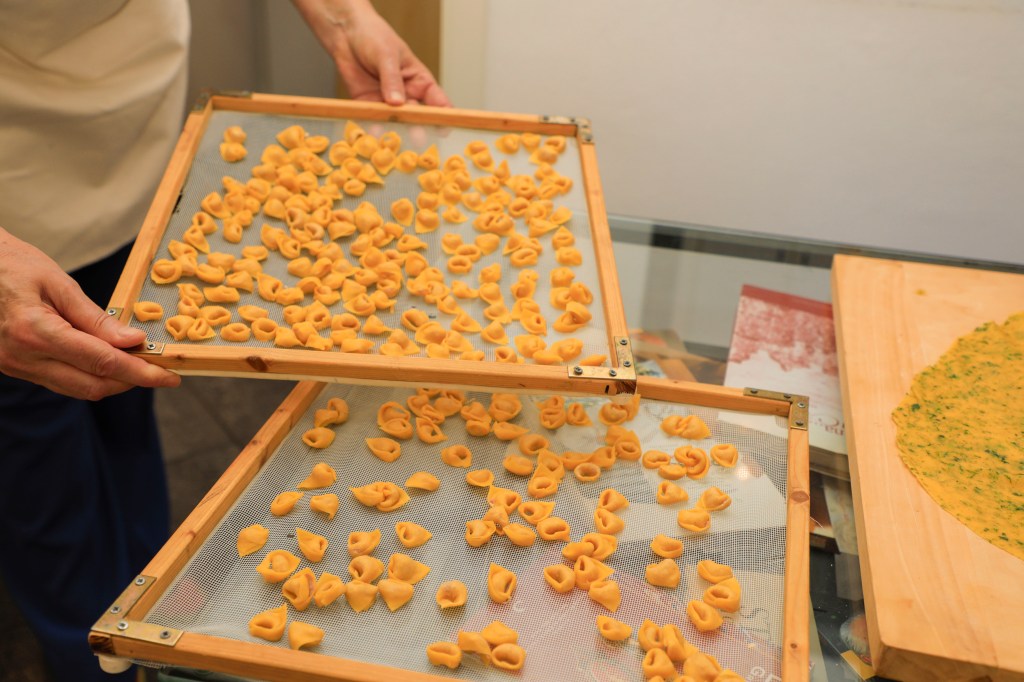
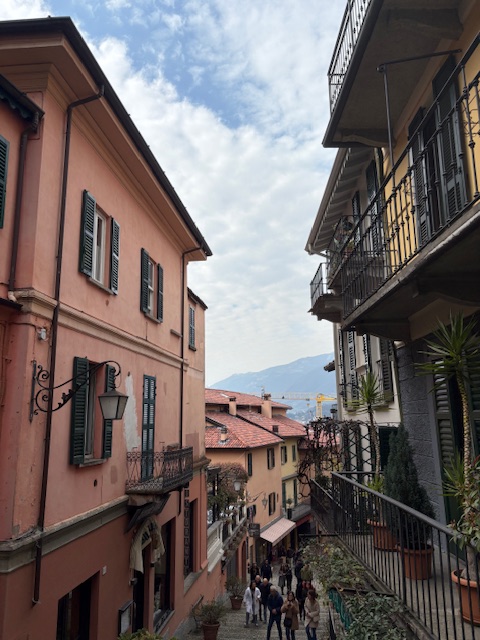
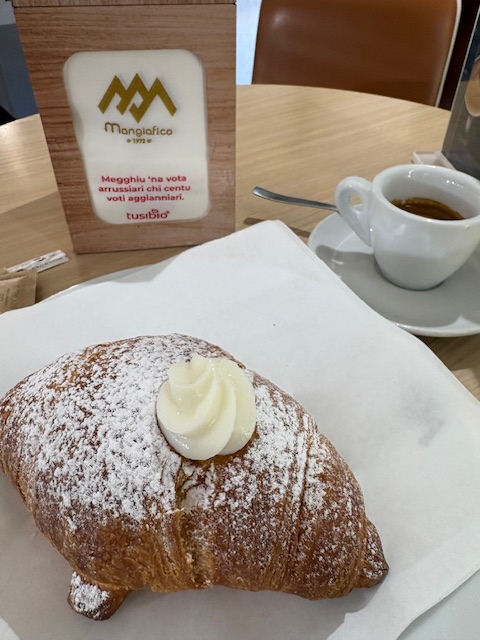
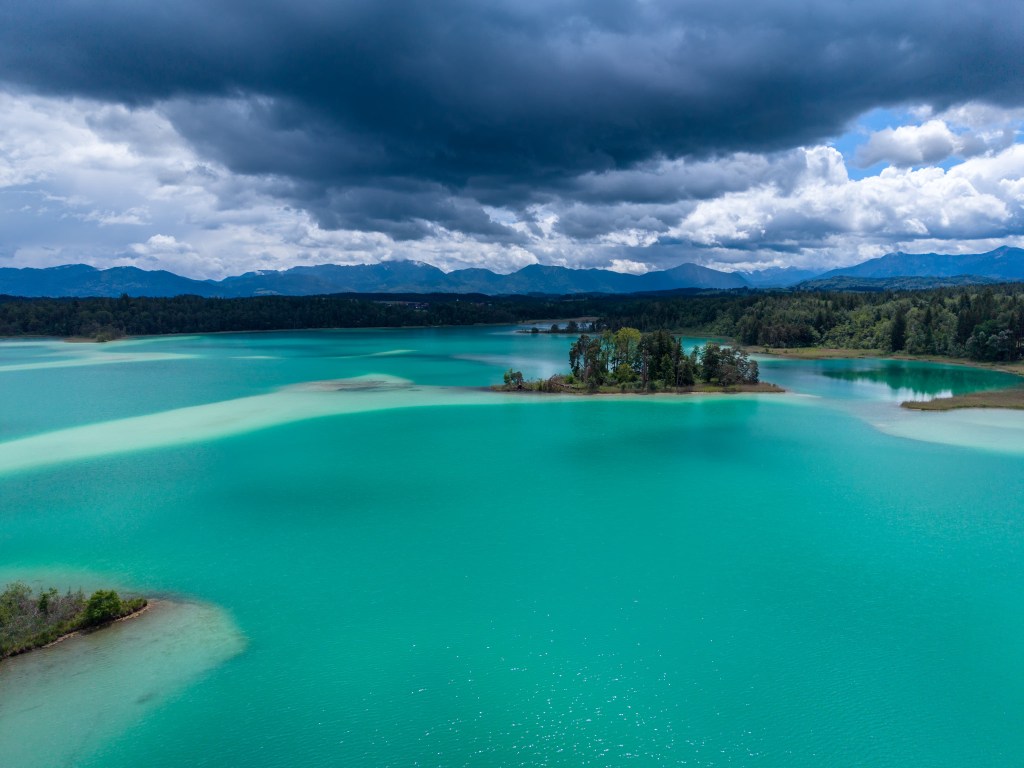
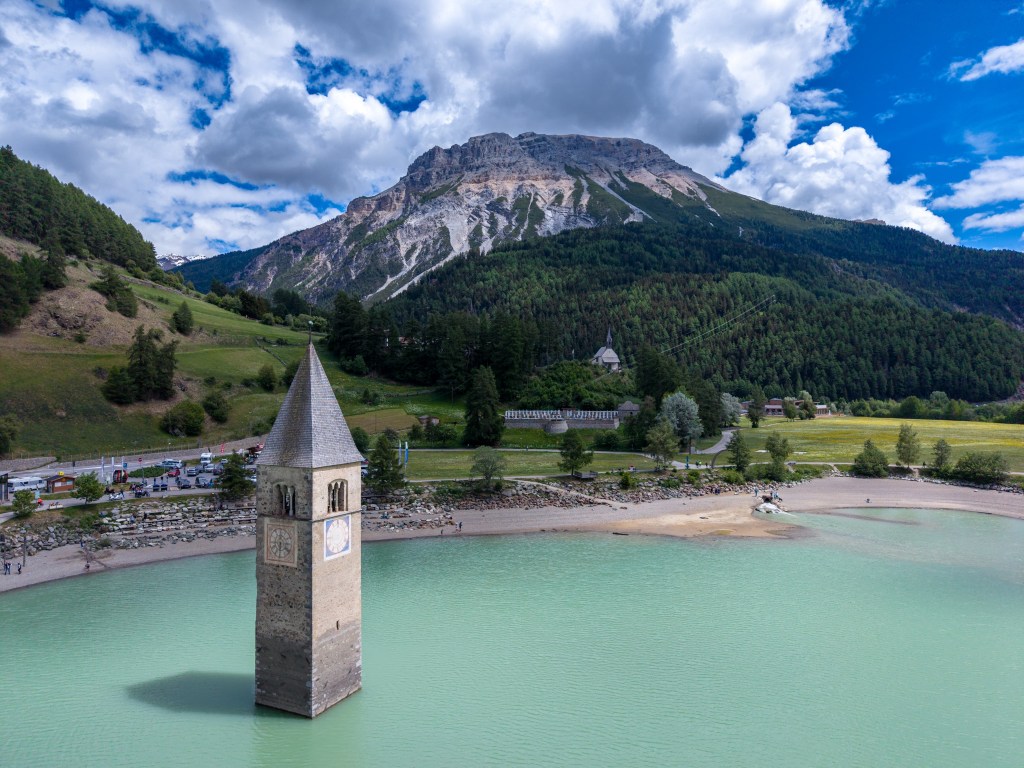
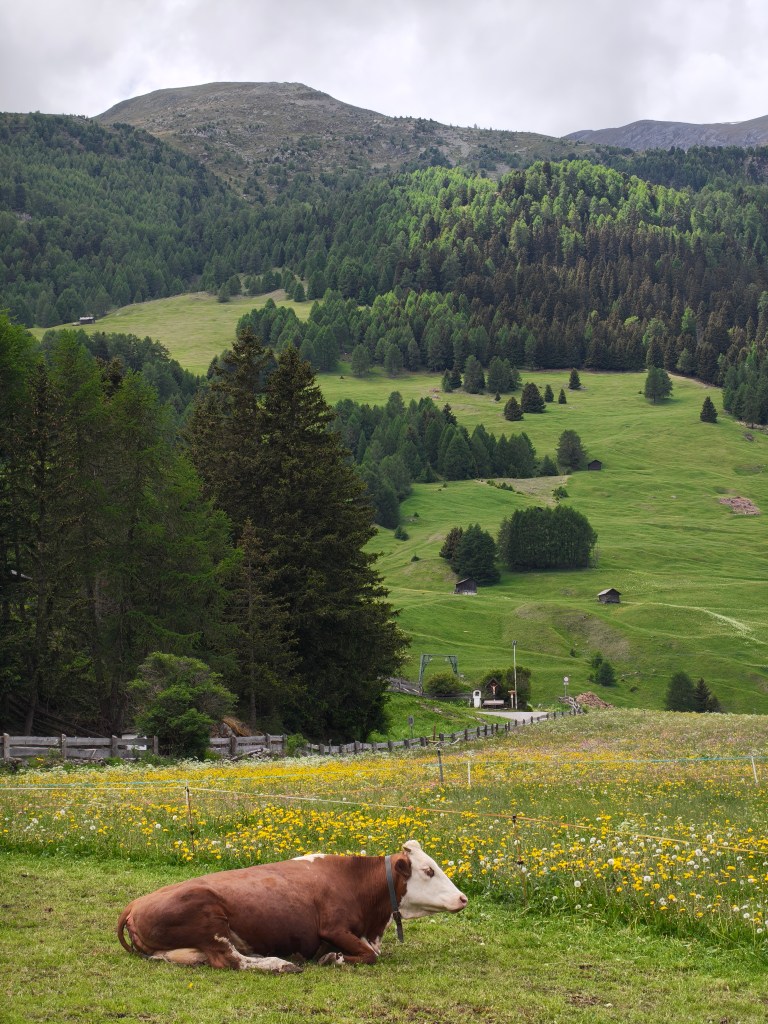
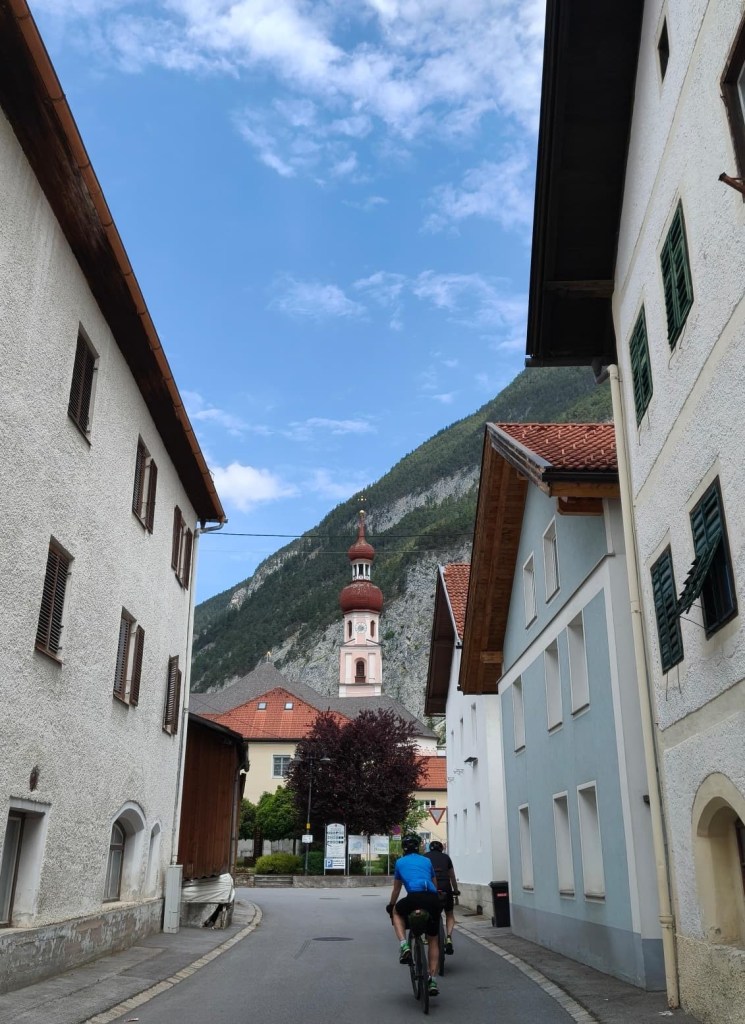
Hosts and guests enjoy a food experience with Cesarine. All pics in this article provided by Cesarine.
Imagine you’re traveling in Italy and you learn how to prepare a home-cooked meal right in a local Italian’s kitchen.
Once the meal is done, you’ll enjoy it along with your host, perhaps with some local wine.
Or, imagine that a local guide takes you on a food and market tour in the Italian city you’re visiting. You learn directly about the area’s specialties and get to try a few of them.
Those experiences are exactly what you’ll get from Cesarine (chay-sa-ri-nay), a Bologna, Italy-based company that began in 2004.
Hosts and visitors enjoy Cesarine experiences. All pics in this article provided by Cesarine.
The company began small but now has more than 1,500 home cooks and culinary hosts across more than 700 towns, says Maria Rita Tattini, Cesarine’s communications advisor.
In 2025, Cesarine welcomed more than 50,000 guests to connect with its hosts.
Cesarine also recently began to offer experiences with local food producers, such as wineries, olive oil estates, and family farms.
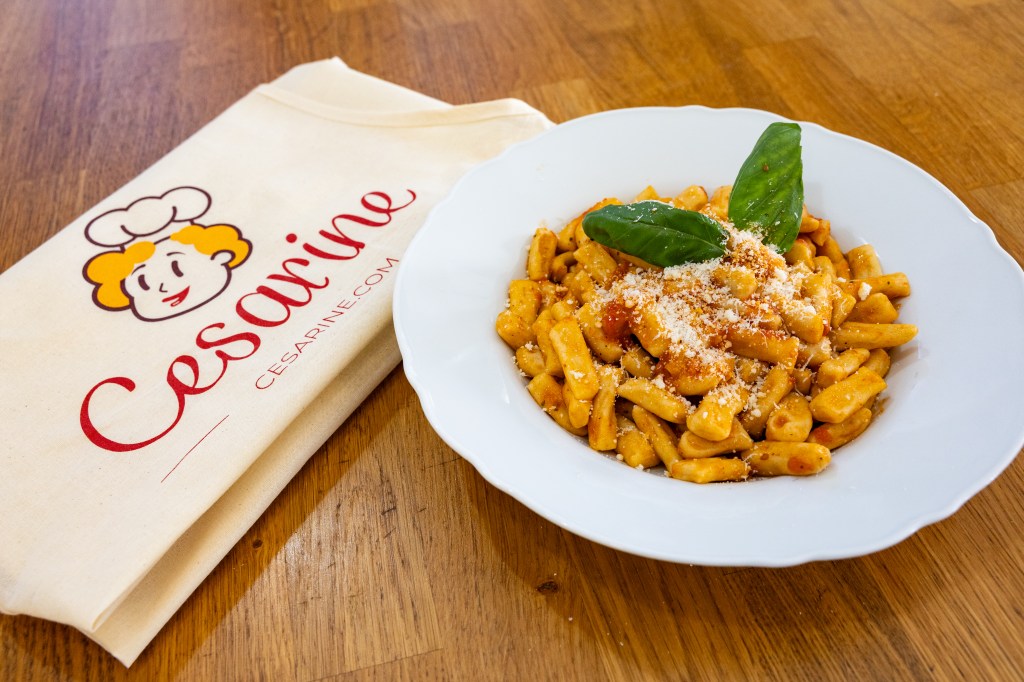
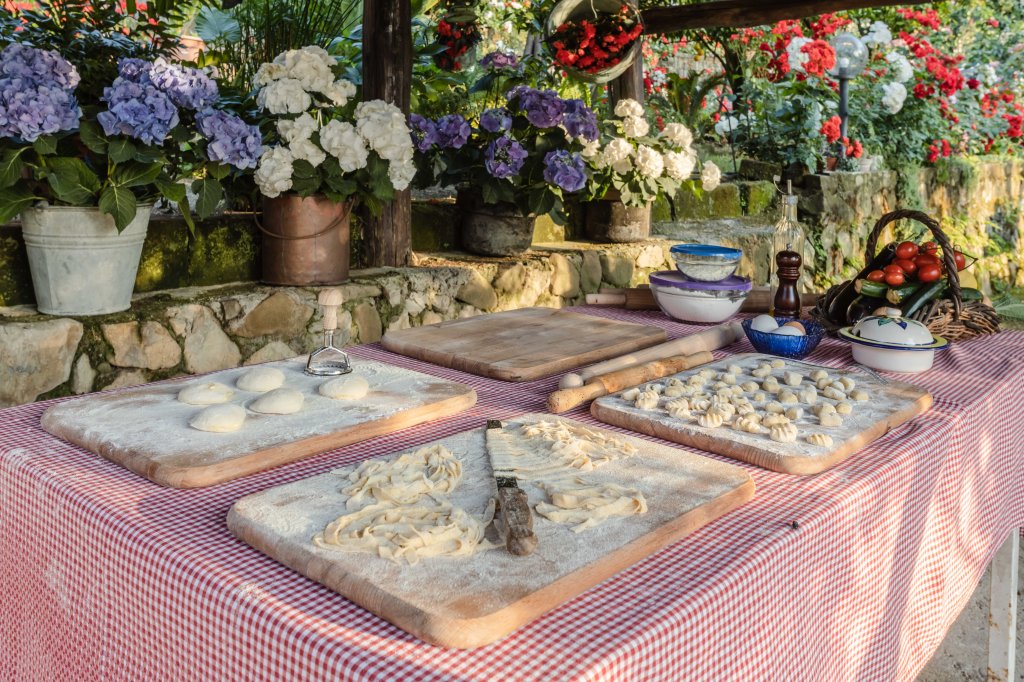
“Cooking classes are among our most popular experiences, particularly fresh-pasta classes. But dining experiences are equally important because they offer something that is difficult to reproduce in a restaurant: the feeling of being invited into someone’s home,” Tattini says.
Cesarine: How It Works
Hungry yet? Here’s how Cesarine works.
Go to its website, and type in the name of the city where you will be in Italy. Next, choose a date. Cesarine’s website will show you a variety of options.
Because of our recent Sicily travels, we typed in “Catania, Sicily,” and chose a date. Here’s just a smattering of the choices offered on or close to our chosen date:
Next, we typed in Modena, a town in Emilia-Romagna famous for its balsamic vinegar. Here are just a few options we got:
–Traditional cooking course with organic ingredients
–The art of homemade lasagna: An authentic experience
–Fresh pasta cooking class
–Culinary traditions of Modena: The secret of the tigelle
Choose your option(s) (personally, we’d like to sign up for all of them), pick a date and number of guests, and note any special requests, such as food allergies.
The listing will tell you the price. Prices vary, but most we saw were around 100 Euros. Then complete the sign-up process.
While on a particular listing, you can read reviews for the specific tour or experience you chose.
One thing to consider: The food experience you get in one part of Italy may be totally different than what you’d experience in another region. That’s because local dishes vary so much across the country, Tattini says.
What Makes Cesarine Different
Food tourism in Italy is a big draw for the country, but there are some things that make Cesarine unique.
“I think travelers are increasingly looking for something beyond sightseeing,” Tattini says. “They don’t just want to see Italy. They want to understand how Italians actually live. Food is an extraordinary gateway to that.”
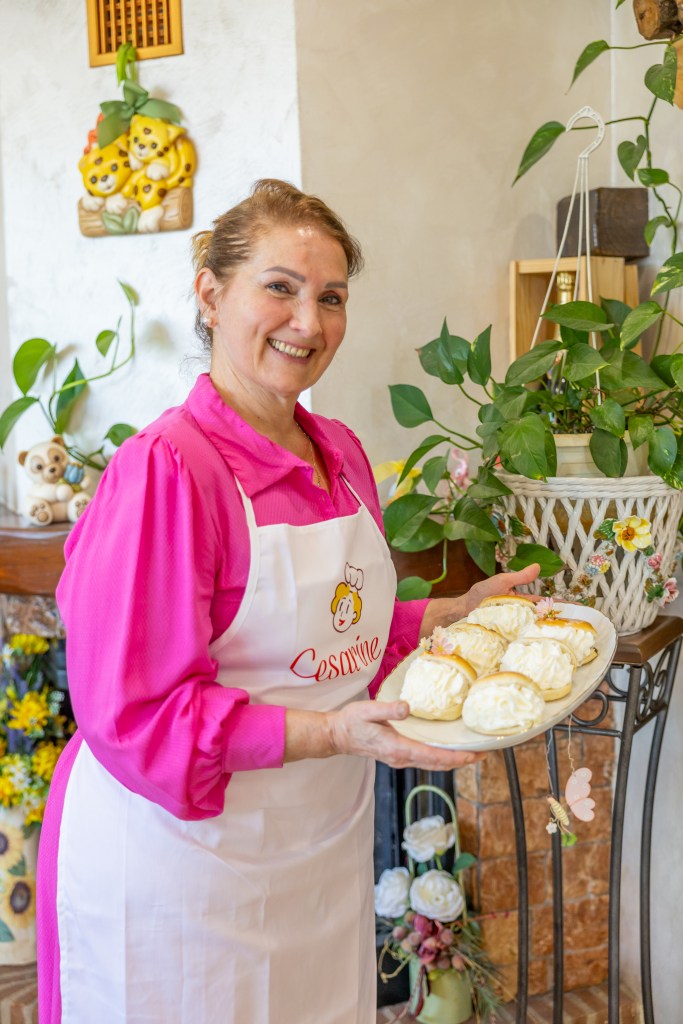
A cooking class with a Cesarina (local host) can reveal something about both the region and also a family recipe or why a particular dish is associated with a holiday or celebration, she explains.
“There’s something very appealing about the idea of being welcomed into a real Italian home. It feels personal and spontaneous rather than a conventional tourist attraction,” Tattini says.
Another thing that distinguishes Cesarine: Since 2019, it’s been designated as a Slow Food Community, which refers to a group that helps to protect and promote local food.
Cesarine’s New Cookbook
Cesarine recently compiled The Cesarine’s Cookbook, a digital collection of authentic family recipes and information from its community of home cooks.
The idea sparked because many Italian recipes have been passed from grandmother to mother to daughter, ofen with ingredients measured visually and with family secrets that aren’t part of conventional recipes, Tattini says.
The cookbook brings together the recipes and helps preserve a culinary heritage. Because it’s digital, the book can continue to grow.
Here are just a few examples of recipes we found in Cesarine’s Cookbook (and we are now very hungry):
How to Enjoy a Cesarine Experience (and Any Food Tourism in Italy)
Italy Dreams asked Tattini for some tips to follow when attending a Cesarine food event. Here’s the scoop:
—Come hungry and curious.
—Don’t be afraid to try something you don’t know. “One of the pleasures of Italian regional cuisine is discovering dishes that you may never have encountered in an Italian restaurant at home,” she says.
—Let Cesarine know of any allergies or dietary restrictions/preferences.
—Don’t worry if you’re a beginning cook. “The point isn’t to produce a perfect restaurant dish. It’s to learn, participate, and have fun,” Tattini says.
—Give yourself plenty of time to enjoy the experience! As we’ve reported before, the beauty of Italy travel is slowing down. That also applies to enjoying a meal.
You can follow similar tips for any food tourism you do throughout the country, Tattini says. Stay open to all of the regional variations, and ask locals what they actually eat.
“Perhaps the biggest mistake is expecting Italian food to mean pasta and pizza everywhere. The real joy is discovering what is different from one region to another,” she explains.
How to Sign Up for a Cesarine Experience
Ready to prepare and enjoy a Cesarine home-cooked experience with a Cesarina or take a market tour with a local?
“You can visit a beautiful Italian city and take photos of its monuments, but sitting at someone’s kitchen table tells you something completely different about that place,” Tattini reminds us all.
Curious to learn more about Italy Dreams and how we can help your Italy journey? Feel free to explore all of the articles on our blog. Then, if you have some Italy travel planning questions, find our contact information here.
We also write articles for Italy-based tourism businesses. Find more details here. 🙂
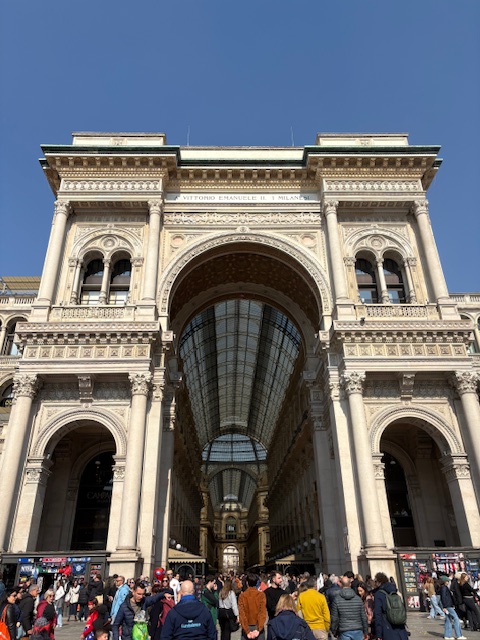
Visitors outside of Milan’s Galleria Vittorio Emanuele II, a shopping area.
There are certain mistakes that visitors often make when they plan a trip to Italy, especially as first-timers.
If you want to hop on larger tour in Italy and take a, “If it’s Tuesday, it must be Venice,” approach, kudos to you. There’s nothing wrong with that, you’ll probably have a great time.
If you’d rather arrange your visit around Italy independently—meaning, you and your travel companions decide where to go and what to do–this is the article you need.
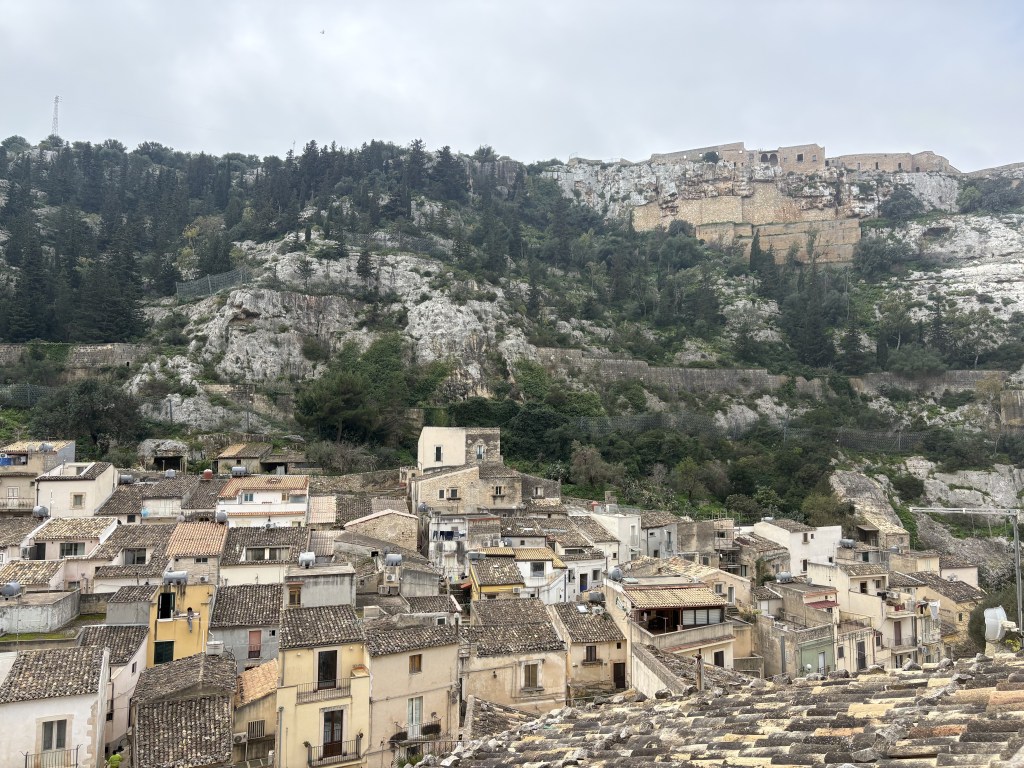
Our visit to Scicli (sheek-LEE), Sicily, Italy, took us off the beaten path.
Below, we share six travel mistakes to avoid when planning a trip to Italy.
If you start to feel a little lost about your current or upcoming Italy plans as you read on, don’t worry. You can always contact us directly for Italy travel planning consultation. That’s a fancy way of saying that we’ll eye your itinerary and give feedback to help you plan a wonderful trip.
See our link here for more details and to book an appointment.
Andiamo/let’s go!
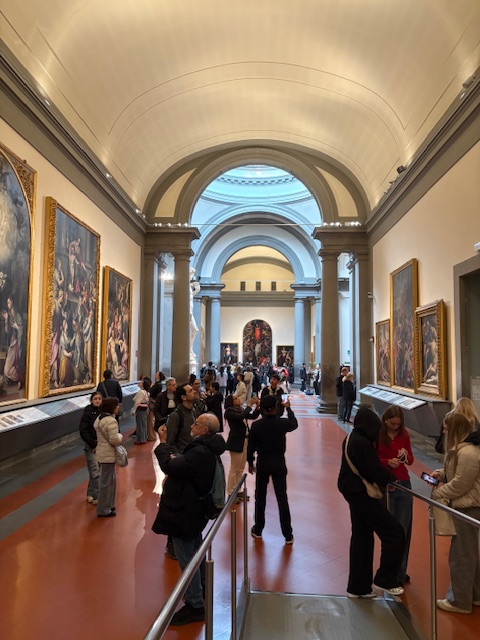
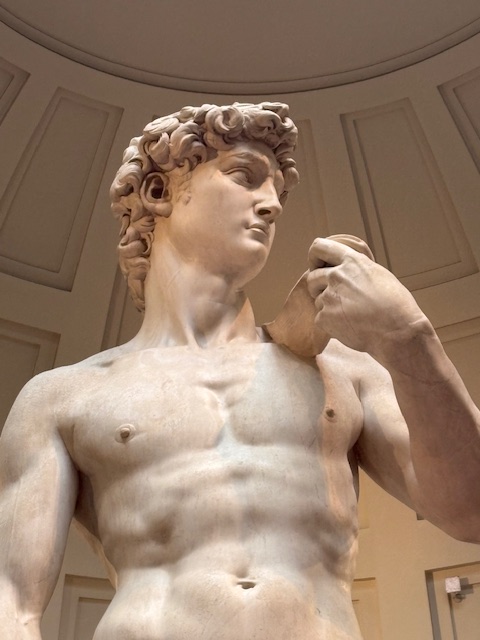
Visitors at the Galleria dell’Accademia in Florence, Italy, home to Michelangelo’s David.
1. DON’T plan to reach all of Italy’s major cities in just a week or two
Cramming all of Italy’s highlights into a week or two is just an exercise in exhaustion. In fact, if you’re from the U.S. and you currently have an Italy itinerary, take a look at it right now. Next, cut it in half or by a third.
Here’s why: You’ll get a much richer experience if you can slow down and spend more time in the places you plan to visit.
Can you hit the high spots of Rome in 3 days followed by Florence for 2 to 3 days, etc., and continue that way until you check them all off your list?
Sure—but you’ll spend a lot of time running around to get places, hopping on trains and feeling like your brain is generally spinning as you try to adjust to a new language/time/culture, etc.
Let’s face it, we Americans like to keep things moving. Your Italy trip should be a time to slow down and really absorb another culture and pace of life.
Try to choose the one—or if needed, two—destinations that are reasonably close and that you really want to see. Plan to spend your trip just in those two places. Less hassle, more time for relaxing and soaking in the Italian culture.
And here’s a benchmark from Leslie Coleman, travel expert and founder of Suitcase Gals, which focuses on small-group, luxury travel for women 40+: Aim for three to four days in each city or town you want to see. Of course, you could stay longer.
“People often overestimate how much they can do each day and this leads to a very hectic and rushed vacation,” she says.
Should you rent a car in Italy? See what our article says.
2. DON’T assume you should rent a car while you’re there
This is especially true if your trip focuses on the big cities and coastal areas. Michael Kovnick, founder and CEO of Culture Discovery Vacations, sums it up while describing a typical bucket-list trip to the Amalfi Coast, Rome, Florence, and Venice:
“Aside from how nervous Americans get driving in Italy, people end up parking in all four places. On the Amalfi Coast, parking is extremely difficult, and it’s easier to get around by boat. In Rome, they are likely to drive through multiple ZTL areas (restricted traffic areas in historic city centers) and have a stack of fines waiting when they get home – plus, it’s easier to get around by metro,” Kovnick notes. “In Florence, they will end up parking outside of the city and walking everywhere. And Venice? Well, no cars in Venice, so they park outside and walk everywhere.”
Instead, use high-speed rail to travel to or from these bigger cities. During our trip to Florence and Milan in 2025, we mostly used our own two feet and a few Ubers/taxis to get around. For Florence to Milan, we hopped on a train and then did the same thing for a day trip for Milan to Lake Como. The train was once again the best option to go from Milan to one of the city’s airports upon the return home.
The train was easy to use and the only issue was a very crowded train returning from Lake Como, thanks to everyone else taking a day trip there.
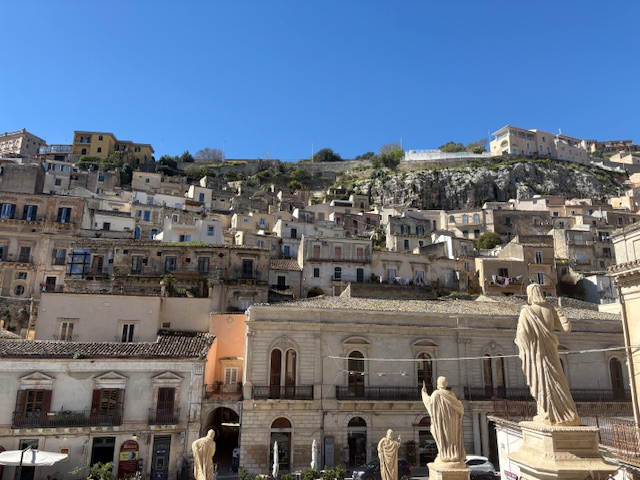
Having a car did make it easy to get to cities like Modica in southeastern Sicily.
That said, there may be some destinations where renting a car would work for you, if you feel up to driving. For our trip to southeastern Sicily this year (2026), we rented a car. It was the right decision as a local recommended it, and public transportation is not as common there.
There were some nerve-wracking moments while driving on more narrow streets (the highway was fine and similar enough to the U.S.). Plus, there was that scrape on the side of a car we got along a narrow street. Oops! That’s where the insurance policy we purchased came in handy.
You can read all about our driving experience and find more tips here.
Bottom line: Generally speaking, you won’t need a car if you’re staying in or traveling to or from bigger cities. If you’ll be somewhere more rural, do a little research before deciding yes or no on car rental.
If your budget allows, you could hire a driver or use tour guides who offer day tours and will take you around.
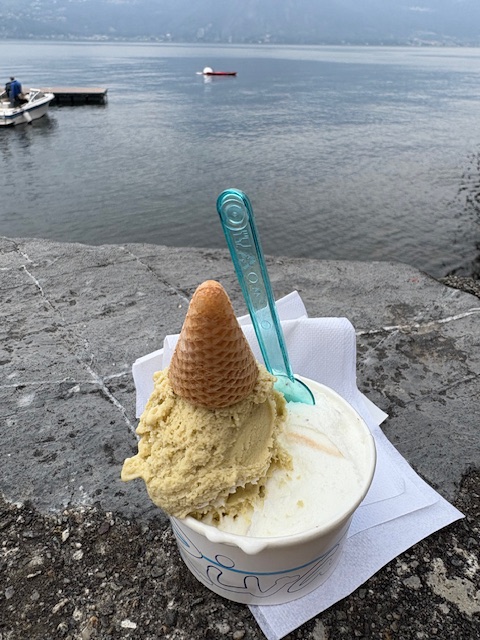
Remember, gelato is calorie-free in Italy. You heard it here first on our blog!
3. DON’T rely on blogs (or social media posts) as your only information source
Logistics change quickly in Italy. The information you read on travel blogs may be outdated.
“Major cities keep changing rules, ZTL zones change all the time, and scheduled events are rarely reliable for future dates,” Kovnick notes.
One example of how quickly things change: Kovnick has to pick up passengers outside of Rome’s Fuicimino Airport regularly and finds that arrival instructions change all of the time.
Of course, we want you to use blogs like ours to plan your Italy trip. 😊 Yet a blog may be best to give you a bigger picture sense of where you want to go and what you want to do.
When it comes time to buy tickets and truly make your plans, check directly with business websites or social media for more information.
Even then, expect a little deviation from what you might see or read. It’s Italy, after all!
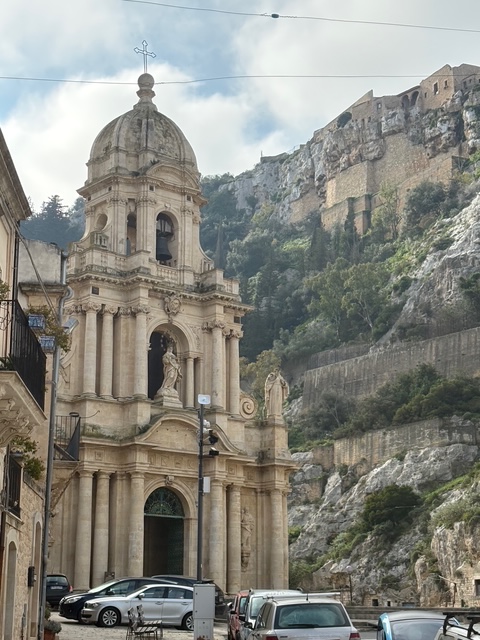
Although Sicily is a hot tourist destination, our visit to smaller towns like Scicli in March made us feel like we were in places lesser known to those outside of Italy.
4. DON’T stick just to tourist spots
This is a big no-no we’ve seen often, and we want more people to consider this trap when planning their Italy trip. Yes, Rome, the Cinque Terre, the Amalfi Coast, etc., are amazing…but if you’re traveling in-season, you’re going to share that amazing view with quite literally thousands of other people.
In summer 2025, we wrote about a group of local cyclists going through parts of southern Italy that had practically zero tourists. Their spring 2026 trip through parts of northeast Italy was a similar experience with sparse crowds.
A few quick examples of alternatives to consider:
–If you like Tuscany’s rolling hills, consider Umbria.
–If you like Tuscany and Umbria, look into Le Marche.
–If you like nature and rural or even coastal views, visit Abruzzo (our Italian friends mention Abruzzo A LOT).
–If you want to visit a beloved city that gets less attention, go to Torino/Turin in Piedmont.
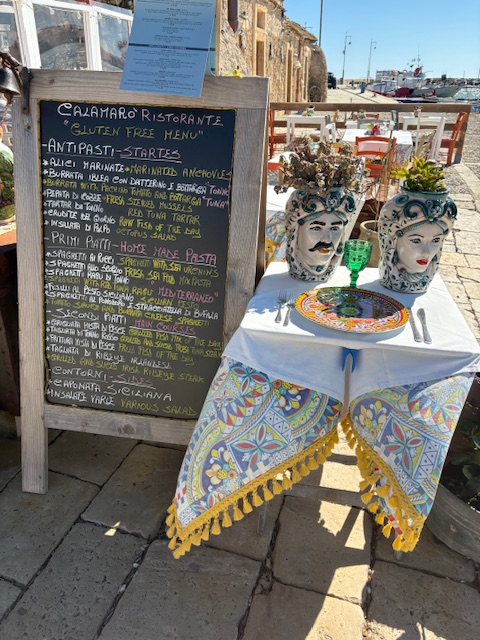
Sicily’s Marzamemi was pretty even in February, with many of the stores closed for off-season. If beach time is less important to you, then an off-season trip to Italy could be a great option.
5. DON’T stick only to tourist season
If you can only make a trip to Italy when everyone else visits, then fine. You just have to put up with the crowds.
If you have any scheduling flexibility, consider visiting when crowds die down and you have a better chance of truly connecting with your destinations.
July and August have the hottest weather and biggest crowds, according to European travel guru Rick Steves. This is true of Italy but probably all of Europe.
May and June or September and October are potentially good times to visit as the crowds are down (maybe just slightly in some places) and the weather will be more pleasant. Depending on where you go, it’ll probably still err on the side of being hot.
Yet don’t neglect November to April! Would you like Christmas in Italy? Buon Natale e si! Those European Christmas markets you see on the Hallmark Channel sure would look cute in person.
Christmas aside, if you’re willing to put up with some cooler weather and a few potential closures due to off-season, November to April can still be a terrific time to visit Italy.
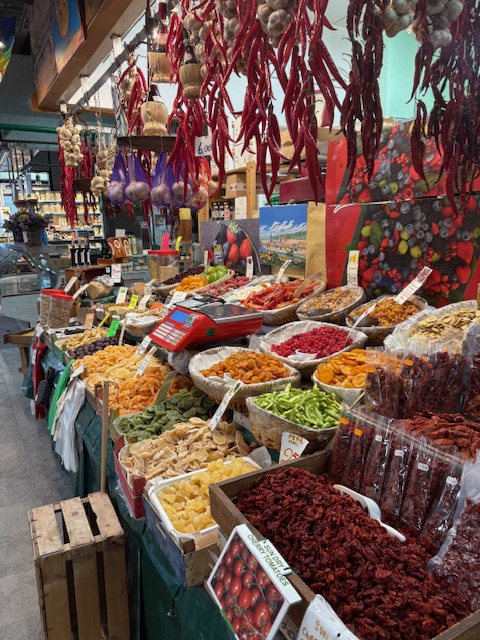
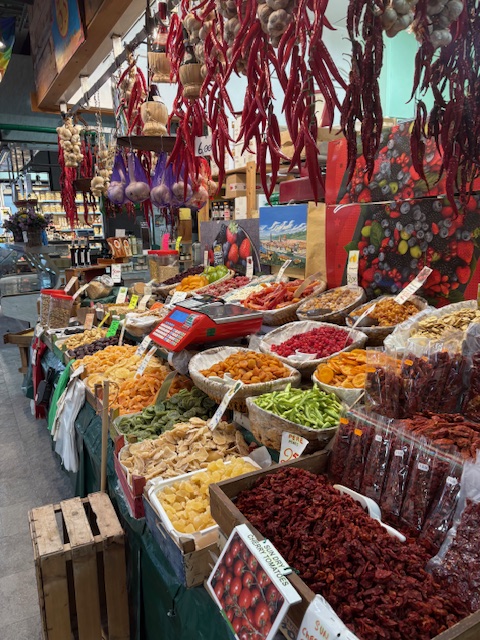
An indoor market view in Florence, March 2025.
Both our 2025 and 2026 trips to Italy were in February and March. The cold was a relief from the Florida heat, and traveling there was definitely cheaper compared to peak season.
There were still a reasonable amount of tourists, especially during the March visit to Florence, Milan, and Lake Como. Yet it wasn’t the craziness you find in the summer.
In southeastern Sicily (FYI, not Taormina but areas south of there), we had places (almost) to ourselves, with a smattering of tourists mostly not from the U.S. There were several businesses closed for off-season that would have been nice to see, but we 100% got an authentic feel for the region that may have been harder to achieve in full-swing tourist season.
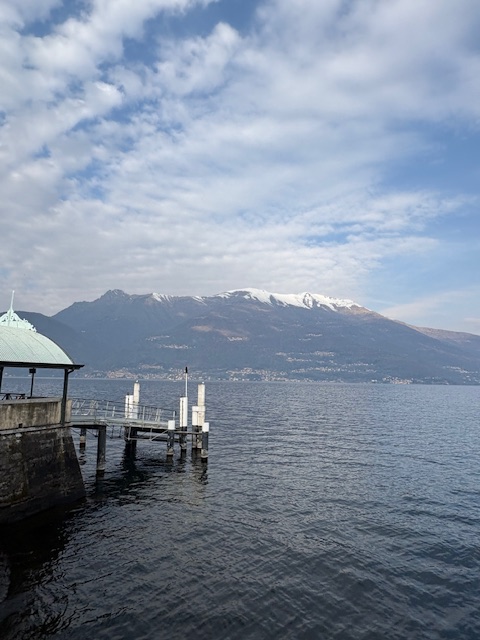
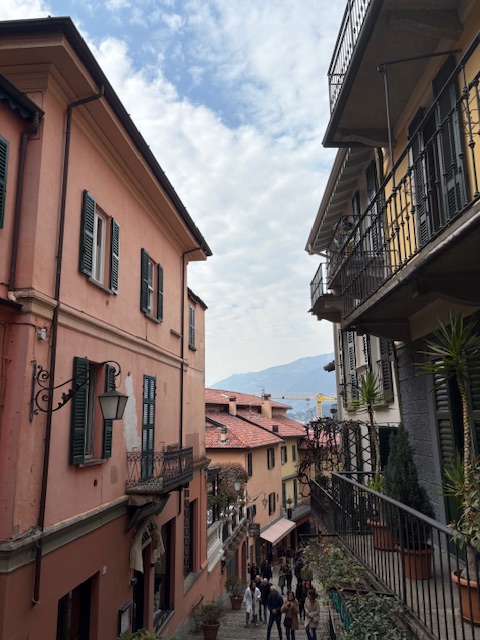
Visitors in Bellagio, one of the towns on Lake Como.
6. DON’T ignore basic research on local customs and the language
Generally speaking, Italians are a welcoming bunch.
Yet the culture is surprisingly more nuanced than we expected from movies and pop culture.
Depending on where you go, the culture might be a lot more traditional than you expected (we’re looking at you, southeastern Sicily).
In other places, you’ll almost think you’re in New York (hello, Milano).
And to say all of the customs, cultures, and politeness in Italy are the same in all parts of the country would be like saying people from New York City have the same customs, cultures, and politeness as people from rural Alabama.
Do a little research on local customs—both local Italian customs and customs specific to the region you’ll visit. Rick Steves is always our top choice for European knowledge, but there are etiquette experts who can help, like Nick Leighton, co-host of the podcast, “Were You Raised by Wolves?”
“Knowing a little bit about the local customs can really help make things easier, especially for first-timers. It gives you more confidence and it also gets you significantly better customer service, meals, and experiences,” Leighton says.
Two examples he shares: “If you walk into a coffee bar and say ‘Ciao,’ that’s way too informal for many Italians. It’s truly better to lead with a ‘Buongiorno’ with strangers instead. The greeting you use can really set the whole tone for the entire encounter, for better or for worse,” Leighton says.
You don’t need to do a crash course in Italian, but learning some basic greetings and words can definitely make a difference. We’ve enjoyed online videos from Italy Made Easy and Italian Teacher Valentina to help.
Another example from Leighton relates to planning meals. The message: Plan to eat later than you might eat at home.
“I love a good 9 p.m. reservation, which gives me plenty of time to enjoy aperitivo before dinner. If you book a 6 p.m. reservation, chances are it’s catering to tourists and it also means you’re missing out on aperitivo,” Leighton says.
And who wants to miss out on an aperitivo?!
And Coleman of Suitcase Gals remains us all of “Italian time.” “People often expect American service, which means rushing through everything. Italian time is deliberate, slow and relaxing,” she says. That’s good to know in advance.
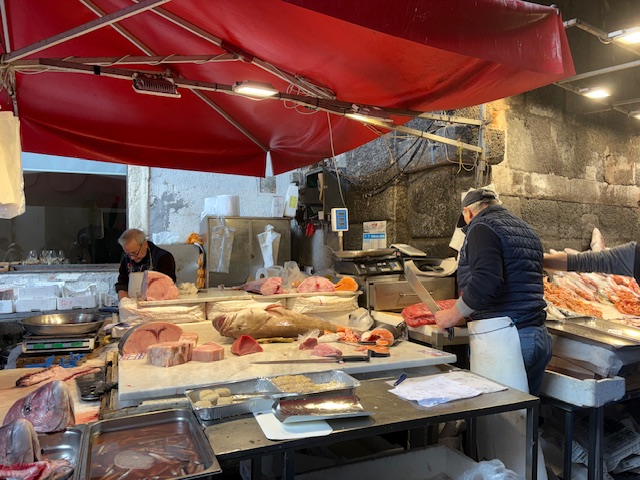
Fish market in Catania, Sicily.
7. DON’T arrive with multiple pieces of large luggage
If you’re one of those “I only travel with a carry on” travelers, more power to you. If you’re like us, you’ve paid one too many luggage fees because it’s a challenge to pack minimally.
And that can be a problem in Italy.
“You are responsible for getting your luggage to and from your hotels as most city centers are filled with cobblestone streets, hills and are not accessible by cars,” Coleman says.
“In addition, vehicles in Italy are built to fit in small places. If you are driving, many times the larger suitcases will not fit in a typical vehicle,” she adds. True.
Plan your luggage carefully, and keep in mind that laundry facilities are available through most hotels even if you have to pay a small fee to use them.
DO plan your trip well
We hope our suggestions help you to be more thoughtful about your Italy trip.
If you have an upcoming trip that’s not yet locked in and you’d like us to review your itinerary, this link tells you a little more about our new Italy travel planning consulting work, available at an affordable rate.
If you’re considering a trip to Italia and want to speak with us before you start to make reservations, we also can help you with that.
We’ll share more travel mistakes and travel wins in future articles.
Buon viaggio!
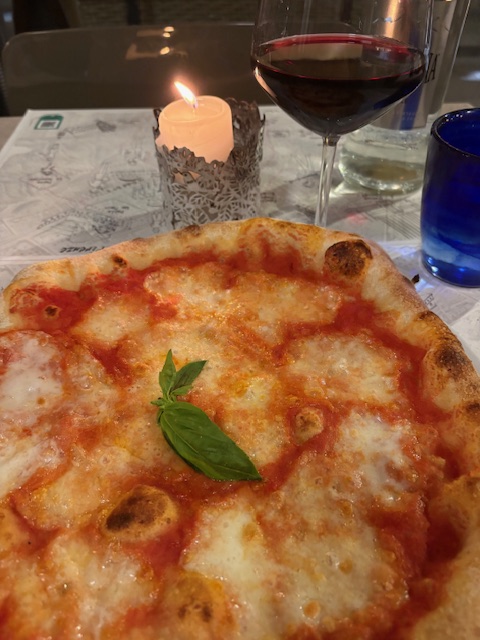
Yes, you can still come to Italy for the pizza. Yum…..
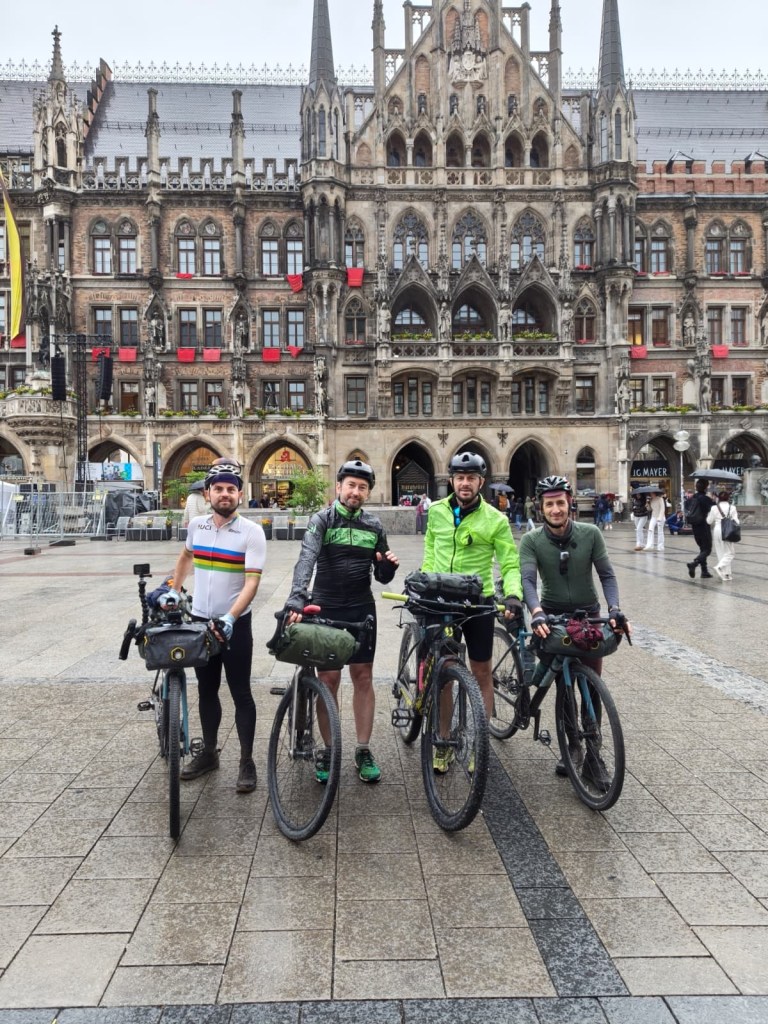
Ernesto G, Fabio B, Giorgio M, and Fabio D in Munich, Germany after their 565-kilometer bike ride from north Italy.
There’s something about long-distance biking that makes you feel like a superhero.
Yet there’s also the comical thrill you feel when you tell family and friends about your long-distance bike plans and they respond with, “Are you crazy??!!”
So says Ernesto G., of Brescia, in northern Italy. Last year, Ernesto shared with Italy Dreams the story of his bike trip from northern to southern Italy, along with his adventure buddy Fabio B.
This summer, Ernesto and Fabio ventured on a five-day journey from the Brescia area all the way to Munich, Germany–traveling 565 kilometers (351 miles) in 5 days.
The trip, which they completed with friends Fabio D. and Giorgio M., took them through northeastern Italy, a small part of Switzerland, Austria, and finally Germany–where they treated themselves to liters of beer at the famous Hofbrauhaus in Munich at the end.
Ernesto shares more details of the journey with Italy Dreams.
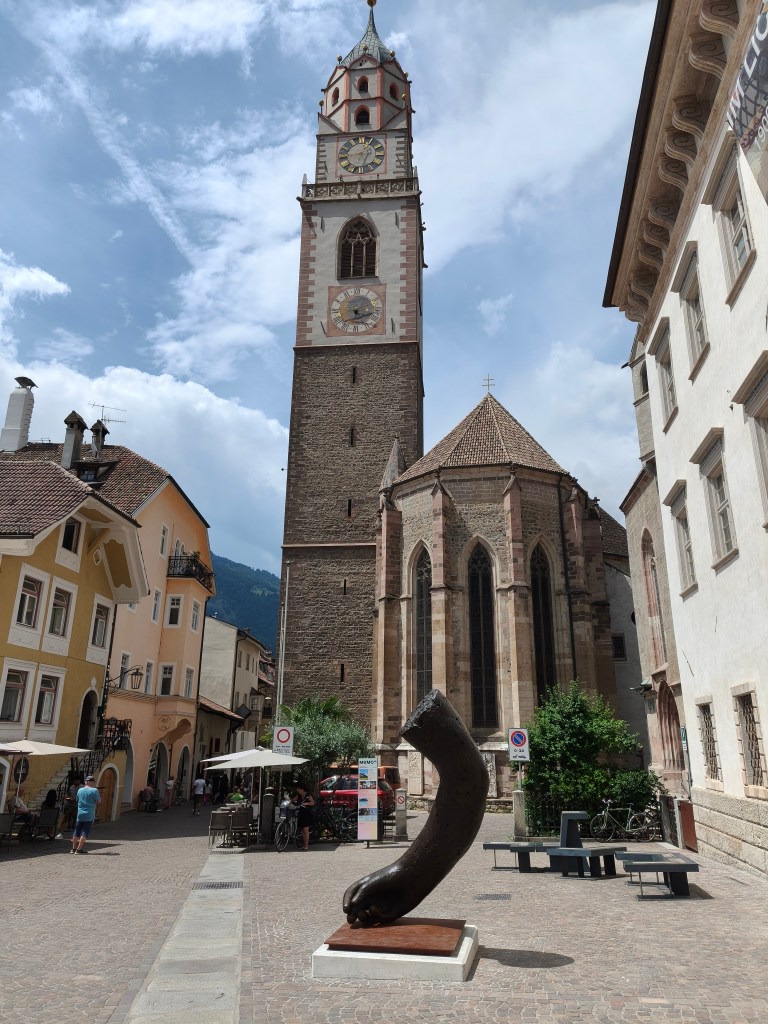
Merano, Italy.
The Idea Begins
Ernesto is no stranger to longer athletic challenges, having swimmed competitively in the past and along with trail running, ski mountaineering, and climbing as well as other long-distance bike trips.
With memories from the bike trip to southern Italy fresh in his mind, he wondered in December 2025 why there was no bike trip planned for 2026. That led him to consider a long-distancce trip with beautiful scenery including going through the Alps.
Although he originally planned to go solo, Fabio D., Fabio B., and Giorgio all wanted to be part of the adventure.
Of course, that meant training had to begin asap as the trip was planned for late May/early June.
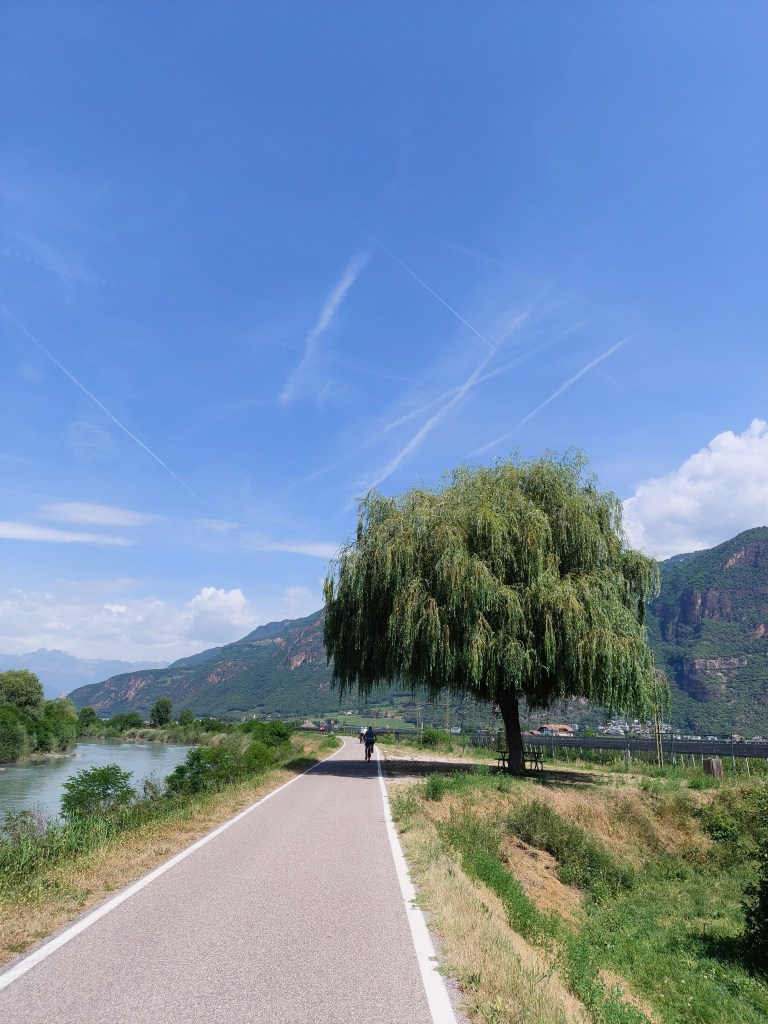
On the Adige bike path going towards Bolzano.
Ernesto and friends began to train almost every Saturday as they could, with the workouts getting progressively harder. There also were bike workouts during the week along with Ernesto maintaining his regular swim workout schedule three times a week.
Just like his previous trips, Ernesto did some serious trip route planning with the help of online tools and apps.
Before they knew it, it was time for their trip.
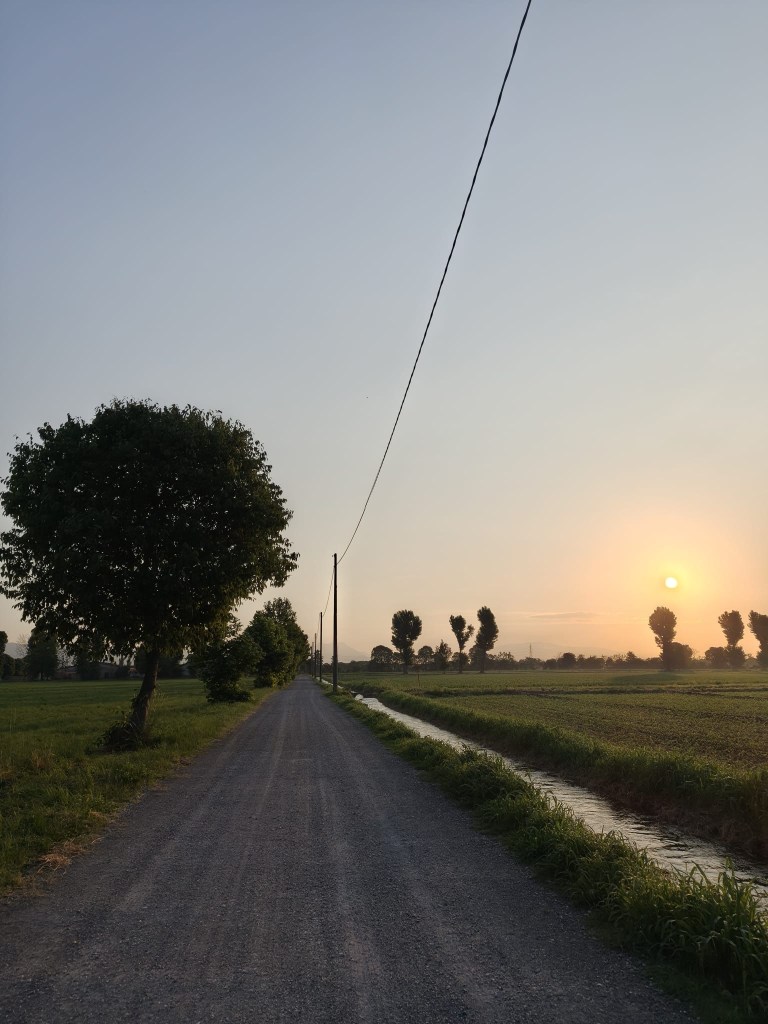
A bike trail in Italy’s Po Valley.
The Adventure Begins
The bikers began most days around 7 am or 8 am, a sharp contrast to the 4:45 am start times to beat the heat while in south Italy last summer.
Over the five days, they averaged 113 kilometers (70 miles) per day, with their longest day 146 km and their shortest 97 km.
“We spent between five and seven hours in the saddle, but each stage took about eight to nine hours total, including breaks,” he says.
There was one important break time each day: “We always stopped for lunch at a restaurant,” he says. That also gave the crew time to soak up the local culture and scenery.
Großer Ostersee in Germany.
In the evening, they stayed at bed-and-breakfasts or hotels. Surprisingly, two of the five places they stayed offered bike repair services, tire inflation, and bike cleaning. One of their favorite hotels was in Laces in the Trentino-Alto Adige region of Italy, which had an outdoor pool and stunning views of the Alps.
The bikers didn’t encounter any flat tires or other bike maintenance issues.
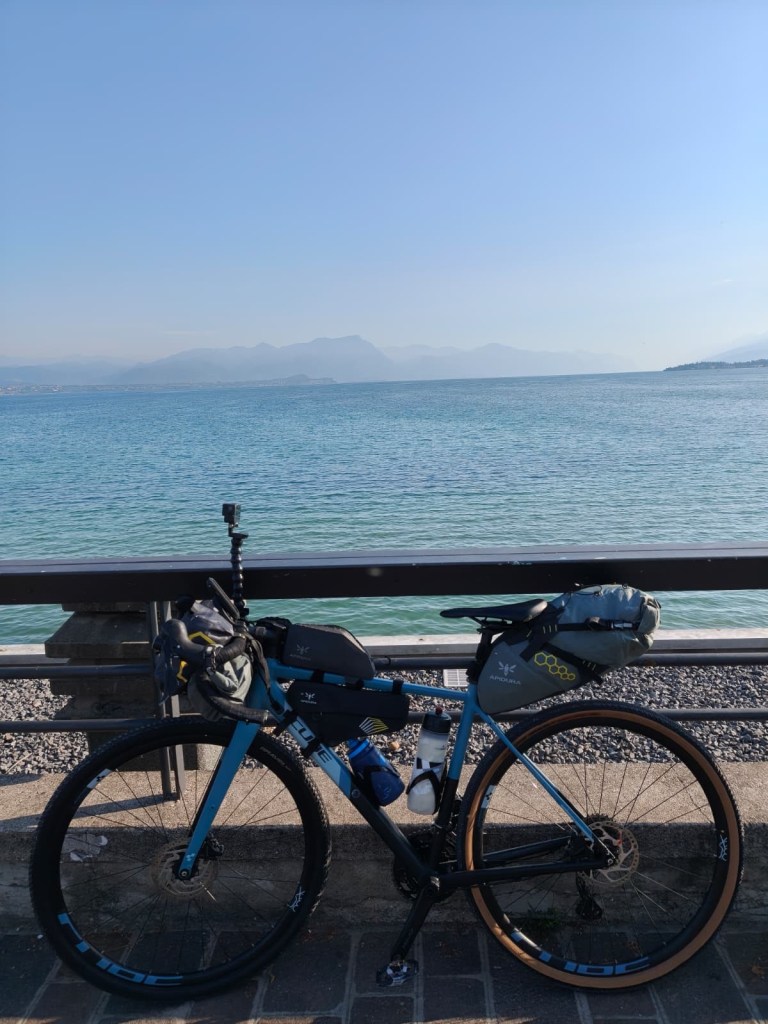
Ernesto had purchased a Dji Mini 5 Pro drone and used it during the ride, which added another “passenger” to the trip. He kept it in a front bag from Apidura, and he watched many tutorial videos in advance so he’d know how to use the drone while cycling or while stopped. The end result? Many great pictures and videos taken with the drone.
Lake Resia in Italy.
Watching the Scenery Change
The bikers traveled through the Lombardy, Veneto, and Trentino-South Tyrol regions of Italy. They started in the Po Valley, which Ernesto describes as having wide-open fields and mountains visible in the distance.
Next came the southern part of famous Lake Garda, surrounded by olive trees, veinyards, and lemon trees.
The Adige River area had a stunning bike trail and small villages and vineyards that continued all the way to the city of Bolzano and to the Alps.
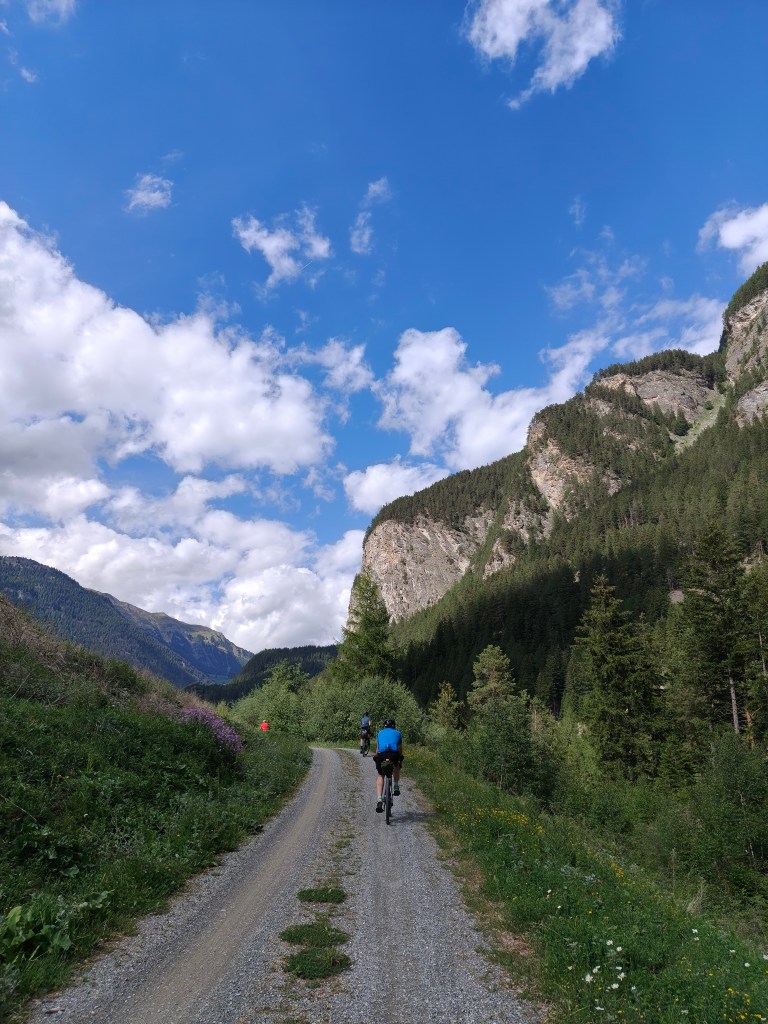
Reaching Val Venosta, an area well-known for its apples, they entered the alps with mountain ranges of 3,000 to 3,900 meters (9800 feet and more).
They were still in Italy at this part of the journey, but it more closely resembled Austria than Italy, and German is widely spoken there.
Italy on the border with Austria.
Although they crossed high elevations during the trip, this didn’t intimidate them too much as they were ready for them.
Upon reaching Austria and the heart of the Alps, the bikers had peaceful views of glaciers and mountains, clear rivers, fields, and Gothic churches and villages.
The same held true in Germany, where the Alps gave way to hills, pastures, and lakes all the way to Munich.
Ultimately, the group traveled through:
–Desenzano del Garda, Italy
–Peschiera del Garda, Italy
–Rovereto, Italy
–Trento, Italy
–Bolzano, Italy
–Merano, Italy
–Lake Resia, Italy
–Prutz, Austria
–Imst, Austria
–Garmisch Partenkirchen, Germany
–Starnberg, Germany
–Munich, Germany
They went through Switzerland as well but only for a few kilometers.
Austria
Reaching Munich
Upon reaching Munich on day 5, the crew arrived at Marienplatz in the center of Munich, went to their hotel, took showers, and then had beer and dinner at the legendary Hofbrauhaus. Dinner was pork knuckle and pretzels.
“I was impressed by the size of Hofbrauhaus, how quickly they serve beer, the German-style decor, and how quickly you can drink a liter of beer,” Ernesto says.
They returned home the next day–but not by bike!
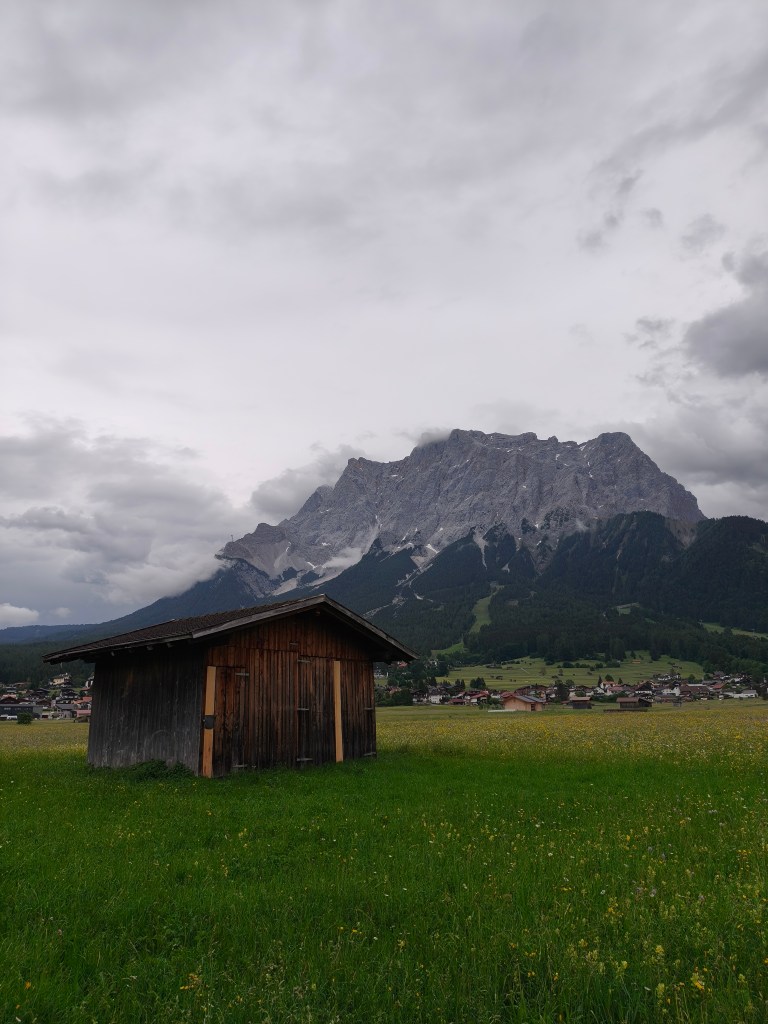
Austria on the border with Germany, with Zugspitze Mountain in Germany in the background.
Comparing Southern Versus Northern Italy
When asked how last year’s sojourn into southern Italy compared to this year’s trip, Ernesto shares a few thoughts.
“Italy is long and narrow, with a wide variety of climates and landscapes. Last year, the dialects, accents, cultures, and landscapes changed several times from stage to stage. On the latest trip, from Bolzano onward, the culture and food were very similar all the way to Bavaria in Germany,” he says.
Still, he says he loved the majesty of the Alps.
The freedom and exploration of new cultures are what keep Ernesto and his biking buddies on the road for these long-distance trips.
“This kind of trip fills you with excitement from the moment you plan it on the map until you’re actually biking,” he says. “The feeling of reaching faraway places under your own power feels great. It makes you feel like a superhero.”
While plans for the next long-distance ride are still in progress, it will most likely lead them to the city of Reggio Calabria in southern Italy, across from Sicily.
Germany
Tips for Long-Distance Biking Through Italy
If you’re considering a long-distance biking adventure through Italy–or really, anywhere–here are a few tips shared by Ernesto:
–Train gradually but consistently to prepare your body.
–Start with three- to four-day trips to make sure you like them.
–Pack as light as you can.
–Buy a good bike GPS. He uses the Garmin Edge 1040.
–Learn how to perform basic bike maintenance.
–Have your bike inspected and serviced before setting off.
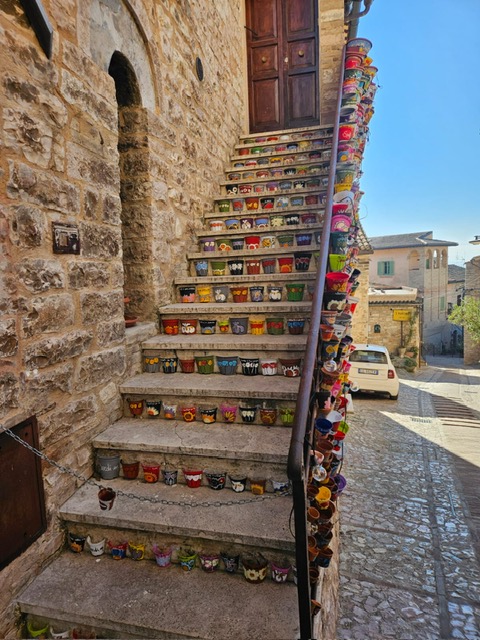
Steps seen in the Umbria region of Italy, a lesser known destination you may get to know on a tour with Discover Your Italy. Photo shared by Aurelio V.
Want to watch art restoration in progress behind the scenes in Florence? How about trying freshly pressed olive oil in southern Italy? Or taking a trek on top of the expansive Dolomites with a mountain guide?
If you’re looking to discover Italy beyond the tourism check-off list like these activities, then get in touch with Discover Your Italy: Fuori Itinerario.
Their name says it all. “Fuori Itinerario” means off-the-beaten path in Italian, and that says a lot about the types of travel that they offer.
Discover Your Italy is based in Umbria, which itself is a region of Italy off-the-beaten path and less touristy than many other areas of the country. The tourism company also has an office in Milan, says Sara Caligiuri, a marketing specialist with the firm.
The company was started by Matteo Della Grazia and Daniella Mencarelli, a husband-and-wife team who are passionate travelers and want to share the authentic beauty of Italy.
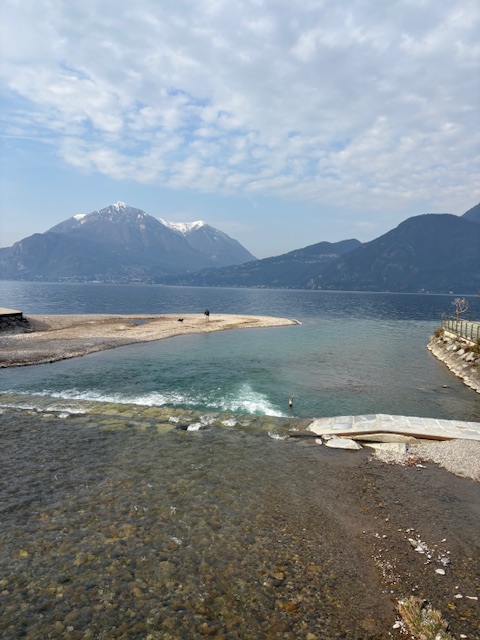
A quiet view of Italy’s Lake Como, in northern Italy.
Going Off-the-Beaten Path
Discover Your Italy works with clients to find out their preferences so they can craft a custom itinerary for them, Caligiuri says.
“It’s not just about the beautiful landmarks that everyone knows, but also the hidden gems,” Caligiuri says. “We are experts in Italy. Having a lot of connections is key for us. It’s important to know the suppliers and to have contacts with artisans and locals so we can craft authentic experiences.”
The company specializes only in Italy so the knowledge of their country is deep.
“Every itinerary is designed by the people who live in Italy, and everything that we recommend is because we personally know it. We don’t sell pre-packaged tours; everything that we sell is tailor -made and completely customized to the precise needs of the client,” Caligiuri explains.
Discover Your Italy has many English-speaking/American clients, including many multigenerational travelers. What they’re looking for is comfort and expertise. “They don’t want to have a complication, they just want to enjoy their experience,” she says.
Some, but not all, may have already seen the big cities like Florence or Rome or Venice and want something more in-depth. “We’ll combine cultural highlights with hands-on local experiences,” Caligiuri says.
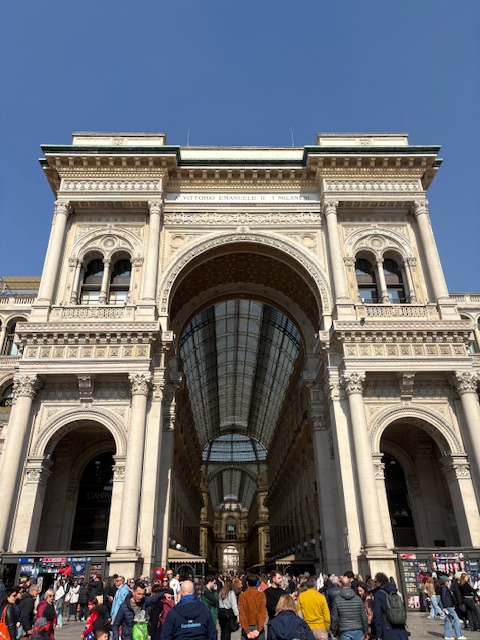
The famous Galleria in Milan.
Oh, the Places You’ll Go!
Just where will a travel itinerary with Discover Your Italy take you? You can go where your heart desires, but here are a few examples of regions you might visit with the company’s assistance:
Umbria, located right in the heart of Italy and close to Tuscany. Although it’s similar to Tuscany, it doesn’t have the crowds or fame. In fact, Umbria has many hidden gems. Perugia, the Umbria-based hometown for Discover Your italy, is famous for its Eurochocolate Festival in November (yum).
Abruzzo, about 2 hours from Rome and filled with national parks and coastline.
Basilicata, which is home to Matera, the oldest city in Europe.
Le Marche, famous for mountains, beaches, history, and art but lesser known than other regions.
Yet if you’re looking to visit one of Italy’s more famous cities or regions, you’re still in luck when you work with Discover Your Italy. A private guide can take you and your travel companion through highlights in Florence, Rome, Venice, Sicily, the Dolomites, and lots more.
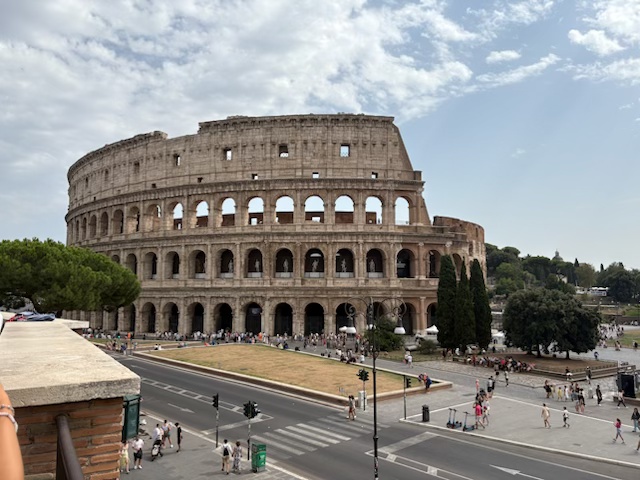
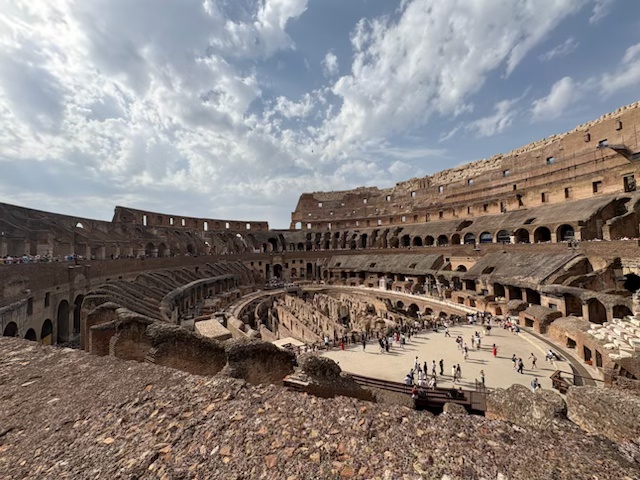
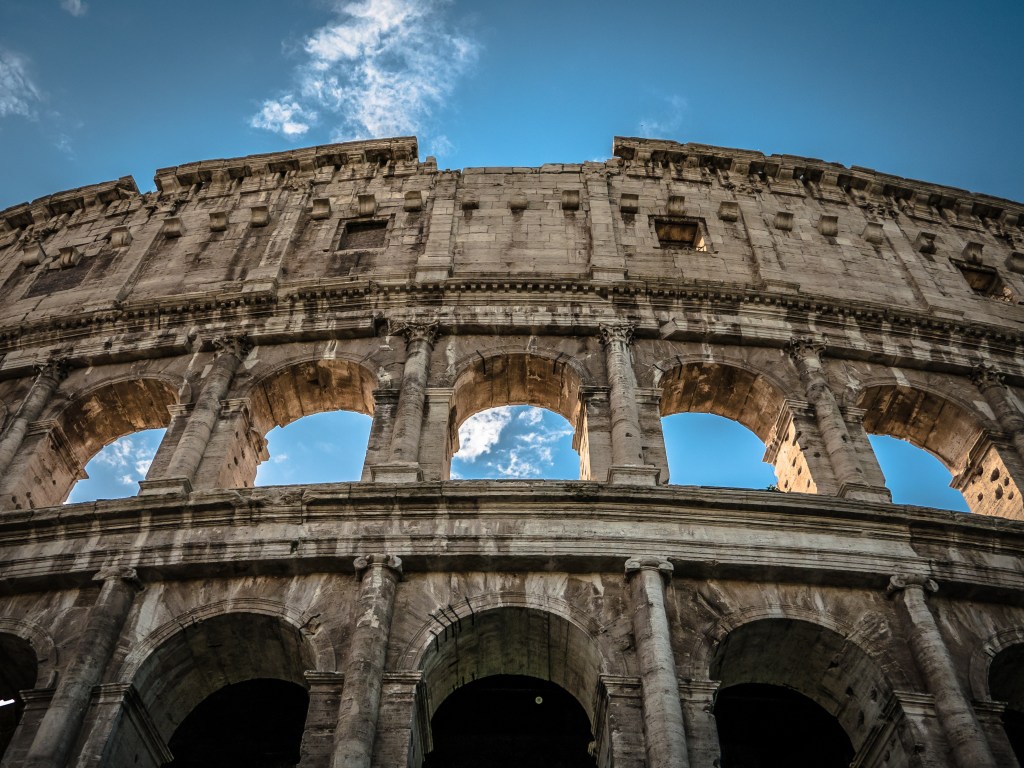
Rome’s famous Colloseum. Picture shared by Jessica Caceres.
In addition to customizable travel plans, other advantages of traveling with Discover Your Italy include:
Stays in boutique hotels
A private meet-and-greet when you arrive in Italy
Restaurant suggestions
Exclusive amenities
Pre-departure tips
A restaurant view in Florence, Italy.
Tips for Planning Your Trip to Italy
Ready to buy that flight ticket to Italia now? Here are a few tips to keep in mind as you prepare for your Italy trip and once you’re onsite, as shared by Caligiuri:
Consider working with a tour company like Discover Your Italy to plan your trip. Italy has so much to offer, it can be overwhelming to plan. It also can be time-consuming. Planning on your own could cost you more and put you in danger of falling for tourist traps. Even planning transportation to different cities can get complex at times. “It’s important to know the behind the scenes, where the real Italian experiences are,” she explains.
Add less, not more. Tours to Europe/Italy often involve packing in many cities in just 10 to 14 days. Yet traveling at this rhythm can make it harder to really get to know each place. That’s why Discover Your Italy advocates for taking your time in just a handful of regions per trip, or even remaining in just one region. “You can really get to see a lot without getting stressed,” Caligiuri says.
Book six or seven months in advance. As you likely know, Italy is a popular travel destination. Booking in advance within a six- or seven-month timeframe helps you find the accomodations and travel plans you want.
Focus on understanding the culture from a local perspective. This will broaden your experience of Italy and help you appreciate how much the country differs even region by region.
Stay curious and stay open. “Italy has a lot of layers. We have history, art, food, nature, and landscapes. We have a lot of offerings for different kinds of people and interests,” Caligiuri says. By staying curious and open, you can experience the country’s different layers.
If you decide to work with Discover Your Italy for your Italy trip, let them know if you have any niche interests. Those special interests may become a part of your visit. If you or someone in your group enjoys fishing, for example, you may find yourself fishing while on your trip.
For more information on Discover Your Italy, visit their website.
Enjoy views of the Coliseum in Rome or any other sights you wish with a Byways of Italy tour. Picture shared by Jessica Caceres.
If you’ve ever dreamed of getting to know Italy up close and personal but you’re not sure where to start, then the Rome-based company Byways of Italy is a great place to start.
Byways of Italy is a tour operator and destination marketing company (DMC) that creates customized travel itineraries and provides experiences at Italy’s iconic destinations as well as lesser-known gems, says founder Manuela Mocci.
The company began in 2021 in response to a growing demand from travelers looking to rediscover Italy after the COVID-19 pandemic. It focuses most frequently on cultural and food and wine experiences along with a commitment to conscious, responsible travel, Mocci says.
Florence, Italy.
What Makes Byways of Italy Different?
Byways of Italy’s travel advisors work closely with clients to create a customized travel experience.
“I would say that clients choose us because of the balanced mix in our proposals, combining the most well-known spots with off-the-radar day trips offered at the right pace, and the dedication we bring from the start,” Mocci says.
The company’s typical client will be a couple or family that’s from Australia, the U.S., Canada, or Latin America. Although Byways doesn’t usually work with large groups, they make an exception for multigenerational families.
“Our correspondence with clients sometimes lasts months or even over a year, allowing us to get to know their preferences, build trust, and carefully curate every detail of their journey,” Mocci explains.
A view of Lake Como in northern Italy.
Although travel options abound online, many people still want the value of working with local experts.
“Younger travelers often want unique experiences that are hard to find online, and they don’t have much time to dedicate to planning,” Mocci says. “Older travelers can feel overwhelmed by the amount of information available on the web and are looking for someone they can trust to provide guidance and support when needed.”
A classic view of Venice, Italy. Picture shared by Jessica Caceres.
Where Can You Go With Byways of Italy?
Instead of asking, “Where can you go with Byways of Italy?”, perhaps the better question to ask is, “Where do you want to go?”
Do you want to take a relaxing bike ride along Lake Garda? Live the luxe life on a yacht cruise on Sardinia’s coastline and enjoy an onboard fish lunch? Or, do you just want to meander in the countryside of the region of Marche and sample authentic food and wine while you stay at a local agriturismo (a farm-based home that usually offers activities like tours or cooking classes)?
All of this and more are possible with the help of Byways of Italy. That’s because it specializes in customized tours.
“We add special touches to make each trip one-of-a-kind, especially for occasions such as honeymoons and anniversaries,” Mocci says.
Mercato Centrale in Florence, italy.
However, Byways also offers classic tours to help you get to know Italy better. Here are a few popular highlights:
––The 10-Day Italy Tour features Milan, Venice, Florence, and Rome. Activities you can enjoy include a guided tour of Milan’s Duomo (cathedral), a private boat tour on famous Lake Como, a sightseeing tour of Venice with a Venetian apertif, a visit to a glass factory in Murano, a guided tour of Florence’s famous art museums, and a walking tour of Rome’s main monuments. Of course, no classic Italy tour is complete without wine tasting in the Tuscan countryside!
––A Journey of Self-Discovering in Tuscia. Get off the beaten path for this 7-night/8-day tour in Tuscia, located in the Lazio region near the border with Umbria and Tuscany. This remote area helps you enjoy less crowded ancient Italian towns and connect with yourself and your loved ones. Take a guided tour of Tuscania, relish in the thermal baths in the town of Viterbo, spend a day at a family-run winery, and visit the Palazzo Farnese to take in its awe-inspiring frescoes.
—Northwest Sardinia. For something truly different, book yourself a Byways of Italy tour to Northwest Sardinia. Sardinia is an island off of Italy’s western coast and is one of Italy’s 20 regions. It has famous beaches but still has many parts that are less discovered compared with Italy’s bigger cites. This 10-day/9-night tour includes a visit to Alghero, which has a strong Catalan influence; a panoramic road trip to the colorful and historica town of Bosa, featuring the area’s vineyards; and a visit to the small village of Castelsardo.
Some of the other tours via Byways of Italy include:
–Milan and the lakes of North Italy
–Sorrento and the Amalfi Coast
–3 Days in the Tuscany Countryside
–Procida, a fishing island in the Gulf of Naples
Rome’s Coliseum. Picture shared by Jessica Caceres.
Tips for Planning Your Trip to Italy
As you plan your trip to Italy, there are some general travel tips you should follow, Mocci recommends:
—Begin to plan your trip 6 to 8 months in advance so you have more options and better prices.
—Keep a running list of useful information and points of interest about your destination, such as attractions, museums, bars/restaurants, streets, etc.
—Buy those museum ticketsahead of time. “During high season, tickets for the most famous museums sell out quickly and need to be booked in advance. This will help you save some time,” Mocci says.
—Double check schedules in advance. Some museums and cultural sites may be closed when you least expect it, especially in small towns or outside of peak season.
—Don’t overplan. “Leave space for unexpected discoveries and improvisation, and make sure to leave time to rest, enjoy a coffee in a nice bar, or take a leisurely walk through the center,” Mocci says.
Mocci shares some final wise thoughts: “Travel isn’t about ticking boxes, it’s about finding experiences that feel meaningful to you,” Mocci says. “What one traveler enjoys might not suit another, and that’s what makes every trip personal.”
To contact Byways of Italy about your Italian trip, find them online at BywaysofItaly.com. You can also message them through the following contact form on their website.
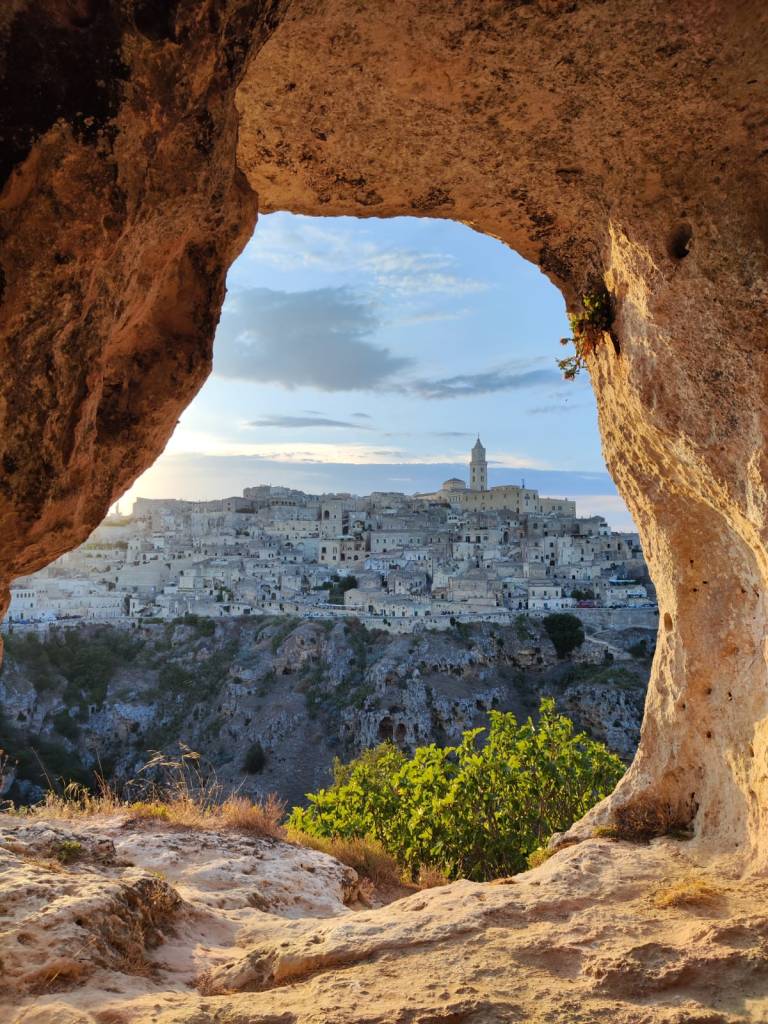
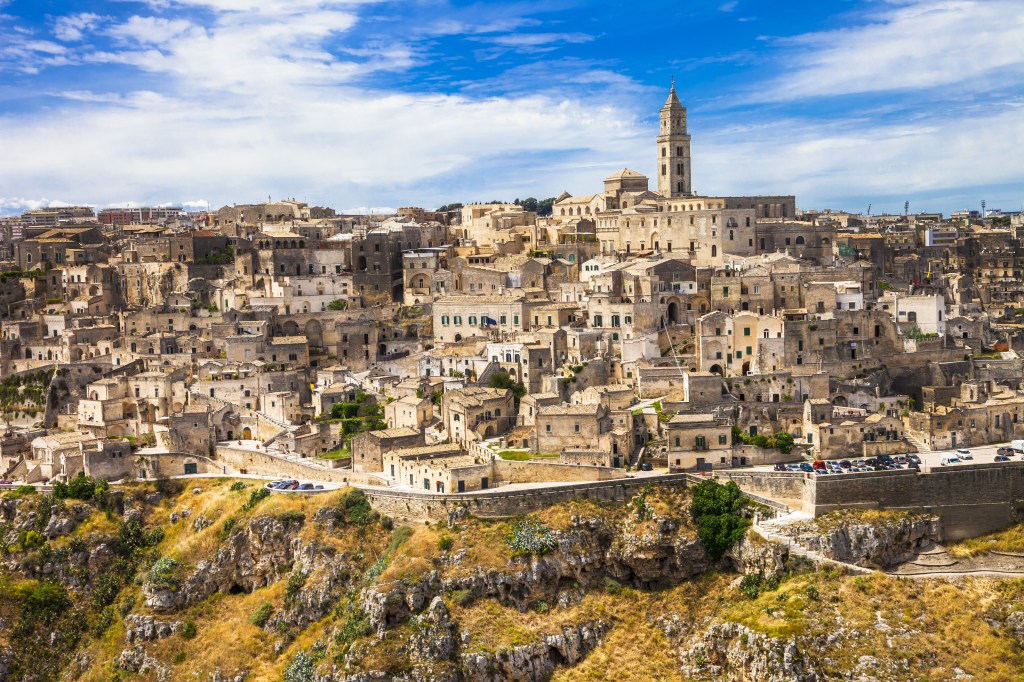
Beautiful Matera in the Basilicata region of south Italy. It’s one of the oldest continuously occupied cities of the world.
Did you know that 70% of tourists to Italy go to just 1% of the country–namely, Florence, Rome, and Venice? Of course, these cities have a wealth of history, food, and culture (we even shared some foodie facts from our Florence visit in this post).
Yet let’s face it, getting stuck in the heat and crowds is NOT fun.
So, in the spirit of Italy Dreams’ mission, we share here five destinations in Italy that are popular among Italians themselves. That’s not to say you won’t find other U.S., British, or other foreign tourists in these beautiful places–but there will be far fewer compared to places like Florence, Rome and Venice.
Andiamo! Let’s go!
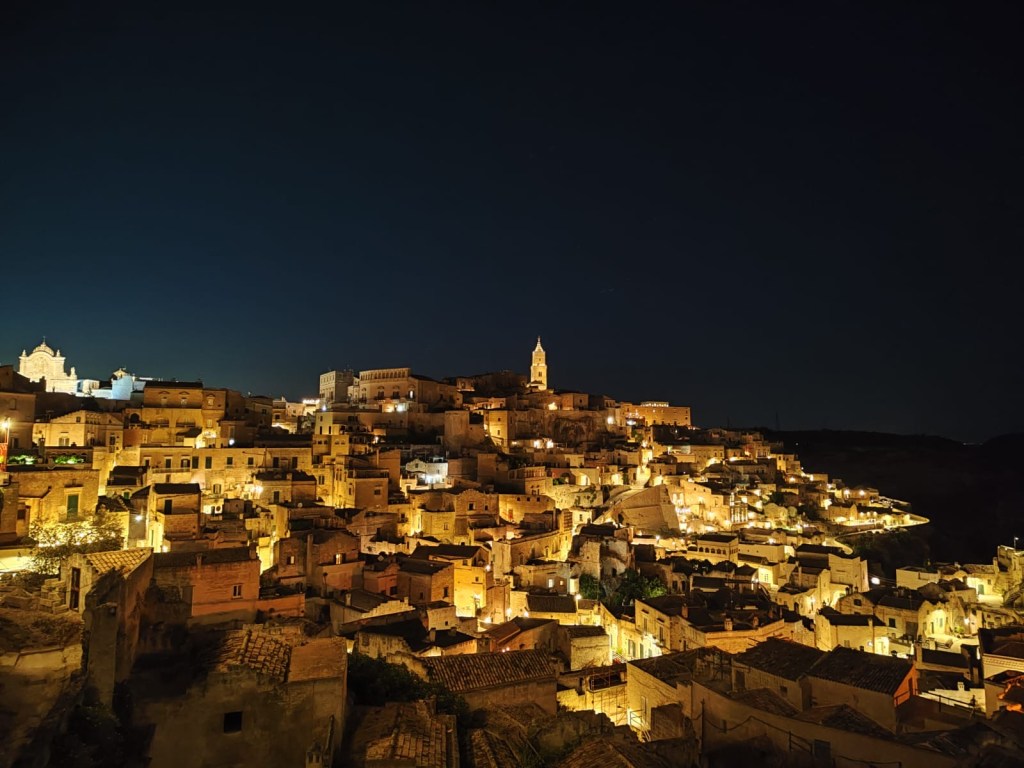
A nighttime view of the historic town of Matera, Italy.
Matera
If you like history, the town of Matera will take you in the way back machine–as in waaaaaayyyyy back. It’s the oldest city in Europe, and one of the oldest continuously inhabited areas of the world–we’re talking history that goes back to 7500 B.C. The 2004 movie “The Passion of the Christ” used Matera as a backdrop.
This history and the city’s unique look naturally drives visitors to this Southern Italian town, located in the region of Basilicata. Matera is about 2 hours from Naples, depending on how you get there.
Here are just some of the things that native Italian visitors do in Matera–and that you can do, too:
—Visit the Sassi di Matera, or stones of Matera, which are declared a UNESCO World Heritage Site. This is an ancient settlement area with alleyways, caves (providing great views of the town itself), gardens, and tunnels.
—Check out The Bread Museum (I Segreti del Pane di Matera). Discover what makes bread from Matera so special and how it ties into the area’s history. It will make you hungry–good thing you’re in Italy!
—Get a stunning view of Matera’s caves from the Pascoli Square Belvedere (Pascoli Square Belvedere). Named for the 19th-century Matera poet Giuseppe Pascoli, you’ll find a balcony that provides a lovely view of the Matero Cathedral, Civita Caves, and part of the stone districts of Matera.
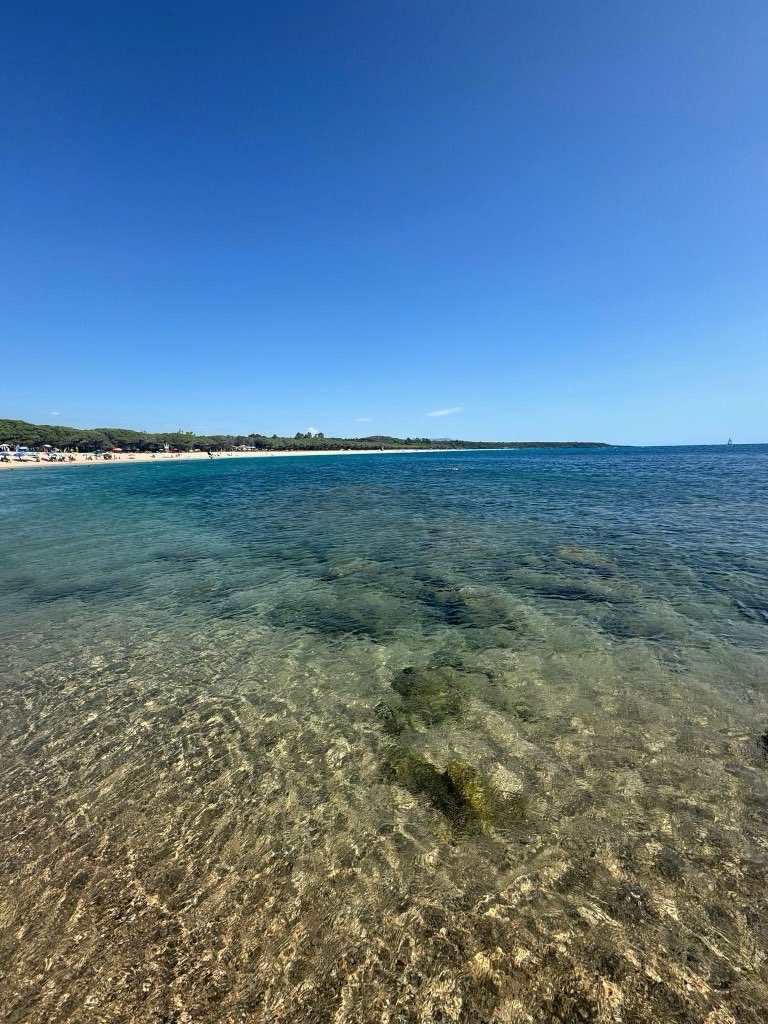
A beautiful beach in Sardinia, Italy.
Sardinia
We’re sure you’ve heard of Sicily, but have you heard of Sardinia? Think of this island region of Italy as Sicily’s wilder sister. It’s located in the Mediterranean Sea, south of the French island of Corsica and west of Italy’s mainland.
Sardinia is the second largest island in the Mediterranean, second only to Sicily, and has a population of 1.7 million. That may sound like a lot, but it’s actually one of the most sparsely populated regions of Italy.
Life’s just a little different in Sardinia, Italy.
So, just what can you do in Sardinia? Here’s the scoop:
—Eat a lot of Pecorino cheese. Despite its many kilometers/miles of coastline, Sardinia is actually better known for sheep farming than it is for fishing. All of that sheep farming leads to a lot of Pecorino cheese, made from sheep. Other foods you might enjoy in Sardinia include malloreddus, a type of Sardinian gnocchi; pane carasau, a crispy bread; and seadas, a fried pastry with cheese and honey.
—Go to the beach. With about 1,200 miles (yes!) of coastline, Sardinia is a natural choice if you consider yourself a beachgoer. Spiaggia di Maria Pia (hailed as a family-friendly choice), Golfo di Orosei (with gorgeous coves), and Spiaggia della Pelosa are just a few possible choices.
—Take a wine tasting tour in Sardinia. After all, wine is just one factor in what makes Sardinia one of the Blue Zone areas of the world–areas with longer longevity and good health. In Sardinia, that’s due to a healthy diet, physical activity that’s a part of daily life, social connections, and of course, some vino.
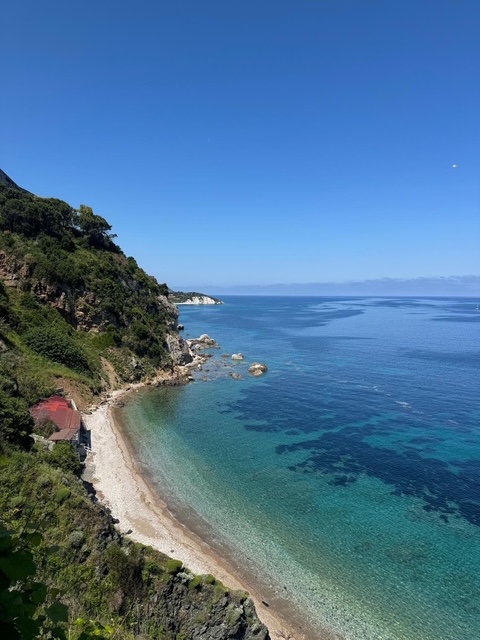
A stunning beach on Isola d’Elba/Elba Island.
Isola d’Elba
This beautiful-sounding name translates to Elba Island in English. It’s located off the coast of the Tuscany region, which is already well-known for wine, Florence, and Pisa. Visitors typically get there by taking a ferry from the town of Piombino (about an hour, depending on where you’re going on the island).
Isola d’Elba is a great choice if you want a quiet destination with history, says Alessandro N. of Brescia, Italy, who was there earlier this year (he also provided the island photos with this article and the photos of Sardinia). He says the mix of history along with natural landscape made it a laidback destination.
The town of Portoferraio on Isola d’Elba.
Here are some other things you can do in Isola d’Elba:
—Follow Napoleon’s footsteps on the island. Napoleon was exiled to Isola d’Elba for 9 months in 1814, but he left a big mark on the island. Visit the Mercy and Napoleon Relics Museum and the Villa Dei Mulini, for instance–the latter of which was his primary residence while spending time there.
—Take a bike ride, buy yourself some bread and fresh fruit, and check out a few of the seaside towns. This lovely-sounding plan is recommended by the website Italy Segreta (Italy Secret), in its article “A Local’s Guide to Elba Island.” You may want to check out their site for a few more tips.
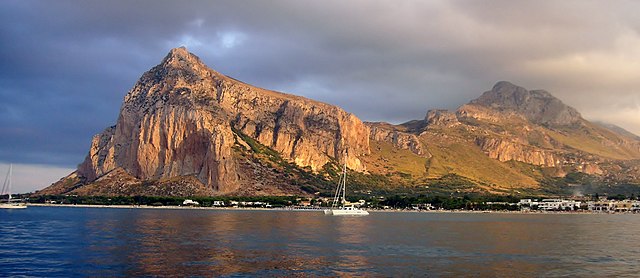
San Vito Lo Capo in Sicily, Italy (picture used from Wikimedia Commons).
San Vito Lo Capo
Sicily has many idyllic beach areas, but one local favorite is San Vito Lo Capo. Located about 2 hours from Palermo, San Vito Lo Capo features stunning beaches and lots of nature. We read that it gets busy in the summer, so we’re not billing it as a complete escape from tourism (including in August, when many Italians take off for a few weeks). However, a little bit of crowding may be worth the visit.
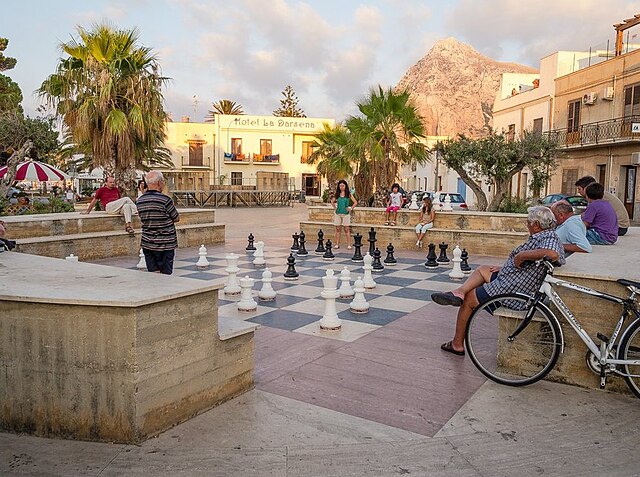
A chess match in San Vito Lo Capo, Sicily (picture taken from Wikimedia Commons).
Here are just some of the things you can do in San Vito Lo Capo in Sicily:
—Take part in all types of water activities, like boating, snorkeling, or, of course, just lounging on the beach.
—Indulge in typical Sicilian dishes. One cool thing about Sicily is that it blends together different cultural influences from around the world. This is especially clear in its food, where you can enjoy dishes like couscous, tuna, and caldo freddo (a type of Sicilian ice cream) during your visit.
—Visit the San Vito Sanctuary, a monument and symbol of the town The site WeArePalermo provides more background about the sanctuary’s history–and a well-written, amusing guide to San Vito Lo Capo.
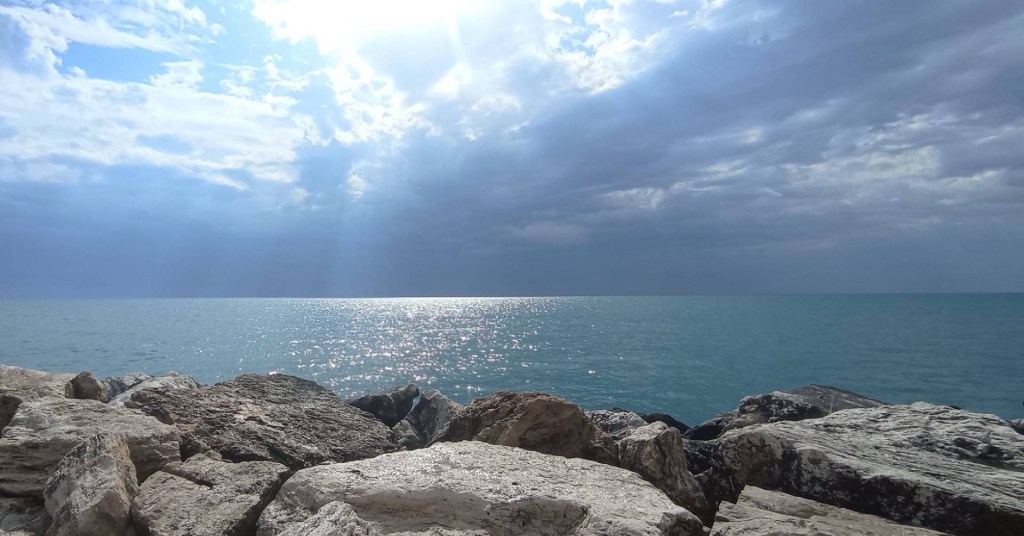
Seaside views at San Benedetto del Tronto, Italy.
San Benedetto del Tronto
If you want a mix of seaside views, seaside cuisine, and an artsy feel, your next destination should be the underrated San Benedetto del Tronto, located in the Italian region of Marche on the country’s eastern coast.
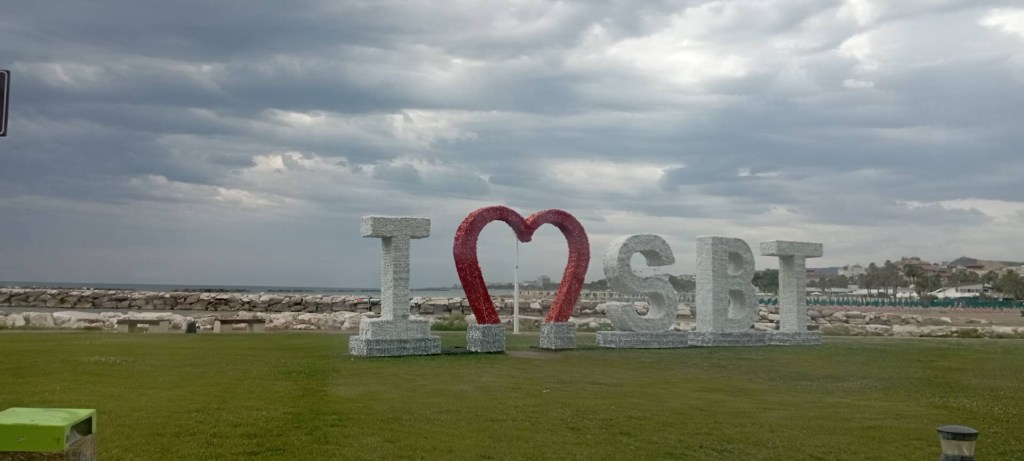
Find this and other sculptures and artwork in San Benedetto del Tronto, Italy.
Here are a few things to do when you’re in SBT:
—Visit the Museum of Art on the Sea (Museo del Mare), an open-air museum on the pier with sculptures and paintings. Take pics, and talk with your travel partners about which artworks are your faves.
—Explore the boardwalk by foot or bike. It’s nearly 6 kilometers (nearly 3.7 miles), so you’ll have plenty to see and do.
—Enjoy a meal! San Benedetto del Tronto has some great seafood, according to Verena, a resident of Val Badia, Italy. She was in SBT recently and recommends the Brodetto alla sambenedettese, a type of fish stew that’s typical of the region. (Verena also provided the photos we’re sharing of San Benedetto del Tronto).
For any of these places, do your homework in advance. These towns and regions may not be bombarded with tourists like the big cities, but they can still get busy, especially in the summer. Check online for best times to visit and any other tips.
Stunning Matera in the Italian region of Basilicata. Matera is a UNESCO World Heritage Site and famous for caves and ancient history. All pictures with this story are shared by Target Travel.
How would you like to see the historical sights of Rome, Italy, at sunrise—where you can beat the crowds and capture some amazing pictures?
Or, what about a food-focused tour of Italy where you literally follow a food from where it’s grown or produced to where it’s ultimately enjoyed on someone’s table?
Or, take a local market tour and cooking class with an Italian chef?
Those types of unique ideas and many more are what Target Travel offers.
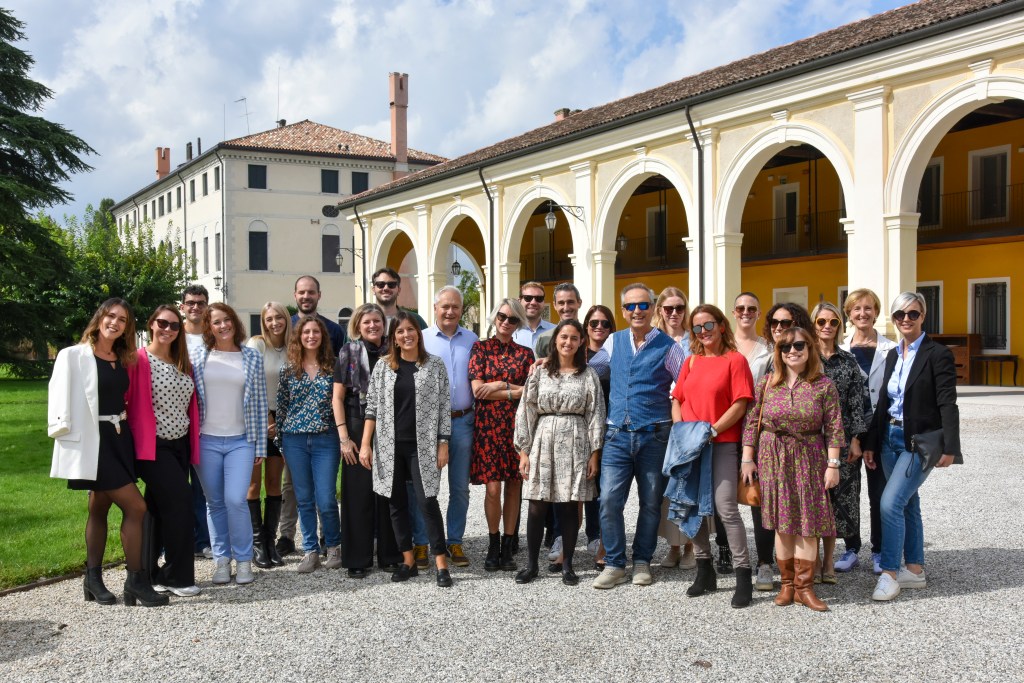
The team at Target Travel.
Target Travel is a family-run, Venice-based DMC (Destination Management Company) that’s been tailoring tours and experiences since 1985, founded by CEO Daniele Panzarin.
What sets Target Travel apart from many other DMCs is the feeling of being at home when working with them. You can truly sense the pride they take in helping people discover the most authentic and unique side of Italy.
With a team of 26 professionals, the company proudly retains the spirit of a boutique destination management company—with deep experience and a warm, family-like atmosphere, where strong interpersonal relationships are always the foundation of everything they do.
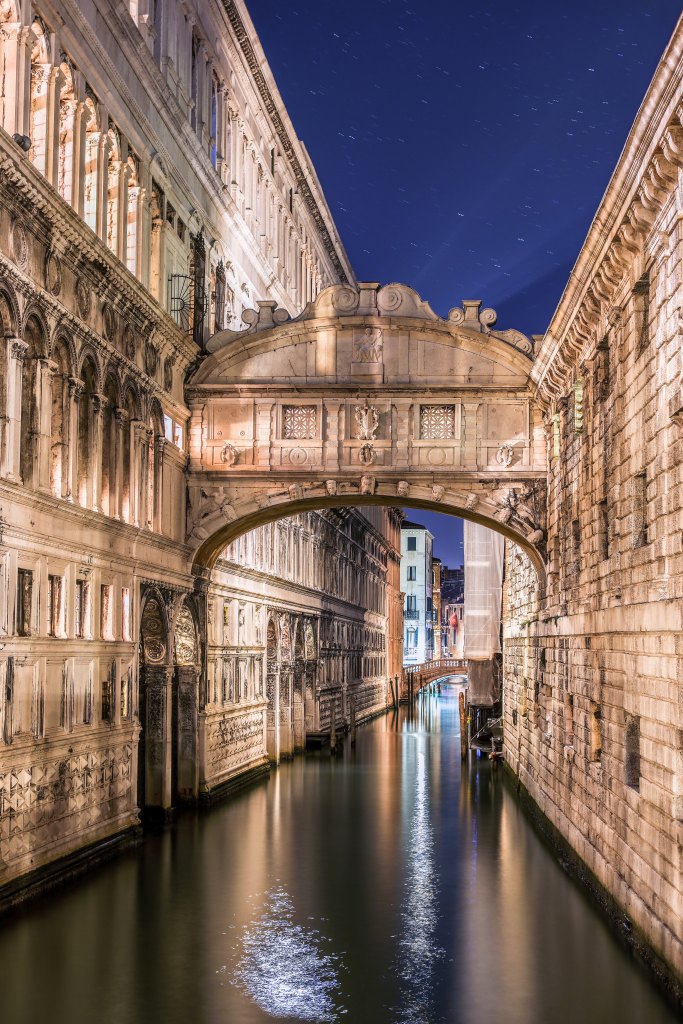
The Bridge of Sighs, Venice Italy.
2025 is a special year because Target Travel is celebrating its 40th anniversary—a significant milestone that adds even more prestige to the company.
Target Travel focuses on bespoke tours (tailored tours for couples or families, for instance) and custom small groups (12 to 15 people) looking for unique tourism experiences around Italy. The type of traveler interested in Target Travel tours is usually a U.S.-based premium or luxury traveler wanting to visit Italy. In all situations, the experience is tailor-made for the visitors.
Taormina, Sicily, Italy.
What Makes Target Travel Different
If you’ve visited Italy already, then you’re acutely aware of the large crowds in the country’s popular tourist destinations, such as Florence, Rome, and Venice. These crowds are present even outside of the summer, when tourism reaches its peak in Europe.
While you may still visit these larger cities on a tour with Target Travel, you’ll have the chance to see lesser known parts of these popular destinations. This could include a private viewing of paintings, a cooking class and a visit to a local market with a chef, or a tour to historic sights at sunrise before the crowds gather.
Of course, Target Travel also can take you to smaller cities and towns for unique experiences and fewer crowds.
Alberobello in the Puglia region of Italy. The town of Alberobello is famous for its white buildings.
“There are so many wonderful regions in Italy and nowadays, everybody says, ‘I want to go off the beaten path. I want to eat and travel like a local,’” says Lisa Zennaro, sales manager at Target Travel. “It’s fancy and trendy right now. But this is something that Target Travel has been doing since the beginning, when the company was founded.”
That long history also gives reassurance to travelers that Target Travel has the right expertise under its belt, both for its Italy knowledge but also for its administrative acumen. They’ll handle the small details so you as a traveler don’t need to worry about them.
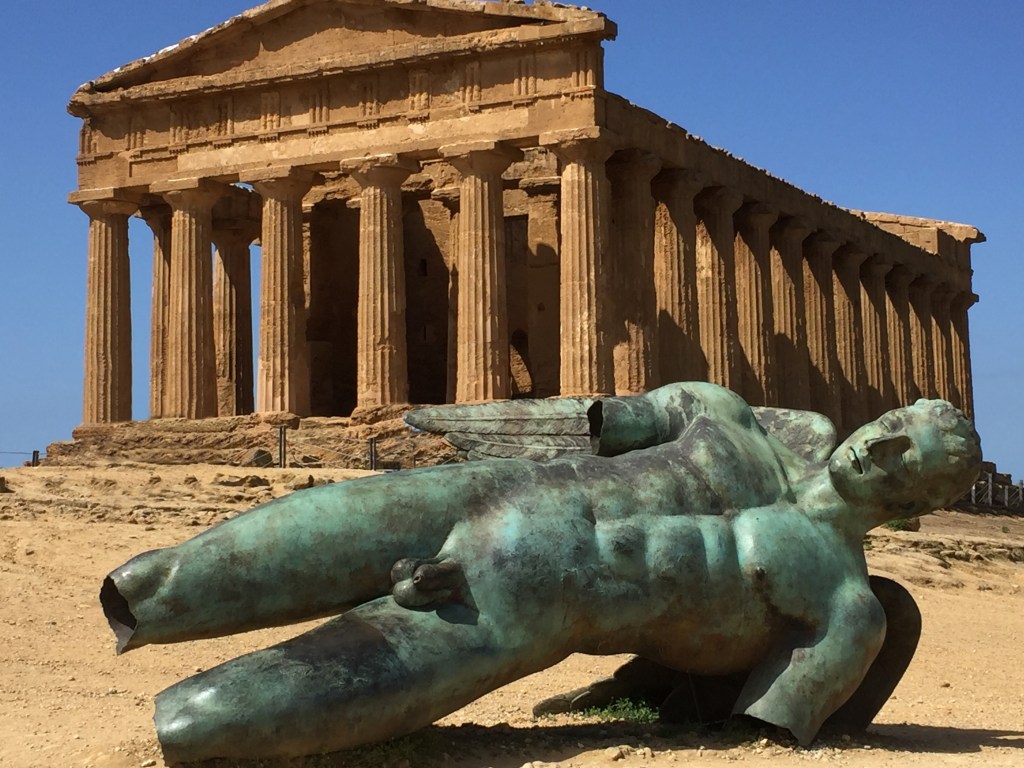
Valley of the Temples in Agrigento, Sicily, Italy.
Where Will You Travel in Italy With Target Travel?
Although Target Travel can tailor experiences and itineraries for free independent travelers (like couples and families) and small groups, it also has typical tours that it offers to popular destinations. Here’s a sampling of what Target offers from around Italy:
Italy’s Vibrant South tour covers Sicily and the region of Calabria in 13 days. You’ll fly into Palermo in Sicily and then make your way all around the country’s well-known island, including Marsala (famous for its wine), the Valley of the Temples, the luxe town of Taormina, and Calabrian coastal towns.
The Reign of Art and Gastronomy in Milan and Turin guides you in nine days to Milan’s famous Fashion District, the Turin Cathedral with the Chapel of the Holy Shroud, and the Truffle Fair, among other highlights.
The Experiential Women’s Journey traverses north Italy and Florence over 13 days. You’ll try wines in the Chianti region of Tuscany and take a bike tour from Siena to Montalcino, explore the highlights of Florence, learn all about cheese-making at the Museum of Parmigiano Reggiano (trying some delicious cheese), and see close up how Venetian masks are made in Venice!
Discovering Puglia takes a nine-day tour around south Italy’s beautiful Puglia region, starting in the Baroque city of Lecce (often called the Florence of the south), the fishing village of Gallipoli, Ostuni (famous for its white houses), Matera (one of the world’s oldest cities), and much more before flying out of Rome.
Umbria You Didn’t Expect offers a five-day tour around central Italy’s Umbria region, including the olive groves of Panicale, the medieval gates and buildings (and chocolate!) of Perugia, the 15th century paintings in Foligno, and a tour of one of Umbria’s finest farmhouses, specializing in cattle.
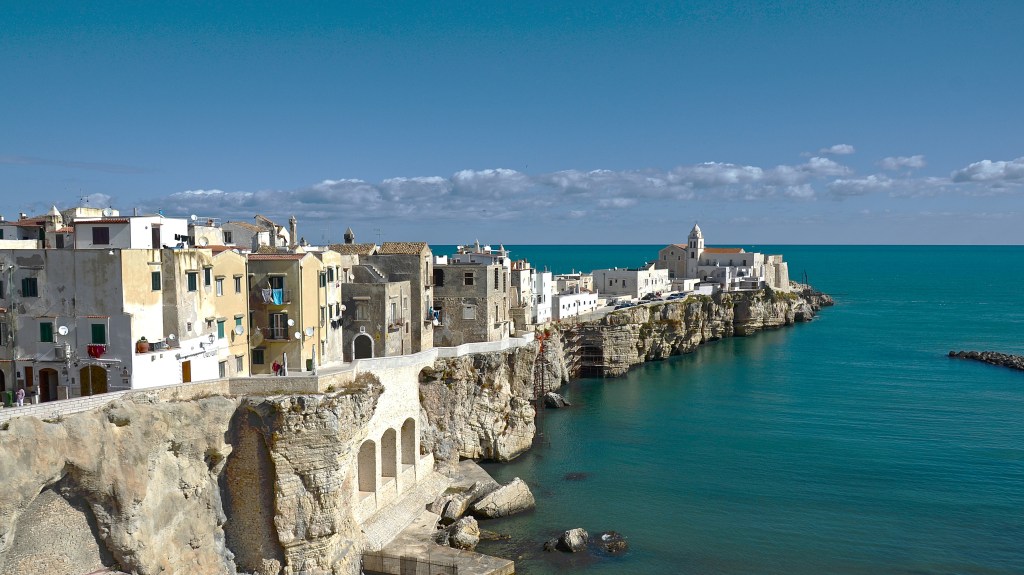
Vieste, Puglia, in south Italy. All pictures provided by Target Travel.
Of course, you can use these itineraries for inspiration and work with your travel agent to tailor your wonderful trips to Italy.
Target Travel works with travel agencies and independent travel advisors. Those in the travel industry who want to work with the company can find them online at Target.Travel.