Category: Lake Como

  • Here’s Why to Visit Italy in the Winter and Off-Season

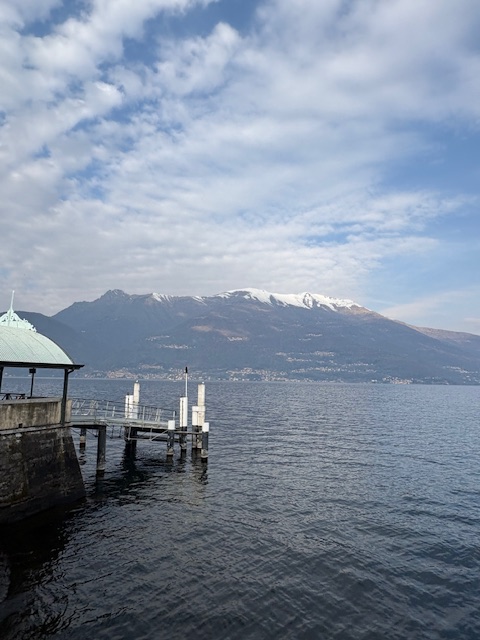
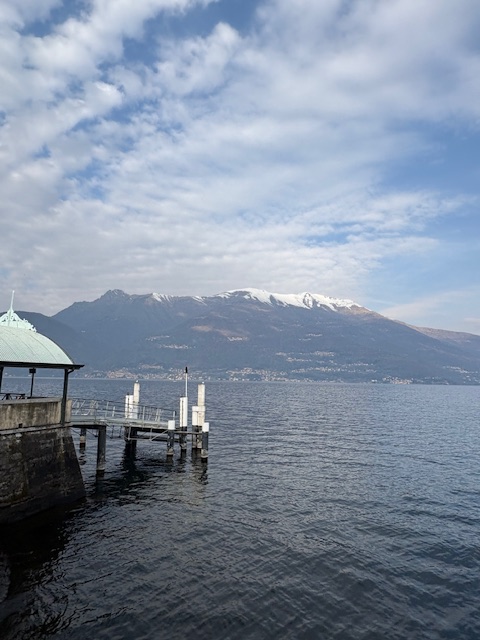
    Snowy mountains as seen from Lake Como, Italy, in early March. The winter can be a great time to visit Italy.

    Italy says “Buongiorno!” to about 70 million tourists this year (2025), with most arriving in the summer months. If you’ve been to Florence, Venice, or Rome that time of year, then you know what it feels like to have thousands of new friends who all want to visit the same places as you, right?

    If you’re an astute traveler, you may be asking yourself what it’s like to visit Italy other times of the year, such as in the winter or off-season. The good news: There are some real advantages if you’re willing to brave a little cold.

    Let’s take a look at why you should consider visiting Italy in the winter or off-season months. Then we’ll suggest a few choice destinations for those quieter months.
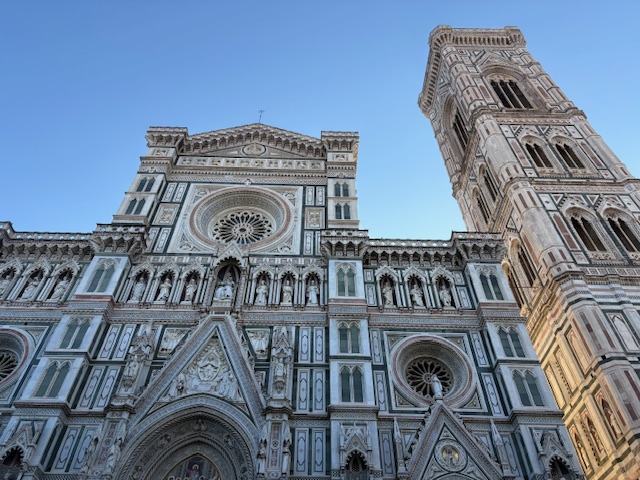
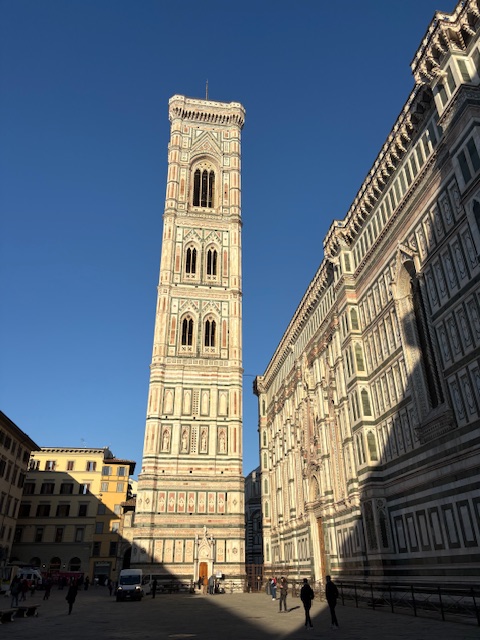
    Florence’s Duomo/Cathedral looks impressive any time of the year.

    Why to Visit Italy in the Winter or Off-Season

    You’ll have more destinations to yourself

    We’re not saying you’ll be the only tourist there, but most destinations will have fewer people. Enjoy the so-called la dolce vita with fewer visitors! It’ll make it a lot easier to book museums, hotels, etc.

    Enjoy cooler temps

    Let’s face it, Italy can get hot in the summer. Walking around Rome, Sicily, and even Milan in June, July, or August can get uncomfortable. Although many places have air conditioning, it’s not as chilly cold by default as in the U.S. The solution? Bring a coat, scarf, and gloves, and come in the winter!

    Plus, keep in mind that Italy has a diverse climate depending on where you go. For instance, Milan’s temps can average in the 40s (Fahrenheit) in the winter, compared with average temps in the 50s (Fahrenheit) in places like Puglia and Sicily.

    We visited Florence, Milan, and Lake Como in early March and got around most days with the requisite jacket and scarf. One day in Milan even reached near 70 and was sunny.
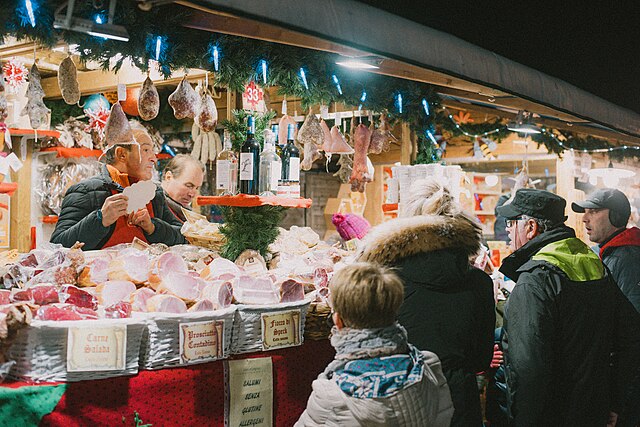
    A Christmas market in Trento, Italy. Picture from Wikimedia Commons.

    Christmas markets!

    Whether you’re familiar with European Christmas markets from previous in-person visits or just Hallmark movies, this shopping experience is a real pleasure. Find dozens of vendors with hand-crafted Christmas items that are perfect as unique gifts for others or souvenirs for yourself.

    Here are a few Italian areas famous for their Christmas markets, according to the tourism operator Discover Your Italy-FuorITinerario:

    –Trento in north Italy

    –the Dolomites, a chain of mountains in north Italy

    –Florence, which features a German-style market

    –Arezzo in Tuscany, which takes on the feel of a Tyrolean village

    –Rome, where you can find a festive market feel in Piazza Navona

    Artichokes are one vegetable that some Italian residents enjoy more in the winter.

    You can try different types of foods

    It’s no secret that Italy is known for terrific food. With eating in Italy a hyper-local experience, it’s probably also not a surprise that food changes seasonally there based on what’s available at certain times of the year.

    So, the special dishes you may have in the summer could have a completely different feel in the winter or other times off-season. One Rome resident we spoke to sung the praises of artichoke dishes in the winter. Root vegetables like potatoes as well as greens are commonly in season in the winter, and citrus season in Sicily (like blood oranges and regular oranges) goes through the winter and spring–just like here in our home state of Florida.

    The Dolomites in northern Italy welcome visitors in the winter and year-round.

    Pursue winter sports

    If you’re into skiing, snoeshowing, ice skating, or other winter sports, then visiting Italy in the winter is an obvious choice. You’ve got your pick of mountainous destinations (see below). The Winter Olympics held in 2026 in and around Milan and the town of Cortina will further shine a spotlight on Italy as a winter destination.
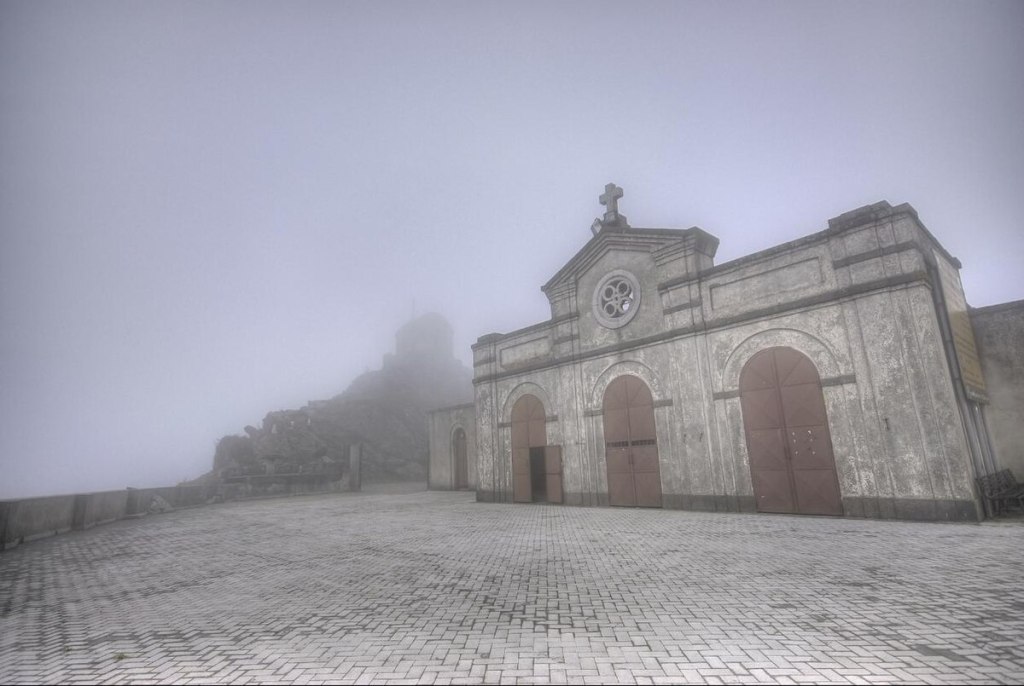
    You’ll need to find different angles for pictures in the winter and off-season in Italy. This picture, taken in Sicily, is from Wikimedia Commons.

    Get new perspectives for pics

    A view of Italy in the summer, with historic buildings drenched with sun and everything colorful? That’s low-hanging fruit. Yet how do make those same buildings look interesting on a rainy, cold day? If you’re into photography, visiting Italy in the winter can become a fun photographic challenge. If you’re creative enough without using filters on your phone, you can still have blockbuster pics from your trip.
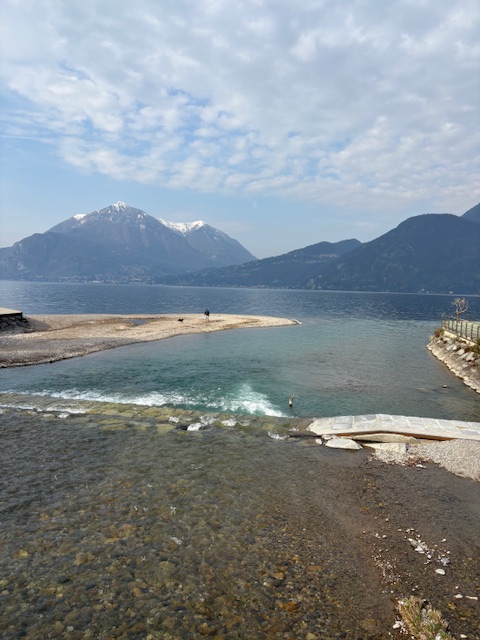
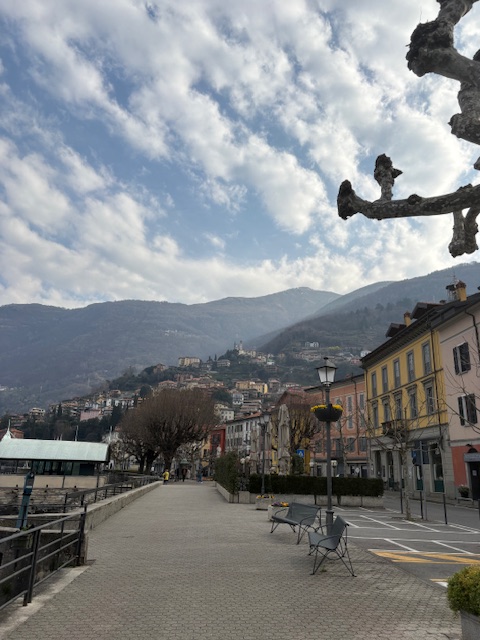
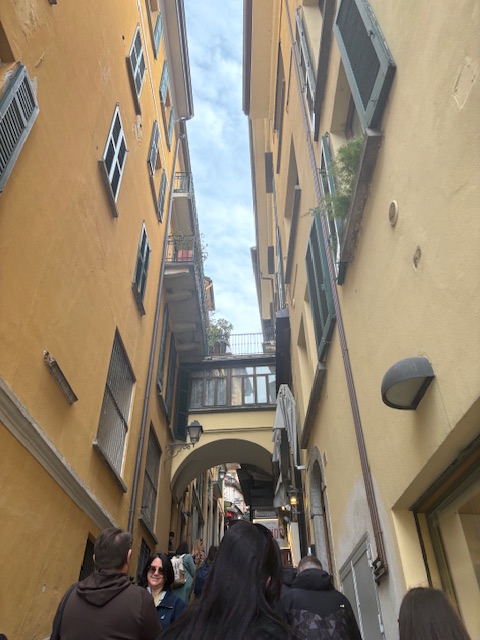
    Bellano, Italy, on Lake Como, in early March.

    6 Places to Visit in Italy in the Winter

    Here are six specific destinations to consider in Italy for the winter or off-season. Don’t be afraid to explore areas outside the typical big-city destinations.

    The Dolomites

    This mountain chain that spans several northern Italian regions can become your winter playground for sports or relaxing by a fire. With its close proximity to Austria, both Italian and German are commonly spoken here.

    Lake Como

    This famous destination in north Italy, just an hour by train from Milan, will lead you with charm through towns like Bellano and Bellagio. Hop on a train to traverse between towns. The ferry on the lake operates year-round although it’s on a reduced schedule in the winter. Find out more about day tripping around Lake Como with our articles here and here.

    Florence

    For the heart of Renaissance art and culture, you can’t go wrong with Florence. Find Christmas markets if you visit around the holidays, or find fewer crowds if you visit in the months thereafter. You’ve probably read enough about Florence elsewhere, so we’ll just share our article about eating in Florence, here.

    You also can find Christmas markets in Rome, Venice, and Naples. Naples is well-known for its living nativity scenes, or presepi.
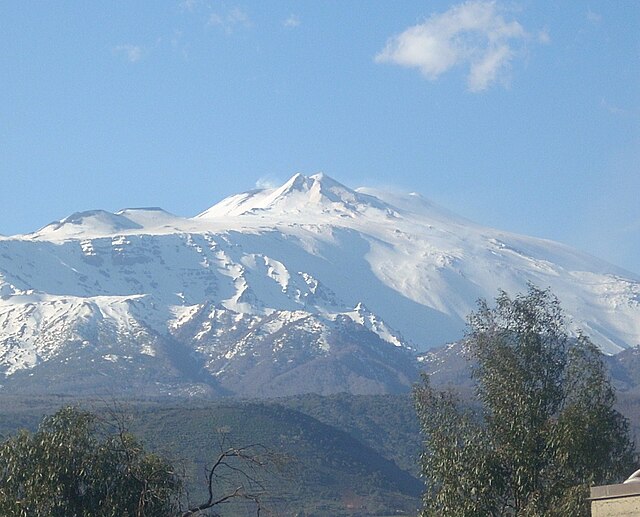
    Sicily’s Mount Etna in the winter.

    Sicily

    Sicilia in the winter? It’s definitely worth considering! Bigger cities like Palermo and Catania may have enough going on to keep you busy, but smaller resort towns like Cefalu may be pretty dead, according to the blog Adventurous Kate. Still, if you want some Sicilian culture and quieter views and don’t mind some potentially rainy weather, you still could have a great trip. Some people even go skiing on Mount Etna. Plus, you’ll find several winter festivals as well as Christmas markets.

    Cortona

    The town of Cortona in Tuscany (not to be confused with Cortina, the site of the Olympics) has medieval charm and wonderful artisan markets around Christmas, according to Discover Your Italy. You can even find a Floating Christmas Tree. “This area is perfect for travelers seeking a quieter, heartfelt experience rich in culture and tradition,” Discover Your Italy reports.
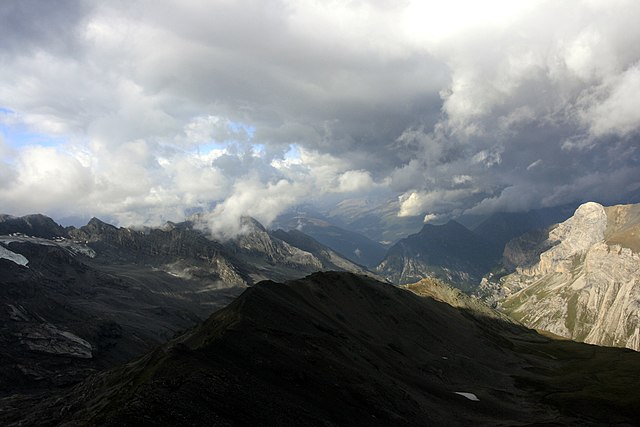
    Beautiful Bormio, Italy. Picture from Wikimedia Commons.

    Bormio and Vatellina

    Yet another recommendation from Discover Your Italy, find skiing and spas in the Alps-based towns of Bormio and Vatellina in Lombardy in north Italy. The towns combine famous ski slopes with Roman-era stone pools, hydrotherapy, salt rooms, and a UNESCO railway that takes you from Tirano into Switzerland.

    Buon viaggio!

  • Byways of Italy Brings You Closer to the Good Life in Italy

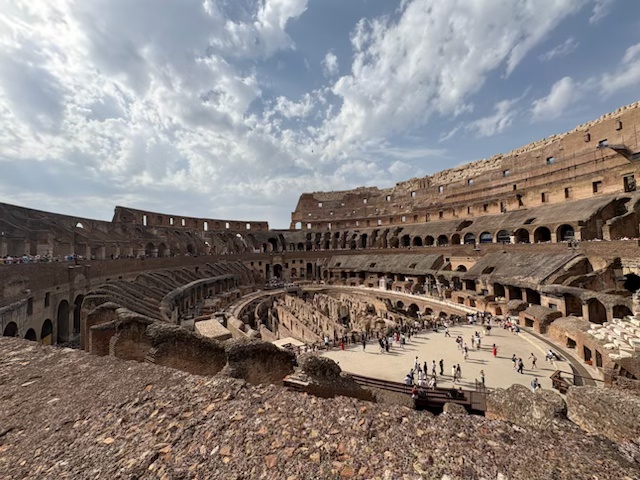
    Enjoy views of the Coliseum in Rome or any other sights you wish with a Byways of Italy tour. Picture shared by Jessica Caceres.

    If you’ve ever dreamed of getting to know Italy up close and personal but you’re not sure where to start, then the Rome-based company Byways of Italy is a great place to start.

    Byways of Italy is a tour operator and destination marketing company (DMC) that creates customized travel itineraries and provides experiences at Italy’s iconic destinations as well as lesser-known gems, says founder Manuela Mocci.

    The company began in 2021 in response to a growing demand from travelers looking to rediscover Italy after the COVID-19 pandemic. It focuses most frequently on cultural and food and wine experiences along with a commitment to conscious, responsible travel, Mocci says.

    Florence, Italy.

    What Makes Byways of Italy Different?

    Byways of Italy’s travel advisors work closely with clients to create a customized travel experience.

    “I would say that clients choose us because of the balanced mix in our proposals, combining the most well-known spots with off-the-radar day trips offered at the right pace, and the dedication we bring from the start,” Mocci says.

    The company’s typical client will be a couple or family that’s from Australia, the U.S., Canada, or Latin America. Although Byways doesn’t usually work with large groups, they make an exception for multigenerational families.

    “Our correspondence with clients sometimes lasts months or even over a year, allowing us to get to know their preferences, build trust, and carefully curate every detail of their journey,” Mocci explains.

    A view of Lake Como in northern Italy.

    Although travel options abound online, many people still want the value of working with local experts.

    “Younger travelers often want unique experiences that are hard to find online, and they don’t have much time to dedicate to planning,” Mocci says. “Older travelers can feel overwhelmed by the amount of information available on the web and are looking for someone they can trust to provide guidance and support when needed.”

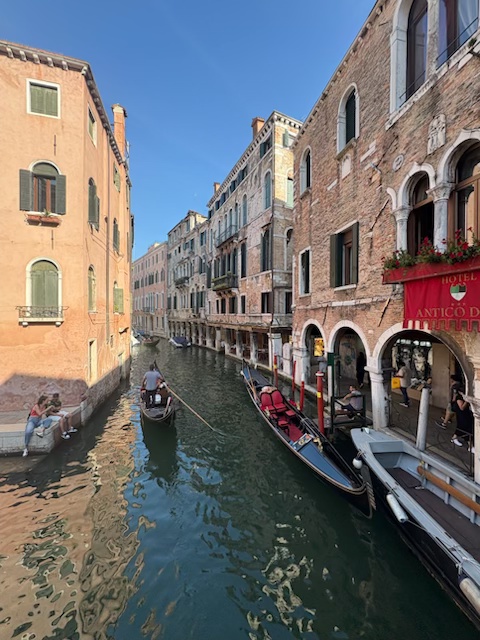
    A classic view of Venice, Italy. Picture shared by Jessica Caceres.

    Where Can You Go With Byways of Italy?

    Instead of asking, “Where can you go with Byways of Italy?”, perhaps the better question to ask is, “Where do you want to go?”

    Do you want to take a relaxing bike ride along Lake Garda? Live the luxe life on a yacht cruise on Sardinia’s coastline and enjoy an onboard fish lunch? Or, do you just want to meander in the countryside of the region of Marche and sample authentic food and wine while you stay at a local agriturismo (a farm-based home that usually offers activities like tours or cooking classes)?

    All of this and more are possible with the help of Byways of Italy. That’s because it specializes in customized tours.

    “We add special touches to make each trip one-of-a-kind, especially for occasions such as honeymoons and anniversaries,” Mocci says.

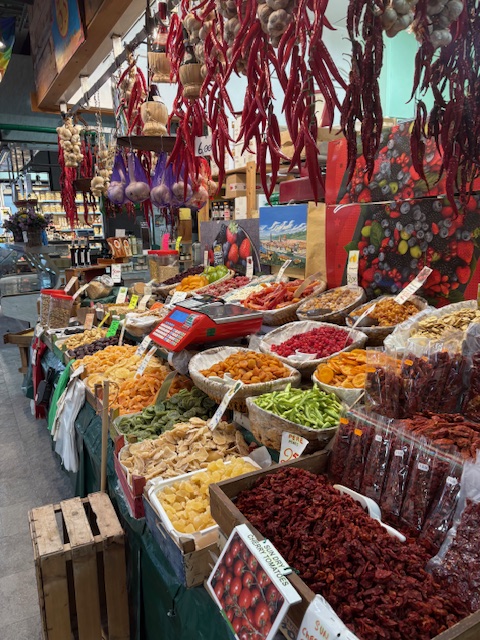
    Mercato Centrale in Florence, italy.

    However, Byways also offers classic tours to help you get to know Italy better. Here are a few popular highlights:

    The 10-Day Italy Tour features Milan, Venice, Florence, and Rome. Activities you can enjoy include a guided tour of Milan’s Duomo (cathedral), a private boat tour on famous Lake Como, a sightseeing tour of Venice with a Venetian apertif, a visit to a glass factory in Murano, a guided tour of Florence’s famous art museums, and a walking tour of Rome’s main monuments. Of course, no classic Italy tour is complete without wine tasting in the Tuscan countryside!

    A Journey of Self-Discovering in Tuscia. Get off the beaten path for this 7-night/8-day tour in Tuscia, located in the Lazio region near the border with Umbria and Tuscany. This remote area helps you enjoy less crowded ancient Italian towns and connect with yourself and your loved ones. Take a guided tour of Tuscania, relish in the thermal baths in the town of Viterbo, spend a day at a family-run winery, and visit the Palazzo Farnese to take in its awe-inspiring frescoes.

    Northwest Sardinia. For something truly different, book yourself a Byways of Italy tour to Northwest Sardinia. Sardinia is an island off of Italy’s western coast and is one of Italy’s 20 regions. It has famous beaches but still has many parts that are less discovered compared with Italy’s bigger cites. This 10-day/9-night tour includes a visit to Alghero, which has a strong Catalan influence; a panoramic road trip to the colorful and historica town of Bosa, featuring the area’s vineyards; and a visit to the small village of Castelsardo.

    Some of the other tours via Byways of Italy include:

    –Milan and the lakes of North Italy

    –Sorrento and the Amalfi Coast

    –3 Days in the Tuscany Countryside

    –Procida, a fishing island in the Gulf of Naples

    Rome’s Coliseum. Picture shared by Jessica Caceres.

    Tips for Planning Your Trip to Italy

    As you plan your trip to Italy, there are some general travel tips you should follow, Mocci recommends:

    Begin to plan your trip 6 to 8 months in advance so you have more options and better prices.

    Keep a running list of useful information and points of interest about your destination, such as attractions, museums, bars/restaurants, streets, etc.

    Buy those museum tickets ahead of time. “During high season, tickets for the most famous museums sell out quickly and need
    to be booked in advance. This will help you save some time,” Mocci says.

    Double check schedules in advance. Some museums and cultural sites may be closed when you least expect it, especially in small towns or outside of peak season.

    Don’t overplan. “Leave space for unexpected discoveries and improvisation, and make sure to leave time to rest, enjoy a coffee in a nice bar, or take a leisurely walk through the center,” Mocci says.

    Mocci shares some final wise thoughts: “Travel isn’t about ticking
    boxes, it’s about finding experiences that feel meaningful to you,” Mocci says. “What one traveler enjoys might not suit another, and that’s what makes every trip personal.”

    To contact Byways of Italy about your Italian trip, find them online at BywaysofItaly.com. You can also message them through the following contact form on their website.

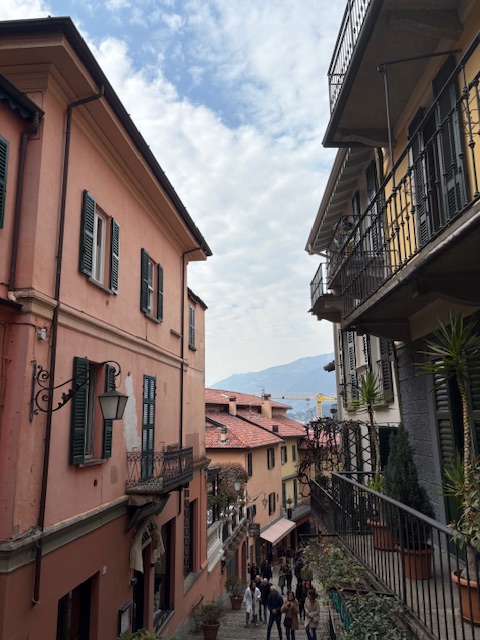
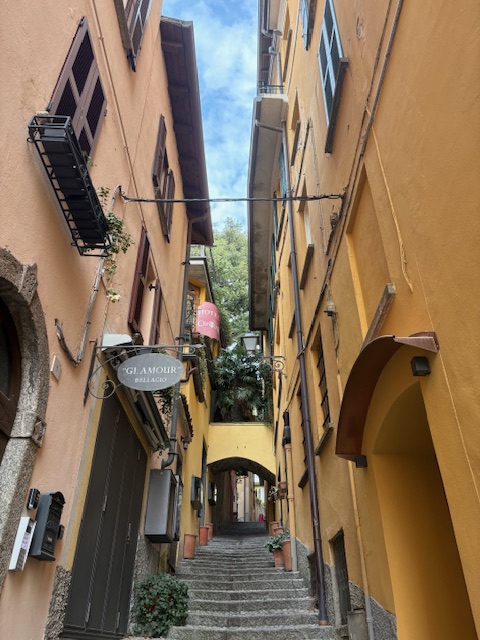
    Beautiful Bellagio in Lake Como, Italy.

  • Here’s Your Day Trip Plan From Milan to Lake Como, Italy

    Bellano, Italy, on Lake Como on a Sunday morning, before the crowds came in.

    If you’re visiting Milan, Italy, and want to take a day trip to Lake Como–home to George and Amal Clooney and gorgeous lake views–we’ve got good news for you. Many of the lake towns are just over an hour away by train.

    Surprisingly, the cosmopolitan feel of Milan quickly fades away via train as you reach mountain views. You even start imagining yourself just hopping over the border to Switzerland for some Toblerone chocolate. In fact, the train ride from Lake Como to Lugano, Switzerland, is just 40 minutes.

    Yet for the purposes of our journey, we’re going to stay in Italy and tell you how you can reach three towns surrounding Lake Como for an enjoyable day trip. This is a trip we at Italy Dreams did in early 2025. For context, I’m a female solo traveler but I find it easier to use “we” when writing.

    Cool buildings in Bellagio on Lake Como in Italy.

    Here’s our first set of tips to help you plan:

    Pick two to three cities around Como that you want to visit for the day. Our itinerary takes you through Bellano, Bellagio, and Varenna in that order, but there are many other towns you can visit, including the town of Como. Bellano seemed to be a good starting point. There are countless online articles online and guidebooks (we always find Rick Steves‘ information helpful) to help you choose destinations.

    Buy your train ticket online in advance on a site like Italia Rail. If you’re looking to visit more than one town in a day, it’s helpful to plan in advance what time you want to leave Milan and reach your first lake destination. You’ll also want to keep in mind the time it’ll take you to get from where you’re staying to the train station. There are a handful of different train stations in Milan that will take you to Lake Como, so make sure you show up at the right station.

    Pay attention to the train station signage. It will tell you what time the train is leaving and what platform to use. Note: Many Italian trains require you to validate your ticket while at the station, but we didn’t have to do this with our ticket for some reason. If in doubt, ask at the train station before you board the train.

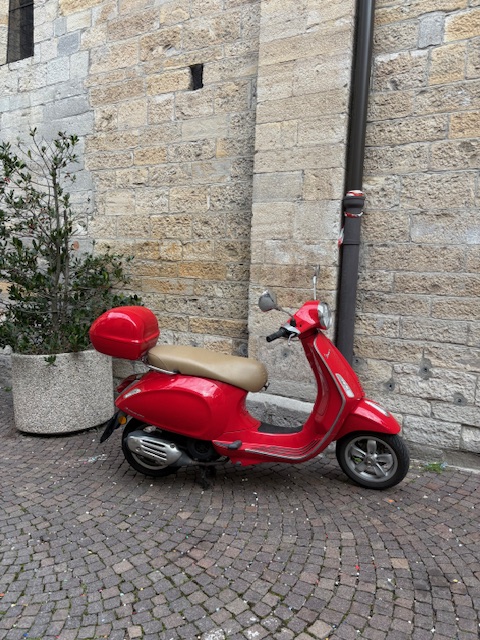
    A Vespa spotted in Bellano, Italy.

    Things to Do in Bello Bellano

    We arrived in bello Bellano (population: 3,400) on a quiet, cool Sunday morning around 9 a.m. Not quite sure where to go, we followed a few other people getting off the train who appeared to be walking toward the lake. There was a small farmers market with a mix of food products and crafts, and it was the perfect place to take those photos and videos that make you say, “Look, I’m at Lake Como!” You could see how busy the area might get in the summer.

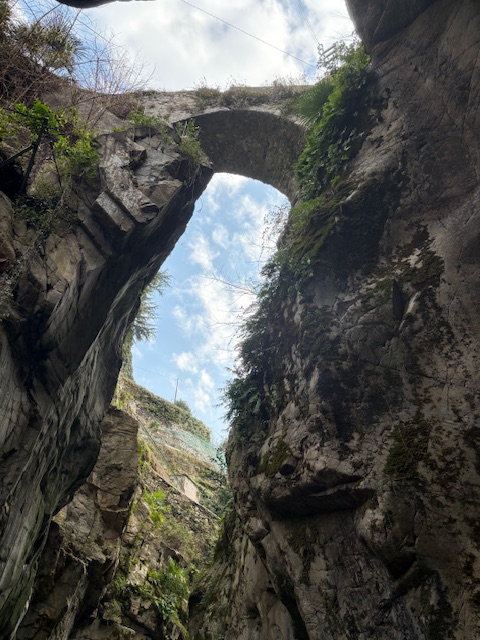
    This view of Orrido di Bellano reminded us of Natural Bridge State Park in Virginia.

    As it was still a little early for shops to be open, we headed toward a gorge called Orrido di Bellano. If you’ve ever been to Natural Bridge State Park in Virginia, it’ll remind you of that. It’s a natural gorge created a whopping 15 million years ago that’s led to the formation of gorges, ravines, and caves. It’s not something you’re expecting to see on your Lake Como visit but it’s definitely a beautiful sight.

    Some tips to visit Orrido di Bellano:

    Wear good walking shoes. It’s very hilly and you’ll find yourself going over some pedestrian bridges.

    Take lots of pictures but hold on to your camera or phone tightly. You don’t want it to fall in the gorge!

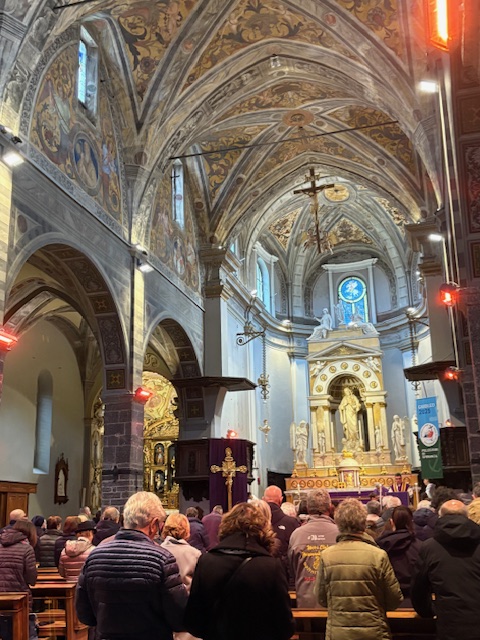
    Churchgoers on Sunday morning in Bellano, Italy.

    It took us 30 to 45 minutes to make our way through Orrido di Bellano, after which we stumbled upon a church with a Sunday service. We entered quietly (or so we hope!) to listen to some of the service in Italian. It was interesting to see people dressed in winter casual clothing, many still wearing their jackets. There were other tourists like us there toward the back.

    We tried our best in Bellagio to get pics without too many tourists.

    Taking the Ferry to Bello Bellagio

    If you look at Lake Como on a map (it looks like a thin person with long legs running), then you can imagine why taking a ferry is an easier way to get to some destinations compared with driving or even a train. With Bellagio across the water from Bellano, it made sense to hop on the popular ferry, which would be about a 30 minute ride.

    Depending on where you’re visiting around Lake Como, you may also find yourself hopping on the train again but just for a few minutes’ ride to your next destination. Again, do your research on a short train ride versus the ferry and which works best.

    If you can, buy your ferry ticket in advance because otherwise you may find yourself waiting in a potentially long line–and you might even miss the ferry that you want to take. For reasons we can’t recall, we couldn’t buy our ticket online that day and waited in a line.

    At this point in our trip–it was about 11 am–we could feel the crowds. Don’t get us wrong, it was still a beautiful view along the ferry ride, breathing in fresh air and taking pictures (again, hold on tight to your phone!). Yet as the crowd descended on historical, tiny Bellagio, it began to feel like too many people. Overtourism is a real thing in many European destinations, so try to visit at the beginning or end of the day when there are fewer people.

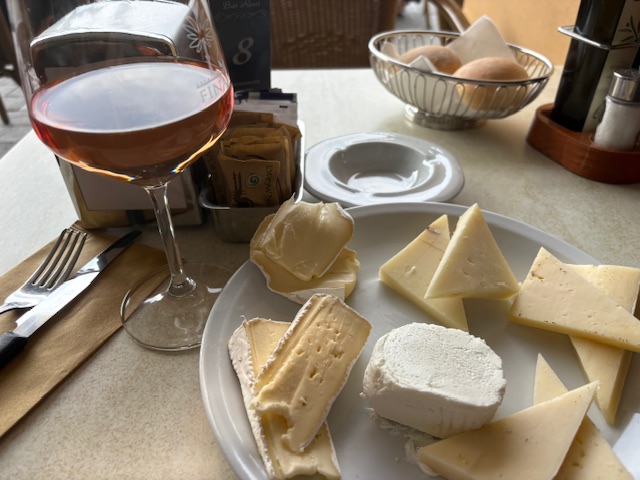
    Lunch in Bellagio was molto buono–and very cheesy!

    Even with the crowds, there was still the charm of Bellagio’s shops, architecture, and scenic vistas. It would have been amazing to spend the night there and see the town first thing in the morning (#futuregoals). We ate lunch at the waterfront restaurant Bar Pasticcheria Rossi–charcuterie board and a rose vino, perfect for Sunday afternoon. After that, it was a stroll by the water and waiting again for the ferry.

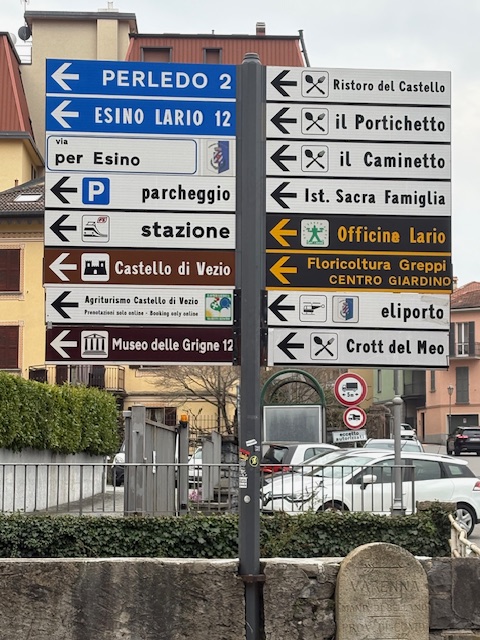
    Oh, the places you can go in Lake Como. Note that “Stazione” on the sign means train station.

    Vrooming to Varenna

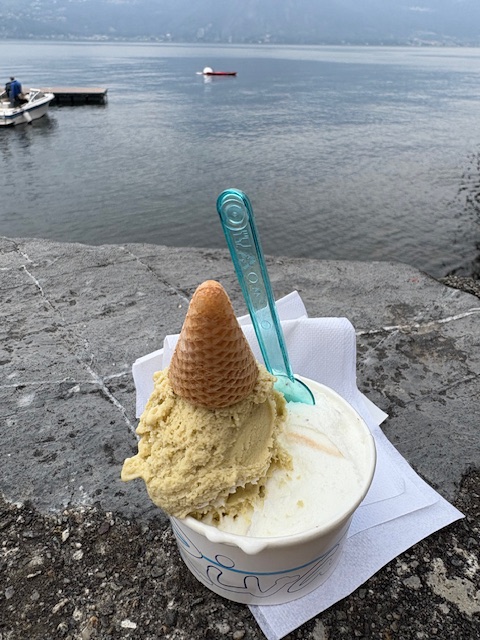
    The next destination was Varenna, a few minutes away and another popular small town. When you get off the ferry, you’ll likely make your way to the right and walk a few minutes to the congregation of shops right on the water. Again, we could feel the crowds and found the best way to cope was enjoying some gelato by the water from Riva Gelateria…because what would a visit to Lake Como be without gelato?!

    If we were in the mood to check out Every.Shop.in.Town, we could have broadened the time we spent in Bellagio and Varenna–but this was the day before we’d return to the U.S. and we had pretty much gotten the souvenirs we wanted. So, well-fed, we made our way to the train station around 4 p.m. to take a 5 p.m. train back to Milano’s Centrale Train Station.

    Don’t turn down the chance to have gelato when you’re in Italy–this one was enjoyed in Varenna.

    We weren’t the only ones with that idea. As it got closer to 5 p.m., there were many people waiting. The train itself was standing room only (and we were one of the standing ones, as other people had clearly boarded in other Como towns). There’s probably no good way to get around the packed train. If you’re going to pack a lot into your day trip, just know in advance that others will have the same idea. Still, getting to the Como area as early as you can is never a bad move.

    We definitely would do another day trip to Como if we weren’t able to spend the night there. We would likely venture to try other towns around the lake, like the actual town of Como. A trip back to Orrido di Bellano would always be welcome!