Category: Uncategorized

  • 6 Common Mistakes to Avoid When Planning Your Trip to Italy

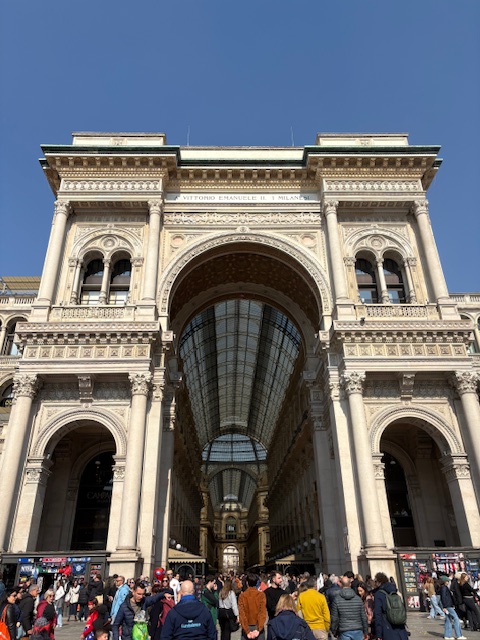
    Visitors outside of Milan’s Galleria Vittorio Emanuele II, a shopping area.

    There are certain mistakes that visitors often make when they plan a trip to Italy, especially as first-timers.

    If you want to hop on larger tour in Italy and take a, “If it’s Tuesday, it must be Venice,” approach, kudos to you. There’s nothing wrong with that, you’ll probably have a great time.

    If you’d rather arrange your visit around Italy independently—meaning, you and your travel companions decide where to go and what to do–this is the article you need.

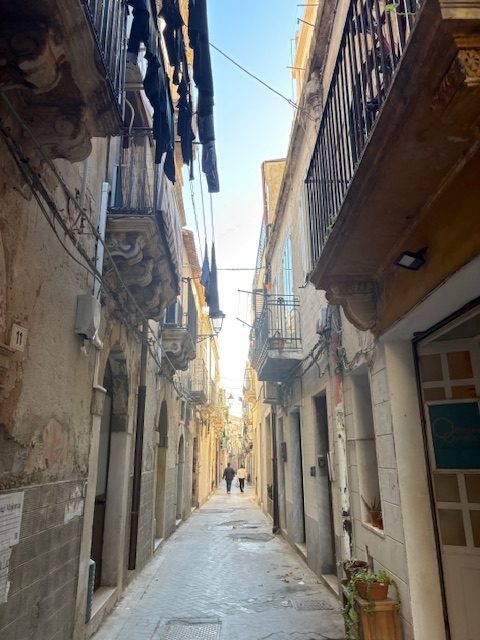
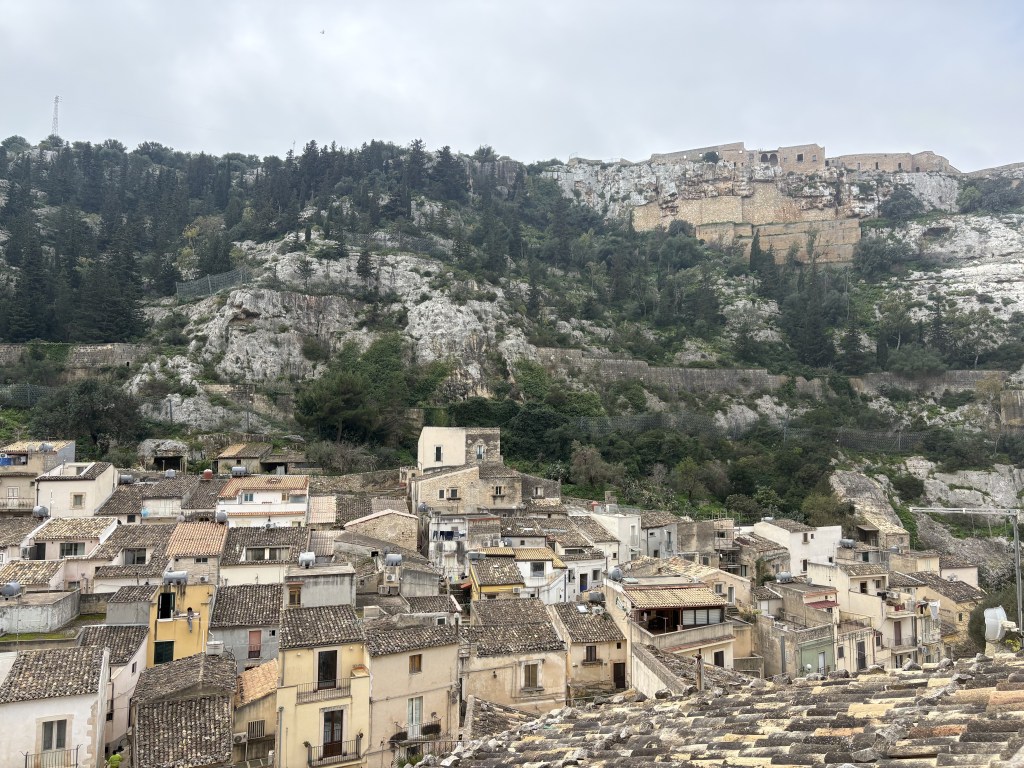
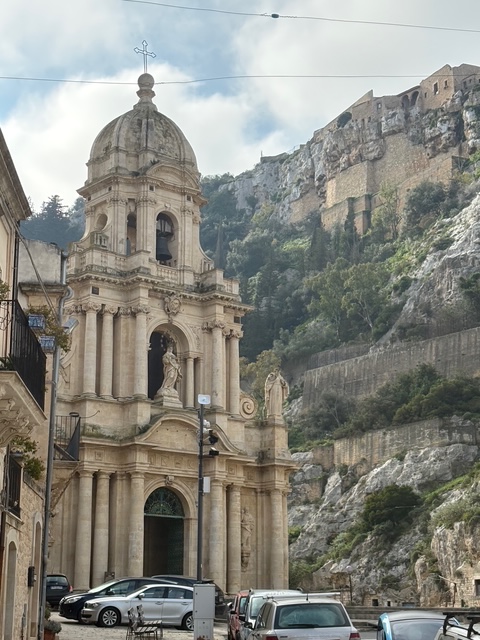
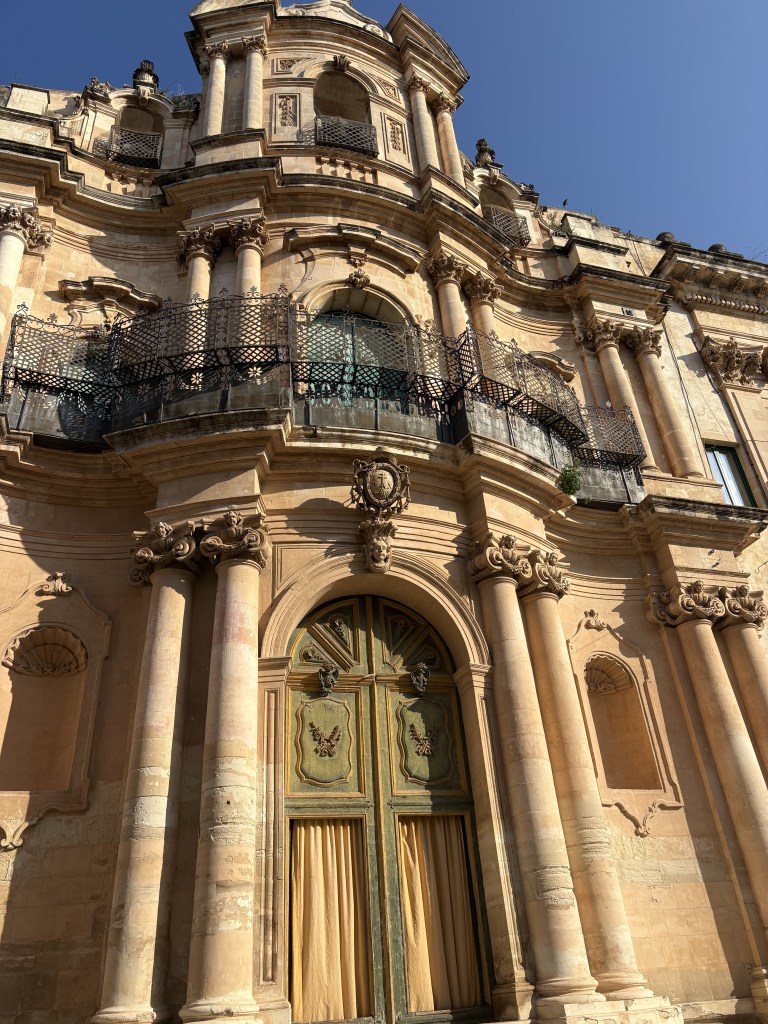
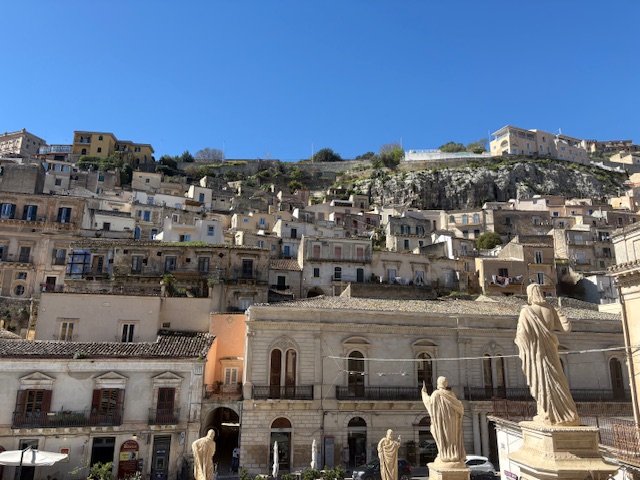
    Our visit to Scicli (sheek-LEE), Sicily, Italy, took us off the beaten path.

    Below, we share six travel mistakes to avoid when planning a trip to Italy.

    If you start to feel a little lost about your current or upcoming Italy plans as you read on, don’t worry. You can always contact us directly for Italy travel planning consultation. That’s a fancy way of saying that we’ll eye your itinerary and give feedback to help you plan a wonderful trip.

    See our link here for more details and to book an appointment.

    Andiamo/let’s go!

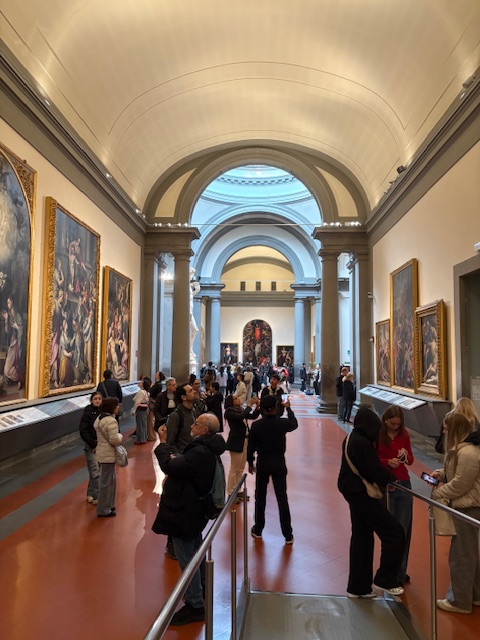
    Visitors at the Galleria dell’Accademia in Florence, Italy, home to Michelangelo’s David.

    1. DON’T plan to reach all of Italy’s major cities in just a week or two

    Cramming all of Italy’s highlights into a week or two is just an exercise in exhaustion. In fact, if you’re from the U.S. and you currently have an Italy itinerary, take a look at it right now. Next, cut it in half or by a third.

    Here’s why: You’ll get a much richer experience if you can slow down and spend more time in the places you plan to visit.

    Can you hit the high spots of Rome in 3 days followed by Florence for 2 to 3 days, etc., and continue that way until you check them all off your list?

    Sure—but you’ll spend a lot of time running around to get places, hopping on trains and feeling like your brain is generally spinning as you try to adjust to a new language/time/culture, etc.

    Let’s face it, we Americans like to keep things moving. Your Italy trip should be a time to slow down and really absorb another culture and pace of life.

    Try to choose the one—or if needed, two—destinations that are reasonably close and that you really want to see. Plan to spend your trip just in those two places. Less hassle, more time for relaxing and soaking in the Italian culture.

    Should you rent a car in Italy? See what our article says.

    2. DON’T assume you should rent a car while you’re there

    This is especially true if your trip focuses on the big cities and coastal areas. Michael Kovnick, founder and CEO of Culture Discovery Vacations, sums it up while describing a typical bucket-list trip to the Amalfi Coast, Rome, Florence, and Venice:

    “Aside from how nervous Americans get driving in Italy, people end up parking in all four places. On the Amalfi Coast, parking is extremely difficult, and it’s easier to get around by boat. In Rome, they are likely to drive through multiple ZTL areas (restricted traffic areas in historic city centers) and have a stack of fines waiting when they get home – plus, it’s easier to get around by metro,” Kovnick notes. “In Florence, they will end up parking outside of the city and walking everywhere. And Venice? Well, no cars in Venice, so they park outside and walk everywhere.”

    Instead, use high-speed rail to travel to or from these bigger cities. During our trip to Florence and Milan in 2025, we mostly used our own two feet and a few Ubers/taxis to get around. For Florence to Milan, we hopped on a train and then did the same thing for a day trip for Milan to Lake Como. The train was once again the best option to go from Milan to one of the city’s airports upon the return home.

    The train was easy to use and the only issue was a very crowded train returning from Lake Como, thanks to everyone else taking a day trip there.

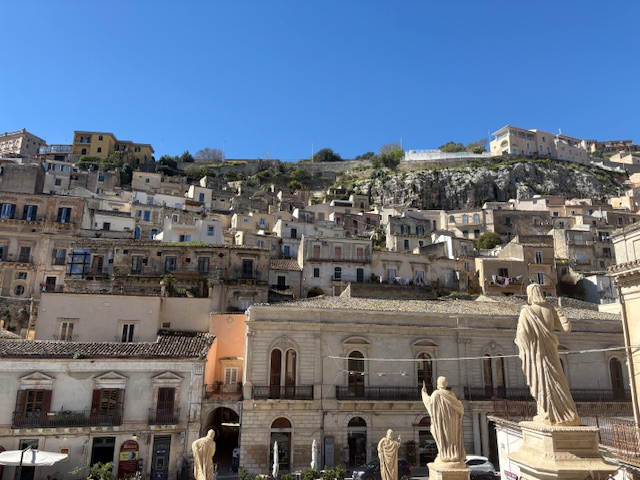
    Having a car did make it easy to get to cities like Modica in southeastern Sicily.

    That said, there may be some destinations where renting a car would work for you, if you feel up to driving. For our trip to southeastern Sicily this year (2026), we rented a car. It was the right decision as a local recommended it, and public transportation is not as common there.

    There were some nerve-wracking moments while driving on more narrow streets (the highway was fine and similar enough to the U.S.). Plus, there was that scrape on the side of a car we got along a narrow street. Oops! That’s where the insurance policy we purchased came in handy.

    You can read all about our driving experience and find more tips here.

    Bottom line: Generally speaking, you won’t need a car if you’re staying in or traveling to or from bigger cities. If you’ll be somewhere more rural, do a little research before deciding yes or no on car rental.

    If your budget allows, you could hire a driver or use tour guides who offer day tours and will take you around.

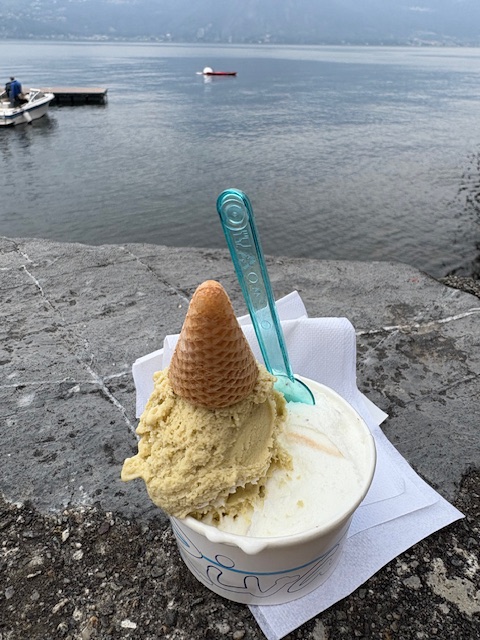
    Remember, gelato is calorie-free in Italy. You heard it here first on our blog!

    3. DON’T rely on blogs (or social media posts) as your only information source

    Logistics change quickly in Italy. The information you read on travel blogs may be outdated.

    “Major cities keep changing rules, ZTL zones change all the time, and scheduled events are rarely reliable for future dates,” Kovnick notes.

    One example of how quickly things change: Kovnick has to pick up passengers outside of Rome’s Fuicimino Airport regularly and finds that arrival instructions change all of the time.

    Of course, we want you to use blogs like ours to plan your Italy trip. 😊 Yet a blog may be best to give you a bigger picture sense of where you want to go and what you want to do.

    When it comes time to buy tickets and truly make your plans, check directly with business websites or social media for more information.

    Even then, expect a little deviation from what you might see or read. It’s Italy, after all!

    Although Sicily is a hot tourist destination, our visit to smaller towns like Scicli in March made us feel like we were in places lesser known to those outside of Italy.

    4. DON’T stick just to tourist spots

    This is a big no-no we’ve seen often, and we want more people to consider this trap when planning their Italy trip. Yes, Rome, the Cinque Terre, the Amalfi Coast, etc., are amazing…but if you’re traveling in-season, you’re going to share that amazing view with quite literally thousands of other people.

    In summer 2025, we wrote about a group of local cyclists going through parts of southern Italy that had practically zero tourists. Their spring 2026 trip through parts of northeast Italy was a similar experience with sparse crowds.

    A few quick examples of alternatives to consider:

    –If you like Tuscany’s rolling hills, consider Umbria.

    –If you like Tuscany and Umbria, look into Le Marche.

    –If you like nature and rural or even coastal views, visit Abruzzo (our Italian friends mention Abruzzo A LOT).

    –If you want to visit a beloved city that gets less attention, go to Torino/Turin in Piedmont.

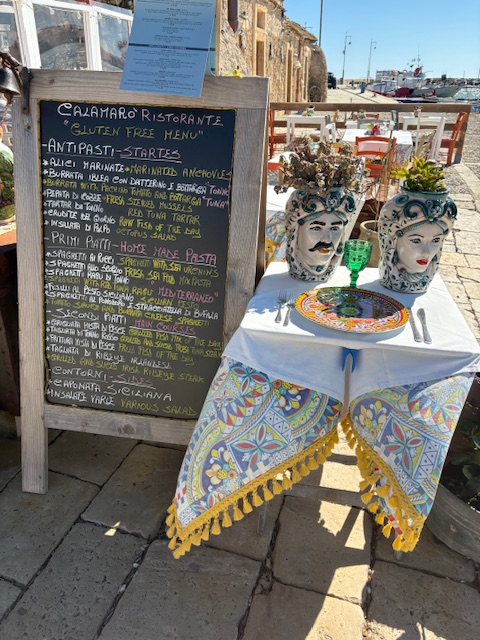
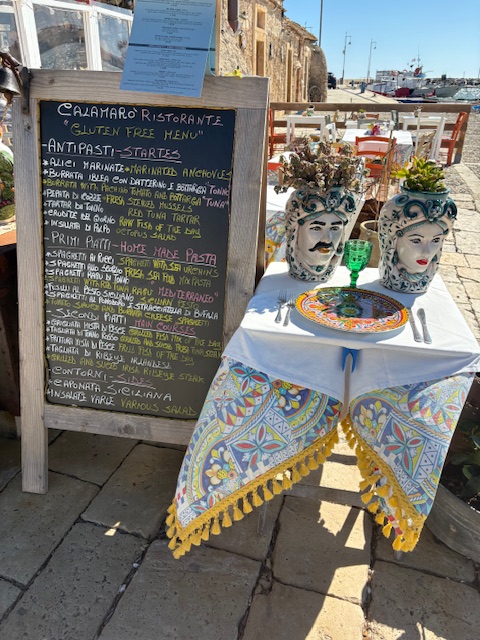
    Sicily’s Marzamemi was pretty even in February, with many of the stores closed for off-season. If beach time is less important to you, then an off-season trip to Italy could be a great option.

    5. DON’T stick only to tourist season

    If you can only make a trip to Italy when everyone else visits, then fine. You just have to put up with the crowds.

    If you have any scheduling flexibility, consider visiting when crowds die down and you have a better chance of truly connecting with your destinations.

    July and August have the hottest weather and biggest crowds, according to European travel guru Rick Steves. This is true of Italy but probably all of Europe.

    May and June or September and October are potentially good times to visit as the crowds are down (maybe just slightly in some places) and the weather will be more pleasant. Depending on where you go, it’ll probably still err on the side of being hot.

    Yet don’t neglect November to April! Would you like Christmas in Italy? Buon Natale e si! Those European Christmas markets you see on the Hallmark Channel sure would look cute in person.

    Christmas aside, if you’re willing to put up with some cooler weather and a few potential closures due to off-season, November to April can still be a terrific time to visit Italy.

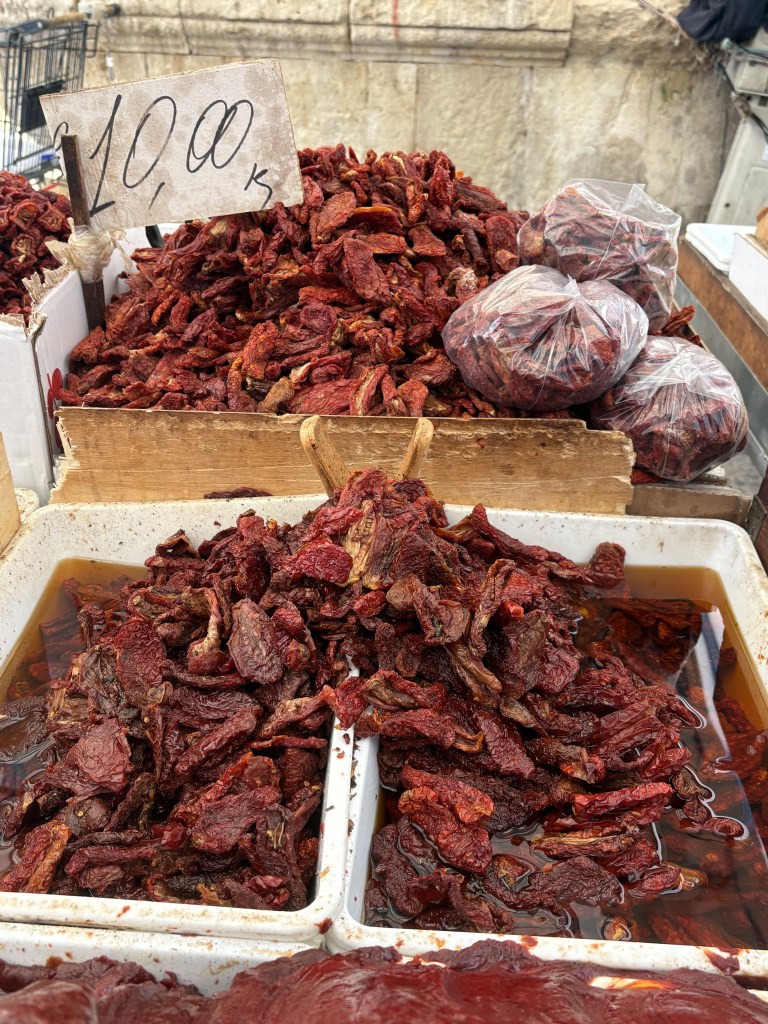
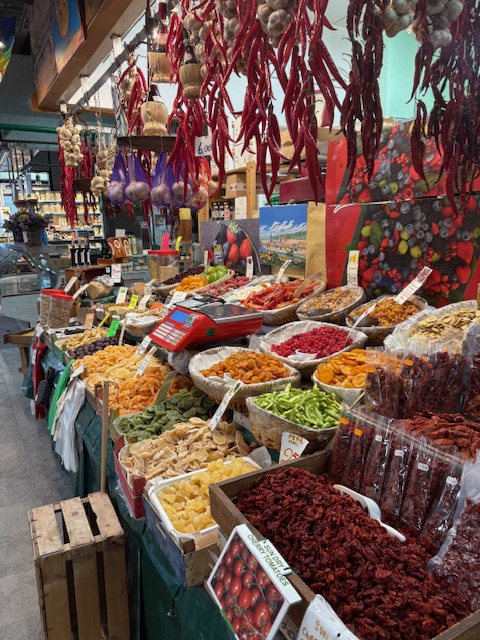
    An indoor market view in Florence, March 2025.

    Both our 2025 and 2026 trips to Italy were in February and March. The cold was a relief from the Florida heat, and traveling there was definitely cheaper compared to peak season.

    There were still a reasonable amount of tourists, especially during the March visit to Florence, Milan, and Lake Como. Yet it wasn’t the craziness you find in the summer.

    In southeastern Sicily (FYI, not Taormina but areas south of there), we had places (almost) to ourselves, with a smattering of tourists mostly not from the U.S. There were several businesses closed for off-season that would have been nice to see, but we 100% got an authentic feel for the region that may have been harder to achieve in full-swing tourist season.

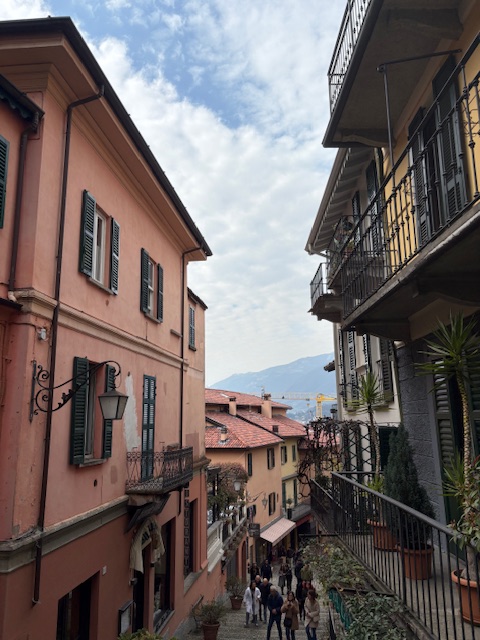
    Visitors in Bellagio, one of the towns on Lake Como.

    6. DON’T ignore basic research on local customs and the language

    Generally speaking, Italians are a welcoming bunch.

    Yet the culture is surprisingly more nuanced than we expected from movies and pop culture.

    Depending on where you go, the culture might be a lot more traditional than you expected (we’re looking at you, southeastern Sicily).

    In other places, you’ll almost think you’re in New York (hello, Milano).

    And to say all of the customs, cultures, and politeness in Italy are the same in all parts of the country would be like saying people from New York City have the same customs, cultures, and politeness as people from rural Alabama.

    Do a little research on local customs—both local Italian customs and customs specific to the region you’ll visit. Rick Steves is always our top choice for European knowledge, but there are etiquette experts who can help, like Nick Leighton, co-host of the podcast, “Were You Raised by Wolves?”

    “Knowing a little bit about the local customs can really help make things easier, especially for first-timers. It gives you more confidence and it also gets you significantly better customer service, meals, and experiences,” Leighton says.

    Two examples he shares: “If you walk into a coffee bar and say ‘Ciao,’ that’s way too informal for many Italians. It’s truly better to lead with a ‘Buongiorno’ with strangers instead. The greeting you use can really set the whole tone for the entire encounter, for better or for worse,” Leighton says.

    You don’t need to do a crash course in Italian, but learning some basic greetings and words can definitely make a difference. We’ve enjoyed online videos from Italy Made Easy and Italian Teacher Valentina to help.

    Another example from Leighton relates to planning meals. The message: Plan to eat later than you might eat at home.

    “I love a good 9 p.m. reservation, which gives me plenty of time to enjoy aperitivo before dinner. If you book a 6 p.m. reservation, chances are it’s catering to tourists and it also means you’re missing out on aperitivo,” Leighton says.

    And who wants to miss out on an aperitivo?!

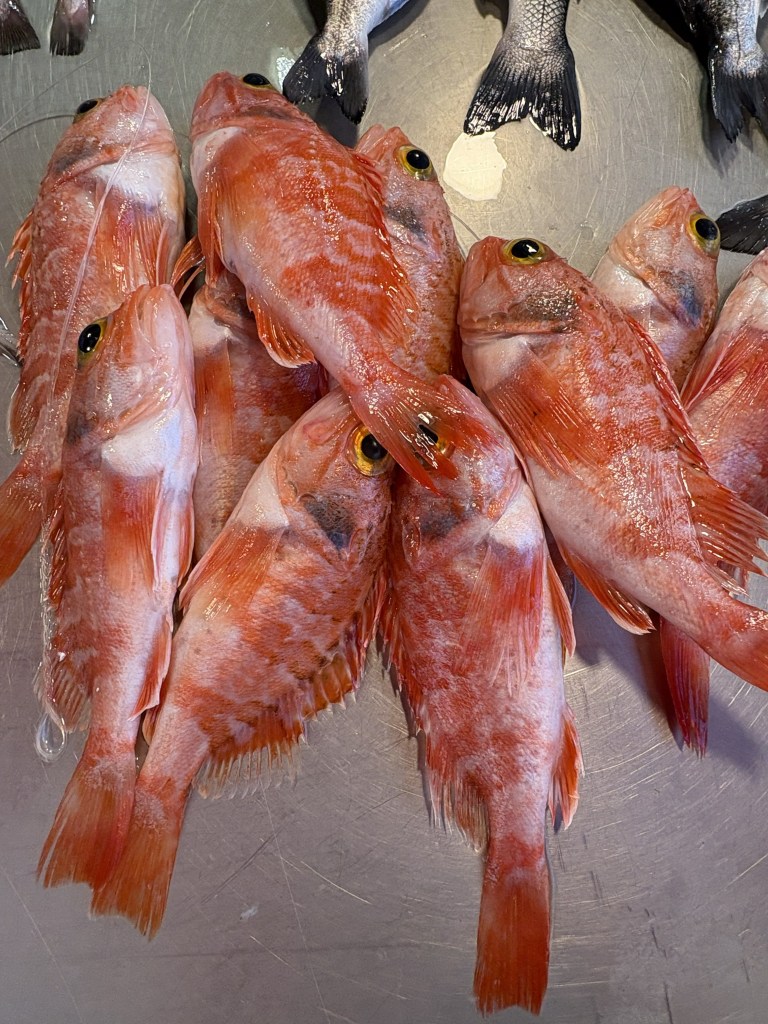
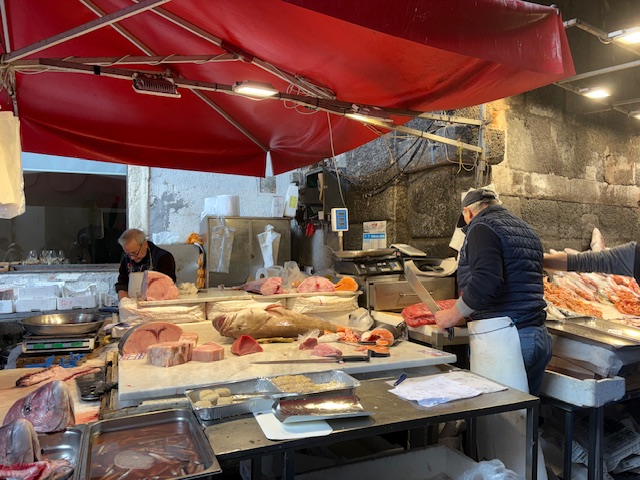
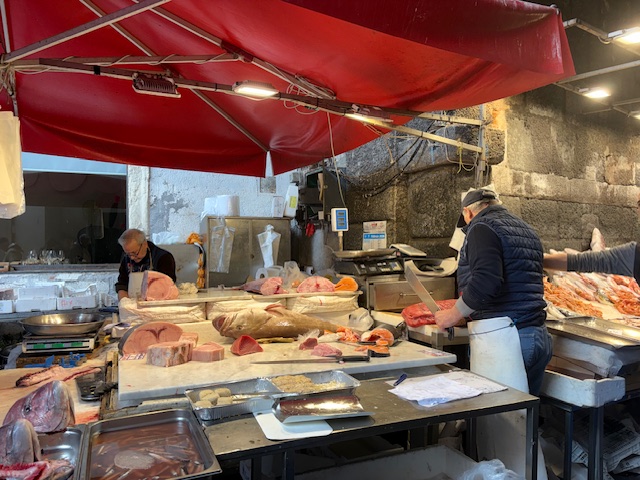
    Fish market in Catania, Sicily.

    DO plan your trip well

    We hope our suggestions help you to be more thoughtful about your Italy trip.

    If you have an upcoming trip that’s not yet locked in and you’d like us to review your itinerary, this link tells you a little more about our new Italy travel planning consulting work, available at an affordable rate.

    If you’re considering a trip to Italia and want to speak with us before you start to make reservations, we also can help you with that.

    We’ll share more travel mistakes and travel wins in future articles.

    Buon viaggio!
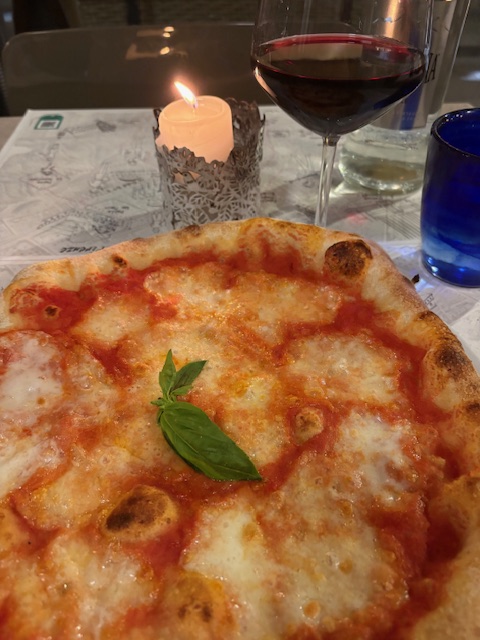
    Yes, you can still come to Italy for the pizza. Yum…..

  • 7 Things to Do When You Visit Scicli, Sicily

    Scicli, Sicily, Italy.

    Are you thinking about a visit to Scicli, Sicily–or heck, you just want to learn how to pronounce the name correctly? (It’s SHEEK-lee, by the way.)

    Let our article help you.

    Scicli is a charming small town in the Val di Noto in southeastern Sicily, Italy. It’s an ideal day trip if you want a real slice of Sicilian life with some tourism mixed in.

    We wrote an earlier article about Scicli’s A Rutta Ri Ron Carmelu (The Cave Home of Don Carmelo), and we’ll briefly recap A Rutta in this article, too. Yet there’s even more to see and do in Scicli.

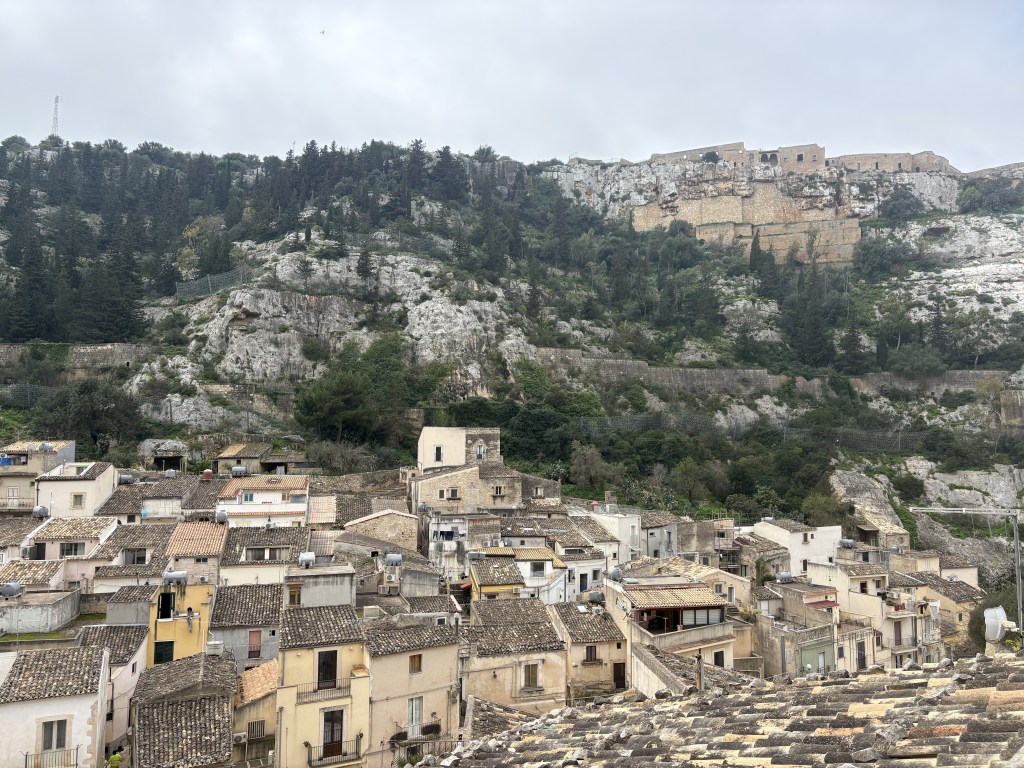
    A view from the hills in Scicli, Sicily.

    Before we dive in further, here are a few fun facts about Scicli:

    –The population of Scicli is about 27,000 people.

    –Scicli is a 40- to 45-minute drive from the popular destination of Noto, Sicily.

    –The town was hit badly by a 1693 earthquake, which also destroyed much of the Val di Noto (Noto Valley). The upside, however, is that the whole area rebuilt itself over the following century in the Sicilian Baroque style that makes Val di Noto so famous today.

    –It’s one of eight towns in the Val di Noto that’s been named a UNESCO World Heritage Site.

    –Amazingly, the town dates back to the year 300 BCE.

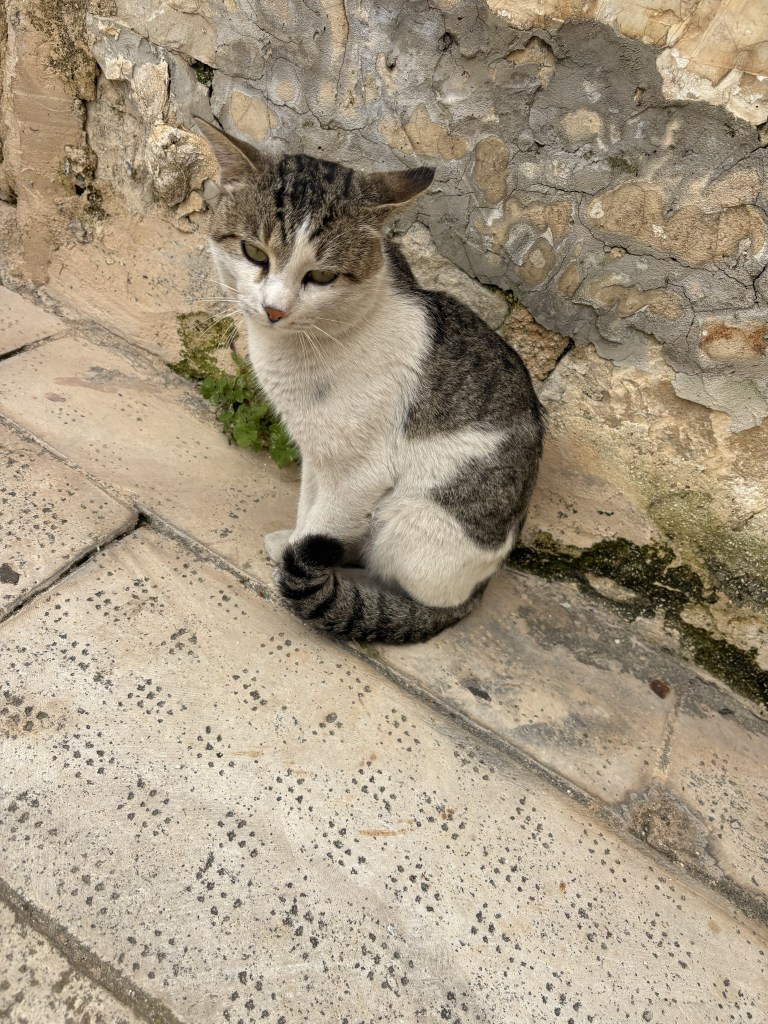
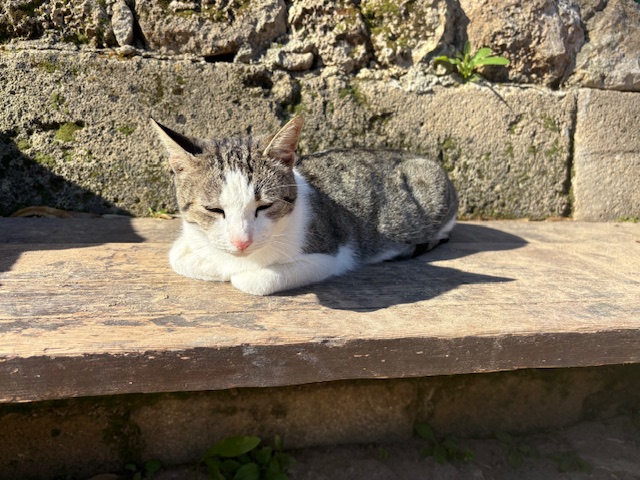
    Un gatto dolce/a sweet cat spotted in Scicli.

    I visited Scicli in early 2026 as part of travels around southeastern Sicily and found it be one of my favorite towns during the trip. It has the same beautiful Baroque architecture as Noto, which is more famous, but the town had a different feel.

    Its rockiness reminded me of the state of West Virginia in the U.S.

    Plus, people seemed….friendlier. I was happy that the people I met in Scicli were a chatty crowd, even with my just-emerging Italian language skills.

    Note that I was traveling solo but sometimes use “we” in my writing just to avoid overusing the pronoun “I”.

    Let’s go to Scicli!

    7 Things to Enjoy in Scicli, Sicily, Italy

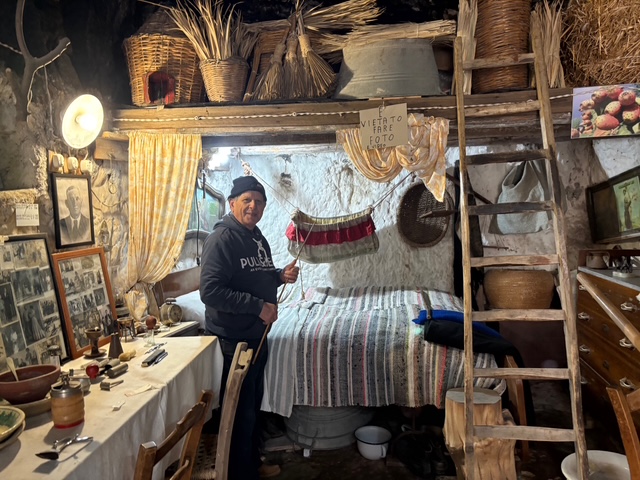
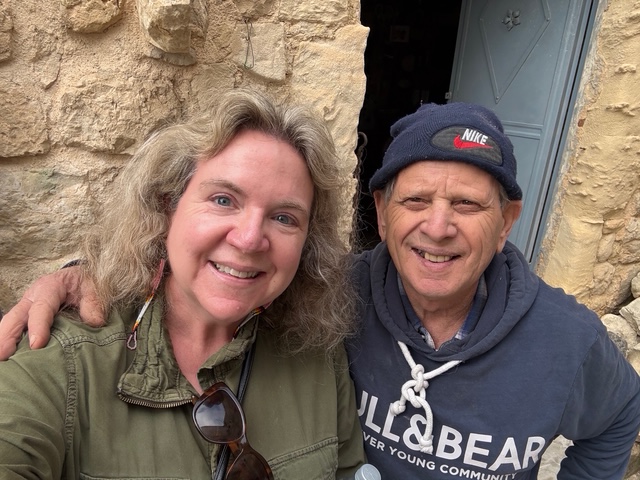
    Mr. Carmelo shows the cave home where his grandparents lived with six children.

    A Rutta Ri Ron Carmelu

    We covered A Rutta Ri Ron Carmelu in a previous article but to recap this unique attraction: Signore (Mr.) Carmelo gives you a tour of the cave home where his grandparents raised his father and five other siblings. The cave home is set up with all of the “comforts” that came with their crowded cave life.

    After the cave tour, Mr. Carmelo proceeds to show you his many, many creations, from soaps to ceramics to other souvenirs you may want to buy. During our visit, he demonstrates his spinning-top skills with a child-like enthusiasm.

    All of this is done in Italian as Mr. Carmelo doesn’t speak English. Yet somehow, you still understand most of what he shares.

    I’d rank A Rutta Ri Ron Carmelu toward the top of your list for a Scicli visit. Just double check hours in advance to make sure Mr. Carmelo will be available, and be ready for some uphill walking toward the Chiafura cave district. If you have a car, you should be able to drive most of the way there.

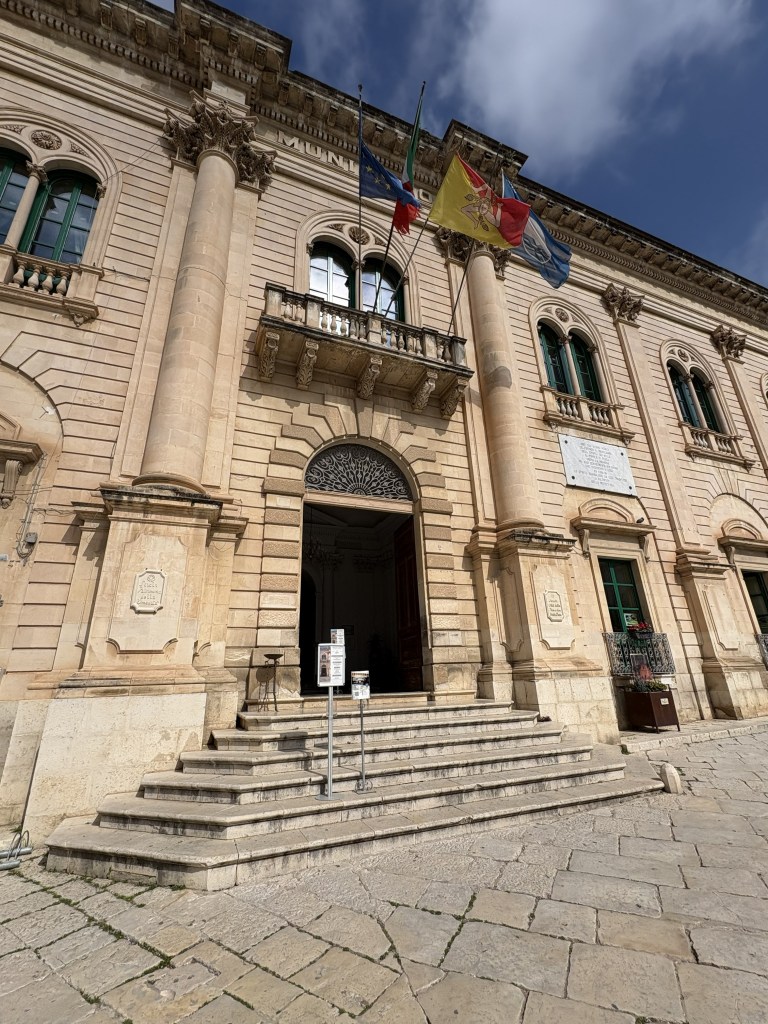
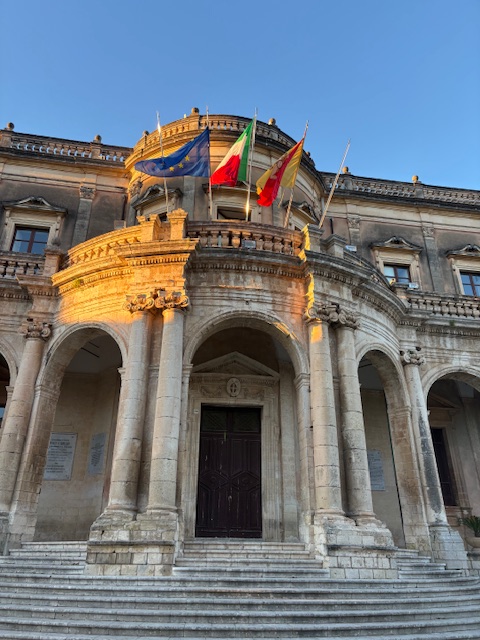
    The Scicli Town Hall entrance seen often on the show “Inspector Montalbano,” which was set in the fictional Sicilian town of Vigata.

    See Places from the Famous Italian Show “Inspector Montalbano”

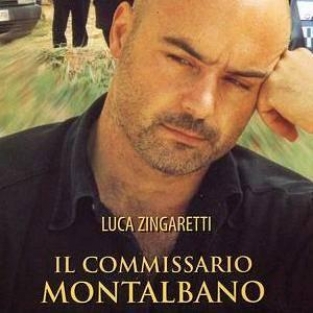
    As an American newly learning Italian language and culture, I’m a recent fan of “Il Commissario Montalbano”/”Inspector Montalbano”, a detective show set in Sicily that became a hit all around Italy.

    I subscribe to MHZ TV through Amazon Prime to watch the series and the subsequent show, “Il Giovane Montalbano”/”Young Montalbano.”

    “Inspector Montalbano” reached as many as 11.3 million viewers for an episode in 2017 and 1 billion viewers cumulatively during all of its 37 episodes, which spanned from 1999 to 2021. Each show is like a film, lasting almost two hours. The same is true of “Il Giovane Montalbano.”

    Actor Luca Zingaretti plays the grumpy, seafood- and sea-loving inspector in the main show, and Michele Riondino plays the younger version of the inspector.

    The show is based on a series of books by the late Sicilian author Andrea Camilleri that he began to publish at age 70. The books were in Italian but sprinkled with the Sicilian dialect, and the same is true of the show.

    With my interest in Italian language and Sicilian scenery (because clearly I have a past life connection to Sicily, LOL), the two Montalbano shows have become fun weekend watching.

    The shows are set in a fictional Sicilian town called Vigata, located in a fictional province called Montelusa.

    Here’s the Scicli connection: Scenes from “Inspector Montalbano” were filmed around southeastern Sicily, and the fictional police station is Scicli’s actual town hall. It’s seen a lot in the show.

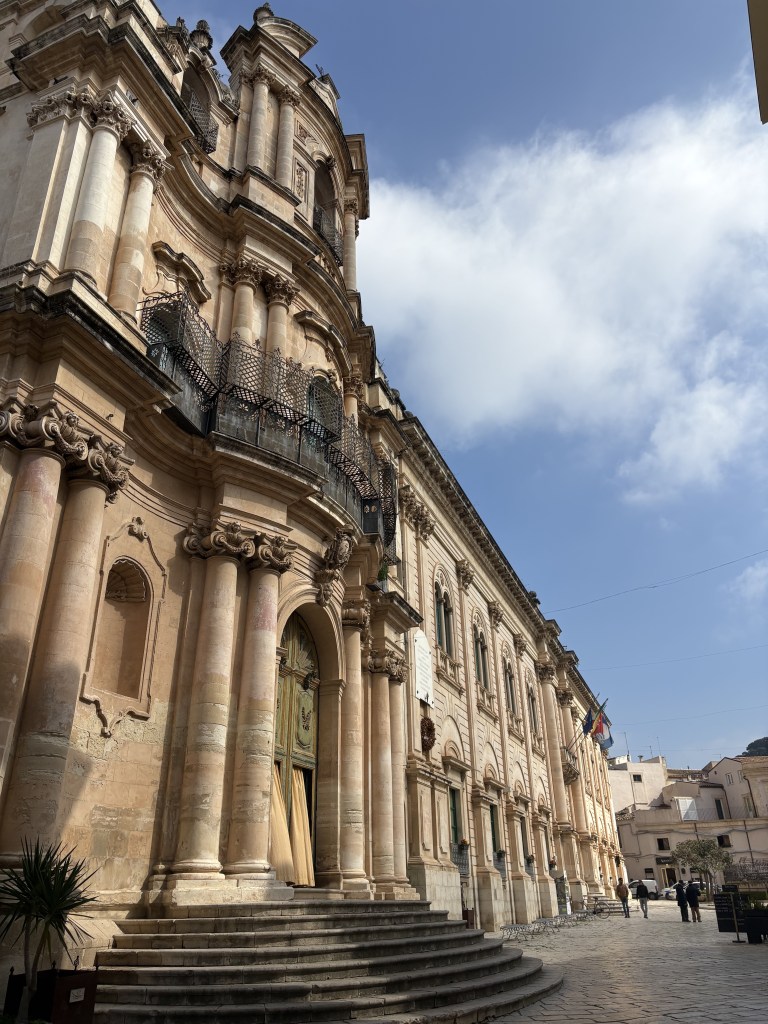
    Another view of Scicli’s town hall.

    I saw the exterior of the town hall when I visited Scicli and snapped a few pics. Sadly, I hadn’t yet watched the show so I didn’t have the foresight to go inside and see the fictional set-up the town hall still has in honor of Montalbano. Next time!

    Even if you don’t know the show, it’s worth a look if you want to appreciate something from Italian/Sicilian pop culture.

    If you are indeed a Montalbano fan, there are day tours you can take to see various sites from the filming of the show.

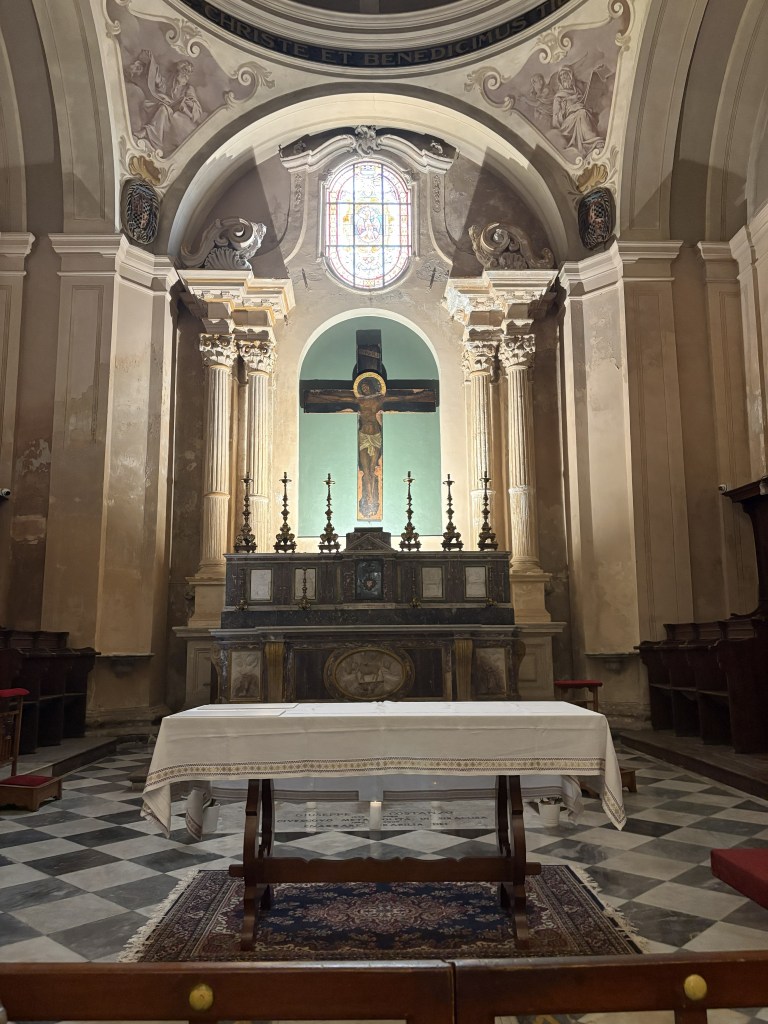
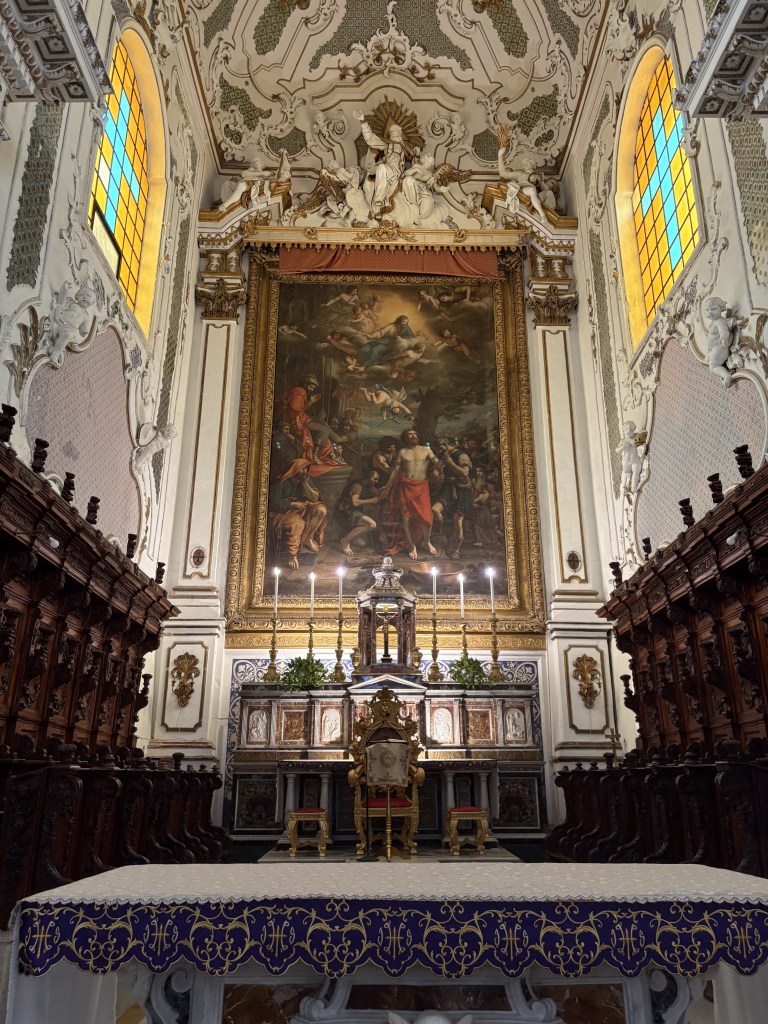
    Inside the beautiful Church of San Bartolomeo in Scicli.

    Enjoy Baroque Architecture and Churches

    As stated earlier, Scicli is one of eight towns in the Val di Noto famous for its beautiful Baroque architecture.

    Some of the Baroque highlights in Scicli include:

    Church of San Bartolomeo (not far from La Rutta Ri Ron Carmelu), a quiet wonder during our short visit

    –Palazzo Beneventano

    –Church of San Matteo

    –Church of Santa Maria La Nova

    You’ll find other examples, including some sites that occasionally appear on the Montalbano shows.

    The more well-known Baroque examples often have signs beside them in Italian and English to help you better understand their history and significance.

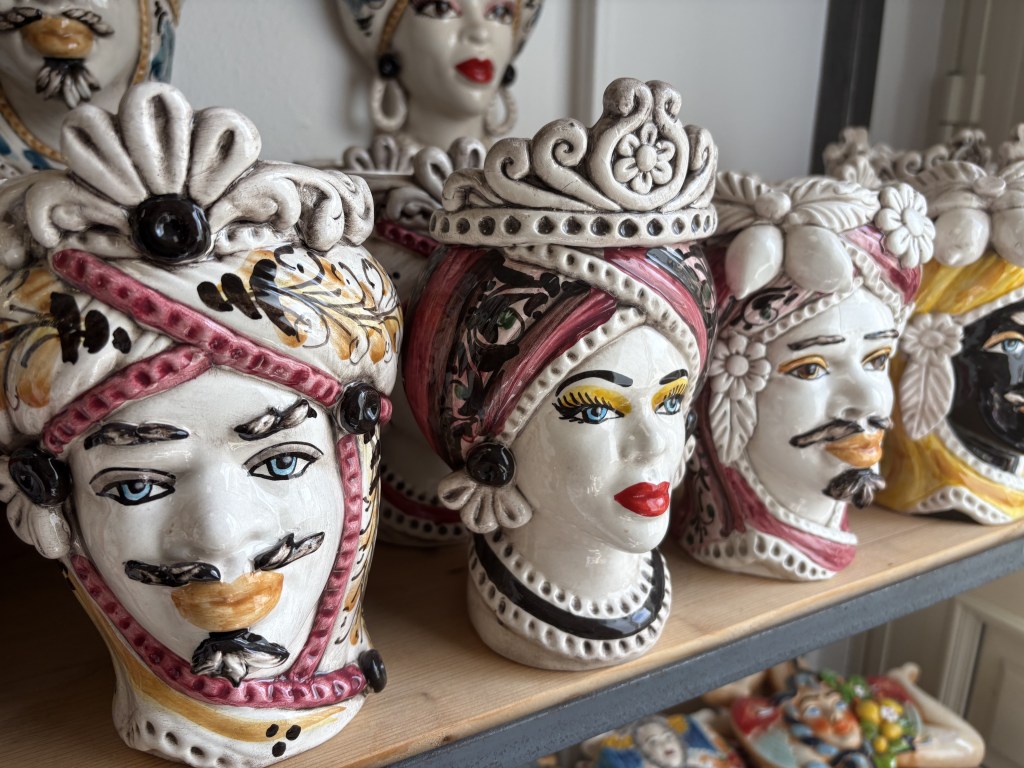
    The famous Teste di Moro (Moor’s Heads) statues, seen here in Scicli.

    Eat and Shop, Shop and Eat

    If you’re anywhere in Italy, you gotta eat, right?

    If you’re in Sicily, famous for So.Much.Good.Food., this rule applies double.

    Why not enjoy some of that famous food in Scicli?

    We only grabbed breakfast while there, so we don’t have any Italy Dreams-approved restaurants to recommend.

    However, folks online praise places like Baqqala, My Name Is Tannino and Prosit Sicilian Bistrot. If you’re looking for dessert, remember that gelato is calorie-free while you’re in Italy. 🙂

    As for shopping, we made our way to several souvenir shops in Scicli, some of the higher-end variety with beautiful handmade items and others a little more generic. We had already purchased a small black vase at A Rutta Ri Ron Carmelu, so we didn’t make another purchase beyond some olive oil.

    Yet we appreciated that shop workers were friendlier…not that they were unfriendly in other towns we visited. Perhaps in Scicli, they appreciated the business as it was still off-season.

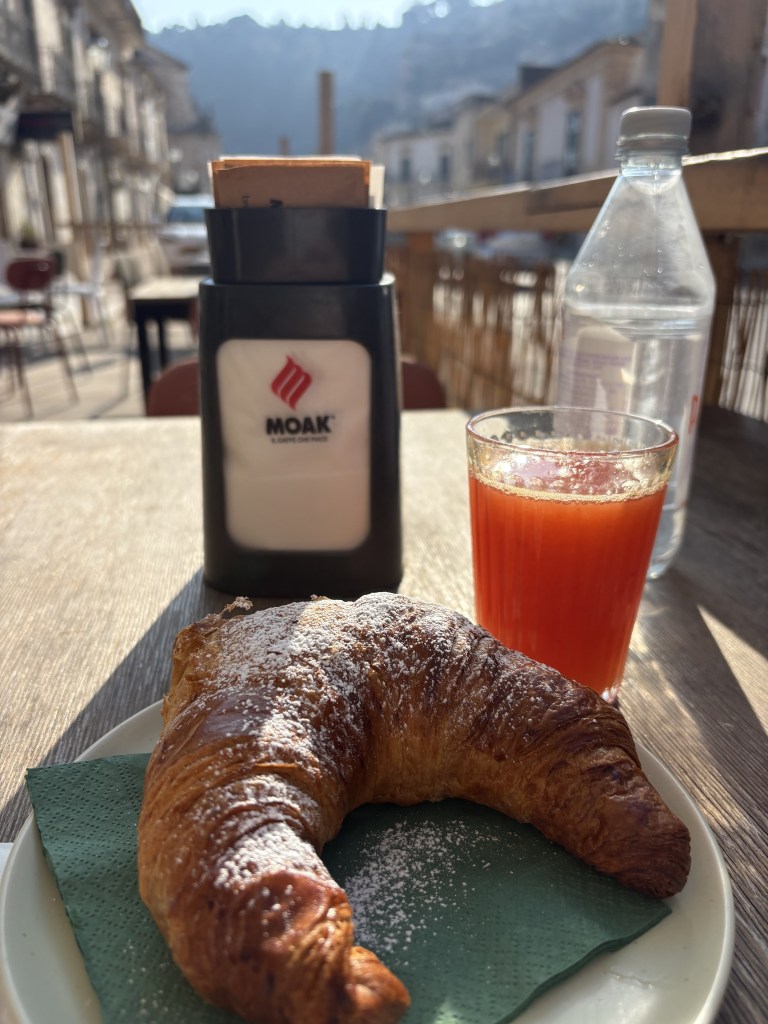
    Our croissaint and orange juice in Scicli.

    Absorb Daily Life in Scicli

    There was something about Scicli that made it easier to get a sense of daily life there.

    There was the encounter we had with a local female police officer who got annoyed that we initially parked in the lot for the train station/police office (oops!).

    There was the young couple arguing near the Church of San Bartolomeo, seemingly unaware of others listening.

    There was the shopkeeper who swapped stories with me about his dog, after I pointed out (in Italian!) that a picture he had in the shop looked like my own dog.

    There was the aforementioned encounter with Mr. Carmelo, who’s a real character.

    A black cat spotted in the Chiafura cave district in Scicli.

    There was the time spent in a small but maze-like supermarket where we compared prices for pasta, bread, produce and other items against our U.S. prices.

    Could you have these types of encounters in another southeastern Sicilian town? Sure. Yet there was something in Scicli that made them more accessible, friendly, and easier to observe.

    You can also find that kind of life interaction in Catania, for example, but there’s so much happening at once there, I found it harder to take in. That’s why Scicli was perhaps more appealing.

    Enjoy Nearby Beaches

    As we visited Scicli in the winter, we never made it to nearby beaches. Yet even with the hill-like feel of Scicli, you’re not too far from a dip in the sea on beaches like:

    –Spiaggia di Sampieri

    –Spiaggia di Mannara

    –Spiaggia Pantano Arizza

    Double check online or with locals about these or other beaches before you visit.

    If you’re driving back towards Noto or Marzamemi, you have many other coastal options, including San Lorenzo or the beaches at Vendicari Nature Reserve.

    And in case you were wondering: There are beach scenes from “Inspector Montalbano” filmed in Punta Secca, east of the beach destinations mentioned here.

    A morning view in Noto, Sicily.

    Visit Other Nearby Baroque Towns

    Whether you’re staying in Scicli during your time in southeastern Sicily or visiting for a day trip, you can absolutely take the time to take day trips to other nearby towns. This will be easier to do if you rent a car or hire a driver.

    As mentioned before, there are eight towns in the Val di Noto that are considered UNESCO World Heritage sites for their Baroque architecture. They include:

    –Caltagirone

    –Militello Val di Catania

    –Catania

    –Modica

    –Noto

    –Palazzolo

    –Ragusa

    They’re all relatively close to each other (Catania’s a bigger city, of course). Between our experience and that of others, we favor Modica, Noto, and Ragusa.

    Although it’s not a Baroque area, we enjoyed nearby Marzamemi as well.

    Drive safe–here are our lessons from driving around Sicily–and enjoy your visit to Scicli and the surrounding area.

    Buon viaggio!
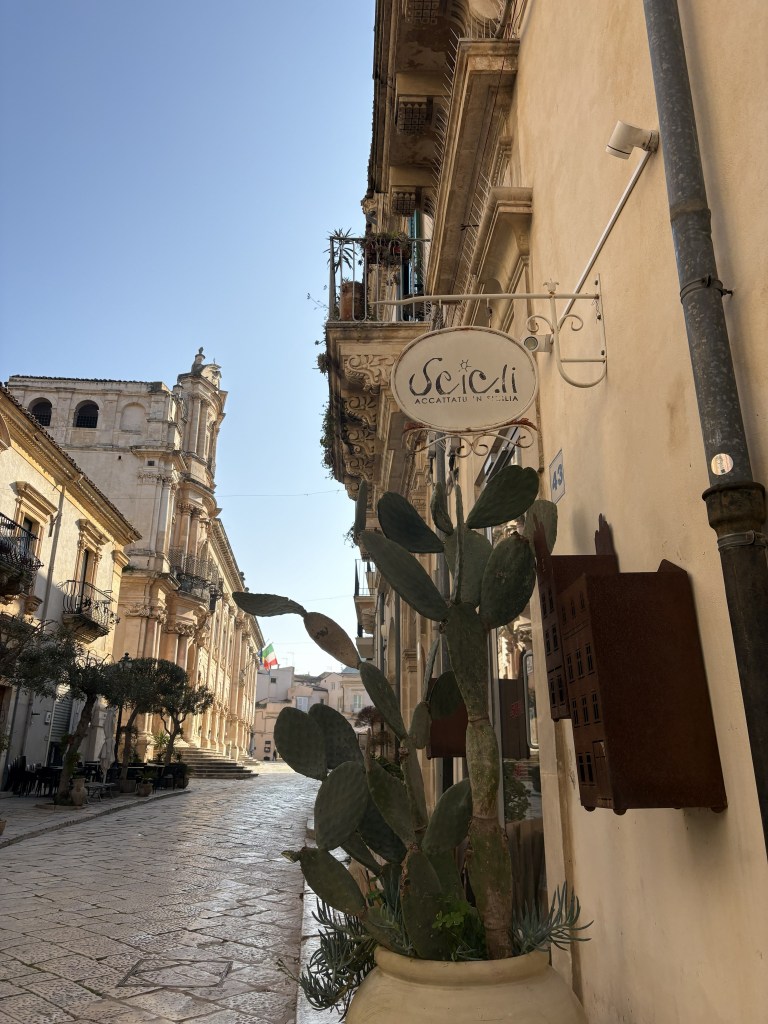
    Some more information about the UNESCO towns in Val di Noto.

  • 6 Things to Do at the Rome Fiumicino Airport in Italy While You Wait for Your Flight

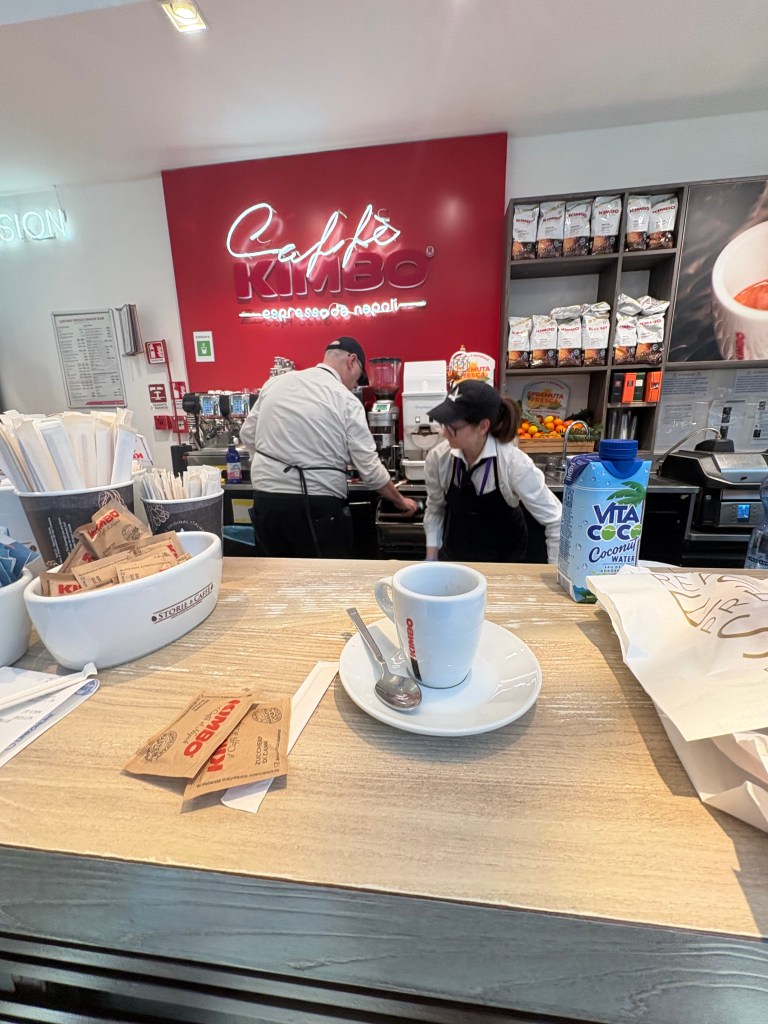
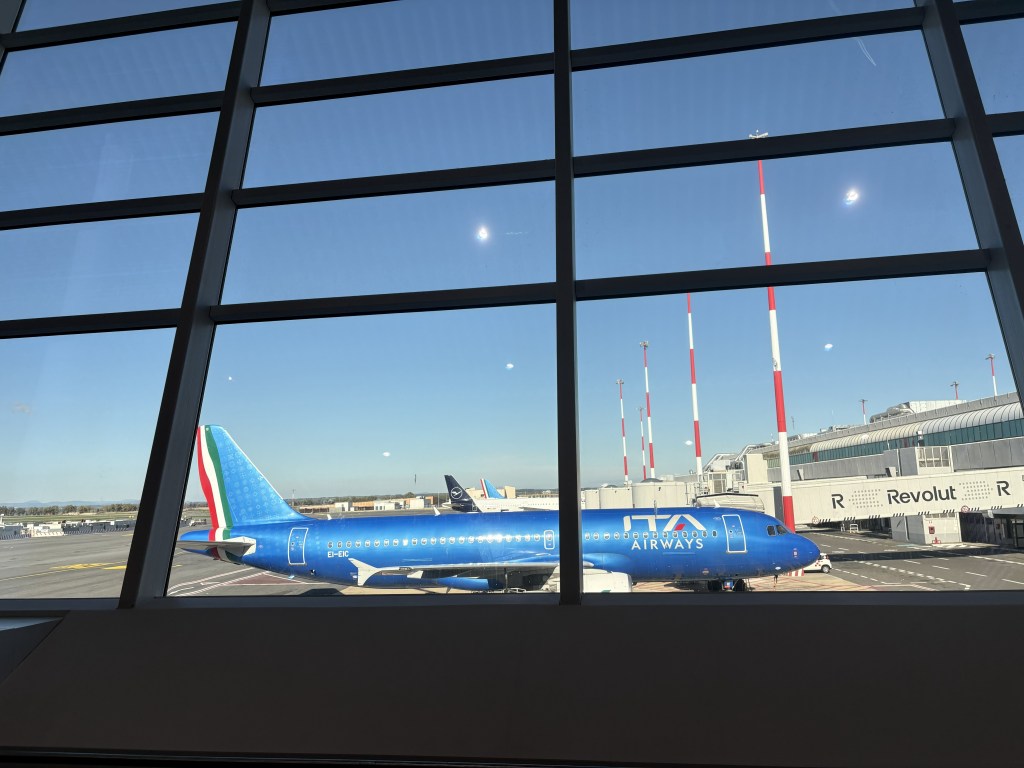
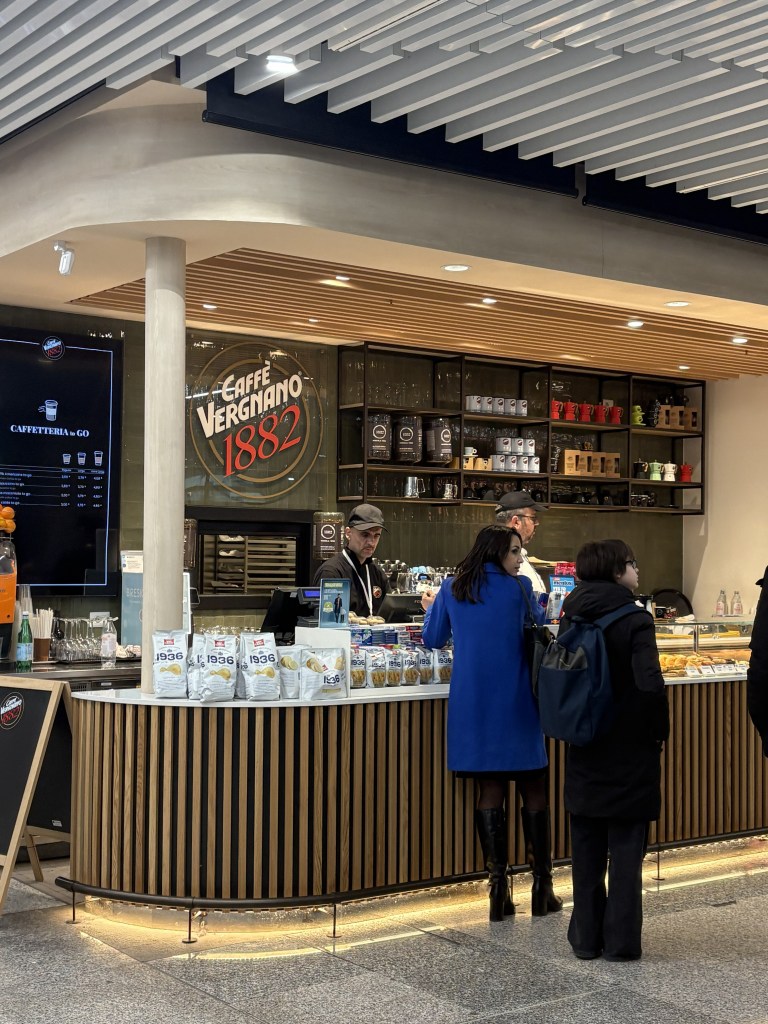
    A simple espresso at the Rome Fiumicino Airport helped us perk up after a long flight from the U.S.

    The Rome Leonardo da Vinci-Fiumicino Airport is the largest airport in Italy and the seventh-largest in Europe.

    So, it’s not surprising that you may find yourself going through this famous airport if you’re Italy-bound.

    Perhaps you have a long layover between destinations, leading you to wonder how the heck to fill your time until boarding starts for your next flight.

    Or, maybe you were in Rome and you’ve arrived early for your flight. Now, you’ve got some time to squander.

    Sure, you could spend those extra hours on your phone. Yet why not make it more interesting and explore what the airport has to offer?

    Artwork seen at the Rome Fiumicino Airport.

    In early 2026, I had a five-hour layover at Rome Fiumicino, arriving from Miami in the U.S. and then had to wait for my flight to Catania, Sicily. (You can read lots about my Sicily journey here and in other articles on my blog.)

    That five hours was just long enough time to entertain myself well while at the airport but short enough that I didn’t feel comfortable leaving the airport.

    Then, on the way home back to the U.S., I had another three-hour layover at Rome Fiumicino.

    Our article shares six tips for things to do while you’re at the Rome Fiumicino Airport. First, here are a few Rome Airport facts.

    Architecture seen at the Rome Fiumicino Airport.

    6 Fun Facts About the Rome Fiumicino Airport

    –The airport code (those codes they place on your luggage) is FCO.

    –Locals often refer to the airport as Fiumicino (fee-u-mee-chino) Airport.

    –Rome actually has a second airport called Rome Ciampino Airport, which mostly serves lower-cost airlines like Ryan Air and Wizz Air. Ciampino Airport is actually older than Fiumicino, built in 1916 compared with Fiumicino opening in 1960.

    –Rome Fiumicino Airport is about 19 miles (30 or so kilometers) from Rome’s city center. It’s located in the town of Fiumicino, hence the airport name.

    –You can get to the airport via an Express train, a taxi/Uber, or a shuttle bus service.

    –Any guesses how many passengers fly in and out of Rome Fiumicino? In 2025, it was 51.3 million, a 4% increase compared with 2024. It’s a busy place!

    Workers busy in a Rome Airport cafe in early 2026.

    6 Things to Do at Rome Fiumicino Airport

    Mangia!

    Or should we say, eat?! I mean, come on, you’re in Italy!

    Upon landing around 10 a.m. local time, I promptly bought un espresso e un cornetto, per favore (an espresso and a croissant) along with a coconut water as I needed hydration after the 9-hour flight.

    Later during my five-hour layover, I got a caprese sandwich. The sandwich was not the same quality as I might find in Italy’s famous eateries outside the airport–but it was still Italy so I couldn’t really complain.

    Take your pick of places to eat among the airport’s many sandwich shops or restaurants. Find a full list here, and heads up: Unlike many airports that feature cuisine from around the world, many or most of the options focus on Italian food. Again, not complaining!

    People-watch.

    People-watching is something we love to do in airports and hope it’s not a lost art as more and more people get lost on their electronic devices. You can learn so much about human behavior just by watching people at an airport. Plus, you’ll get a few laughs (we’re talking to you, Atlanta and Miami airports).

    At the Rome Airport, I don’t remember any crazy people-watching sightings but I do remember feeling amazed by the number of people from literally all around the world.

    A partial view of the window where you can watch planes come and go while you sit, relax, and listen to paino music.

    –Meditate or take a nap while listening to lovely piano music.

    Meditate at the airport? For real? Yes! In Terminal 1, near gate A66, there’s an area with huge chaise-lounge style chairs that face a massive picture window looking out at airplanes. You’ll also find there a piano, one of several throughout the airport that give passengers the chance to play their favorite tunes (some performing better than others).

    It was such a nice respite to sit there and passively look outside the window rather than be in a hurry. If you don’t want to fully fall asleep because you want to watch your stuff (understandable), you can still use the spot just to sit for a bit.

    To find more pianos at the airport, search at the map here and type in “piano.”

    Call your Italian friends and family–or meet them at the airport.

    With today’s technology, it’s super easy to see friends and family from around the world using WhatsApp or any other favorite app, right?

    Still, there’s something kind of fun about reaching out to your peeps while you’re in their country. I took a few minutes after my Italy arrival to video call one of my Rome-based language partners. Then, after arriving at the Rome Airport from Catania and getting ready to return to Miami in the U.S., I was able to meet this same friend at a cafe that was inside the airport but on the other side of security. It was a fun, short visit, and all I had to do was go through security again.

    Just ask for help if there’s any confusion over where you should or shouldn’t go if you plan to meet someone without leaving the airport.

    If you truly want to leave the airport and sightsee or meet a friend, it’s best if you have a layover that’s six hours or more.

    A cafe in Rome’s airport before you go through security.

    Shop!

    Any large airport will have a whole selection of stores, from those common “buy some water and a snack” type places to luxury stores to overpriced souvenir shops. The Rome Fiumicino Airport definitely has its share of high-end shops (find a full list here of all of its stores, including Burberry, Cartier, and Fendi).

    Yet my personal interest always veers more towards food, which is why I took my time in a few souvenir or food-themed shops, including the famous Italian-created shop Eataly. Eataly is a large store that features Italian food products as well as several places to eat within Eataly itself. Knowing I was about to be in “Italy,” I knew I didn’t really have a need for “Eataly.” Still, looking around was a way to pass the time.

    It’s also interesting to compare prices for items in the airport versus the prices you see outside of the airport.

    Of course, like any international airport, there are duty-free shops, which also have their share of Italian food products in addition to the usual alcohol and cigarettes. Watch passengers decide if they really need one more limoncello bottle to take home to Aunt Susie.

    Find a list of the airport’s shopping options here.

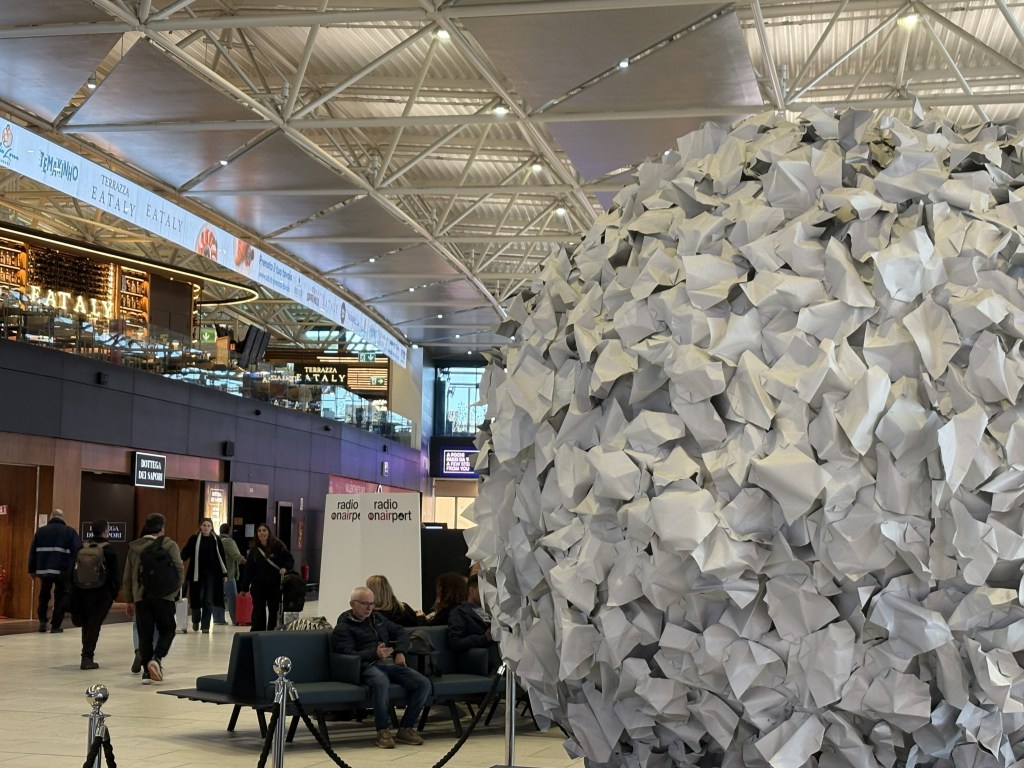
    A partial view of the “Master of Mistakes” artwork at the Rome Airport.

    Check out some art.

    In Terminal A, the same area with the piano and the large seats, there was a large sculpture called “Master of Mistakes” by Daniele Sigalot, which looked like an enormous ball of crumpled papers (a true master of mistakes, we presume). Yet you can find other art throughout the airport, which makes sense when you consider the airport is named for the master himself, Leonardo da Vinci.

    Find out more about the artwork at the Rome Airport here.

    Some Final Thoughts on Things to Do at the Rome Airport

    Our ideas here reflect what we enjoyed at Rome Fiumicino, but we know there are plenty more things you could do there.

    Like any large airport, there are private lounges and also pay shower areas (25 Euros each).

    Find the airport website here for more ideas.

    Of course, you can also practice speaking and listening to Italian. Yet since you’re at the airport, you’ll also hear plenty of English.

    Feel free to explore more options, but hopefully our article gives you a few starting ideas.

    Buon viaggio!
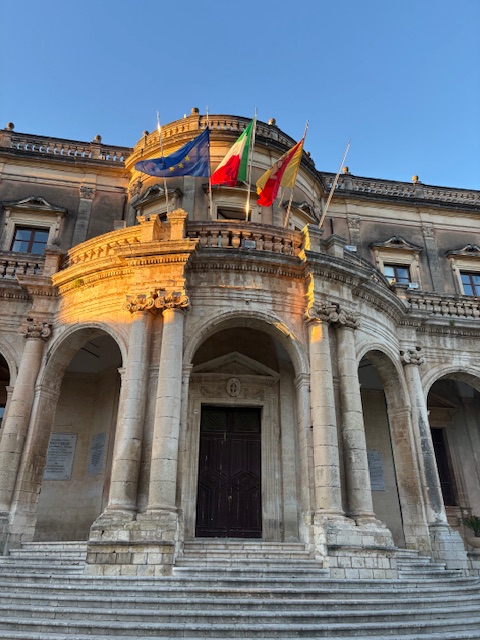
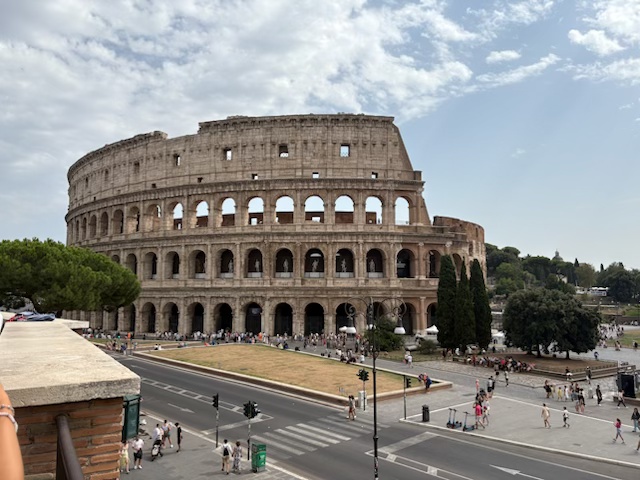
    Rome’s famous Coliseum (taken by a friend; we still need to make it there).
    Yet sometimes, there’s no place like home.

  • Here’s What It’s Like to Bike From North Italy to Munich, Germany, in 5 Days

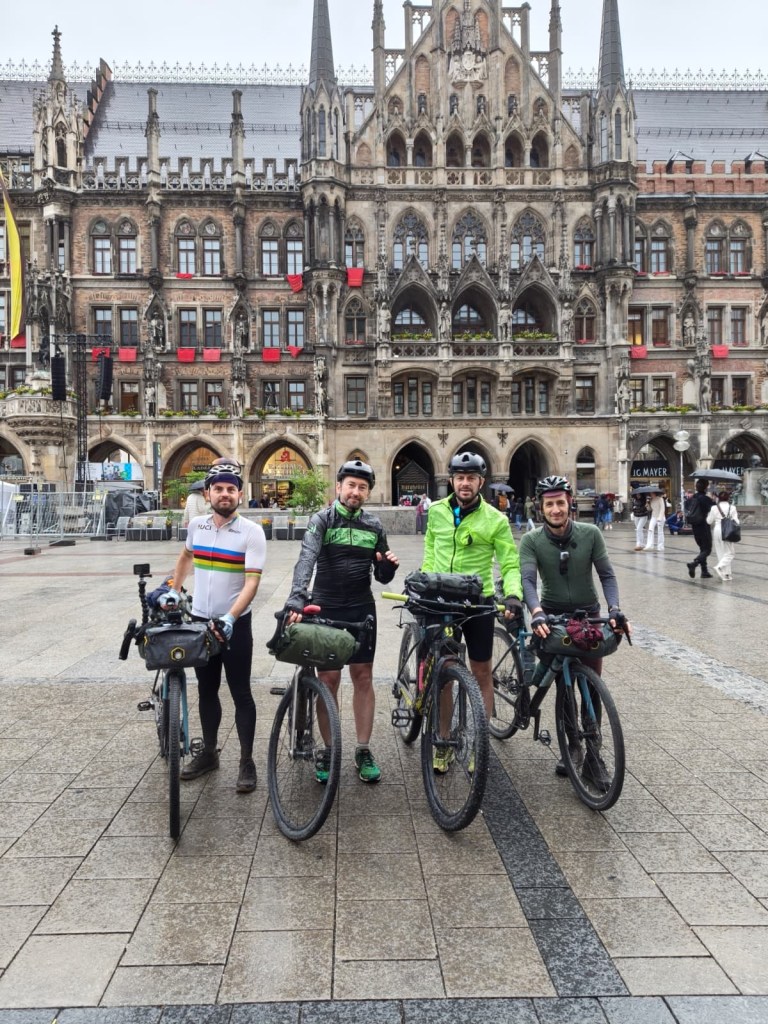
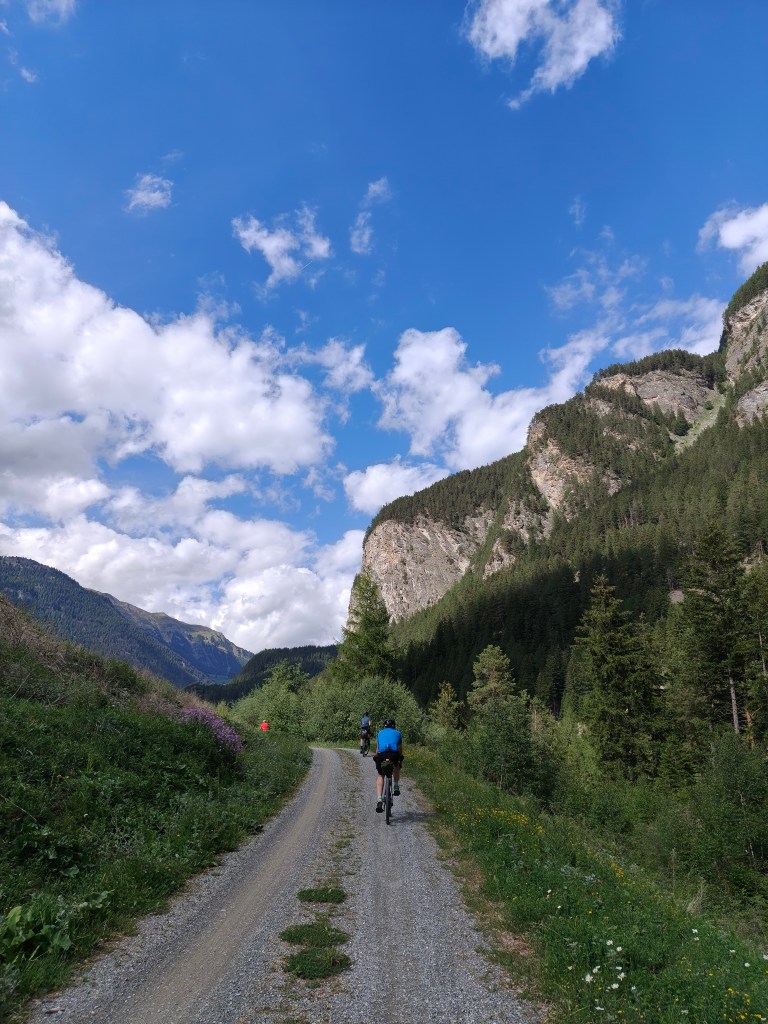
    Ernesto G, Fabio B, Giorgio M, and Fabio D in Munich, Germany after their 565-kilometer bike ride from north Italy.

    There’s something about long-distance biking that makes you feel like a superhero.

    Yet there’s also the comical thrill you feel when you tell family and friends about your long-distance bike plans and they respond with, “Are you crazy??!!”

    So says Ernesto G., of Brescia, in northern Italy. Last year, Ernesto shared with Italy Dreams the story of his bike trip from northern to southern Italy, along with his adventure buddy Fabio B.

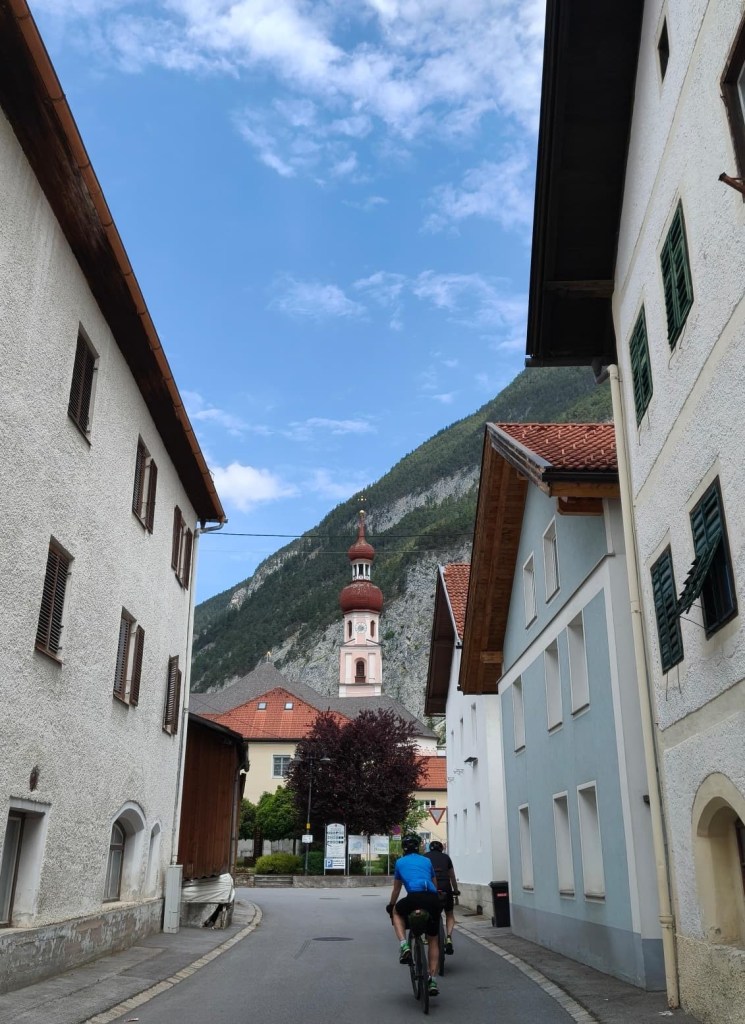
    This summer, Ernesto and Fabio ventured on a five-day journey from the Brescia area all the way to Munich, Germany–traveling 565 kilometers (351 miles) in 5 days.

    The trip, which they completed with friends Fabio D. and Giorgio M., took them through northeastern Italy, a small part of Switzerland, Austria, and finally Germany–where they treated themselves to liters of beer at the famous Hofbrauhaus in Munich at the end.

    Ernesto shares more details of the journey with Italy Dreams.

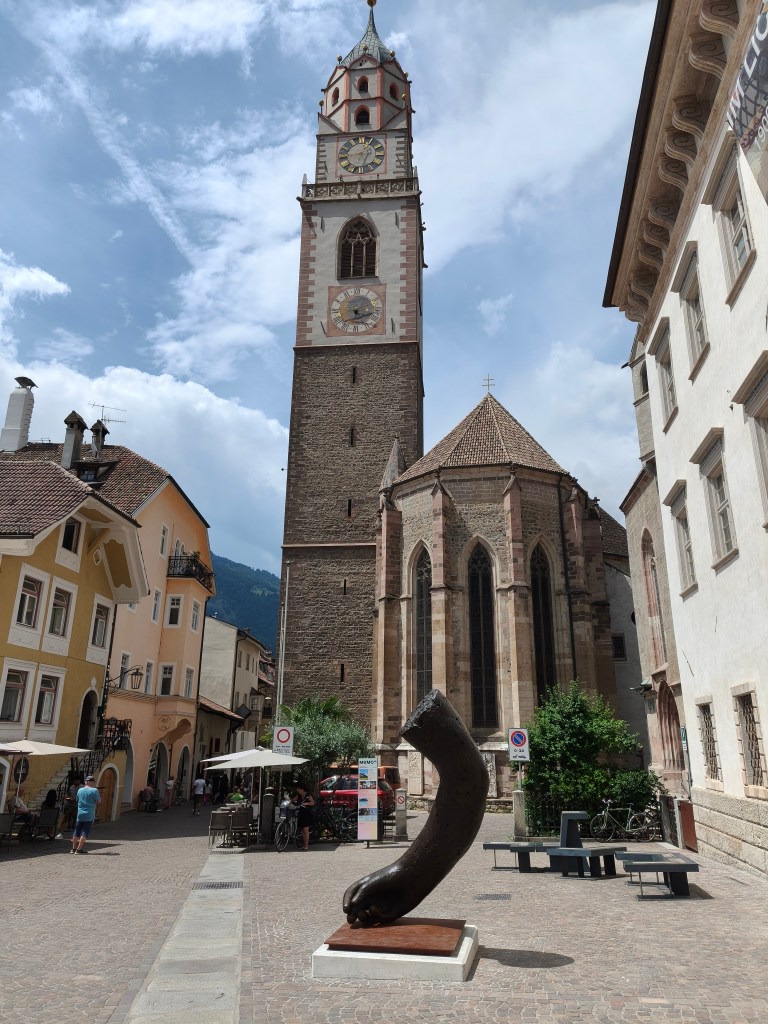
    Merano, Italy.

    The Idea Begins

    Ernesto is no stranger to longer athletic challenges, having swimmed competitively in the past and along with trail running, ski mountaineering, and climbing as well as other long-distance bike trips.

    With memories from the bike trip to southern Italy fresh in his mind, he wondered in December 2025 why there was no bike trip planned for 2026. That led him to consider a long-distancce trip with beautiful scenery including going through the Alps.

    Although he originally planned to go solo, Fabio D., Fabio B., and Giorgio all wanted to be part of the adventure.

    Of course, that meant training had to begin asap as the trip was planned for late May/early June.

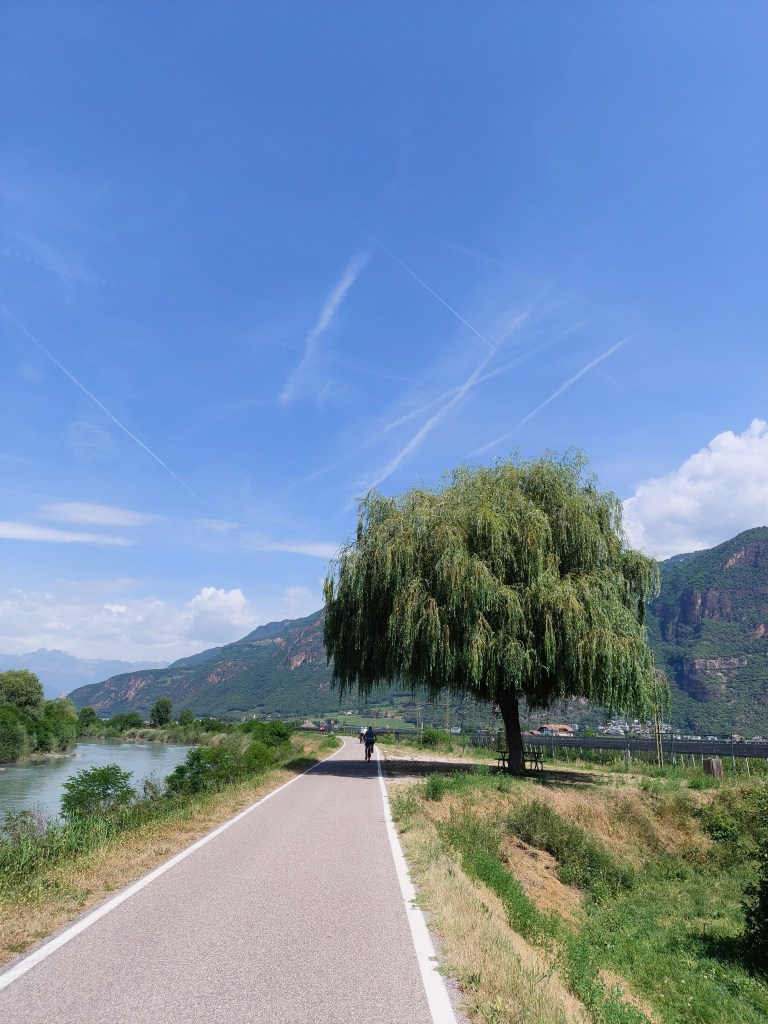
    On the Adige bike path going towards Bolzano.

    Ernesto and friends began to train almost every Saturday as they could, with the workouts getting progressively harder. There also were bike workouts during the week along with Ernesto maintaining his regular swim workout schedule three times a week.

    Just like his previous trips, Ernesto did some serious trip route planning with the help of online tools and apps.

    Before they knew it, it was time for their trip.

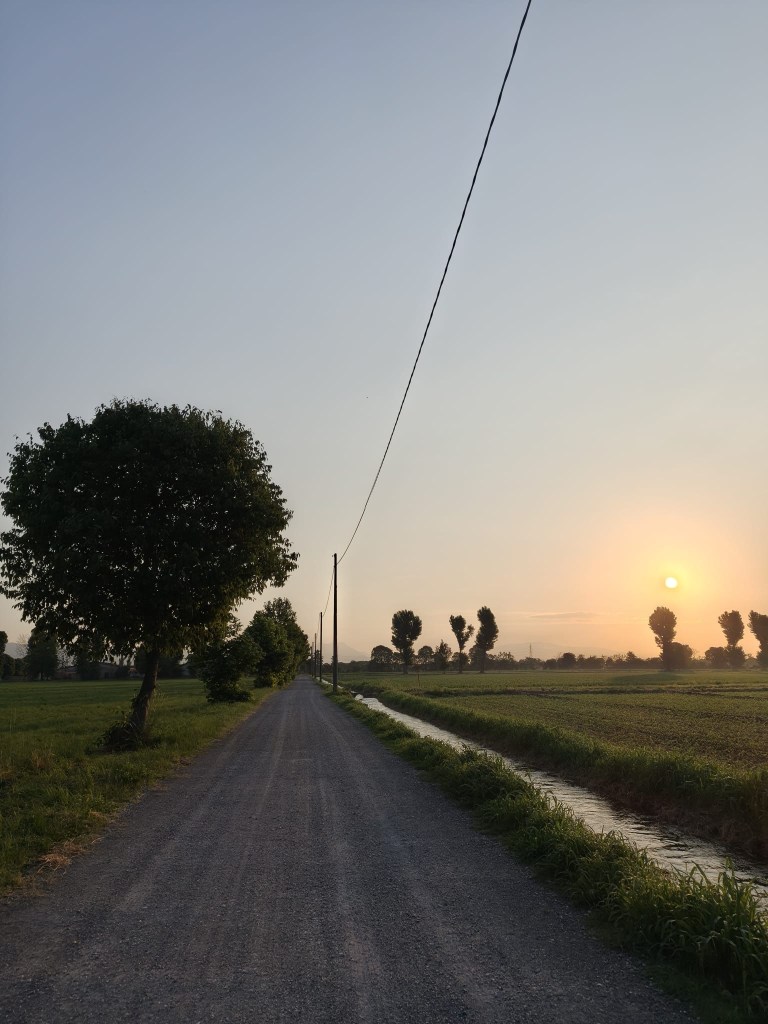
    A bike trail in Italy’s Po Valley.

    The Adventure Begins

    The bikers began most days around 7 am or 8 am, a sharp contrast to the 4:45 am start times to beat the heat while in south Italy last summer.

    Over the five days, they averaged 113 kilometers (70 miles) per day, with their longest day 146 km and their shortest 97 km.

    “We spent between five and seven hours in the saddle, but each stage took about eight to nine hours total, including breaks,” he says.

    There was one important break time each day: “We always stopped for lunch at a restaurant,” he says. That also gave the crew time to soak up the local culture and scenery.

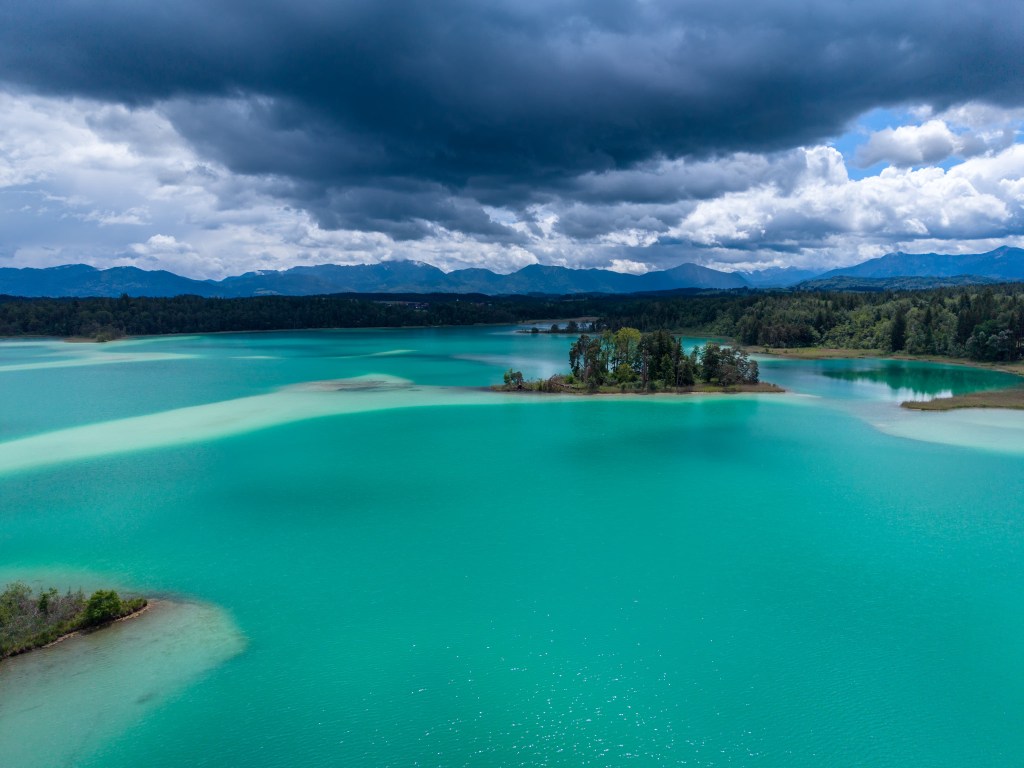
    Großer Ostersee in Germany.

    In the evening, they stayed at bed-and-breakfasts or hotels. Surprisingly, two of the five places they stayed offered bike repair services, tire inflation, and bike cleaning. One of their favorite hotels was in Laces in the Trentino-Alto Adige region of Italy, which had an outdoor pool and stunning views of the Alps.

    The bikers didn’t encounter any flat tires or other bike maintenance issues.

    Ernesto had purchased a Dji Mini 5 Pro drone and used it during the ride, which added another “passenger” to the trip. He kept it in a front bag from Apidura, and he watched many tutorial videos in advance so he’d know how to use the drone while cycling or while stopped. The end result? Many great pictures and videos taken with the drone.

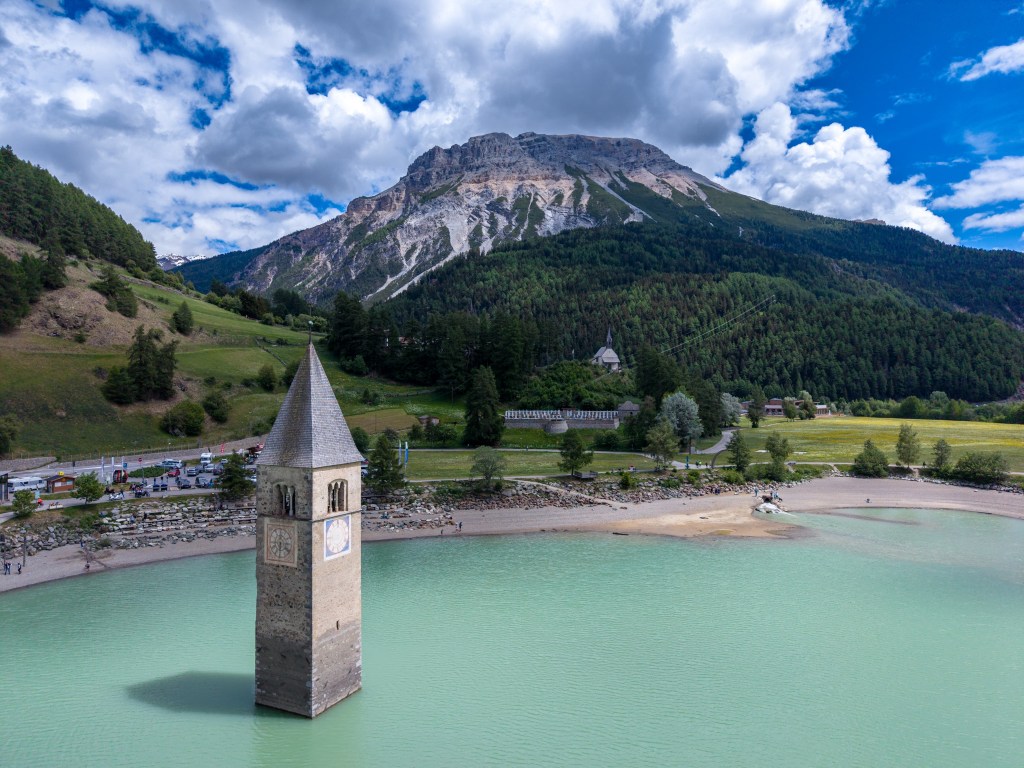
    Lake Resia in Italy.

    Watching the Scenery Change

    The bikers traveled through the Lombardy, Veneto, and Trentino-South Tyrol regions of Italy. They started in the Po Valley, which Ernesto describes as having wide-open fields and mountains visible in the distance.

    Next came the southern part of famous Lake Garda, surrounded by olive trees, veinyards, and lemon trees.

    The Adige River area had a stunning bike trail and small villages and vineyards that continued all the way to the city of Bolzano and to the Alps.

    Reaching Val Venosta, an area well-known for its apples, they entered the alps with mountain ranges of 3,000 to 3,900 meters (9800 feet and more).

    They were still in Italy at this part of the journey, but it more closely resembled Austria than Italy, and German is widely spoken there.

    Italy on the border with Austria.

    Although they crossed high elevations during the trip, this didn’t intimidate them too much as they were ready for them.

    Upon reaching Austria and the heart of the Alps, the bikers had peaceful views of glaciers and mountains, clear rivers, fields, and Gothic churches and villages.

    The same held true in Germany, where the Alps gave way to hills, pastures, and lakes all the way to Munich.

    Ultimately, the group traveled through:

    –Desenzano del Garda, Italy

    –Peschiera del Garda, Italy

    –Rovereto, Italy

    –Trento, Italy

    –Bolzano, Italy

    –Merano, Italy

    –Lake Resia, Italy

    –Prutz, Austria

    –Imst, Austria

    –Garmisch Partenkirchen, Germany

    –Starnberg, Germany

    –Munich, Germany

    They went through Switzerland as well but only for a few kilometers.

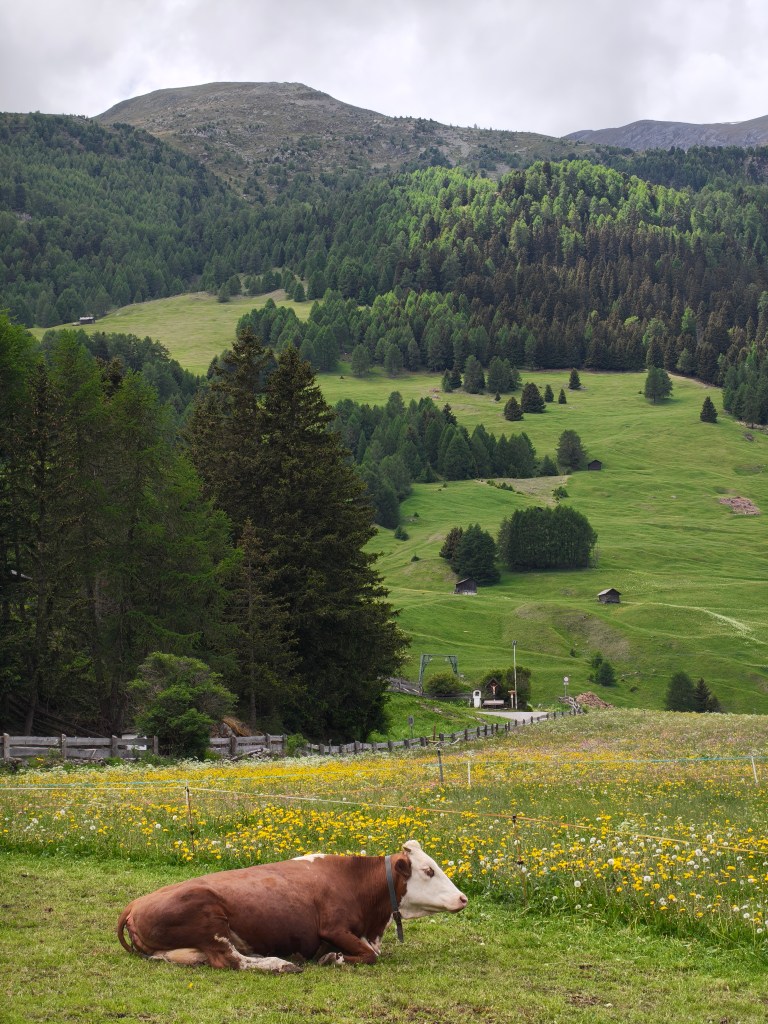
    Austria

    Reaching Munich

    Upon reaching Munich on day 5, the crew arrived at Marienplatz in the center of Munich, went to their hotel, took showers, and then had beer and dinner at the legendary Hofbrauhaus. Dinner was pork knuckle and pretzels.

    “I was impressed by the size of Hofbrauhaus, how quickly they serve beer, the German-style decor, and how quickly you can drink a liter of beer,” Ernesto says.

    They returned home the next day–but not by bike!

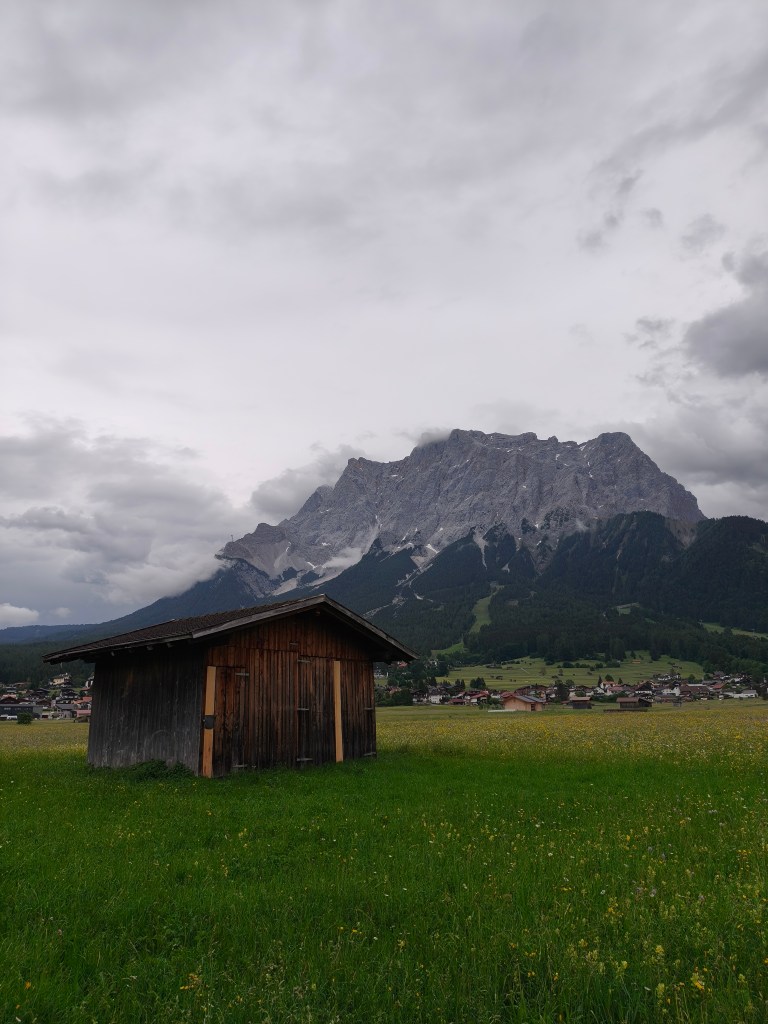
    Austria on the border with Germany, with Zugspitze Mountain in Germany in the background.

    Comparing Southern Versus Northern Italy

    When asked how last year’s sojourn into southern Italy compared to this year’s trip, Ernesto shares a few thoughts.

    “Italy is long and narrow, with a wide variety of climates and landscapes. Last year, the dialects, accents, cultures, and landscapes changed several times from stage to stage. On the latest trip, from Bolzano onward, the culture and food were very similar all the way to Bavaria in Germany,” he says.

    Still, he says he loved the majesty of the Alps.

    The freedom and exploration of new cultures are what keep Ernesto and his biking buddies on the road for these long-distance trips.

    “This kind of trip fills you with excitement from the moment you plan it on the map until you’re actually biking,” he says. “The feeling of reaching faraway places under your own power feels great. It makes you feel like a superhero.”

    While plans for the next long-distance ride are still in progress, it will most likely lead them to the city of Reggio Calabria in southern Italy, across from Sicily.

    Germany

    Tips for Long-Distance Biking Through Italy

    If you’re considering a long-distance biking adventure through Italy–or really, anywhere–here are a few tips shared by Ernesto:

    –Train gradually but consistently to prepare your body.

    –Start with three- to four-day trips to make sure you like them.

    –Pack as light as you can.

    –Buy a good bike GPS. He uses the Garmin Edge 1040.

    –Learn how to perform basic bike maintenance.

    –Have your bike inspected and serviced before setting off.

    Buon viaggio!
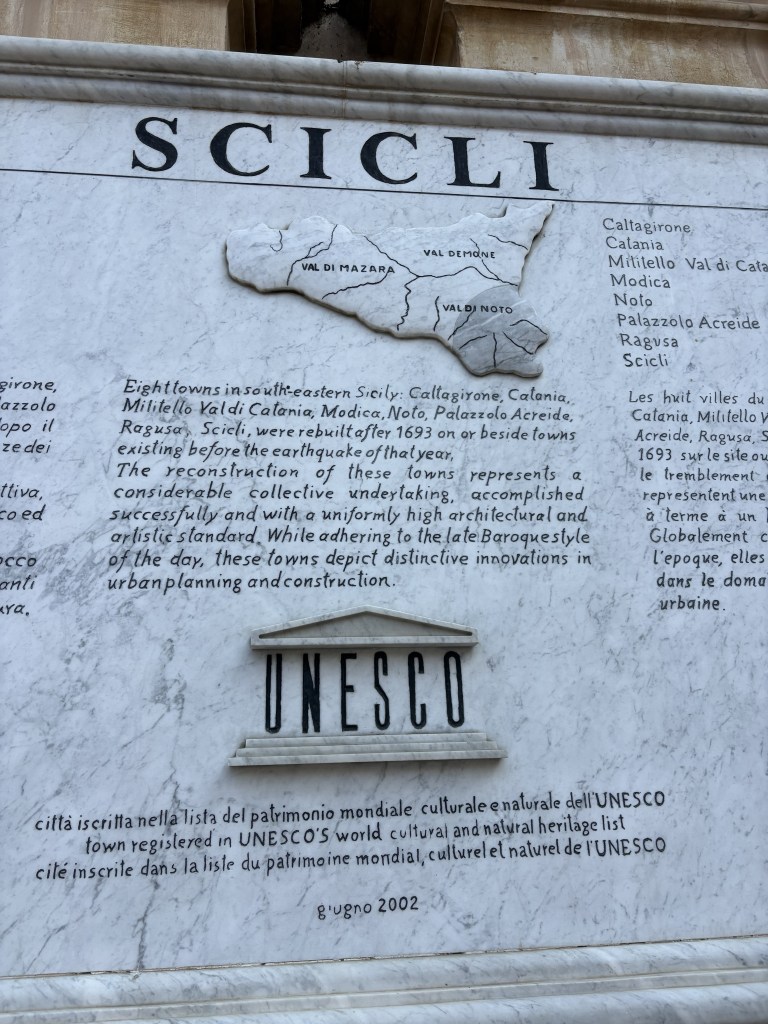
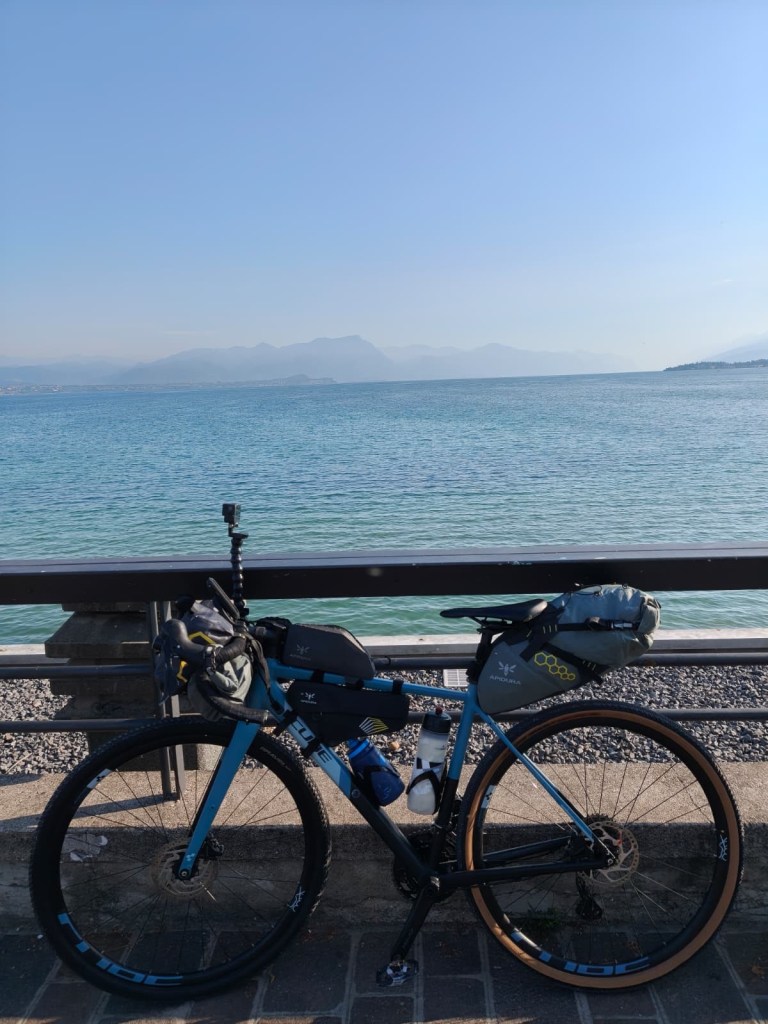
    Bike in Desenzano del Garda, Italy.
    Switzerland

  • Italian Cookies? Yes, Please! Here’s What We Learned From the Cookbook “Italian Cookies”

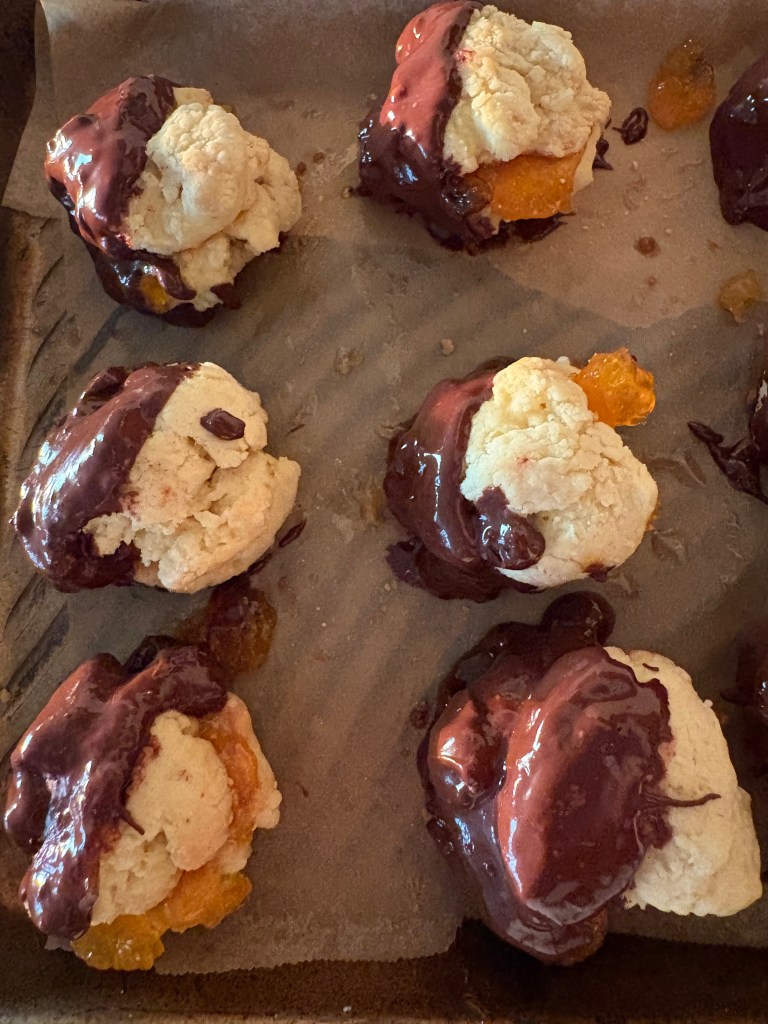
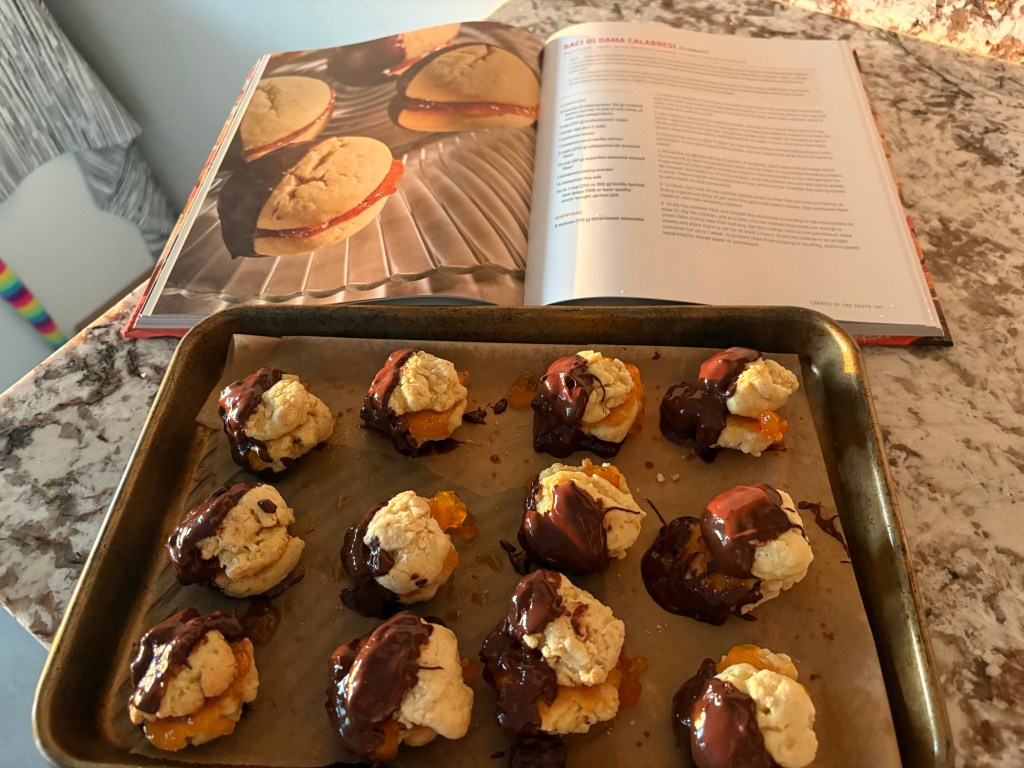
    A chocolate and apricot jam-based cookie from Calabria in Southern Italy.

    If you’re like me and you would say “Si” to trying just about any type of Italian food, including cookies, then have I got a cookbook to recommend to you.

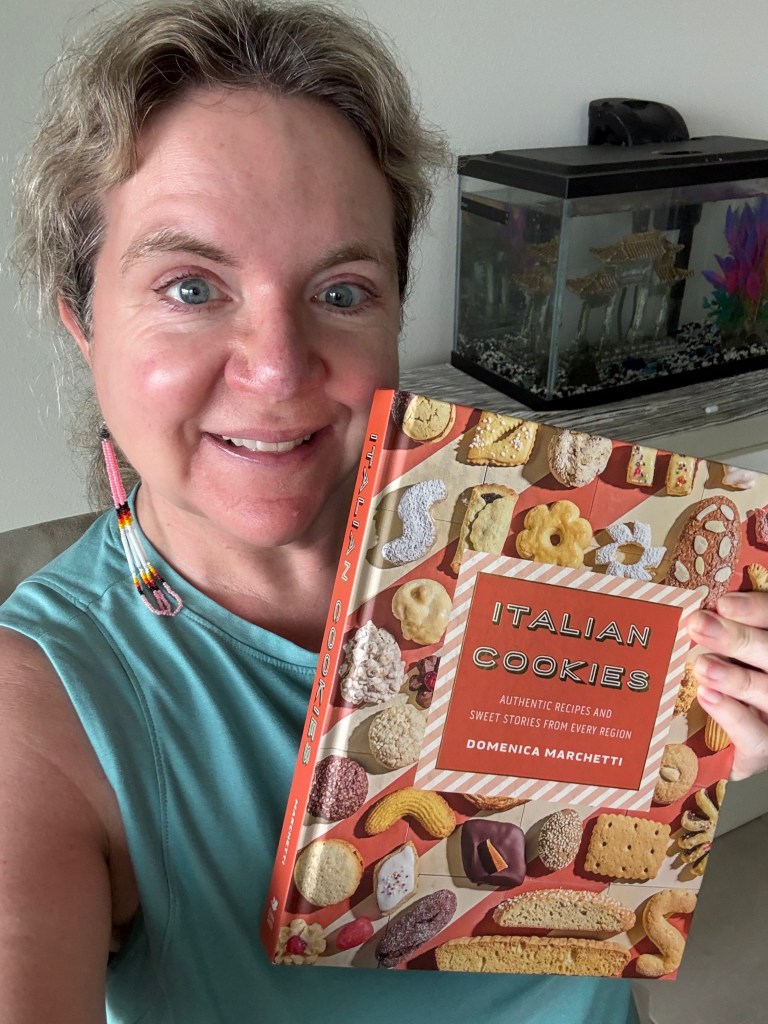
    “Italian Cookies: Authentic Recipes and Sweet Stories From Every Region,” by Italian American cookbook author Domenica Marchetti, just published this April and is chock full of dozens of cookie recipes divided by region: north, central, south, and the islands (Sardinia and Sicily).

    Marchetti has authored several popular Italian home cooking books, including “The Glorious Pasta of Italy” and “Williams-Sonoma Everything Italian.” She has a master’s degree of journalism (shout out to a fellow journalist!), and her writing is easy to enjoy. Marchetti splits her time between the U.S. and the Italian region of Abruzzo in central Italy.

    Holding a copy of “Italian Cookies.”

    Finding this cookbook was perfect for me as I continue to nerd out on all things Italy but especially the food.

    And let’s just say that cookies and me have had a special relationship.

    I learned how to bake chocolate chip cookies at a young age and have worked on just about all variations of this classic treat through the decades, having learned the original recipe from my mom and now have passed it on to my son. I even sold my homemade cookies in high school, wrapping four or eight at a time in aluminum foil.

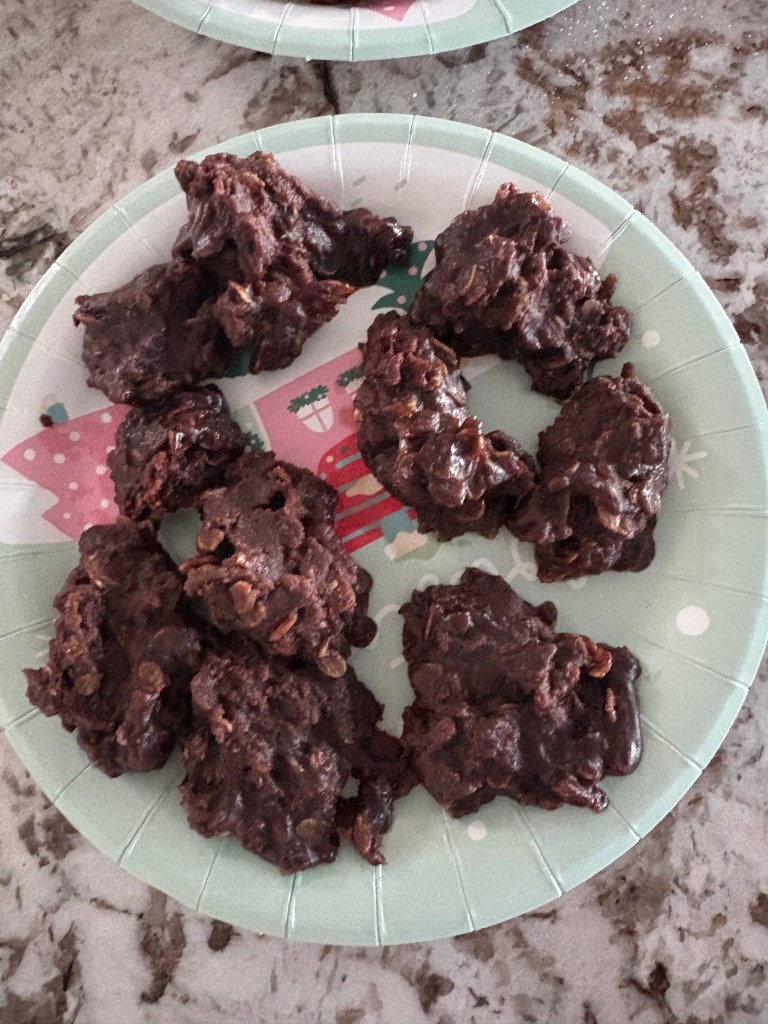
    A plate of our No Bake cookies made around Christmas time.

    I bake cookies for Christmas to enjoy with family and give away as bonus presents–treats like lemon squares, decorated sugar cookies, and my always-favorite No Bake cookies with chocolate and peanut butter.

    Coupled with my love of baking bread, I sometimes wonder if all this baking indicates a past life as a baker…maybe in Italy. Just kidding (or maybe not?!).

    Ironically, I didn’t know a lot about Italian cookies until more recently, as I didn’t grow up around those delectable Italian American bakeries common in New Jersey and New York. Buying a box full of randomly chosen Italian bakery cookies at Christmas time just last year was a real feast for the senses.

    I decided to apply my cookie-making skills to one recipe from each region in “Italian Cookies.” Here are the results, followed by a few more details about Marchetti’s cookbook.

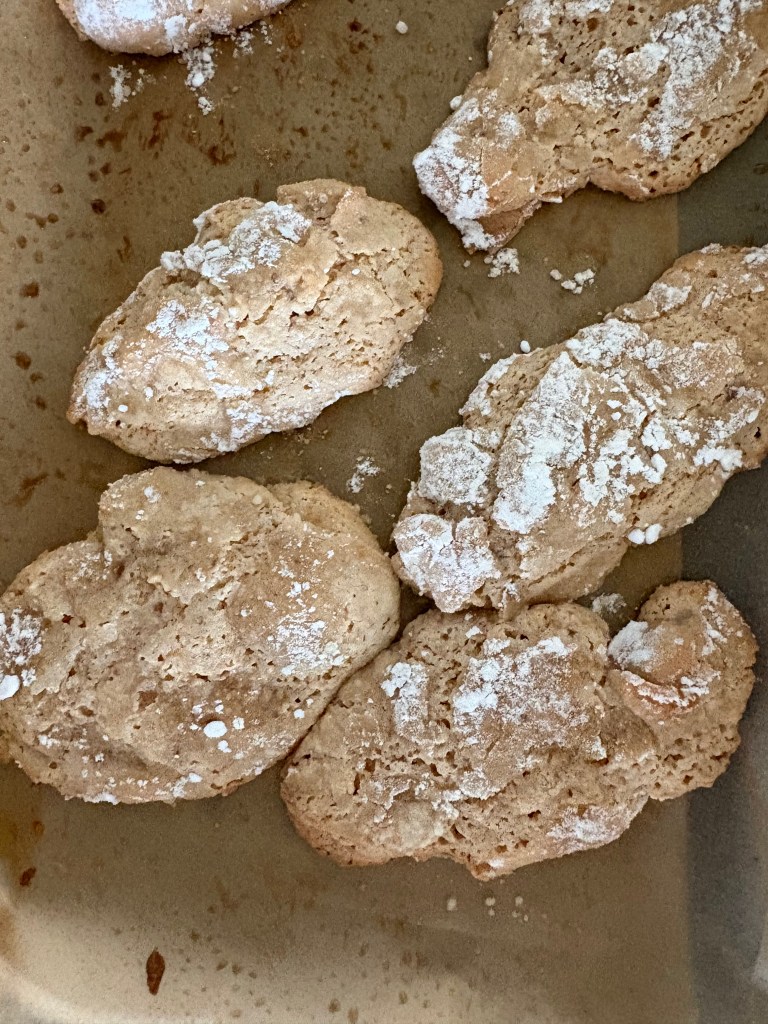
    Our puffy version of Amaretti di Gallarte.

    Amaretti Di Gallarte: From Lombardy

    One thing I learned from Marchetti’s cookbook is how almonds are commonly used in Italian cookies. The cookbook describes Amaretti from Gallarte, originating in Italy’s northern region of Lombardy, as having a meringue-like texture and a slightly chewy center.

    I found myself blanching almonds for the first time (basically, you put the almonds in boiling water and then take off the harder skins once everything cools down). Other ingredients include granulated sugar, egg whites, just a touch of honey, salt, and almond extract. You leave the dough in the fridge overnight uncovered so the batter forms a “skin.”

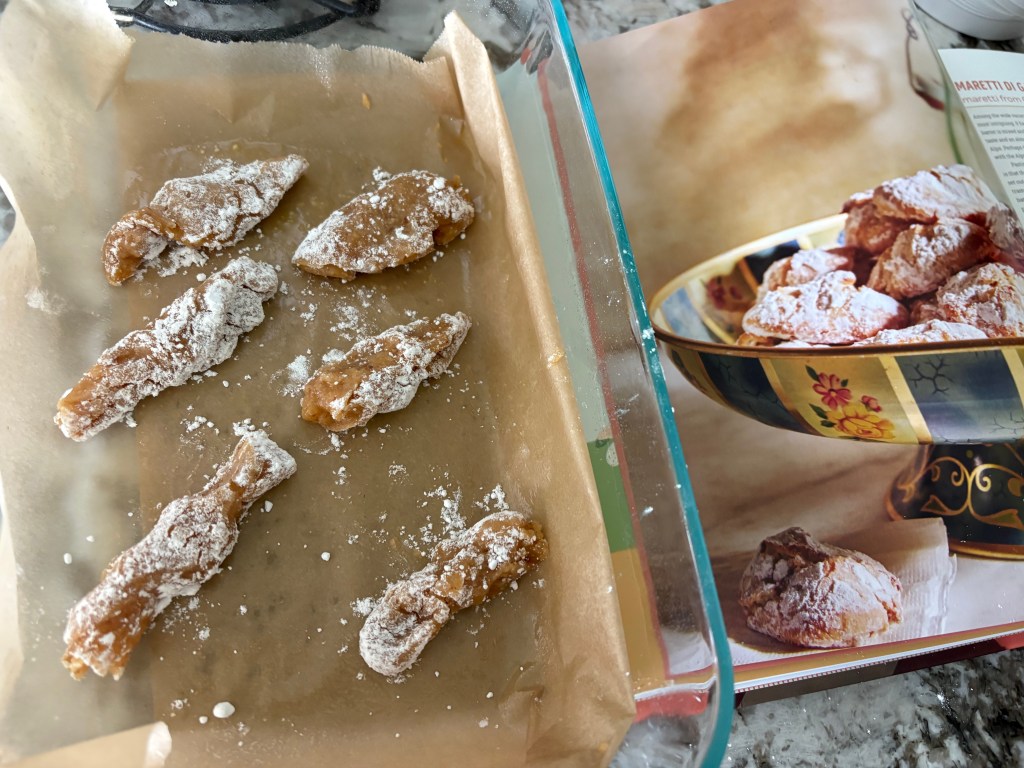
    Before cooking, you cover the cookies with confectioners’ sugar.

    My Amaretti before they went in the oven.

    I enjoyed the almondy taste of the Amaretti, although the shape of the cookies was not as perfect as in the cookbook. That’s because I didn’t have the piping bag to shape the cookies nicely. Still, I was happy with my first attempt at Amaretti, a type of cookie you’ll find in all sorts of variations around Italia.

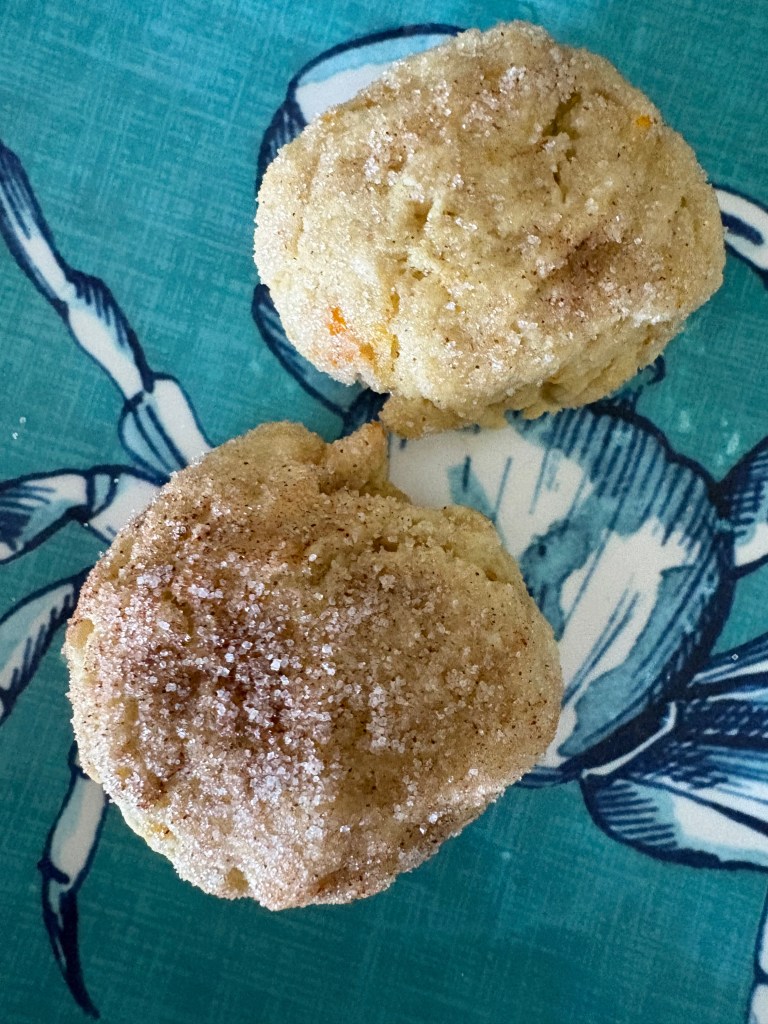
    Our version of Biscotti Della Nonna.

    Biscotti Della Nonna: From Umbria and Other Italian Regions

    Biscotti Della Nonna means Nonna’s (Grandma’s) Cookies. My Southern U.S. grandmother, a master cook and baker, never baked these cookies but she probably would have aced them if she had the recipe.

    This recipe includes granulated sugar, an egg, extra-virgin olive oil, milk, orange zest, and a few other dry ingredients. You mix it all together and roll the dough into circles or ovals before flattening them down and coating them with a simple cinnamon sugar mix.

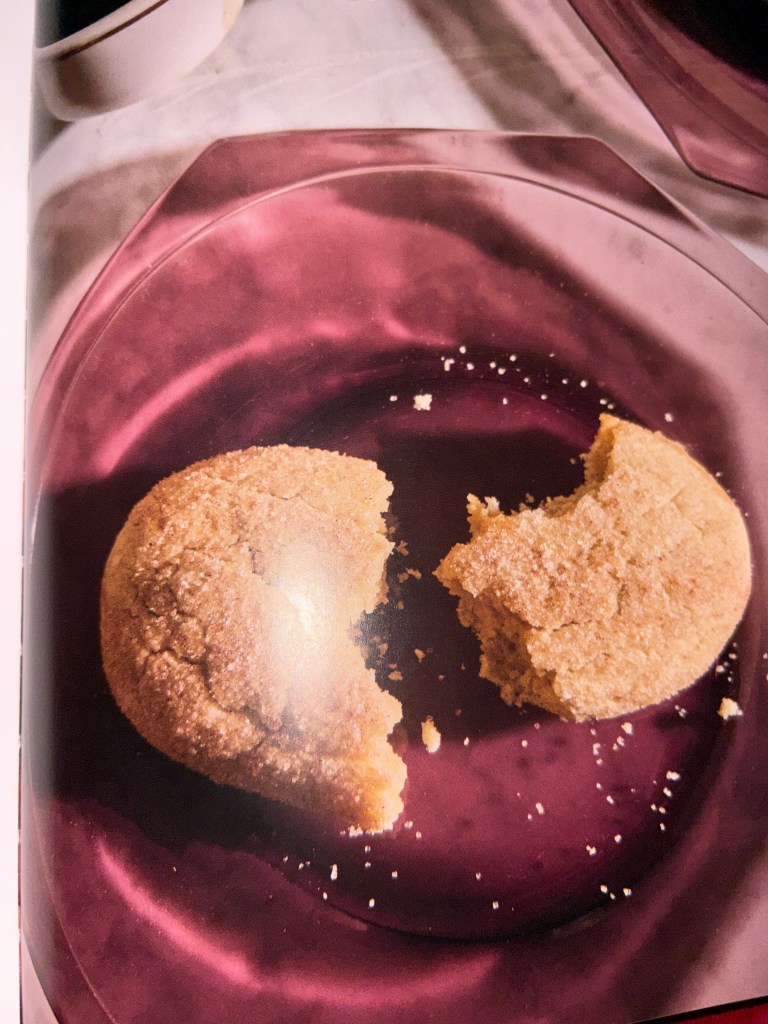
    A picture of Biscotti Della Nonna in the cookbook.

    The Biscotti Della Nonna were tasty, slightly bigger than I thought they’d be, and would do great with a cup of milk or even coffee. Marchetti even points out that they are good for dunking into your chosen beverage.

    Our favorite cookie of the whole bunch: Baci Di Dama Calabresi.

    Baci Di Dama Calabresi: From Calabria

    All of the cookies were good, but this one was the biggest hit.

    The name translates directly to Lady Calabresi’s Kisses, or you can describe them as Apricot Jam and Bittersweet Chocolate Kisses.

    This cookie was a little more involved because I had to make the top and bottom of the cookie, add jam in the middle and then dip about half of it in chocolate (the fun part!).

    With the butter involved, I felt like I was on more familiar cookie-making territory. The main cookie part uses other standard ingredients, including eggs, vanilla extract, and honey.

    Then, as mentioned, there’s the apricot jam in the middle along with melted bittersweet chocolate for coating. The recipe actually calls for Vanilla Apricot Jam and has a recipe for that in the cookbook, but I went with the simpler option of a best-quality store-bought apricot jam.

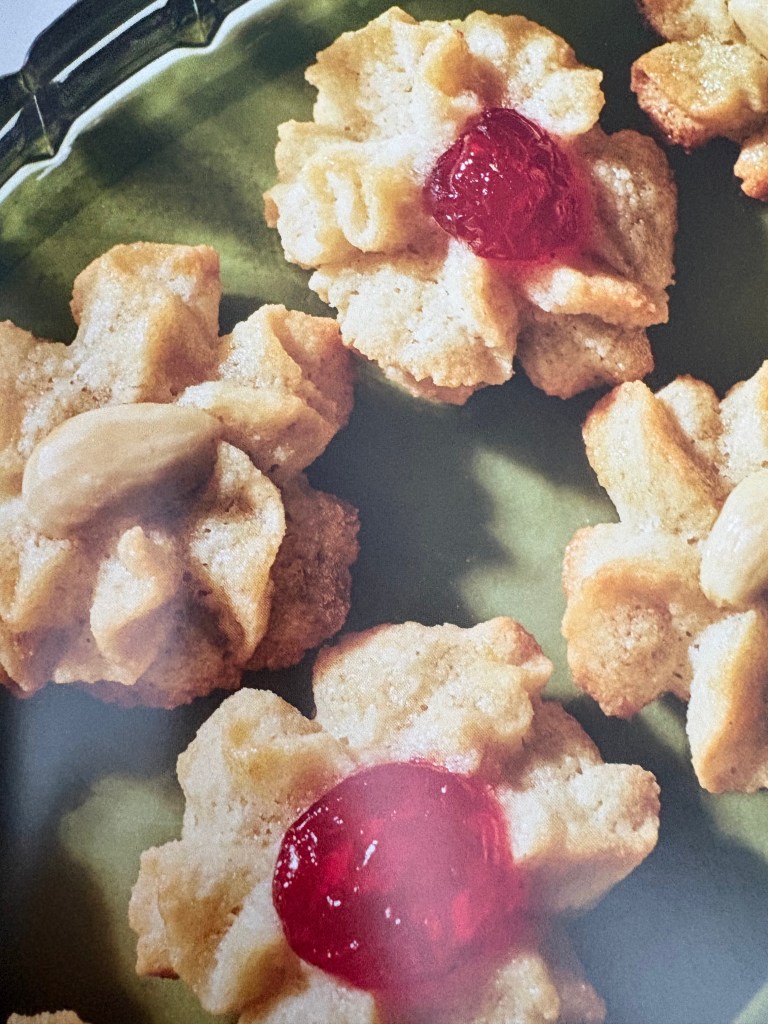
    Yum, Pasticcini Di Mandorla as seen in “Italian Cookies.”

    Pasticcini Di Mandorla: Sicily

    Last but not least, I gave some love to la Sicilia bedda (beautiful Sicily in Sicilian) with these Pasticcini Di Mandorla, or Little Almond Cookies.

    The recipe calls for almond flour (a first-time purchase for me) along with sugar, salt, lemzon zest, egg whites, almond extract, and amaretto liqueur–the latter of which I skipped as I didn’t have any.

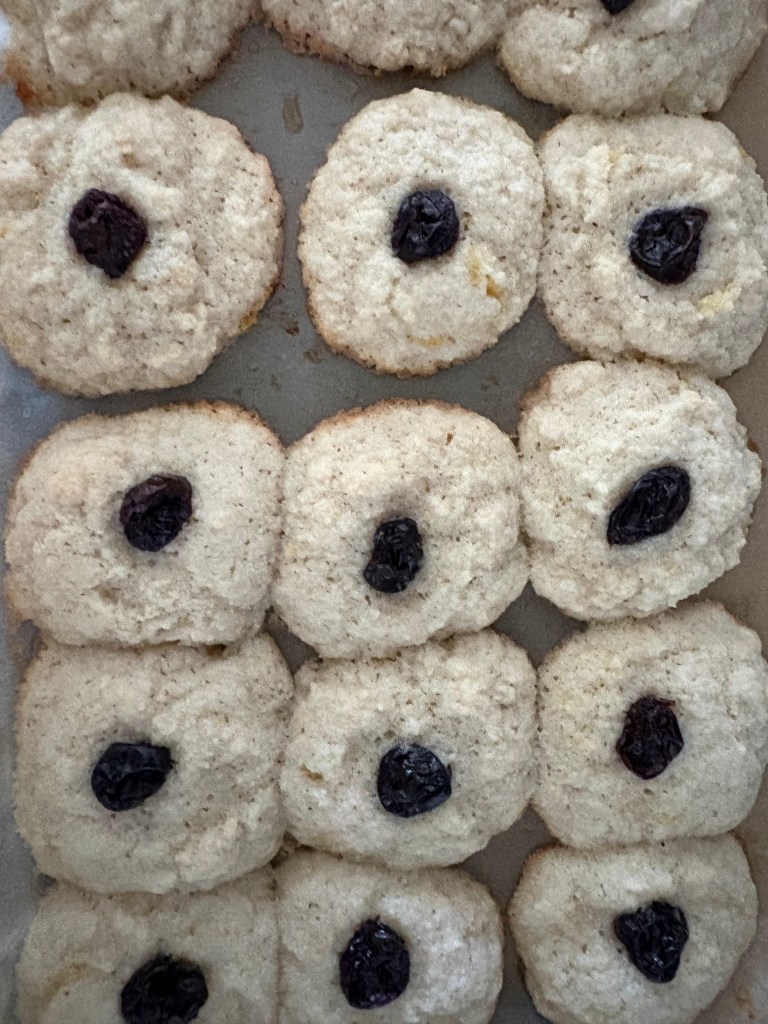
    The cookies are decorated with glace cherries or whole blanched almonds on top. I found some dried cherries at the store and soaked them in water to give them a consistency somewhat closer to glace cherries.

    Since I didn’t have the pastry bag tool to give the cookies a super-cute shape as done in the cookbook, I just made circles.

    The cookies turned out sweet and almondy–similar to the cookies I ate a little bit too much during my time in eastern Sicily this year.

    If we’re ranking recipes, this was probably my second favorite, although one day I need to get the right tools to make the cookie’s shapes and ridges.

    Kept fresh in the fridge, these cookies still tasted chewy and soft several days after I made them.

    Our overpuffed (but still tasty) version of the Sicilian cookie recipe with the dried (but soaked) cherries on top.

    Italian Cookie Making With “Italian Cookies”: The Final Verdict

    I loved this cookbook.

    For someone who enjoys reading and learning about Italian food culture, I took my time to savor (pun intended) each regional description and enjoy the accompanying pictures.

    Marchetti did a nice job of including some recipes about cookie-baking pioneers in each region of Italy. If you’ve been to Italy, you may have even visited some of the places she mentionns throughout the book or on the list of select cookie bakeries in Italy. The chapter on cookies from the islands includes information on Noto’s Caffe Sicilia, which I’ve written about before but was unfortunately closed during my off-season visit to Noto, Sicily, earlier this year.

    Marchetti provides plenty of support and resources for baking items that you may not have around the house. She explains baking tools you might need and Italian ingredients (examples: Sicilian almonds, pistachio flour, pizzelle irons) and where you can find them in person or online–important as some of the less-common ingredients may be harder to find.

    Although I didn’t take the time to find these special ingredients, I could see the value of doing so if making cookies for a special event, like around Christmas.

    Trying these recipes also taught me a few things about cookie baking beyond my Southern U.S. cooking background:

    Not all cookies need butter. This is still hard for me to accept, LOL.

    Not all cookies need chocolate.

    Almonds and sugar can serve as a great cookie base, which created a sense of deja vu from when I discovered marzipan (a paste of blanched almonds and powdered sugar) while living in northern Europe for a year during high school.

    -Italian cookies do a terrific job of incorporating local specialty ingredients. This would explain how I ended up eating a few too many cookies with pistachio or orange zest in Sicily.

    I look forward to trying more recipes from “Italian Cookies” to further hone my skills.

    Here’s a link to the book: “Italian Cookies“.

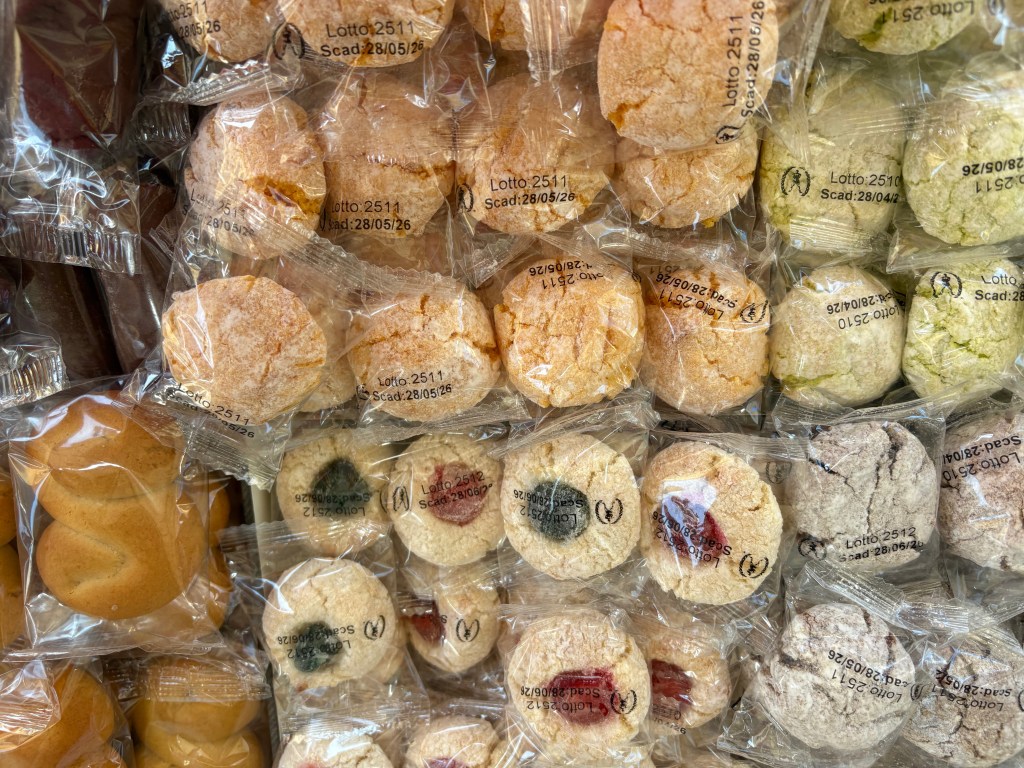
    Cookies seen at an outdoor market in Noto, Sicily, February 2026.

  • Driving in Sicily? Here Are 10 Tips for Tourists

    If you’re planning a visit to Sicily, Italy, and you want to drive while you’re there, you may wonder if you should rent a car and what the driving experience is like.

    Here was our take on road tripping in a rental car around the southeastern part of the island:

    Driving is doable there, but you’ll want to stay more aware of road hazards, pedestrians, and narrow spaces. If you’re a laidback or only mildly nervous driver, you should do OK. If you’re a nervous driver, maybe let someone else take the wheel although you may be OK on the highways. If at all possible, avoid driving in city centers–definitely not Catania or Palermo but maybe not even in medium-sized towns. The driving in those areas is more chaotic.

    I share this answer based on my 9-day trip around Sicilia bedda (beautiful Sicily) off-season, in February 2026. I flew into Catania, on the eastern portion of the island close to Mount Etna, and stayed in Noto as my base–I would definitely recommend having a base town, and Noto was a solid choice.

    I drove every day except the day I arrived, the day I flew home, and one day when I didn’t feel great and decided to just stick to Noto.

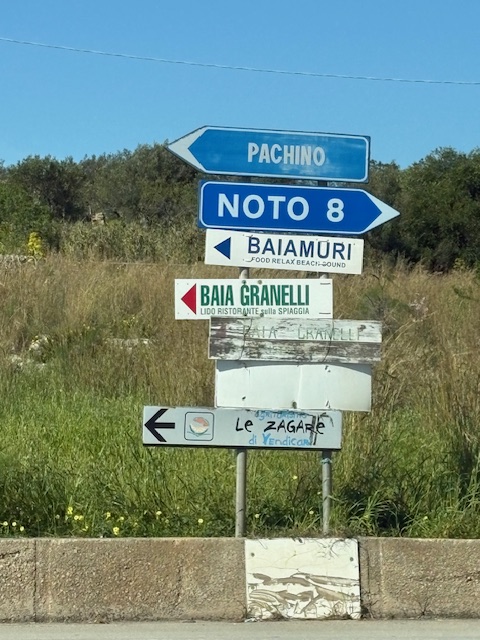
    Road sign in eastern Sicily, near Noto.

    Sicily has public transportation like buses and trains, but they are apparently not as well used as in northern Italy. You can get by using public transportation with some planning, but having a car will get you farther (no pun intended). Plus, I’ve had Sicilan locals tell me flat out that if you’re traveling there, go ahead and rent a car–especially if you want to spend more time outside the bigger cities.

    So, to make your trip a little easier to plan–and perhaps a little safer and enjoyable–here are my 10 tips for driving in Sicily, geared toward visitors. Although I was a female traveling solo, I sometimes use “we” in my articles to avoid overusing “I.” Let’s go!

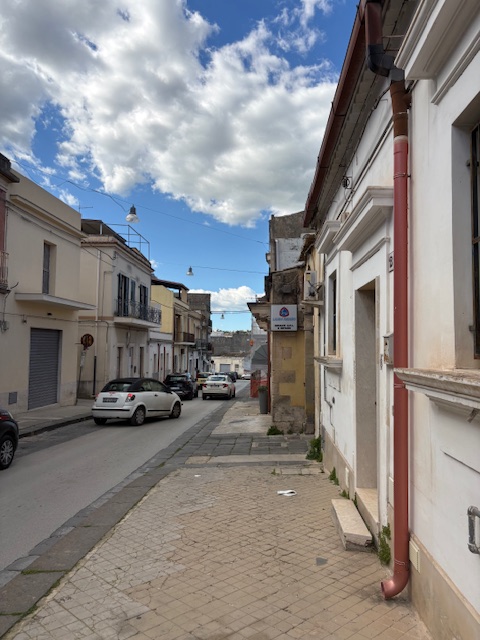
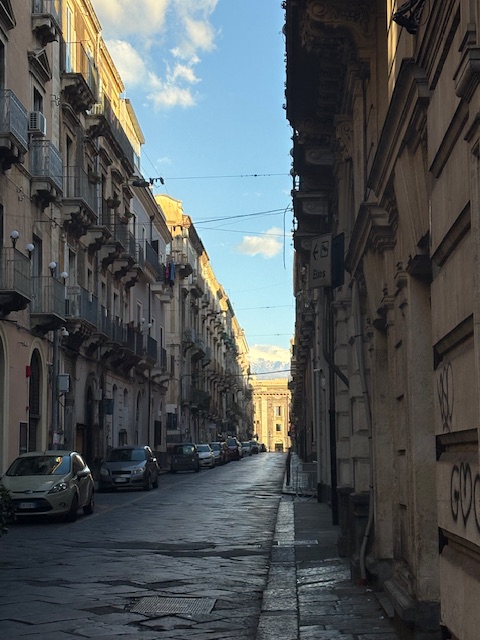
    A street view in Noto, Sicily, Italy.

    Get an International Driver’s Permit (IDP). If you’re coming from the U.S., you’re required to have an IDP for driving in many E.U. countries. The Italian embassy says you can also have a copy of your U.S. driver’s license translated into Italian but if you’re going to get that done officially, you may as well go ahead and get the IDP. Yes, it’s one more item on your to-do list, but it’s only about $20 along with the cost of a passport photo of yourself. You can go in person to a AAA office to get one or apply by mail. I got mine before traveling and scored a cheap offer to join AAA while there.

    You still may be able to rent a car without an IDP–your rental agent may only ask to see your regular driver’s license (my agent asked to see my IDP)–but you may have a steep fine from the police if you are stopped and don’t have an IDP.

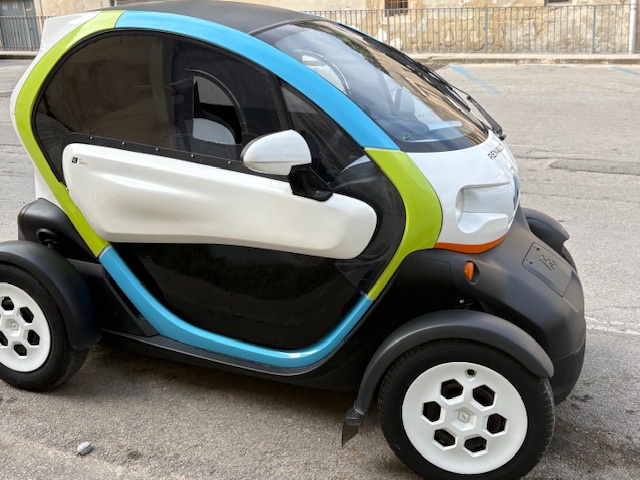
    This small vehicle in Scicli, Sicily, Italy, has the right idea!

    Rent as small of a vehicle as you can. Upon checking in with Sicily by Car at the Catania Airport, everything was going well. The agent was friendly and she liked my colorful earrings and purse. That love fest led to an upgradewith a slightly nicer vehicle than what I paid for, or so she said. A Kia Sportage? Great! I drive a Kia Sorento at home, I said. Well, the car was definitely comfortable but I wished later on that I had something smaller. Navigating some of Sicily’s more narrow roads was doable in my SUV but made me a little nervous. This would probably apply to other areas of Italy as well. If you can get a smaller car and still comfortably fit your luggage, do it.

    Modica, the town where I got some scrapes on the rented Kia Sportage.

    Get full-coverage car insurance for your visit. Your auto policy in the U.S. won’t cover your car rental in Europe. Don’t cut corners here–or should I say, if you cut a corner while driving, insurance will cover the cost for it. Ask me how I know. While leaving the small town of Modica (famous for chocolate), I scraped against a building. Oops! I scraped the right back passenger side of the car, and my rental car company had to clock the damage when I returned my car. I had to pay US $972 upfront for the damage and when I returned home, I filed a claim with my insurance company. It took a few weeks but guess what? One day, that $972 reimbursement showed up in my bank account. If you get into an accident, hold on to any paperwork given to you by the rental company as your insurance company will need a copy.

    I got my coverage through Booking.com, which is where I also booked my rental car. Maybe it was $80 to $100 total? Some people say online you should get your policy through a third-party provider and not the rental car company itself. I can’t advise you there but all I can say for sure is, get the coverage.

    Sicily is soooo pretty, but watch for distractions. Pic taken in Marzamemi.

    Don’t drive distracted. If you’re driving in the U.S., then you already know to watch out for pedestrians, whether they’re zombies starting at their phone or kids or animals running out in the road without looking. The same applies in Sicily. With everything scrunched together in cities or town centers, it can be easy to miss something. If you’re on the autostrade, or highways, in Sicily, you may encounter beautiful scenery (it reminded me of California wine country with valleys, greenery, and coastline in the distance). It’s soooo nice to look but then, oops, there’s a car newly in front of me! You get the point. The novelty of your visit can make everything more distracting. Do all you can to focus.

    Traffic seen at a distance in Catania, Sicily.

    Avoid driving in big cities. Before arriving in Sicily, I decided not to pick up my rental car at the airport the same day of my arrival. Since I was arriving in the evening, I knew it would already be dark and my B&B was in the center of Catania. I had zero interest in city driving, especially after my long journey. It was the right choice. Catania driving definitely seemed more chaotic compared to other areas I visited, probably similar to scenes of foreign driving you’ve seen in person or in movies. Think: Fewer people following the rules, no real use of turn signals, confusion at roundabouts, and more. This meant that I had to take an Uber to my accommodations that evening and the next day to get my car. Although I wasn’t crazy about the extra Uber costs, it was still the right decision. Plus, I didn’t have to go on a crazy parking quest in Catania.

    I haven’t been to Palermo, but I’m guessing the same principles apply. If you’re a driving pro and want to take your chances driving in the city, be my guest. I’ll stick with my own two feet in the cities, grazie.

    Small car on a small street in Noto, Sicily.

    Think narrow. Not every stereotype you see about Italy in movies or TV shows is correct (perhaps that’s an article for a different day). Yet one stereotype that’s accurate is that many roads are narrow, particularly in the cities or town centers. The autostrade (highways) were nice and open–maybe not as massive as U.S. roads, but they were manageable and usually scenic. Yet in the city or town centers, roads were often narrow and sometimes had cars parked on one or both sides. There also were a few streets where I wondered how any car could fit–needless to say, I avoided those streets, even if my GPS was urging me to turn left or right.

    As previously mentioned, that nervousness ultimately led to my rental car scrape in Modica. I wasn’t even on a super narrow road, but who knows? Maybe my sense of space in that moment was just off.

    Honestly, sometimes, I just needed a break from driving while there as it did make me a little nervous. At one point I considered taking a short train ride for a day trip but ultimately decided against it. There’s a real convenience with having a vehicle.

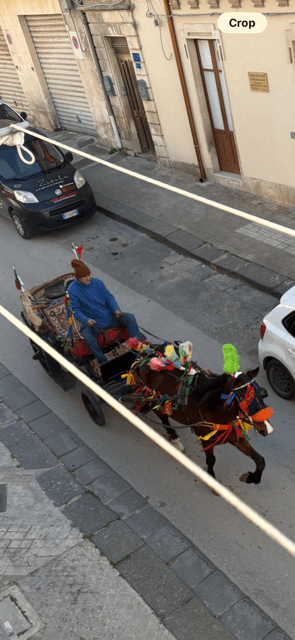
    Share the road! Horse seen beside cars in Noto, Sicily.

    Have a GPS backup. We all use the navigation system in our cars or on our phones, right? Mine helped me tremendously in Sicily, but there were also times it got things wrong–like the time I typed in a destination and next thing I knew, I was on a dirt road and there was a guy with a machete on the side of the road (I think he was a farmer trimming extra grass). Or, as a pedestrian in Catania, I was trying to get back to my B&B and my phone GPS kept taking me farther away from there (I eventually took an Uber back!).

    I don’t have a good alternative to suggest when your GPS fails except to stay aware of possibly bad routes. If you can find an actual map book, that may be useful. If you’re traveling with a guidebook, they will sometimes have small maps you could use as a backup.

    Know a little bit of road-friendly Italian. So yes, most of what you see on the road will be the names of towns and their distance from where you are (remember that 1 kilometer is 0.6 miles). However, you may be surprised by how handy it is to know some road-friendly Italian. Plus, the use of road signs is sometimes different compared to the U.S. Check out these road-friendly phrases from Italy Magazine and this guide to driving in Italy from the blog Mom in Italy. You’ll be glad you did. Prego.

    Cars in early morning Catania, Sicily, with Mount Etna volcano seen in the background.

    Watch where you park. This tip has a few layers to it. First, Italy is notorious for its ZTL signs in historic city centers. ZTL stands for Zona a Traffico Limito, which basically means that traffic is limited there and you could get a big fine if you park or drive there without authorization. So, before you think you scored the spot of the century, look out for a ZTL sign.

    Next, find out about the parking situation near your hotel/B&B before you arrive. In the U.S., we’re spoiled in suburbs and small towns with ample parking lots. Italy, including Sicily, doesn’t always have that space. Find out where you’re able to park, if parking is a tight squeeze, and whether it’s close to your place. In Noto, I was fortunate to have a small lot right beside my B&B that always had at least one space for me. It shared space with a small fish market and a butcher. Only one time did I make a tight squeeze and apparently cause a block for others, leading a Sicilian man to grumble something to me in frustratrion. I gave my best “Sorry I’m a tourist” smile and moved my car elsewhere.

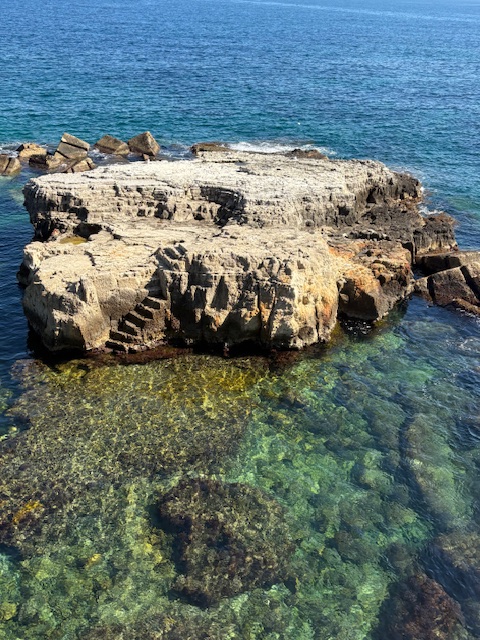
    The sea in lovely Ortigia, Sicily. I looked up parking options online in advance, found the lot, paid a couple of Euros, and blissfully trekked by foot for my day trip there. The only difficult part was getting through busy Siracusa/Syracuse to reach Ortigia.

    If you’re visiting a larger area, use your GPS or an online search to find out about parking areas in advance. In Ortigia (loved Ortigia), there was a parking lot on the edge of the historic area where I was able to park all day. I had to download an app to pay for parking, similar to what you might do nowadays in the U.S. It was great to park on the edge of the action, although I did have to drive first through busier Siracusa during rush hour and it made me somewhat nervous.

    Bottom line, doing some research on parking options can help save you some headaches. Just look up “parking” + “name of town” online and you’ll find some guidance

    Enjoy your trip and drive safely!

  • Mount Etna Volcano, the Fish Market, and More: Here’s What to Know Before You Visit Catania, Sicily

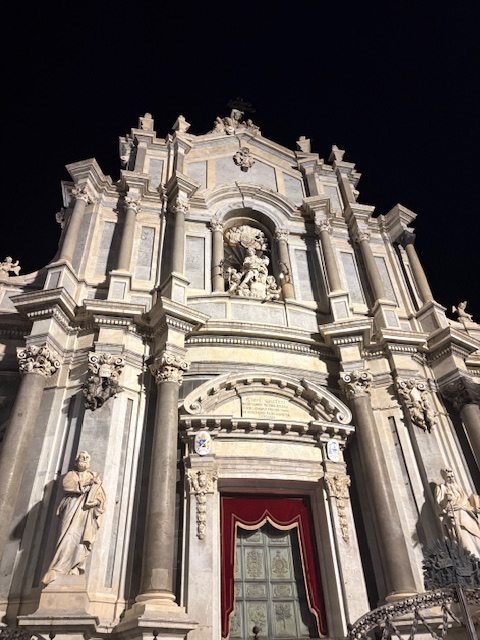
    Saint Agatha Cathedral in Catania, Sicily. Saint Agatha is the patron saint of the city.

    If you’re planning a visit to Sicily, Italy, and you’re wondering if you should visit Catania, located in eastern Sicily and the second largest city on the island, here’s our simple answer:

    If you’re flying in or out of Sicily via the Catania airport, stay a night or two there so you can check out some of its highlights. If you like vibrant city life, spend some time there.

    It’s not going to be the peaceful experience you’ll have in smaller Sicily towns, but Catania definitely has history, passion, tasty food, and cool views of Mount Etna volcano.

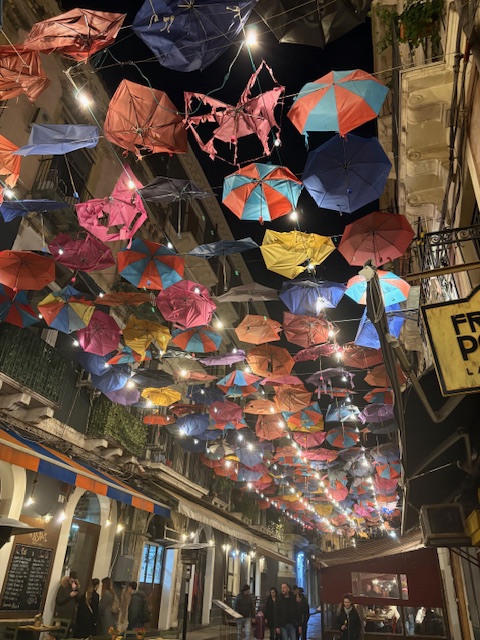
    Umbrellas decorate the view in one part of Catania’s city center.

    Let me walk you through my two nights in Catania and share a few tips that may help you. I stayed there in late February when it was off-season in Italy.

    A quick note: I was traveling solo as a female but sometimes use “we” in my article to avoid using “I” all of the time.

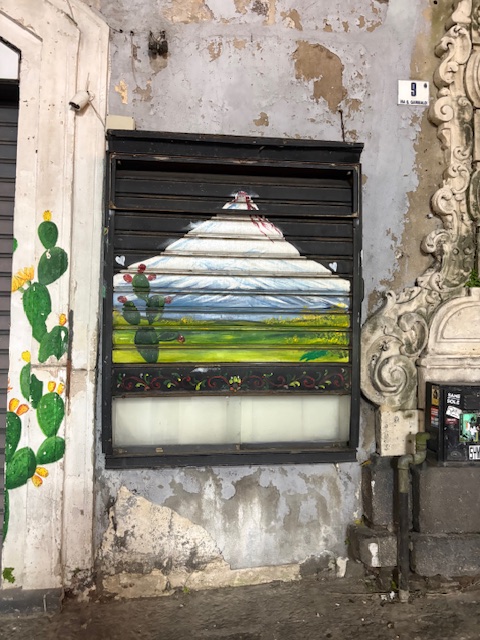
    A street painting of Mount Etna. The view of the real thing is even more impressive.

    Some Quick Facts About Catania, Sicily

    Before sharing visit details, let’s load you up with a few facts about Catania, so you can put your visit in context:

    The city has about 315,000 residents, and there are about a million people in the general area. The city also has beaches although we didn’t make it to them. The beach areas received some damage during Cyclone Harry in January 2026.

    Catania got hit by a bad earthquake in 1693 and was rebuilt in a Baroque style using black lava stone from the famous Mount Etna volcano. This earned Catania its nickname of “the Black City.”

    The historic city center of Catania is a UNESCO World Heritage site.

    Catania’s been around for a loooonnnng time–since 8th century BC.

    Catania has an underground city that you can tour. It features Roman-era aqueducts and more.

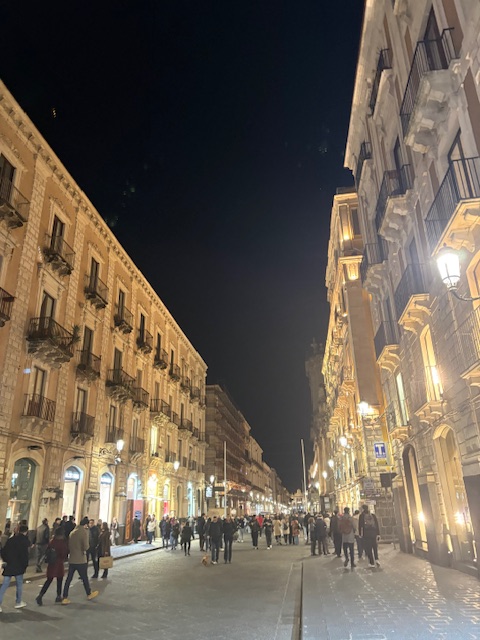
    A view of Via Etnea, a well-traveled street in downtown Catania, Sicily.

    Sights to See in Catania, Sicily…and the Scoop on Staying There

    OK, let’s get to it! I arrived in Catania on a Saturday evening, tired from my trip (I flew from the U.S. to Rome and then Rome to Catania) but also eager to explore the city. Pretty quickly, it reminded me of Lima, Peru, which I’ve visited a few times. Beautiful architecture with some gritty city life around it. Not gritty as in unsafe or ugly, just….a lot going on. Definitely a city with stories to tell.

    The four-room B&B where I stayed (shout out to Opera Boutique) was located on a hill about a block or so from Via Etnea, the popular pedestrian-friendly street filled with cafes and shops. After getting settled, I quickly made a beeline toward Via Etnea and watched my step heading down the steep decline.

    Right away, the rush of city life and energy was there. Young people–or mostly young, especially compared to the people I saw in SIcily’s smaller towns–were all around, dressed in black and flirting with each other, vaping, sometimes arguing. Street performers did what they could to attract passerby and get a few Euros tossed their way. Servers from restaurants beckoned passerby to try the pasta, pizza, or drinks at their place.

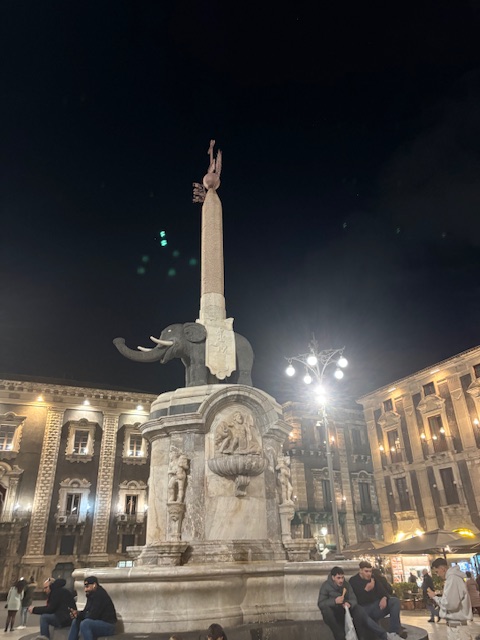
    Catania’s famous elephant statue, nicknamed u Liotru in Sicilian.

    I strolled for awhile before deciding where to eat, taking in the crowd but also the view of Saint Agatha Cathedral (closed for the evening) and the famous elephant statue called u Liotru that symbolizes Catania–located right across from Saint Agatha. It’s a good stopping point, but it also was crowded on Saturday night.

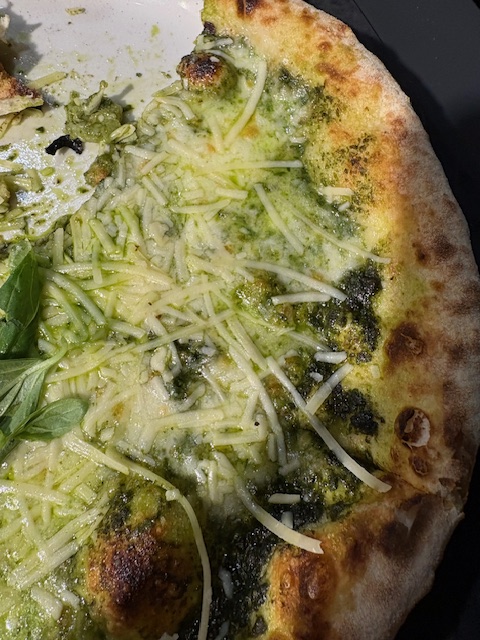
    Pesto pizza in Catania. It was as tasty as it looks.

    I eventually stopped for pesto pizza (delizioso) and a bright orange aperol spritz. OK, two of them.

    After getting a little lost, I eventually made it back to my B&B. While my phone’s GPS was helpful overall during my Sicily trip, it sometimes got things wrong and sent me on a goose chase that evening. I recommend that you have a backup plan for situations like that, whether it means paying attention to where you’re going as if you didn’t have GPS or keeping your phone charged well. Also, take a screenshot of where you’re staying and its address.

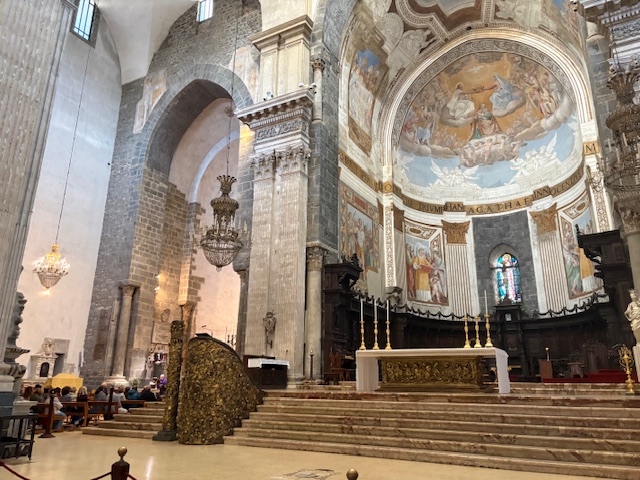
    Inside Saint Agatha Cathedral.

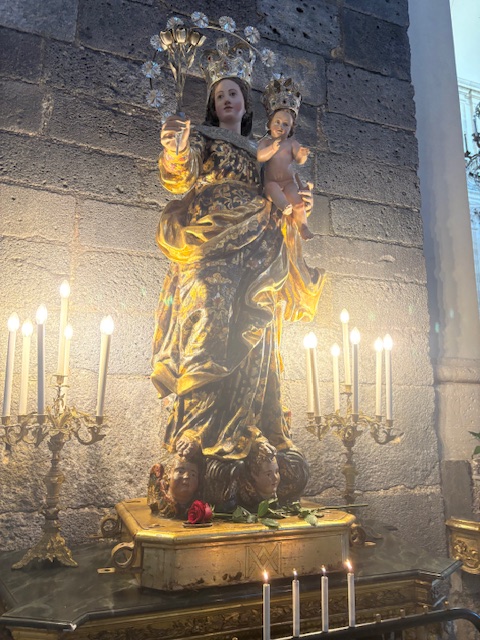
    The next morning, I enjoyed Via Etnea with far fewer people and far-off views of beautiful Mount Etna. I was able to go inside Saint Agata Cathedral (called Cattedrale di Sant’Agata or Basilica Cattedrale Sant’Agata in Italian) and learned a little more about its history. It was originally built in 1078 but then was almost completely lost by an earthquake in 1169 and then another earthquake in 1693. It was rebuilt in its current Baroque style and is now a UNESCO World Heritage site.

    Another view in Saint Agatha Cathedral. It’s kind of hard to see, but there was a small service going on toward the left.

    The cathedral honors Saint Agatha of Sicily who lived in the third century. Saint Agatha is the patron saint of Catania and of breast cancer patients. It’s also said that she helps to protect the city against volcanic eruptions. There’s a massive festival to celebrate Saint Agatha that’s held in early February in Catania. I was there just a couple of weeks after the festival.

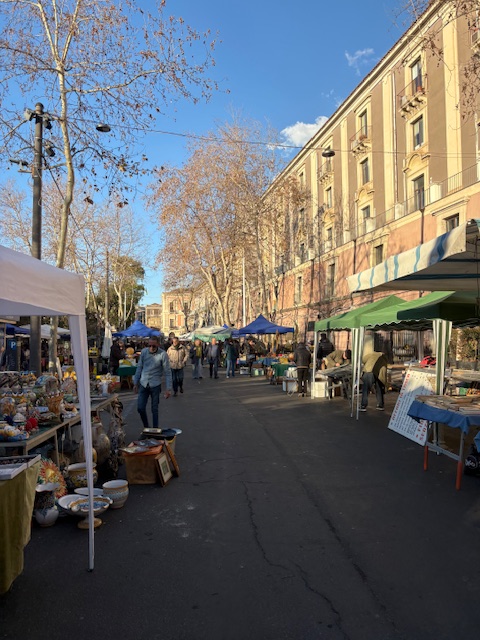
    A Sicilian Sunday morning flea market.

    I came across a flea market in the same area where the fish market is held Monday to Saturday (more about that below). As a lover of outdoor markets here in Florida, it was great to compare flea markets in the Sunshine State versus Sicily, especially one I didn’t expect to encounter. As it turns out, flea markets still give you a great sense of the local culture, with old albums, vases, books, ceramic plates, and other items that were (mostly) unique to Sicily.

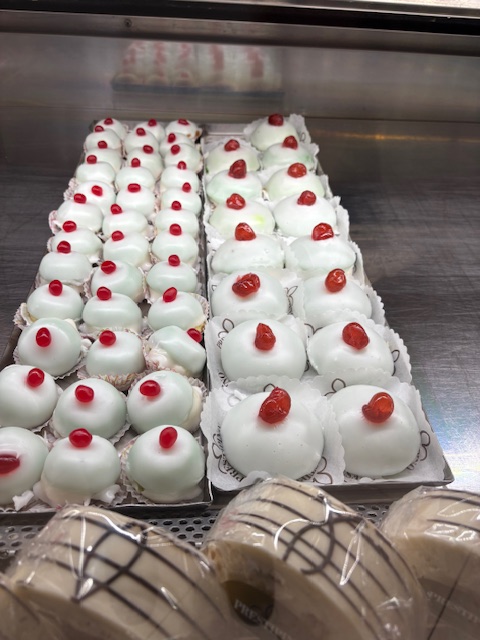
    Sicily is well-known for its desserts. We spotted these Minne di Sant’Agata at Prestpino Cafe in Catania.

    I enjoyed breakfast at Prestipino Cafe, where I ordered un espresso e un cornetto, per favore (an espresso and a croissant, please), along with a fresh-squeezed orange juice. Sicily is known for its citrus fruits. Everything was delicious, but the chocolate filling in my croissant got messy and I noticed a family of tourists gently laughing at my mess. Oops!

    I took several pics inside Prestipino of the traditional Sicily desserts they had on display, giving me a sneak preview of things I’d try later in my trip.

    I eventually made it back to the B&B and took an Uber to get my rental car. Since I’m focusing here on Catania, I’ll skip the rest of my trip (although you can read about it here) and jump ahead to my second night in Catania–the last night of my trip before returning home.

    My return to Catania got me into the city around 12:30 in the afternoon, where the B&B hostess let me know if I wanted to make it to the Saturday fish market, I’d have to hustle. I did just that and again, as a perennial fan of outdoors markets, it didn’t disappoint. There were so many types of fish around. While I wasn’t looking to buy any to cook, they were still great to see for pictures and the atmosphere.

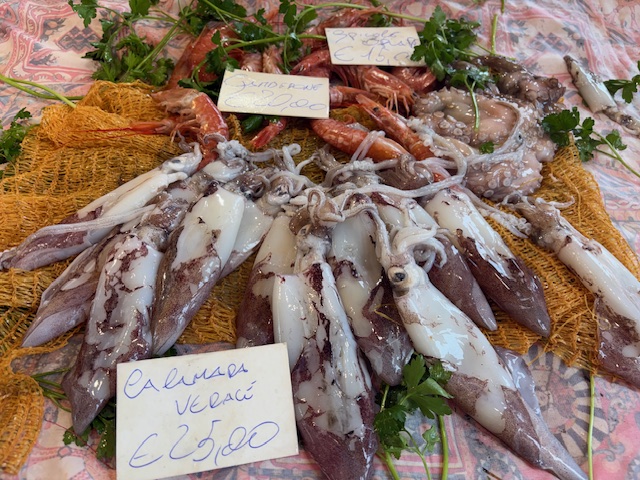
    Calamari for sale at the Catania Fish Market.

    Much like my previous Saturday in Catania, the city was bustling and there were even more tourists than before. In addition to the fast-moving feel of the fish market, restaurants were doing a brisk business and I saw signs for horse meat (carne di cavallo), which is famous in Catania and a few other parts of Italy.

    The fish market was a definitely a highlight of my time in Catania.

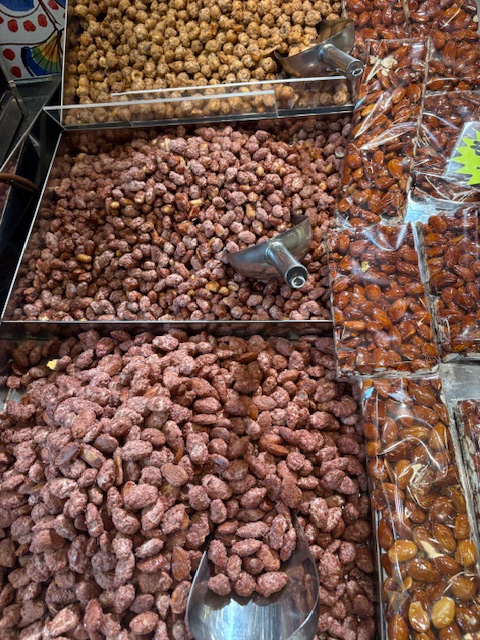
    Ultimately, my need for sweets prevailed and I purchased some praline-style almonds from a street vendor–almonds are yet another agricultural item well grown in Sicily. This may not have been a balanced lunch but they were just what I wanted. We’ve all had those days, right?

    Yummy nuts in Catania make for a good street-food snack.

    The street area was quite busy (and honestly, smoky from people who smoke/vape). Beyond a pizza for dinner, those were the highlights of that day in Catania.

    I made it to the airport early the next morning with some confusion as a few of us thought our ticket counter hadn’t yet opened, only to realize it was open in a different part of the terminal. There’s sometimes confusion like that in Sicily, so make sure to advocate for yourself when something is unclear during your visit. Knowing some basic Italian can help.

    If I were to return to Catania, I would make time for at least a half-day tour of Mount Etna (elevation: 11,000 feet). It’s one of the oldest and most active volcanoes in Europe, located in Etna National Park. Although I was traveling through Sicily independently, I would want a tour for Etna as you can only reach the summit craters with a certified guide, and the guides can help instruct you on any safety measures needed. I recently learned about a tour operator/DMC called Enjoy Your Sicily through their Facebook group Sicily Travel Tips, and I would reach out to them for an Etna tour. (They also do private tours/experiences around other parts of Sicily.) Next time!

    Vendors working hard at the Catania Fish Market. Look at that large fresh catch toward the middle.

    Tips for Your Catania Visit

    If you plan to stay in Catania before and/or after exploring other parts of Sicily like we did, here are some tips to consider.

    Stay near the street Via Etnea. This pedestrian-friendly street is the hub of activity in downtown Catania and you’ll be just minutes from the Saint Agatha Cathedral, the fish market, and other famous sites. It may be a little loud on the weekends but again, if your stay is brief, that will pass quickly.

    Follow common-sense safety tips. Catania was the only place during my stay where I felt a little more guarded than usual–not completely unsafe, but cautious. Avoid having anything valuable in pockets that can be easily reached. Walk like you know where you’re going. Watch out for strangers who may try to ask for money or lord knows what else (one strange-looking man approached me for something on Sunday morning but I didn’t understand what he said). That all said, I got lost on my way back to the B&B on my first night and was wandering around and never felt completely unsafe–just lost. I eventually called an Uber to get me back to my place.

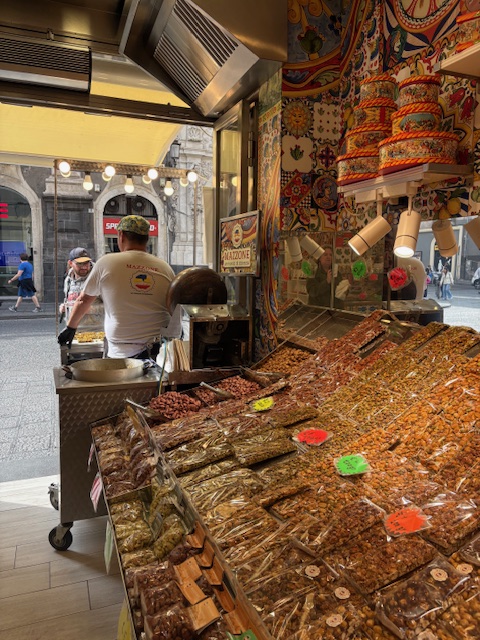
    A view inside a Mazzone location, where we bought more candied almonds.

    Wait to rent a car until you are leaving the city. It may seem convenient to land at the Catania Fontanarossa Airport and get your rental car and then go stay in the city, right? After all, the rental car companies are all right there beside the airport. Right? Wrong. False. If you plan to stay overnight in Catania, we recommend for your own peace of mind to return to the airport area the next day and get your car. Driving in Catania seemed a bit chaotic, and I was thankful not to have to worry about driving there or find parking–especially after traveling hours to reach Sicily from the U.S. The ride from the airport to the B&B was only 15 minutes, so it’s not a huge trek back to fetch your rental car.

    Have a little cash on hand. It’s true that we live in a cashless world, even in Sicily for the most part. However, Catania is one of those cities that charges a tourist tax. Unfortunately for everyone involved, the tourist tax can’t be charged as part of your online booking. For smaller accomodations, it’s easier for them to request that tax in cash (Euros) so they don’t have to pay expensive bank fees. I ended up having to go to an ATM to get cash, but it reminded me that I should always have some real cash on hand.

    Enjoy trying different foods. Even if gritty urban life isn’t your thing, Catania knocks it out of the park with its food options. Whether you want to try some of the best offerings at the fish market, go exotic with the horse meat, fill up on dessert items, or just have traditional pizza and vino, it’s all there waiting for you.

    Don’t miss Mount Etna! We said it before but we’ll say it again. Not having time for a Mount Etna tour was probably the biggest regret of my trip, so we’ll save you any heartache and say: Make time to go see this unique volcano.

    Buon viaggio!
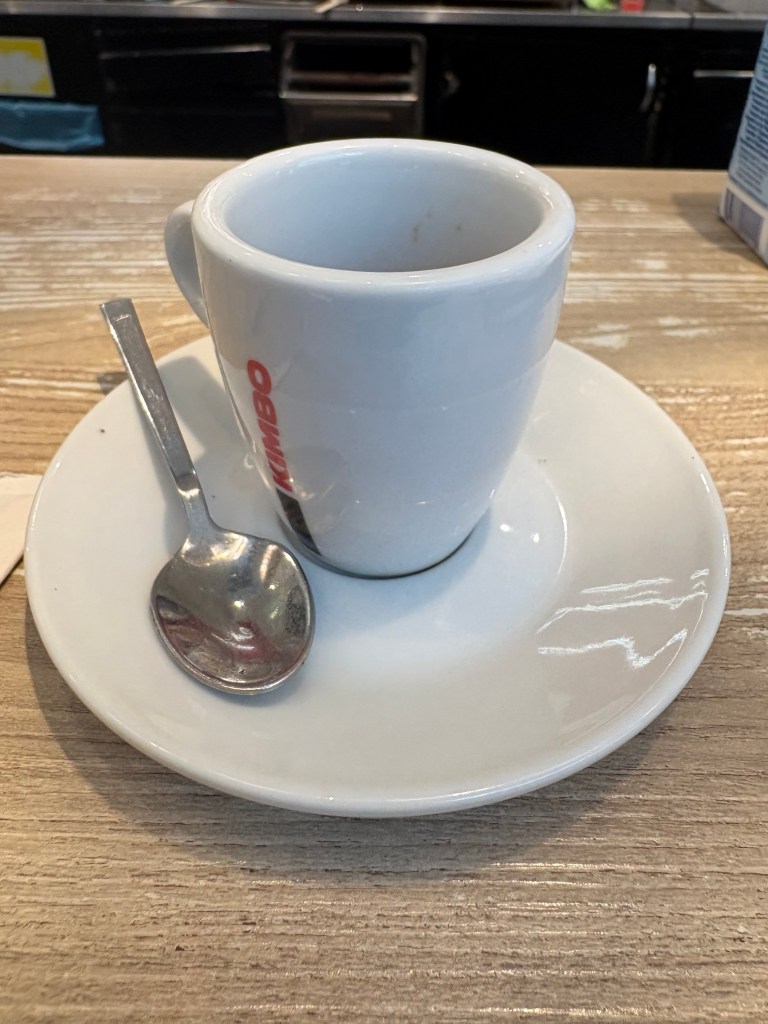
  • Here’s What It’s Like to Visit Noto, Sicily–in Pictures

    Outside of City Hall in Noto, SIcily. Notice the European Union, Italy, and Sicily flags.

    If you’re traveling to eastern Sicily in Italy and plan to visit Noto, we’ve got you covered.

    You can find our detailed Noto, Sicily, article here.

    If you want to get a better idea of what Noto looks like as you plan your trip–or, you just want a virtual tour of Noto–read on!

    This article tells a story of a journey around Noto in pictures.

    I share some of my favorite pics during a week-long stay in beautiful Noto, famous for its Baroque architecture and its designation as a UNESCO World Heritage site. The visit was in late February, so it was off-season. Hence, you don’t see a ton of people in the pictures.

    You can find more details about my trek through southeastern Sicily here. That article also shares some good tips for your eastern Sicily travels.

    Noto was a great “basecamp” town to stay in and southeastern Sicily. However, you also can find great B&Bs/hotels to stay in Ortigia, near San Lorenzo Beach/Marzamemi, Modica, Ragusa, and other areas.

    The fun pics and captions below share some more background to help you plan your trip. Andiamo/let’s go!

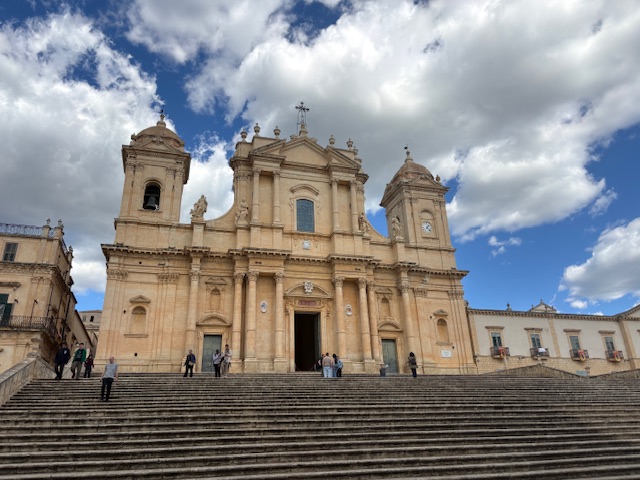
    Here is Noto’s most famous site, its Cattedrale di San Nicolo, or Noto Cathedral. It was completed in the early 1700s, but its dome collapsed and was replaced in the mid-1990s. The cathedral has appeared in various movies and TV shows, including “White Lotus.” You’ll find a lot of activity around this centerpiece tourist site of downtown Noto. It’s beautiful on the inside as well.
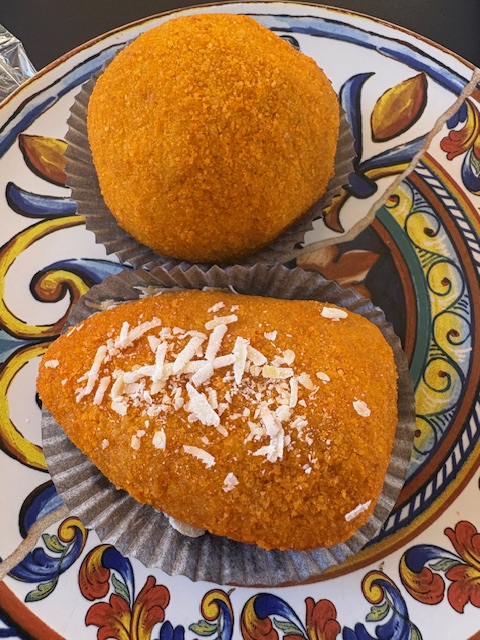
    Yum, here are the arincini, or rice balls ordered at MammArincina in Noto’s small downtown area. Rice balls are filled with all types of ingredients, including rice (of course), cheese, meats, and sauces. You don’t have to limit yourself to their restaurant to try arincini. It’s a Sicilian specialty so they’re pretty common.
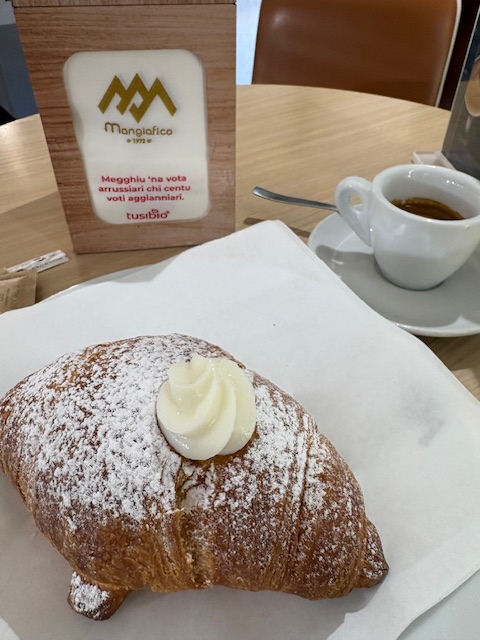
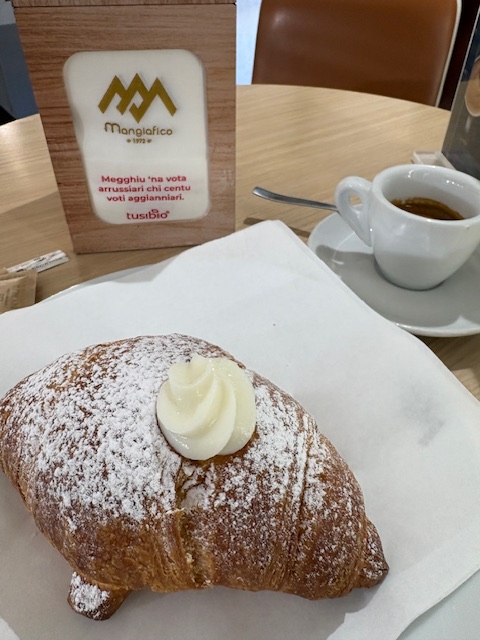
    Un cornetto e un espresso, per favore.” Restaurant ordering gave me a chance to practice my beginning Italian. I did good with this phrase for my croissaint and espresso order at Mangiafico in Noto although I didn’t know the word for “vanilla cream.” It was interesting to get there as it first opened, sit and eat breakfast, and watch some locals trickle in. A few noticed that I was not a local!
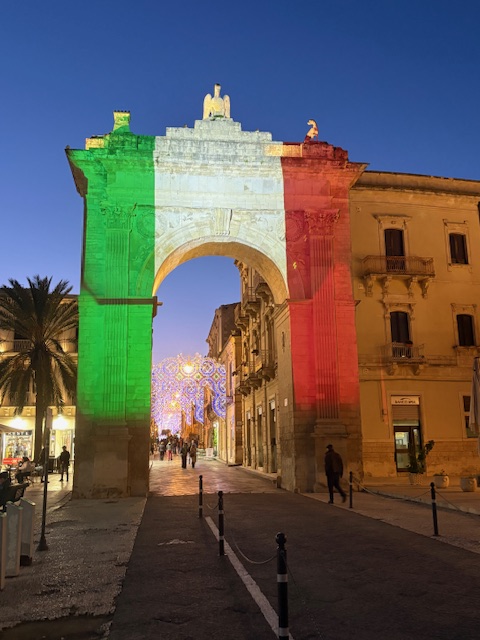
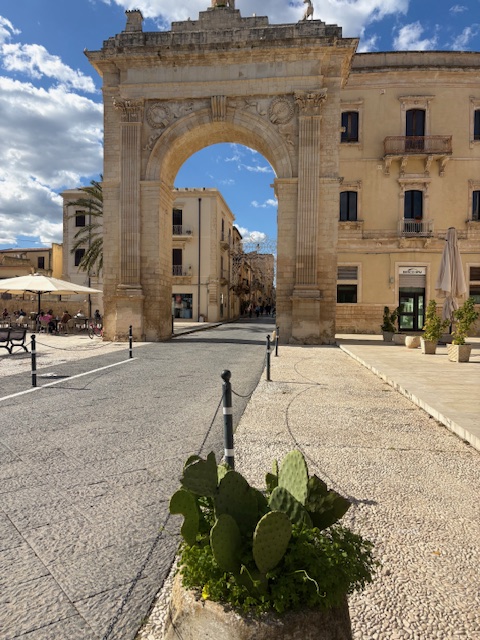
    Look at the cool lighting on the Royal Gate (Porta Reale) in downtown Noto. In the evening, locals like to have a passaggiata, or walk, in the downtown area. If it’s in-season, you’ll surely find a lot more tourists doing the same. You can also shop at souvenir stores and people watch while you stroll around the downtown.
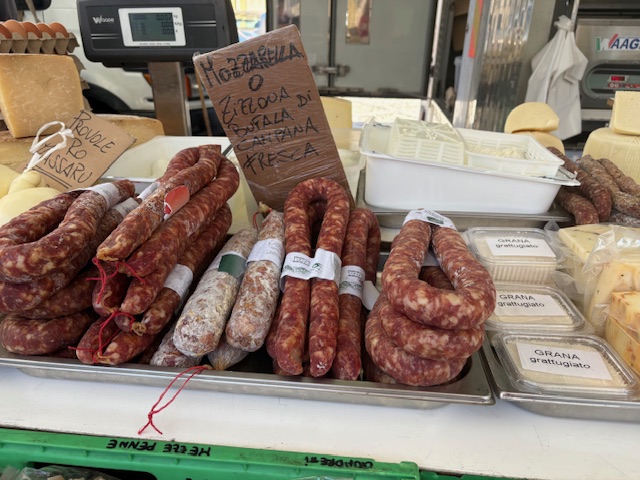
    Noto has a mercatino, or outdoor market, on Sunday and Wednesday. I was thrilled when my B&B host at Cuore Barocco took me there to pick up some local cheese, and I returned that Wednesday for some Sicilian cookies and more cheese. Make sure to also ask any locals you meet for grocery store and bakery (panificio) recommendations. Cheap, fresh bread always makes things better.
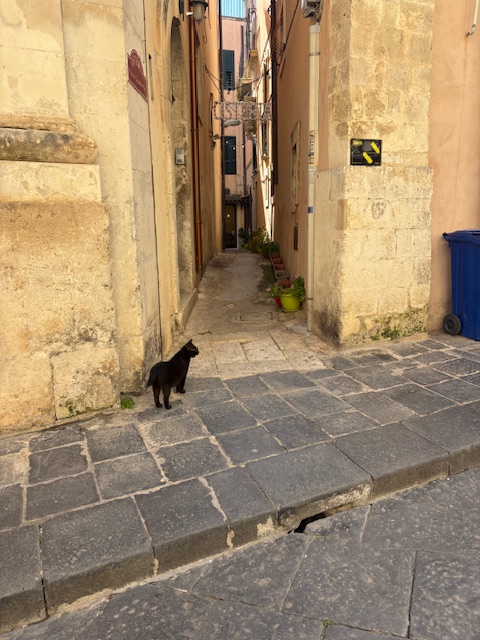
    A random cat from my Noto stay. I have so many cat pics from my Sicily trip; they should become their own separate article!
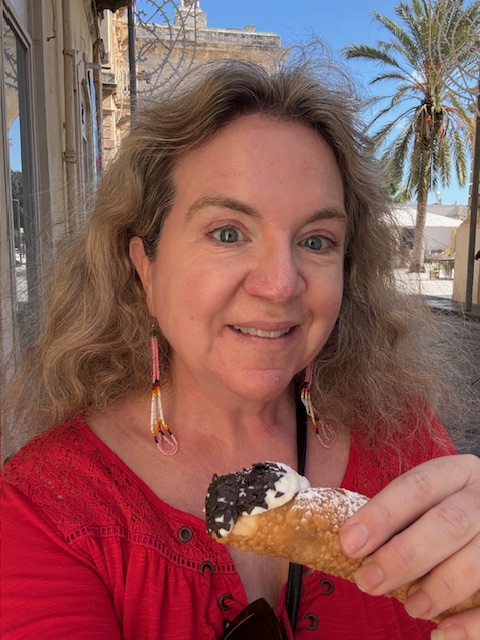
    Holding a chocolate chip cannolo from Cannoliamo in downtown Noto. Sicily is the birthplace of cannoli so you must try one! They are calorie-free while you’re in Sicily!
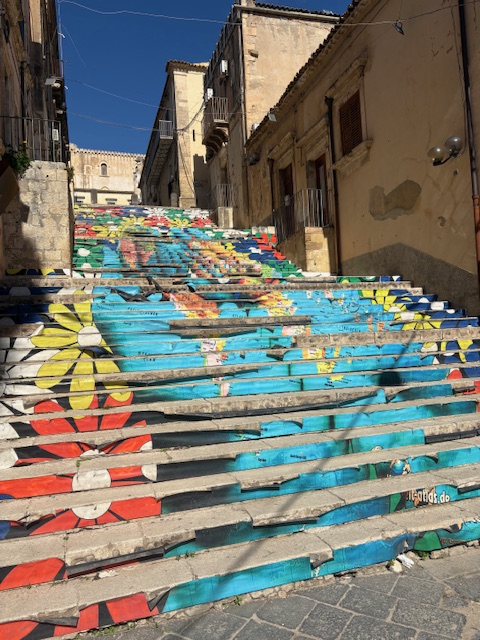
    Every May, Noto has a flower festival called Infiorata. Here’s a staircase with some art that remained after the festival.
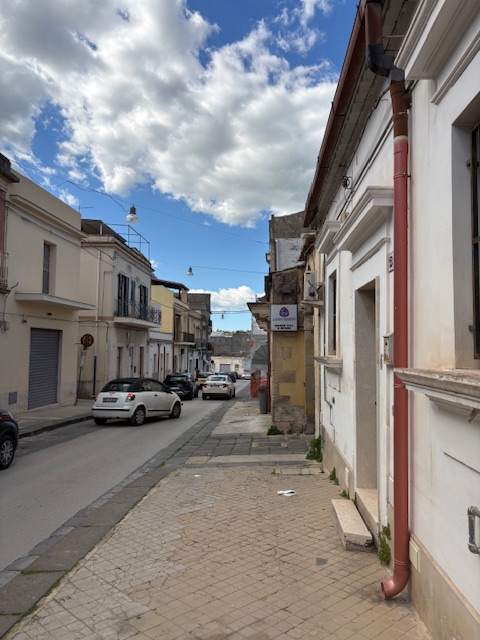
    One view of the streets of Noto. Make sure to wander around to different streets to look for good photo angles. For some reason, the sidewalk looks wider here than usual. The sidewalks were quite narrow, so walk carefully, look out for cars zipping by, and monitor your children if traveling with them. Also, be careful driving. I was fortunate to have a parking space that was not right on the street for my rental car (ask your B&B host if there’s anywhere nearby where you can park comfortably). Otherwise, you’ll have to deal regularly with a tight parking situation. My B&B was thankfully located near the end of the street and in walking distance to everything.
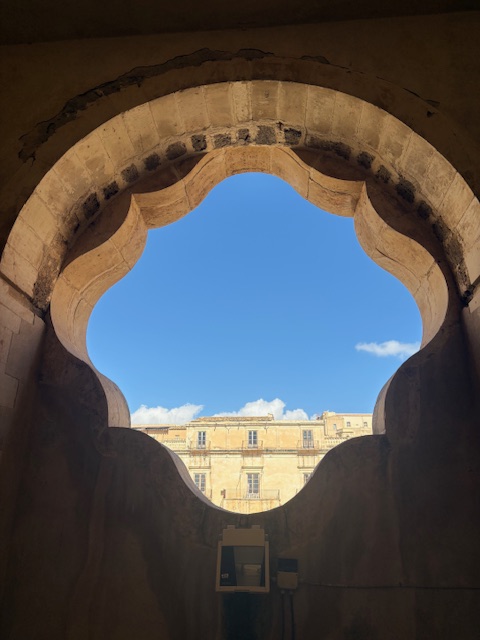
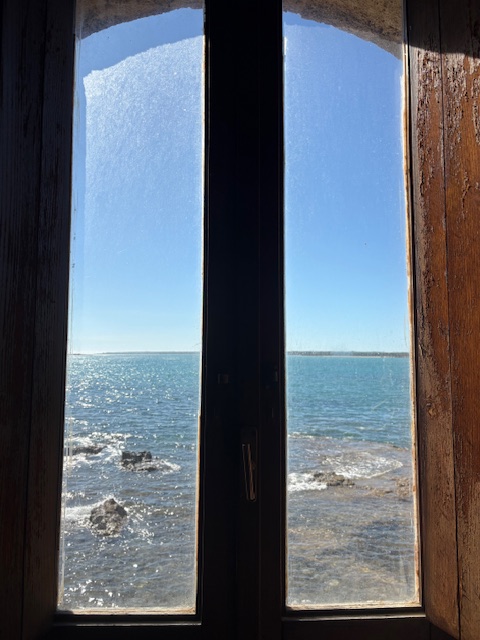
    A lovely view from the cut-out window at Saint Carlo Church. You can climb to the top of the church and check out a stunning view of the Valley of Noto and downtown Noto. However, be prepared for some stairs (see pic below).
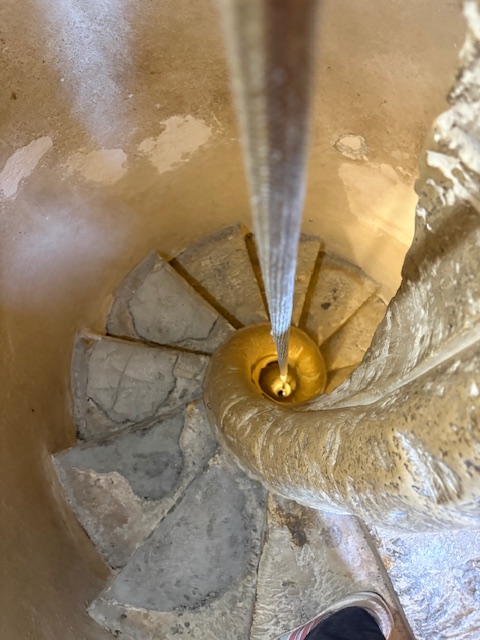
    Here’s what the staircase looks like at Chiesa di San Carlo/Saint Carlo Church in Noto. They are quite steep and old! Only one person can fit on a stair at a time so listen out for others who may be coming. Still, the view at the top is a nice payoff.
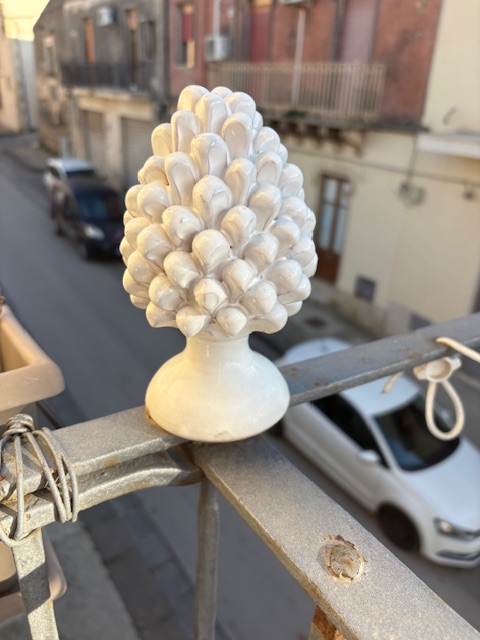
    You’ve probably seen the man-and-woman statues that are symbolic of Sicily, but did you know that the pigna, or ceramic pinecone, is another symbol of hospitality and prosperity in Sicily? This one was on the balcony of where I stayed.
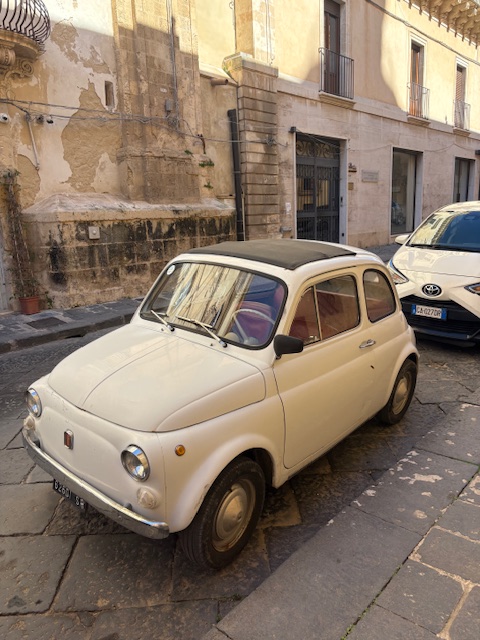
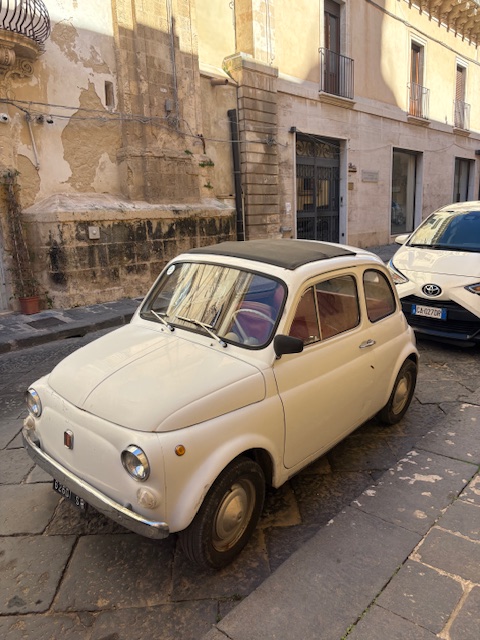
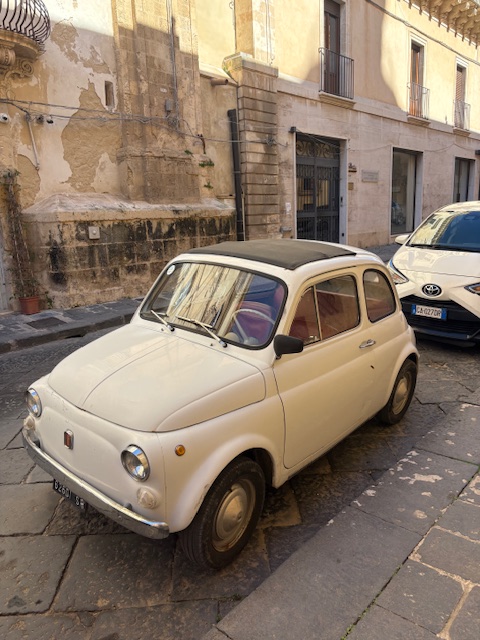
    Obligatory pic of a small car on an Italian street. 🙂
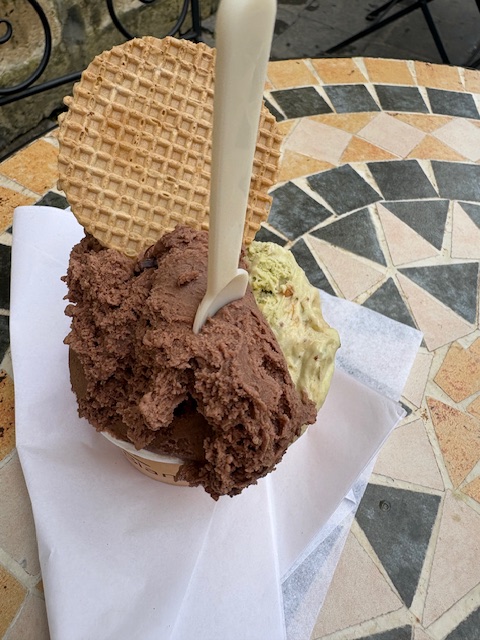
    Gelato from Gelati Bianca in downtown Noto. This was Nutella (I think) and the Sicilia, which blended together locally-grown items like raisins and almonds. Molto buono!
    Another view of the arch in beautiful downtown Noto.

  • Here’s What It’s Like to Visit Sicily’s Marzamemi and Vendicari Nature Reserve

    Lovely sun, colors, and decor in Marzamemi, Sicily, located south of Noto in Italy.

    If you’re interested in Italy’s island region of Sicily, you’ve probably heard a ton about Catania, Palermo, and Taormina.

    Yet it’s even more interesting to dig into smaller (but still popular) areas around the island, which is how I’d categorize Marzamemi and Vendicari Nature Reserve.

    Both are located in southeastern Sicily, south of Catania and south of the famous Baroque town of Noto. If you’re renting a car (which you will have to do to reach these areas without a local driver), you’re 20 to 30 minutes or so from Noto to each location.

    Yet they both offer an intriguing glimpse of life in this tucked-in corner of traditional Sicily–Marzamemi revealing history related to commercial tuna fishing and Vendicari Nature Reserve offering a quiet retreat, bird watching, and also some tuna fishing history.

    Here’s what we experienced during our visit in early 2026–and some tips for your own trip planning. Note that I was traveling solo but I use “we” in my article to avoid saying “I” constantly.

    Marzamemi, Sicily.

    Marveling at the Sea and Sicilian Food at Marzamemi

    If you want to see the sea (pun intended), feel a breeze, and try Sicilan seafood in a colorful setting, then head on over to Marzamemi. Although not as large or flashy as Ortigia, it was a picturesque afternoon diversion.

    Although the visit was short, I’d say it was one of my favorite parts of my southeastern Sicily trip.

    Much of today’s Marzamemi is what remains of an old tonnara, or tuna processing plant. Yet the full fishing village has roots dating back to the 1000s when Sicily was under Arab rule (Sicily has been conquered by many different groups, which is why you find a mix of Arab, Spanish, Norman, Greek, and other cultures in its architecture and food). The name Marzamemi is thought to be linked to the Arabic “marsa al hamem,” meaning Turtle Dove Cove.

    The present-day view of Marzamemi is said to date back to the mid-16th to mid-18th centuries and includes San Francesco di Paola Church, the old fishermens’ homes, the tuna manufacturing plant, along with a courtyard. The brownish rustic buildings have turquoise and yellow splashes of color, giving them their authenic Mediterranean-by-the-sea look.

    Living in southwest Florida, I couldn’t resist comparing Marzamemi to our local commercial fishing village of Cortez right on the Gulf. Both have completely different looks but share some similar history, and both welcome visitors to try local fish and seafood.

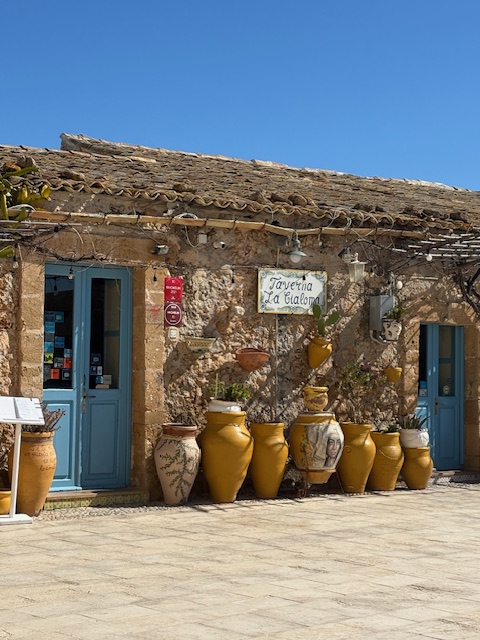
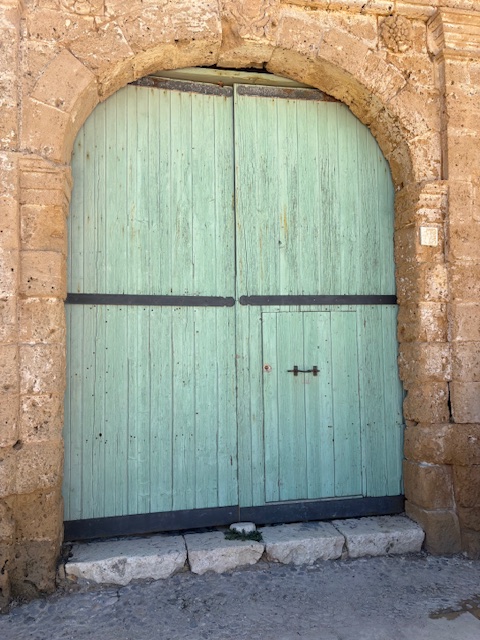
    Love this colorful door in Marzamemi.

    The GPS first took me to a large parking area that looked nothing like the Marzamemi I follow on Instagram (@Marzememi_Sicily). To avoid the same problem, use “Tonnara di Marzamemi” in your GPS as that should take you much closer to the main village area.

    After parking, I began to stroll, at first along the Ionian Sea (it was windy!) and then closer to the restaurants and shops. I wandered aimlessly for my first stroll, noticing the cats and the colors. I have so many pics of stray cats in Sicily.

    Enjoy some boat watching in Marzamemi in southeastern Sicily, Italy.

    I then strolled out onto a pier that had a metal cross toward the end. This provided a great view of the beautiful Ionian Sea and some colorful boats. On one side of the pier toward the land, I could see a group of workers. When Cyclone Harry hit Sicily in January 2026 and caused more than $1 billion (USD) in damage, Marzamemi received some water damage. I’m not sure if they were repairing post-storm damage.

    A breezy day at Calamaro Portodimare Ristorante/Calamaro Restaurant in Marzamemi.

    As I was there during lunchtime on a weekday, the gift shops were closed. If you really want to shop till you drop, you may want to save your visit for a Friday, Saturday, or Sunday, when Marzamemi gets even more visitors and gift shops are likely to be open.

    Instead, I was more focused on the food. I chose Calamaro Portodimare Ristorante for its scenic view, and I sat beside a few other tourists taking their time with their meals. The overall restaurant pace to get the meal and the check was pretty laidback.

    For lunch I chose the Sapori Siculi, a vegetarian pasta dish with Sicilian pesto (yum), sun dried tomatoes, garlic, basil, pine nuts, raisins and almonds, and something called muddica atturrata. That’s apparently a Sicilian version of toasted breadcrumbs.

    Sapori Siculi at our chosen restaurant in Marzamemi. Yum or should we say molto buono?!

    There are mixed reviews online of the restaurant but I must say, it was perhaps my favorite pasta dish of the whole trip. The combination of a scenic view on a breezy day while watching the cats and the sea definitely helped.

    Part of the tonnara (tuna processing plant) left at Vendicari Nature Reserve in southeastern Sicily.

    Finding Peace at Vendicari Nature Reserve

    If you like nature photography, an outdoor stroll, or perhaps just a quiet place to reflect, then consider visiting Vendicari Nature Reserve just minutes away from Marzamemi. In Italian, it’s called Riserva Naturale Orientata Oasi Faunistica di Vendicara.

    The reserve has more than 3,700 acres of beach area and protected wetlands as well as five separate entrances. This website from Trails of Sicily has some interesting history about Vendicari, from its B.C. origins to the presence of its Greek ruins to the tuna processing plant to plans in the not-so-distance past to build an oil refinery or turn it into a tourist complex (!). Thankfully, it became a protected reserve in the 1980s.

    If you’re looking to just wander, no worries. Choose the first entrance you find on your GPS and enjoy.

    If you want a more specific experience, research in advance where you want to go and find the entrance that’s closest.

    For my visit, I chose the main entrance called the Vendicari entrance. It took me down a dirt-and-rock road, but there were signs that assured me I was going the right way.

    One of the lovely cats seen during the visit to Vendicari and Marzamemi.

    I paid the admission fee and asked the friendly man working there about the stray cats that were hanging out near the entrance. He told me how he helped keep watch over them and in fact, the two that I saw were actually mother and daughter. I took pics of the cats and of him with the cats, using my beginning Italian to chat with him.

    I decided to wander a bit, which led me to a bird watching area where you can see flamingoes from afar (flamingoes! we have those in Florida, too). There’s plenty of other bird watching there, including herons and black cormorants.

    Sea view from the small museum at Vendicari Nature Reserve.

    Then, I walked along a boardwalk area that took me on a trail beside the sea and eventually ended up in the ruins of an old tuna processing plant (Tonnara of Vendicari, which was open from 1655 to 1944).

    There’s also a small museum area where you can learn more about the tuna processing plant and some of the other happenings at Vendicari.

    FYI, the restrooms are right beside the museum.

    More of the tonnara area at Vendicari.

    Vendicari Nature Reserve has several beach areas, including Eloro Beach and Calamosche Beach. Since my visit took place in February and not summer, I can’t give you much tea on the beaches.

    From what I read online, the beaches are somewhat less crowded than nearby Lido di Noto or San Lorenzo. However, being in a park area, Vendicari’s beaches don’t have chairs or other beach amenities you’d find elsewhere.

    I actually felt right at home in Vendicari as it reminded me of some of Florida’s state parks, particularly Fort De Soto Park in St. Petersburg. Fort De Soto also combines history (an old fort), nature, and a beach area.

    With more time or repeat visits, I would have explored other trails.

    One more similarity with the Florida vibe–this little guy! (See picture above.) He was similar to the geckos we often see in the Sunshine State.

    Coastal map at Vendicari Nature Reserve. Some of the English translations on their signs are clunky so you may have to do some decoding. “Mar Ionio” on the sign above means Ioanian Sea.

    Tips for Your Visit to Marzamemi and Vendicari

    Make a half-day or a full-day trip out of your visit to Marzamemi and Vendicari. These two are close to each other, so it would be easy to take your nature walk at Vendicari and then enjoy a meal at Marzamemi, or vice versa. If you really like to take your time strolling, you could probably turn these two destinations into a full-day experience. If you’re going to Vendicari for beach time, then you could do a beach day there followed by an evening meal at Marzamemi.

    Plan what time of the day you want to go. Because it’s a park, Vendicari is open during the daytime but closed in the evening. Marzamemi is open during the day and into the evening so you can choose when to visit. We think an evening visit is a great idea as it’s surely more lively, but you may not feel as open to that if you’re a little nervous driving in the dark in a foreign country. If you’re stayiing in a nearby beach area–say, San Lorenzo–this is less of a concern as you’re just minutes away. If you’re staying in Noto, you may not feel confident about nighttime driving (or at least I didn’t), especially if you plan to have a glass of vino or two during your Marzamemi visit. If you’re staying in Noto and want to see a different town in the evening, consider checking out the nearby beach town of Avola.

    -Expect to pay a small entrance fee for Vendicari. At the time of our visit, it was 3.5 Euros, or about $4 U.S. For comparison, that’s the typical fee to enter a state park in our home state of Florida.

    Bring sunscreen, water, and maybe a hat to explore Vendicari. This is the same advice we dispense on our Florida travel blogs. Many parts of the walking trails are in the sun, and it can get hot at certain times of the year. If you’re going for a beach day, bring everything you need, including snacks and drinks as they aren’t for sale at the park. Pay attention to where you’re going so you know how to get back. Visit early if you’re going in the summer to avoid the midday heat.

    Enjoy your visit to Marzamemi and Vendicari/buon viaggio! Got questions? Leave a comment and let us know.
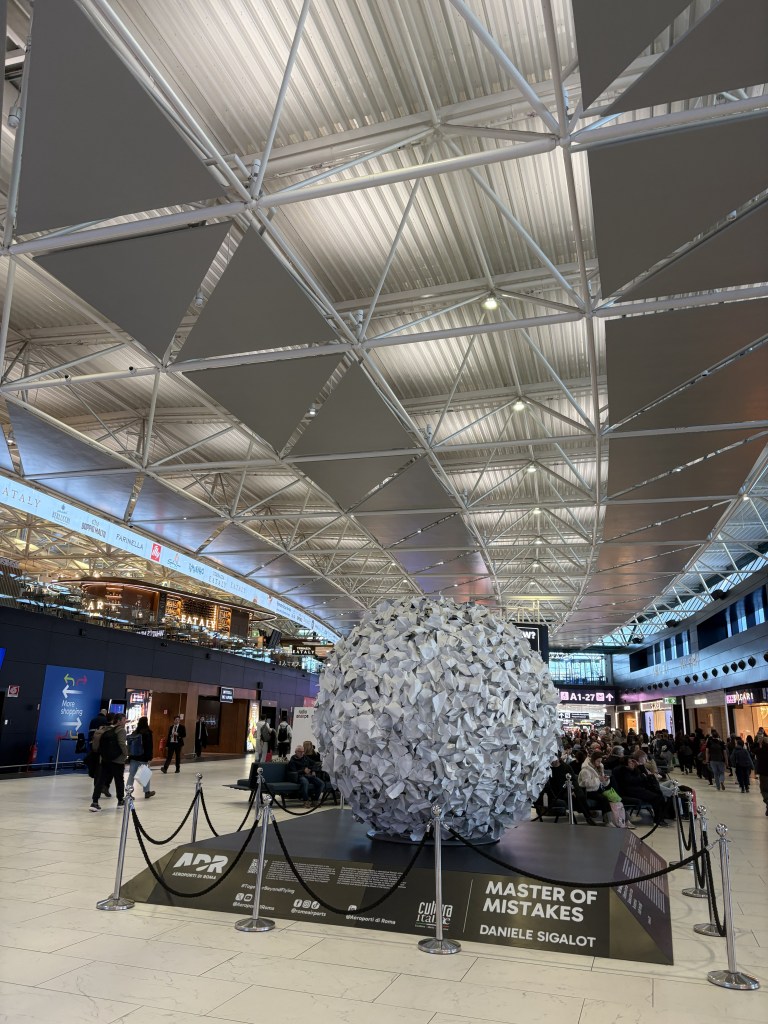
  • I Visited Southeastern Sicily Off-Season–Here Are Some Travel Tips for Your Trip There

    Boats at Marzamemi in Southeastern Sicily.

    (A quick note: If you’re learning English and want to see a video about our trip to Sicily, please click here! It’ll be a great way to practice English and discover more about Sicily.)

    Ahhhhh…..la bella Sicilia/beautiful Sicily. Our interest in this southern Italian island is no secret, if you judge by the number of Sicily stories we’ve written over the past year or so.

    Yet we (OK, well, just me, but I like to use “we” to avoid overusing “I”) finally had the chance to travel there in late February.

    The 10-day trip included a first night and last night stay in Catania because of its proximity to the airport, along with renting a car and staying in Noto (the town that appears in a season 2 episode of “White Lotus”) the remainder of the trip.

    If you’re thinking of visiting Sicily, you may wonder if it’s worth it to visit off-season. This blog even has an article on that exact topic.

    Italian lights on display in Noto, Sicily.

    Now that we have the lived experience, we can confirm that yes, there are some real benefits. Here’s why:

    The weather is a lot nicer compared to the scorching summer. Locals reported summer temps that reach as high as 45 Celsius or about 113 Fahrenheit. Whew! Another local said the summer weather there is best for lizards, not humans.

    During our February visit, morning temps were around 45 to 50 Fahrenheit and reached 65 to 70 by the afternoon….cold in the morning but great as the day went on. You’ll have occasional rainy or cloudy days, and temps may be a little colder at the start of winter.

    You don’t have the crowds. Sicily has become a hot tourist destination, and I wanted to avoid the throngs of people for this visit. Each town I visited had a few tourists but that’s it. Evening walks in downtown Noto had very few, if any, tourists beyond myself most nights.

    Prices are better but options are more limited. Many B&Bs (what the small hotels in Italy are often called) may be closed during the off-season. However, the ones that are available often are affordable.

    The famous arancini, or rice balls, from Sicily.

    The Itinerary: A Journey Through Southeastern Sicily Off-Season

    If you’re thinking about a trip to Sicily off-season–generally, from November through March or April–here’s a recap of the itinerary I followed, along with some helpful tips:

    –Catania

    –Noto

    –Marzamemi/Vendicari

    –Modica

    –Ortygia/Siracusa

    –Scicli

    Sadly, I didn’t make it to Mount Etna this time but would suggest you try to get there, especially with a good guide. Also, since my trip focused on southeastern Sicily, I didn’t make it the well-known town of Taormina, located north of Catania.

    You don’t need to follow this itinerary exactly. If you have a good “basecamp” city like Noto (see our tips section), you can visit each town when you want.

    We’ve got a brief summary below of each town and will follow up here on Italy Dreams with a full article on each location.

    Andiamo! From Catania to Marzamemi to Scicli and More

    Here’s some basic info on each town.

    Colorful umbrellas located near the fish market in Catania, Sicily.

    Catania

    Catania is home to about 300,000 residents, and they all seemed to be out and about on the two Saturdays I was there. Young people in particular were on the busy central streets of Catania on both Saturday evenings, ready to eat, drink, and meet.

    Some Catania highlights included the morning fish market that happens until around 1 p.m. every day but Sunday along with a local flea market in the fish market area on Sunday morning (a very cool way to see Sicilian antiques and other knick-knacks). Of course, there’s the famous Saint Agatha Cathedral, too.

    For both nights, I stayed at Opera Boutique, a four-room B&B that was just a block or two away from the main downtown action in Catania. Thumbs up to our Opera Boutique experience.

    The famous Saint Nicholas Cathedral in Noto, Sicily.

    Noto

    The Baroque architecture of Noto makes it a popular place for visitors to Southeastern Sicily. It was a safe small town and an ideal location. You’ve got Saint Nicholas Cathedral along with several other churches (loved the view from the bell tower at Church of San Carlo, located close to Saint Nicholas Cathedral).

    You’ll find several souvenir shops and restaurants, some of which were closed for off-season. Because Noto is popular, you may also find some of the souvenirs to be overpriced.

    Still, it was a good choice for a week-long stay and I got to try several famous Sicilian foods in Noto, including gelato, cannoli, arancini (rice balls), and cheese and bread purchased at the Sunday/Wednesday mercatino (local market).

    Menu seen outside of a tasty restaurant in Marzamemi, Sicily.

    Marzamemi/Vendicari Nature Reserve

    The fishing village of Marzamemi, a former tuna fishing and processing village, reminded me of Cortez, Florida, right here in our Southwest Florida area. Although the looks of the Sicilian village versus the Floridian village are completely different, both serve as a reminder of the commerical fishing business that influence each respective area.

    Marzamemi maintains its historical buildings, with much of the space now serving as a home for restaurants and gift shops. There was a pleasant walk along the water with plenty of colorful boats. Sicily got hit with a cyclone in January 2026 (causing around $1 billion in damage), and it appeared that some of the area near the water still was undergoing repairs.

    Still, that didn’t get in the way of taking in the lovely view or enjoying a pasta dish with Sicilian pesto, sun-dried tomatoes, raisins, almonds, and lemon peel. It was probably the best pasta dish of the whole trip.

    One view at Vendicari Nature Reserve in southeastern Sicily.

    The day near Marzamemi included some driving around the San Lorenzo Beach area and a visit to Vendicari Nature Reserve (in Italian: Riserva Naturale Orientata Oasi Funistica di Vendicari). For some reason, the reserve also gave me Florida vibes, with a friendly man who took my admission fee and told me in Italian about the stray cats at the reserve he helps to care for. Then, there were several choices of walking trails, many along the water. Don’t miss the birdwatching (including flamingoes!) and the old tuna processing plant.

    A sign advertising Modica’s Chocolate Museum, which was small but cute. Check it out if you have the time but definitely don’t miss chocolate tasting at the local chocolate stores.

    Modica

    When you think of Modica, think chocolate. The town still makes chocolate in the same way the Spanish and Aztecs made it, meaning the only thing that’s added is sugar–not cocoa butter. They flavor it with cinnamon, citrus, and other items.

    Modica is a hilly town, so you’ll find some attractions on both the upper and lower “levels” of the town.

    Many visitors to Modica also enjoy the nearby town of Ragusa Ibla, although I didn’t make it there.

    Outside of Ortigia’s Moniace Castle, built in the 1200s. As you walk around the castle, you can see the influence of the different civilizations that have conquered Sicily in the past.

    Ortigia

    Ortigia, an island that juts off of Siracusa/Syracuse, was a highlight of the week. It’s a popular destination with beautiful sea views, a castle (Castle Moniace) from the 1200s, coastal restaurants, a daily outdoors market (definitely try some local produce–loved the strawberries and bought some local oregano), and plenty of cats that made for good photography.

    I could see how Ortigia would also be a good place to stay for a few days, although it would take a little longer to drive outside of the island to reach other day-trip destinations compared to Noto.

    The beautiful Ionian Sea as seen in Ortigia, Sicily.
    Church of Saint Bartholomew in Scicli, Sicily.

    Scicli

    Pronounced sheek-li, Scicli was probably my other favorite destination in addition to Ortigia. Tucked in a rocky, hilly area (it reminded me of West Virginia), it’s a town made famous by the famous Italian show “Inspector Montalbano,” which named the town Vigata in the show. You can tour the town hall that’s featured prominently in “Inspector Montalbano.”

    The real highlight of Scicli was a visit to A Rutta ri Ron Carmelu, tucked inside a housing neighborhood among the hills where Mr. Carmelo–a charming, inventive local man who speaks no English–gives tours that show how his grandparents lived in a cave with their six children. Even with no English, there are enough visuals that you can still understand most of what he says.

    He then showed off dozens of inventions and creations that he’s made, all of which are for sale. Some are as simple as soap or home decorations; others are unknown contraptions that Mr. Carmelo will reveal to be a child’s potty or something else offbeat.

    A small black ceramic vase made by Mr. Carmelo now sits in our dining room.

    Expect some hairpin turns as you drive into or as you leave Scicli. Go slow!

    Obligatory cannolo shot from Sicily….this famous dessert is originally from Sicily!

    6 Tips for Your Visit to Sicily Off-Season

    Although my visit concentrated on southeastern Sicily, some of the tips below may help no matter where you visit on the island.

    -Be prepared for the car rental process. You’re required to have an international driver’s permit (we got one easily from a local AAA office for about $20). You’ll also be asked in the booking process if you want insurance. Make sure to say “Si” to that as the insurance from your home country likely won’t cover accidents or damage.

    Be prepared for driving around Sicily. So, how was it driving in Sicily? The autostrade (one of the main highways) was good and had some pretty views of the farm land. Road construction and blockages came up much more quickly than in the U.S.–God bless American roads and their big signs–but other than that, zero issues. Still, it’s a good idea to learn some road signs/driving terms in Italian before your visit.

    The GPS on my phone was overall helpful during the Sicily journey although some of the rural roads were bumpy and felt a little nerve-wracking in the rental car. One set of directions took me on a dirt road with long grass where I saw a man with a machete–to be clear, not a serial killer, but likely a farmer used to cutting his way around the weeds.

    That said, I intentionally didn’t drive in city areas like Catania (yikes!) and felt more nervous driving along narrow streets in Noto and the other day-trip towns. In fact….the good ol’ Kia Sportage rental got some scrapes on one side when maneuvering through a narrow road in Modica. That’s what that insurance is for, although note that you may have to pay for the damage upfront and then apply to get reimbursed.

    Bottom line: You really do need a car to get around Sicily beyond the bigger cities unless you have a guide handling that for you. Trains are present but some routes aren’t used as much as in northern or central Italy. Take a deep breath and drive smart. Or, have a trusted travel companion handle the driving if you’re too anxious to do it.

    Make sure to sample Sicilian produce!

    Consider staying in Noto as your “basecamp” town. Noto was a great jumping-off point to reach destinations further south in Sicily. I enjoyed a week-long stay at Cuore Barocco, a studio apartment that was just a 10-minute walk or so from the downtown area but had a nearby small parking lot so I didn’t have to fit the Kia into tight on-street parking every day. Plus, Cuore Barocco had a balcony that made it great for watching daily Sicilian life.

    Brush up on basic Italian. If your only Italian consists of “ciao” and “gelato,”you’ll probably survive. Yet if you choose to travel off-season, there are fewer tourists, which means there are probably fewer people around who speak English or languages other than Italian who can help you. Most people at souvenir shops and restaurants would speak English to me, but there were some areas (supermarkets, smaller towns like Scicli) where there wasn’t that English back-up. It’s always useful to know some basic phrases in Italian, and the locals will appreciate it.

    Don’t set your heart on agricultural destinations or beaches during off-season. Unless I missed something, most vineyards and farms seemed to be closed for off-season–perhaps not completely closed, just closed to the public. I reached out to two farms to see if they were doing tours and heard back from one that told me no. Some places might open but for small or large groups. As for beaches, yes, you can visit them, but you may find differing quality off-season. My afternoon in Ortigia was warm enough that some people got comfortable on a stretch of sand and rocks near the water to sunbathe, with hardly anyone in the water. San Lorenzo Beach near Marzamemi was pretty but didn’t have anyone hanging out. Lido di Noto (Noto Beach) looked a bit worn-down on the cloudy morning I checked it out. However, it likely gets prettier as locals get it ready for season.

    Don’t be surprised if hours and schedules are different than what you find online. On our first day in Noto, there was a tourist shop where I bought a great pistachio cream liquor (yeah, that one never made it home) and some Sicilian cookies. I wanted to return toward the end of my week to look for olive oil and a few other goodies. I looked up the hours online but every time I went by the shop after my initial visit, it was closed. Just know that hours for different places may be unpredictable, and probably even moreso than in-season. Some places even favor evening hours more after an afternoon break.

    Let us know what other questions you have about Sicily travel in the comments. We’ll be happy to help if we can!

    Buon viaggio!
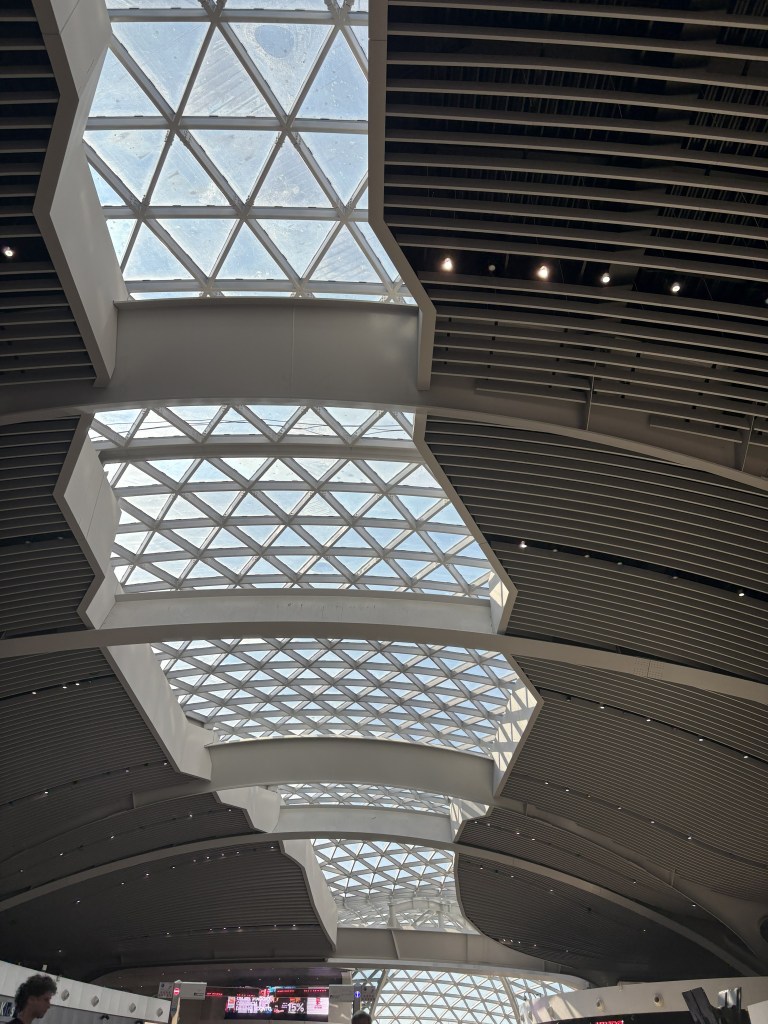
    Obligatory pizza photo from Italy….this one a pesto pizza in Catania, yum….