So, you’re booking a trip to Sicily, Italy. You’re excited, but you also have a few questions.
After all, you’re traveling halfway around the world to go to Italy’s southernmost region. You’ve probably seen beautiful images of Sicilia on social media or shows/movies.
Yet it’s also a big, expensive trip.
We’re here to let you know that Sicily, Italy, is a great place to visit, but it’s also great to do your homework in advance. If you’re reading this article, then your homework is already in progress–congrats!
I share these answers with you as a student of Italy and Italian for more than two years and as a long-time travel/business freelance journalist–meaning, I basically research things for a living.
I also offer services as an Italy travel planning consultant.
Plus, I traveled solo to Sicily in winter 2026. You can read about many of the towns I visited on my blog. From a tourism perspective, I loved my trip to Sicily, but some things were good to know in advance.
This article answers some of the most common logistical frequently asked questions (FAQs) about Sicily. Our follow-up FAQ article will cover food and culture.
Andiamo/let’s go!
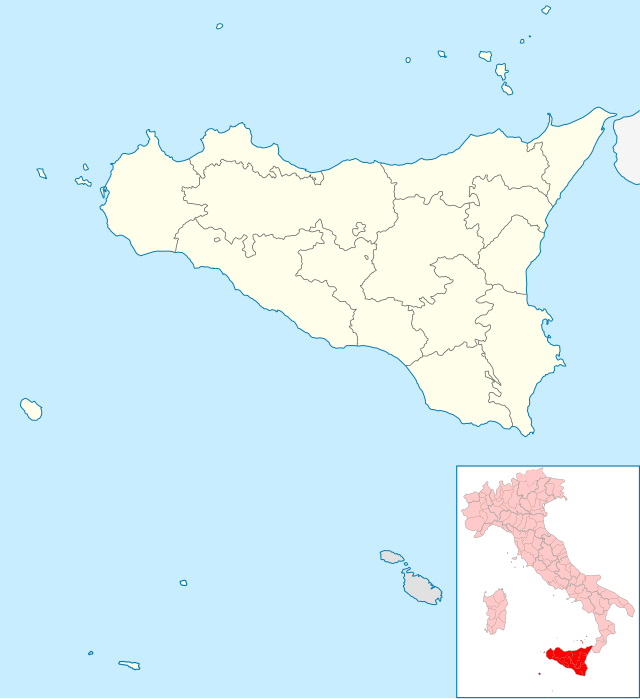
Just how big is Sicily? Where are the major cities, like Catania and Palermo, located? How close is it to Italy and other countries?
Sicily is about the size of the state of Massachusetts. Catania is on the east side of Sicily, and Palermo (the capital) is on the west side. Both are near the coasts.
It takes 3 1/2 to 4 hours to drive across Sicily on A19 highway.
Sicily is only 2 miles from mainland Italy, specifically, the region of Calabria. The two areas of land are divided by the Strait of Messina (which for some reason makes me think of actor Chris Messina). There’s a ferry between Sicily and Calabria that takes 20 to 30 minutes to cross.
At its closest point (not including some smaller islands), Sicily is only 90 miles from Tunisia, Africa. To give you some context, that’s the same distance from Key West, Florida, to Cuba.
Sicily is 60 miles from the small but popular island country of Malta.
How do I get to Sicily from mainland Italy?
The quickest way is by air. Rome to Catania as well as Rome to Palermo are just a little over an hour.
You could also take a train from Rome to Sicily, and the train actually boards the ferry that we mentioned. The whole experience takes over 12 hours. There are buses that follow a similar route from Rome to Sicily, crossing over with the ferry.
There’s been talk for many years about building a bridge to connect mainland Italy to Sicily, but it hasn’t happened yet.
Which airport should I use in Sicily, Catania or Palermo?
The answer depends on where you plan to visit. If you’re focused on Catania, Mount Etna, Taormina, and Noto, fly into Catania Fontanarossa Airport. Catania is the biggest airport in Sicily.
If you plan to visit Palermo, Cefalù, Agrigento, or Trapani, choose Palermo Airport.
If you plan to visit various destinations all around the island, then research what works better for your timing and budget.
Mount Etna eruptions could become a factor in your choice, but we’ll address that in a separate question.
Do I need to rent a car in Sicily? Are there other ways to get around?
It depends. If you feel comfortable driving there and you’ll spend most of your time outside the bigger cities, rent a car. It’ll make it much easier to get around.
If you’ll spend most of your time in Catania or Palermo where driving can be more challenging, don’t rent a car.
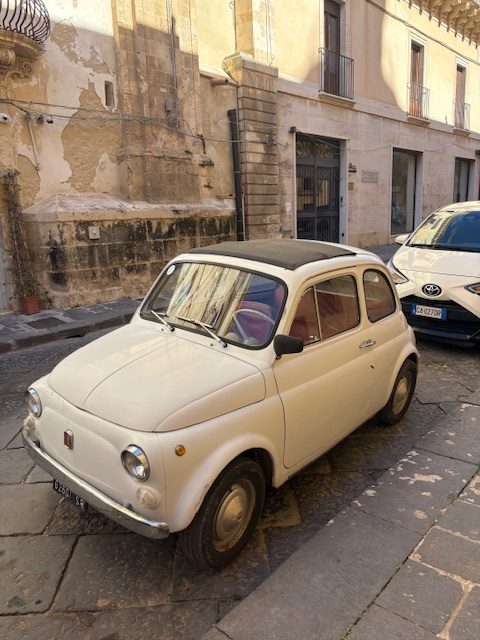
Driving around Sicily was reasonable for me on the main highways and more nervewracking in cities like Siracusa and Modica, where I scraped my car against a building. What can I say, I’m used to wide suburban streets in the U.S.!
You can find more guidance on driving in Sicily in our article here.
There are other ways to get around Sicily beyond renting a car. You can use the train and bus system, although we’ve been told by locals that renting a car is better and that the train system isn’t as robust as northern Italy. Yet it’s definitely an option. Plus, it’s easy on the wallet.
If you’re staying near the most populated areas, you can use rideshare options like Uber if you just occasionally need a ride somewhere.
If you have the budget for it, you could hire a private driver. Some private drivers also will give you custom tours of the area you want to visit. Just expect to pay several hundred Euros a day for their time.
The Rick Steves Sicily guide includes names of a few reliable private drivers that you may want to consider.
You could also do a tour around Sicily–there are many–but our advice is geared toward those traveling independently.
How many days do I need for a trip to Sicily?
This is hard to answer because it depends on your schedule and your priorities.
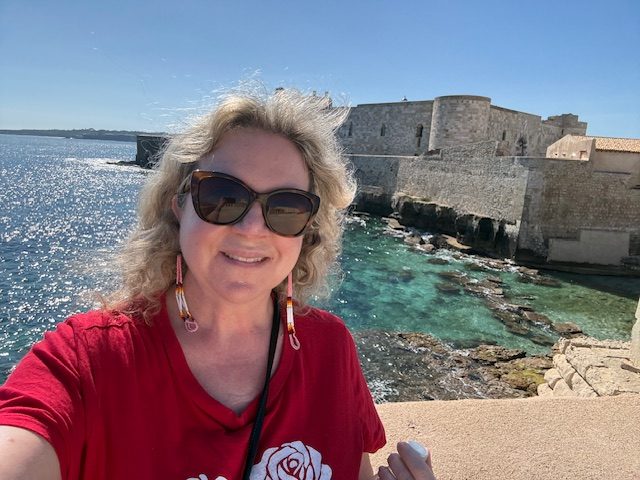
If at all possible, give yourself time to travel slowly around Sicily–or really, anywhere in Italy. For comparison, my 10-day trip focused just on southeastern Sicily (Catania and points south, no Taormina) and there were still a couple of places I ran out of time to visit, including a hike/tour of Mount Etna. For the most part, I spent a different day in each town and had a home base in Noto. Two of those 10 days were travel days. Of those 10 days, I also spent about two days in Catania.
What’s the best time of year to visit Sicily?
April, May, June, and October are great months to visit Sicily, according to European travel guru Rick Steves. You’ll benefit from Sicily’s temperate climate without the throngs of people visiting in July and August. Sicily has become quite popular.
July and August are also very HOT and getting hotter, just like the rest of Europe. As one Sicilian told us, complaining about the hot weather there, “I’m not a lizard.” Yes. Exactly. As a Florida resident, I feel that.
Average July temps are 90°F to 100°F (32°C to 38°C) but may feel hotter. Some feels-like temps have even reached 115 to 120 F.
Visiting off-season–November to March–can be a great option if you’re heart isn’t set on going to the beach and you don’t mind cooler temps. Expect to wear a jacket, scarf, and layers you can remove if it warms up a bit. Some restaurants, attractions (like agritourism/vineyards), and even B&Bs will be closed, but not all. You can still get a feel for Sicily visiting off-season, and prices will be cheaper, too.
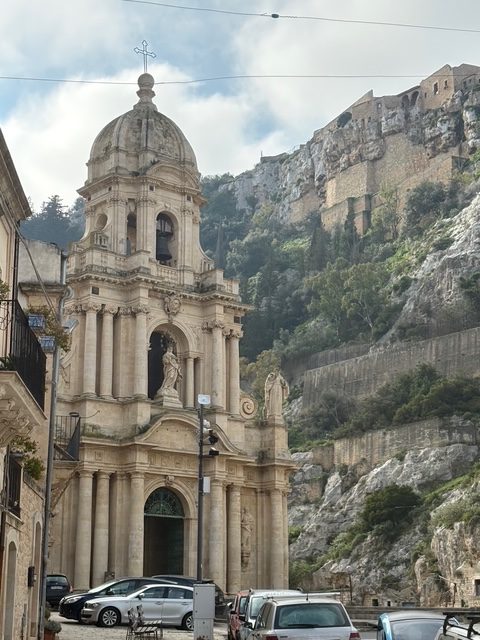
What are some of the major towns to visit in Sicily?
It’s incredible that Sicily has so much to see and it’s only one region in Italy. When you multiply that times 20–the total number of regions in Italy–you could keep yourself busy for years traveling around the country.
That said, here’s a very quick list of some of the best-known cities to visit in Sicily:
–Agrigento
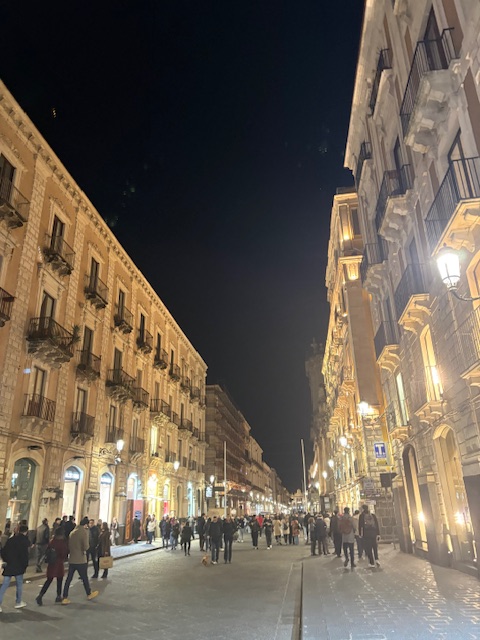
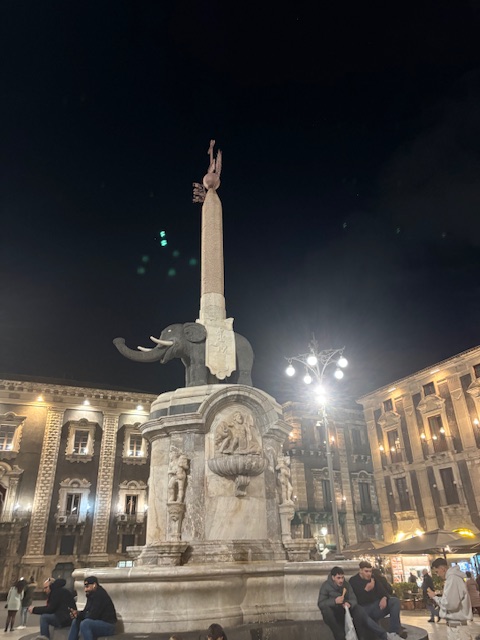
–Catania
–Cefalù
–Noto
–Ortygia
–Palermo
–Syracuse
–Taormina
–Trapani
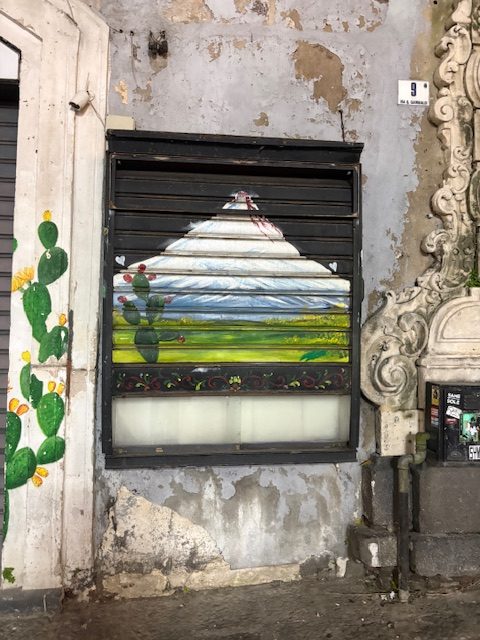
Mount Etna is starting to erupt and I’m not sure if I can take my flight out of Catania. What should I do?
Yeah, this is a downside of traveling to an area with an active volcano, LOL. It may stay quiet for a really long time and then all of the sudden, it’s erupting.
First, here’s what NOT to do: Don’t rely on some random people on a Facebook Sicily group to give you accurate information. These same people may be well-meaning, but they may not have the most up-to-date answer.
The best thing to do if Mount Etna is erupting is check with your airline directly and check the Catania Airport website. The airport will sometimes close temporarily while Mount Etna is erupting to avoid exposing flights to harmful volcanic debris.
That does indeed mean you need to change your flight plans. That could mean getting over to Palermo and flying out from there. It could mean slightly extending your stay.
It’s frustrating, for sure, but keep in mind that this is a regular occurence in Sicily.
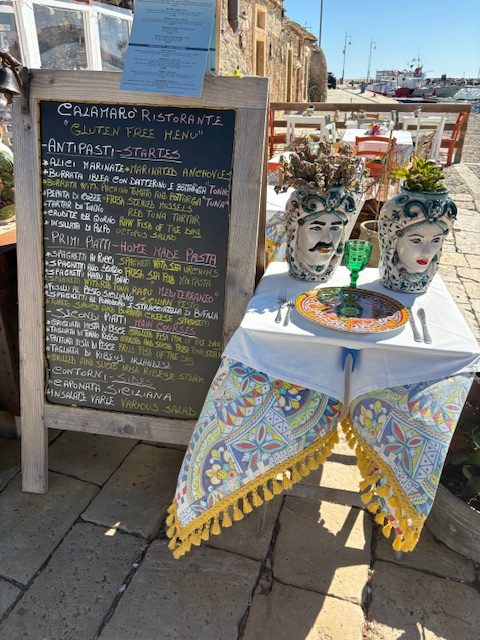
Is Sicily cheaper than the rest of Italy?
I wouldn’t say it’s a bargain-basement destination like some parts of eastern Europe, but it’s also not as pricery as downtown Milan or Rome.
It also depends on where and when you go.
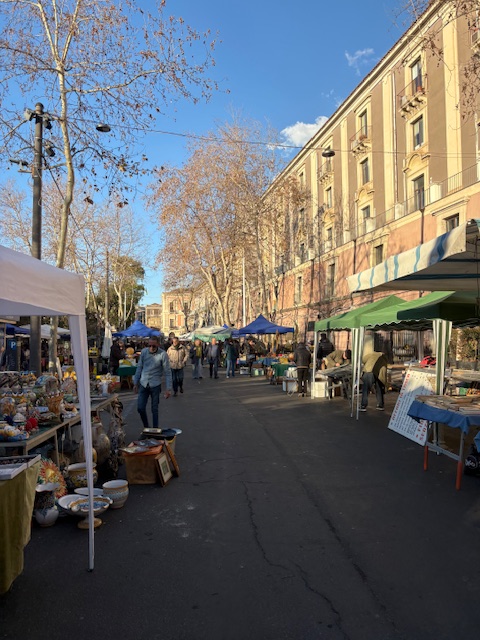
My off-season studio-sized B&B in downtown Noto was about 55 Euros ($61 U.S.) a night, a rate that was definitely affordable. By frequenting the bakery for bread, the farmers market held twice a week and a small grocery store, I could make some of my meals right in my kitchenette. That was another way to shave costs.
Restaurant meals can add up cost-wise but of course, they’re going to be worth it because you’re in Sicily and you must eat the wonderful local food.
An in-season or off-season stay in glitzy Taormina probably won’t have the same budget plan as I just outlined.
I’ve seen estimates online that say Sicily is 50% cheaper than mainland Italy. Whether or not the math holds up in today’s economy is hard to say.
But yes, your visit will likely be cheaper than big-city destinations, and spending wisely on airfare, car rental, food and attractions helps.
Where can I get help planning my Sicily trip?
Here’s what I recommend for more Sicily trip planning:
—Rick Steves Sicily and Rick Steves Italy. Rick’s staff members visit places every year or two to confirm their advice is up-to-date. In turn, their books get updated.
Don’t want to travel with a large guidebook? Rick himself recommends tearing out the chapters you’ll use and leave the rest at home! There’s also a Rick Steves Audio Tours app as well as a Rick Steves online forum.
–-There are a variety of social media groups for people traveling to Sicily Sicily Travel Tips on Facebook has been useful. Double check who’s giving you advice–meaning, is it someone who’s traveled to Sicily recently or who lives there, or are they sharing logistics from a trip 30 years ago?
—ChatGPT and other AI sites can help with travel planning. For sure. Just keep in mind that you still need to check for accuracy. Your AI buddy is getting advice from the same websites and social media forums you may have encountered online. That means the advice you get may be from a lady named Peggy in Iowa who traveled to Sicily in pandemic-era 2022–not 2026 (no offense, Peggy!). Use it if you’d like but verify.
—Here at Italy Dreams, we are available to help you plan your Italy and Sicily trip. Our focus is on travel planning consultation–we can answer questions based on our experience around Italy and Sicily and doing research when we don’t know the answers. We also have friends and contacts in a variety of regions around Italy who are happy to help us out.
Here’s a link for more information to contact us. Or, just look at the “Work With Me” page on our main page.
We are happy to consult with you by email or via a virtual appointment!
Buon viaggio /Happy travels to Sicily, and make sure to read our follow-up FAQ article that will publish soon!