If you’re like me and you would say “Si” to trying just about any type of Italian food, including cookies, then have I got a cookbook to recommend to you.
“Italian Cookies: Authentic Recipes and Sweet Stories From Every Region,” by Italian American cookbook author Domenica Marchetti, just published this April and is chock full of dozens of cookie recipes divided by region: north, central, south, and the islands (Sardinia and Sicily).
Marchetti has authored several popular Italian home cooking books, including “The Glorious Pasta of Italy” and “Williams-Sonoma Everything Italian.” She has a master’s degree of journalism (shout out to a fellow journalist!), and her writing is easy to enjoy. Marchetti splits her time between the U.S. and the Italian region of Abruzzo in central Italy.
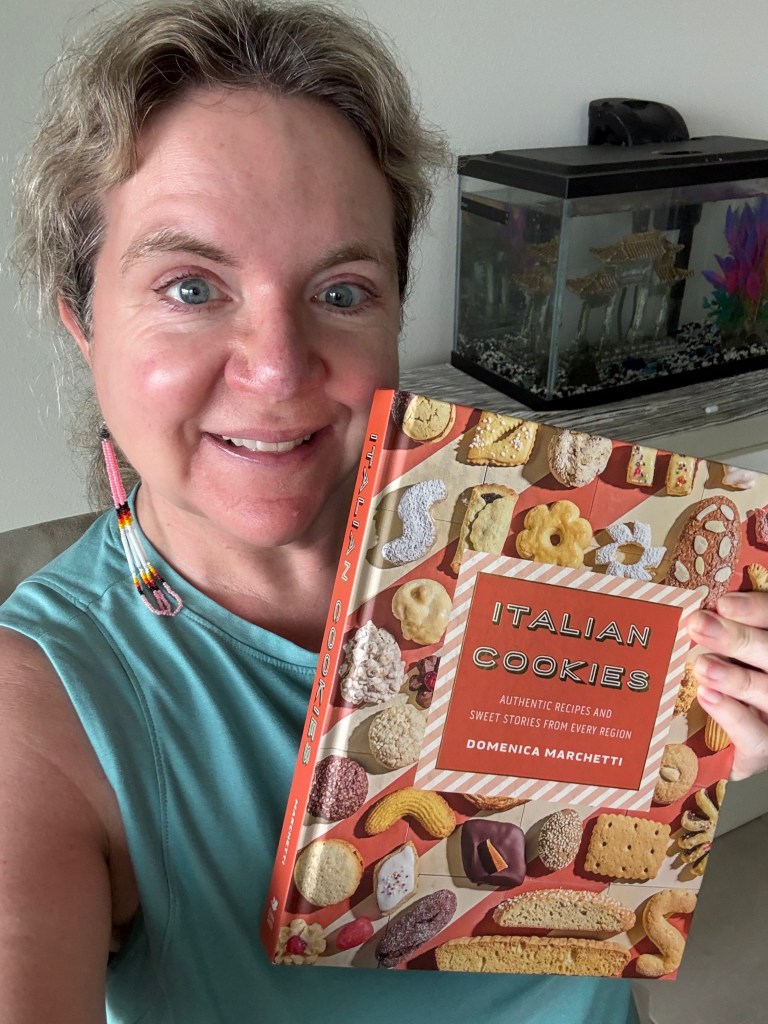
Finding this cookbook was perfect for me as I continue to nerd out on all things Italy but especially the food.
And let’s just say that cookies and me have had a special relationship.
I learned how to bake chocolate chip cookies at a young age and have worked on just about all variations of this classic treat through the decades, having learned the original recipe from my mom and now have passed it on to my son. I even sold my homemade cookies in high school, wrapping four or eight at a time in aluminum foil.
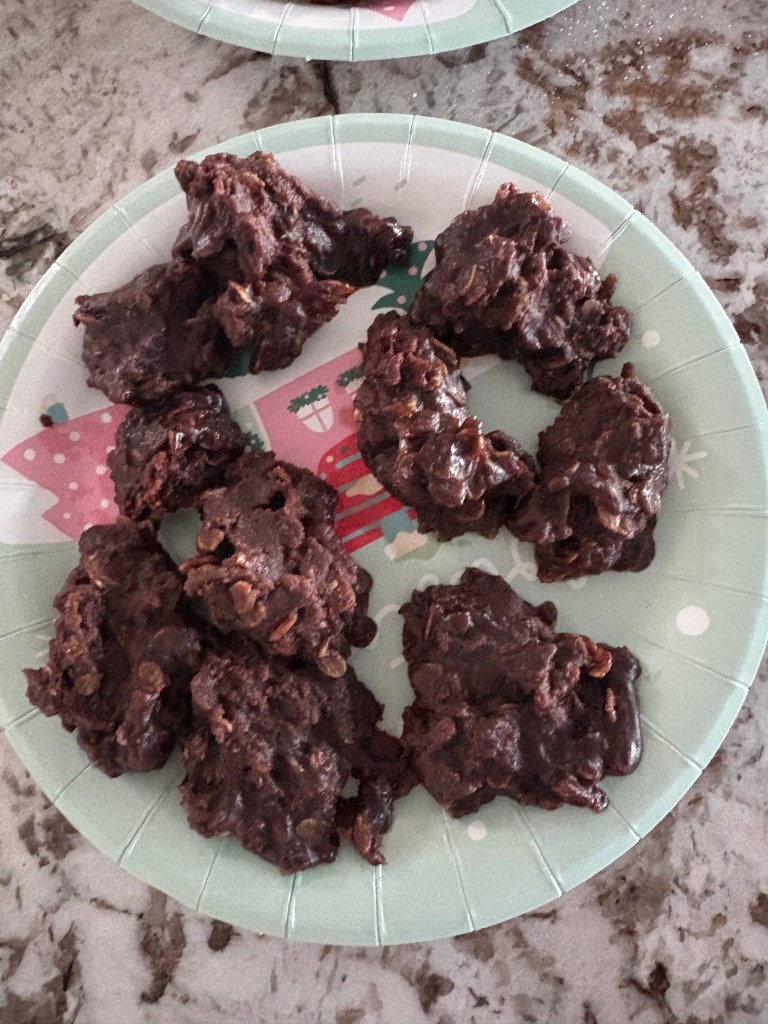
I bake cookies for Christmas to enjoy with family and give away as bonus presents–treats like lemon squares, decorated sugar cookies, and my always-favorite No Bake cookies with chocolate and peanut butter.
Coupled with my love of baking bread, I sometimes wonder if all this baking indicates a past life as a baker…maybe in Italy. Just kidding (or maybe not?!).
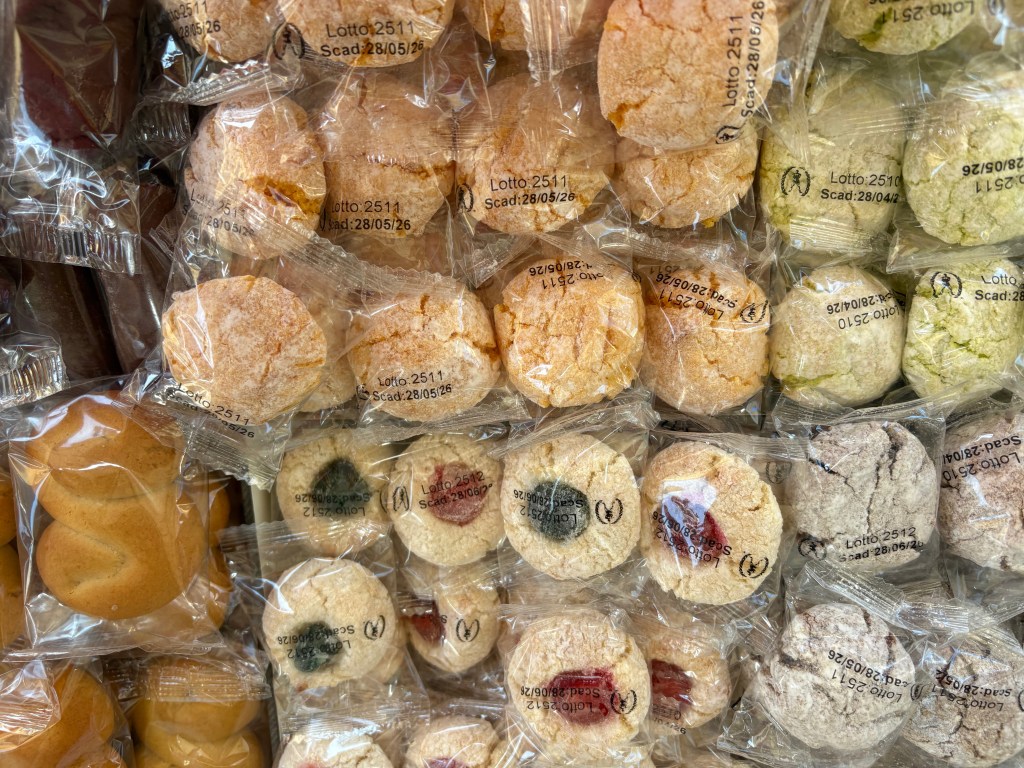
Ironically, I didn’t know a lot about Italian cookies until more recently, as I didn’t grow up around those delectable Italian American bakeries common in New Jersey and New York. Buying a box full of randomly chosen Italian bakery cookies at Christmas time just last year was a real feast for the senses.
I decided to apply my cookie-making skills to one recipe from each region in “Italian Cookies.” Here are the results, followed by a few more details about Marchetti’s cookbook.
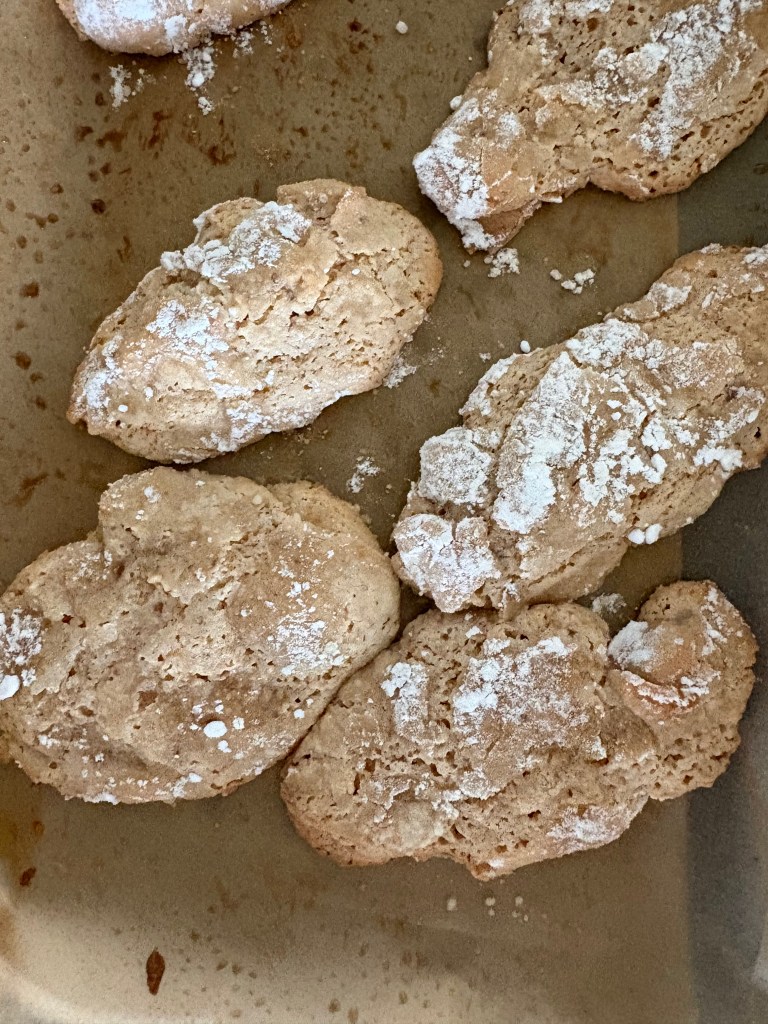
Amaretti Di Gallarte: From Lombardy
One thing I learned from Marchetti’s cookbook is how almonds are commonly used in Italian cookies. The cookbook describes Amaretti from Gallarte, originating in Italy’s northern region of Lombardy, as having a meringue-like texture and a slightly chewy center.
I found myself blanching almonds for the first time (basically, you put the almonds in boiling water and then take off the harder skins once everything cools down). Other ingredients include granulated sugar, egg whites, just a touch of honey, salt, and almond extract. You leave the dough in the fridge overnight uncovered so the batter forms a “skin.”
Before cooking, you cover the cookies with confectioners’ sugar.
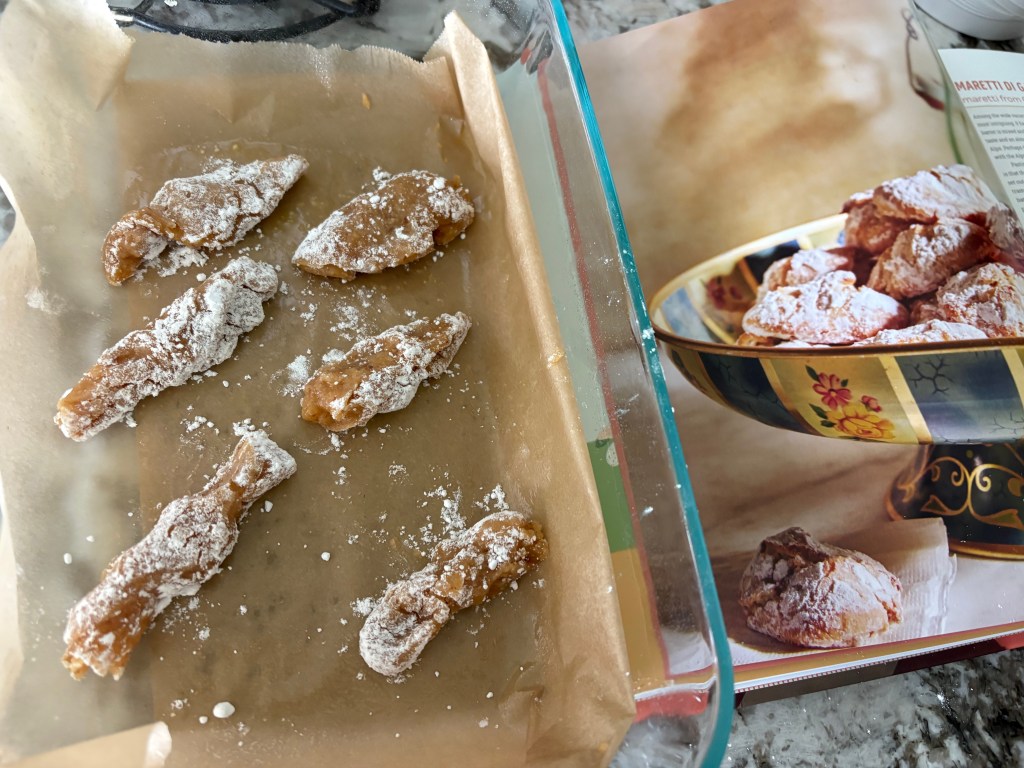
I enjoyed the almondy taste of the Amaretti, although the shape of the cookies was not as perfect as in the cookbook. That’s because I didn’t have the piping bag to shape the cookies nicely. Still, I was happy with my first attempt at Amaretti, a type of cookie you’ll find in all sorts of variations around Italia.
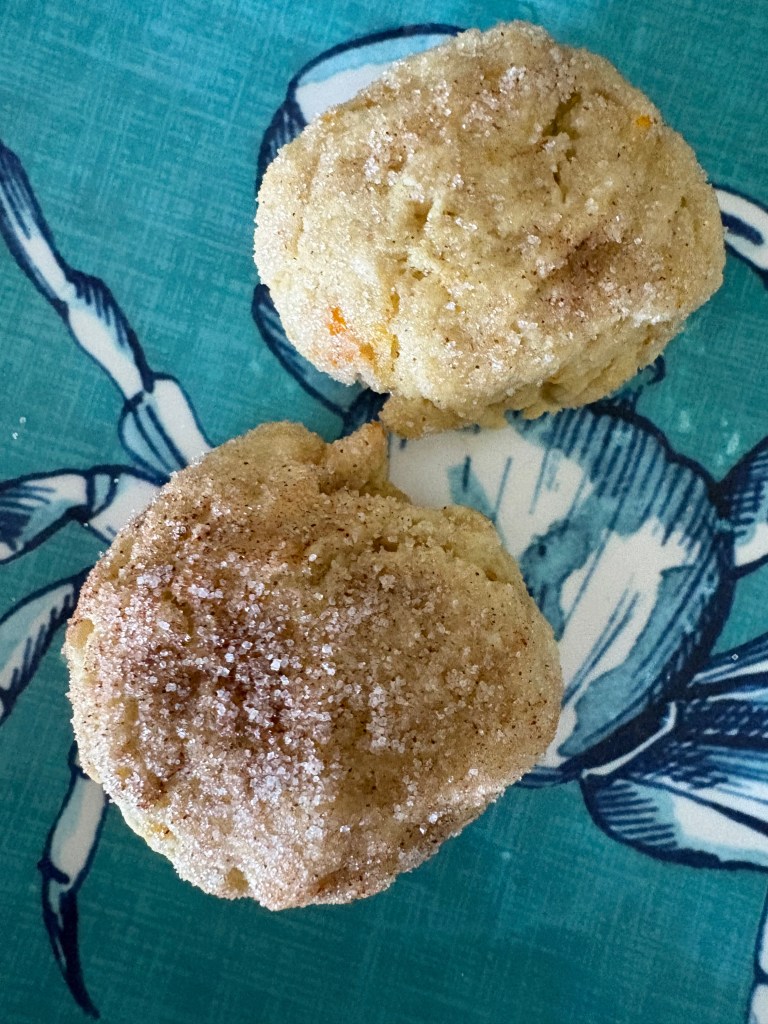
Biscotti Della Nonna: From Umbria and Other Italian Regions
Biscotti Della Nonna means Nonna’s (Grandma’s) Cookies. My Southern U.S. grandmother, a master cook and baker, never baked these cookies but she probably would have aced them if she had the recipe.
This recipe includes granulated sugar, an egg, extra-virgin olive oil, milk, orange zest, and a few other dry ingredients. You mix it all together and roll the dough into circles or ovals before flattening them down and coating them with a simple cinnamon sugar mix.
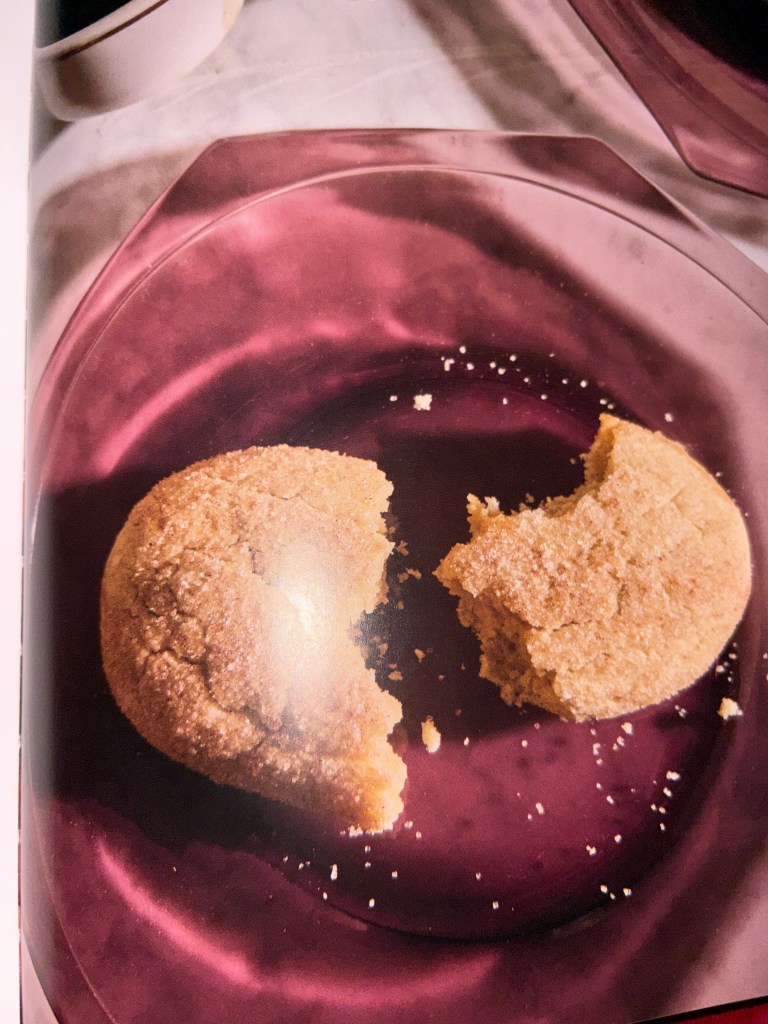
The Biscotti Della Nonna were tasty, slightly bigger than I thought they’d be, and would do great with a cup of milk or even coffee. Marchetti even points out that they are good for dunking into your chosen beverage.
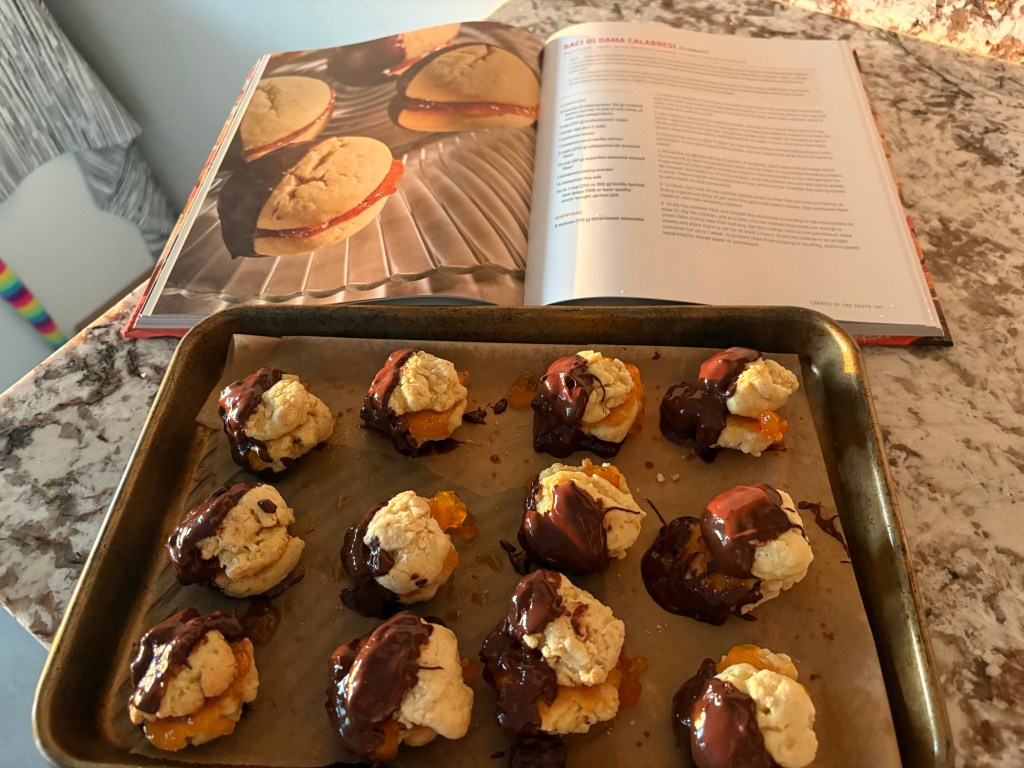
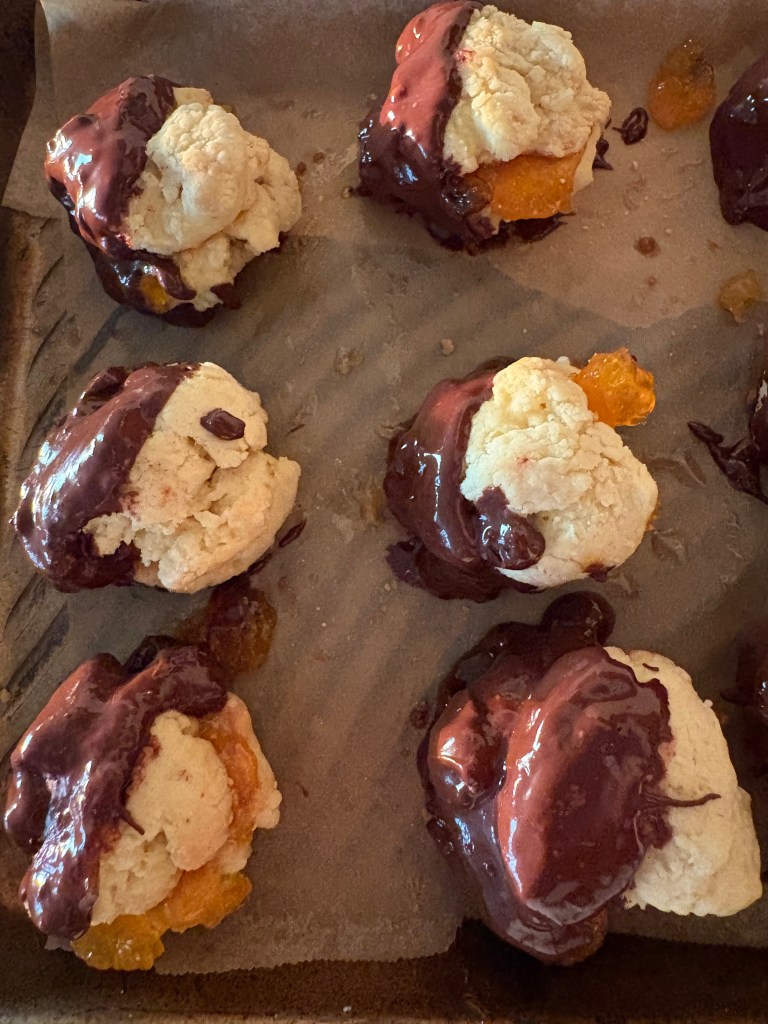
Baci Di Dama Calabresi: From Calabria
All of the cookies were good, but this one was the biggest hit.
The name translates directly to Lady Calabresi’s Kisses, or you can describe them as Apricot Jam and Bittersweet Chocolate Kisses.
This cookie was a little more involved because I had to make the top and bottom of the cookie, add jam in the middle and then dip about half of it in chocolate (the fun part!).
With the butter involved, I felt like I was on more familiar cookie-making territory. The main cookie part uses other standard ingredients, including eggs, vanilla extract, and honey.
Then, as mentioned, there’s the apricot jam in the middle along with melted bittersweet chocolate for coating. The recipe actually calls for Vanilla Apricot Jam and has a recipe for that in the cookbook, but I went with the simpler option of a best-quality store-bought apricot jam.
Pasticcini Di Mandorla: Sicily
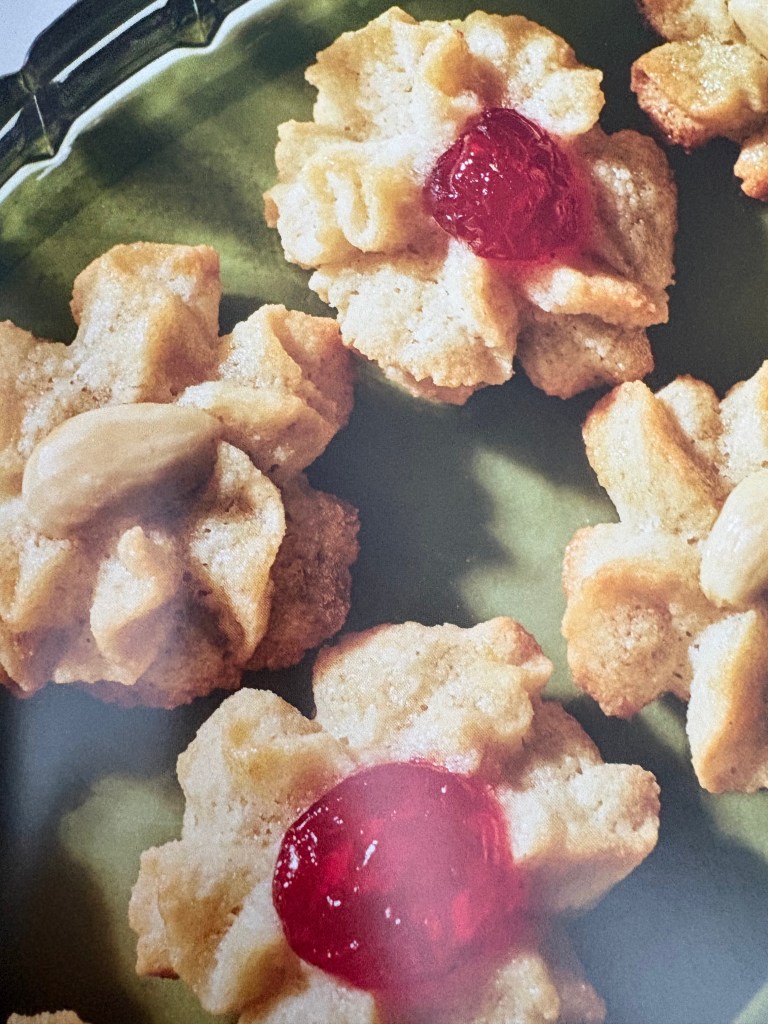
Last but not least, I gave some love to la Sicilia bedda (beautiful Sicily in Sicilian) with these Pasticcini Di Mandorla, or Little Almond Cookies.
The recipe calls for almond flour (a first-time purchase for me) along with sugar, salt, lemzon zest, egg whites, almond extract, and amaretto liqueur–the latter of which I skipped as I didn’t have any.
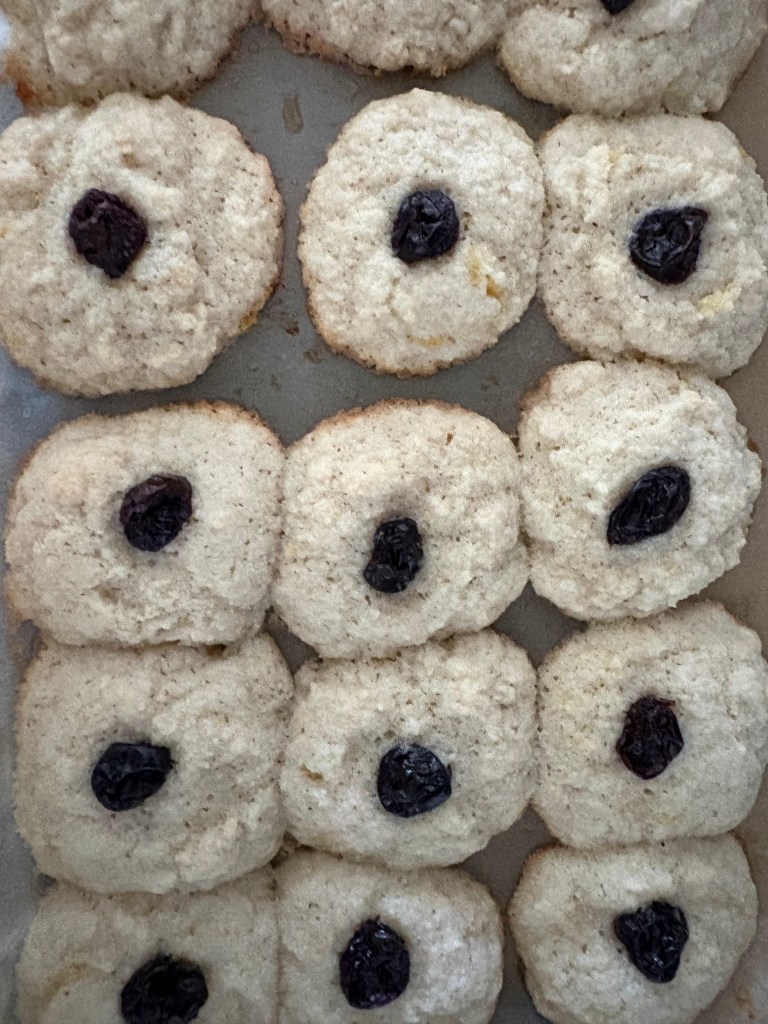
The cookies are decorated with glace cherries or whole blanched almonds on top. I found some dried cherries at the store and soaked them in water to give them a consistency somewhat closer to glace cherries.
Since I didn’t have the pastry bag tool to give the cookies a super-cute shape as done in the cookbook, I just made circles.
The cookies turned out sweet and almondy–similar to the cookies I ate a little bit too much during my time in eastern Sicily this year.
If we’re ranking recipes, this was probably my second favorite, although one day I need to get the right tools to make the cookie’s shapes and ridges.
Kept fresh in the fridge, these cookies still tasted chewy and soft several days after I made them.
Italian Cookie Making With “Italian Cookies”: The Final Verdict
I loved this cookbook.
For someone who enjoys reading and learning about Italian food culture, I took my time to savor (pun intended) each regional description and enjoy the accompanying pictures.
Marchetti did a nice job of including some recipes about cookie-baking pioneers in each region of Italy. If you’ve been to Italy, you may have even visited some of the places she mentionns throughout the book or on the list of select cookie bakeries in Italy. The chapter on cookies from the islands includes information on Noto’s Caffe Sicilia, which I’ve written about before but was unfortunately closed during my off-season visit to Noto, Sicily, earlier this year.
Marchetti provides plenty of support and resources for baking items that you may not have around the house. She explains baking tools you might need and Italian ingredients (examples: Sicilian almonds, pistachio flour, pizzelle irons) and where you can find them in person or online–important as some of the less-common ingredients may be harder to find.
Although I didn’t take the time to find these special ingredients, I could see the value of doing so if making cookies for a special event, like around Christmas.
Trying these recipes also taught me a few things about cookie baking beyond my Southern U.S. cooking background:
—Not all cookies need butter. This is still hard for me to accept, LOL.
—Not all cookies need chocolate.
—Almonds and sugar can serve as a great cookie base, which created a sense of deja vu from when I discovered marzipan (a paste of blanched almonds and powdered sugar) while living in northern Europe for a year during high school.
–-Italian cookies do a terrific job of incorporating local specialty ingredients. This would explain how I ended up eating a few too many cookies with pistachio or orange zest in Sicily.
I look forward to trying more recipes from “Italian Cookies” to further hone my skills.
Here’s a link to the book: “Italian Cookies“.