Tag: Firenze Italia

  • 12 Facts About Italian Food in Italy That May Surprise You

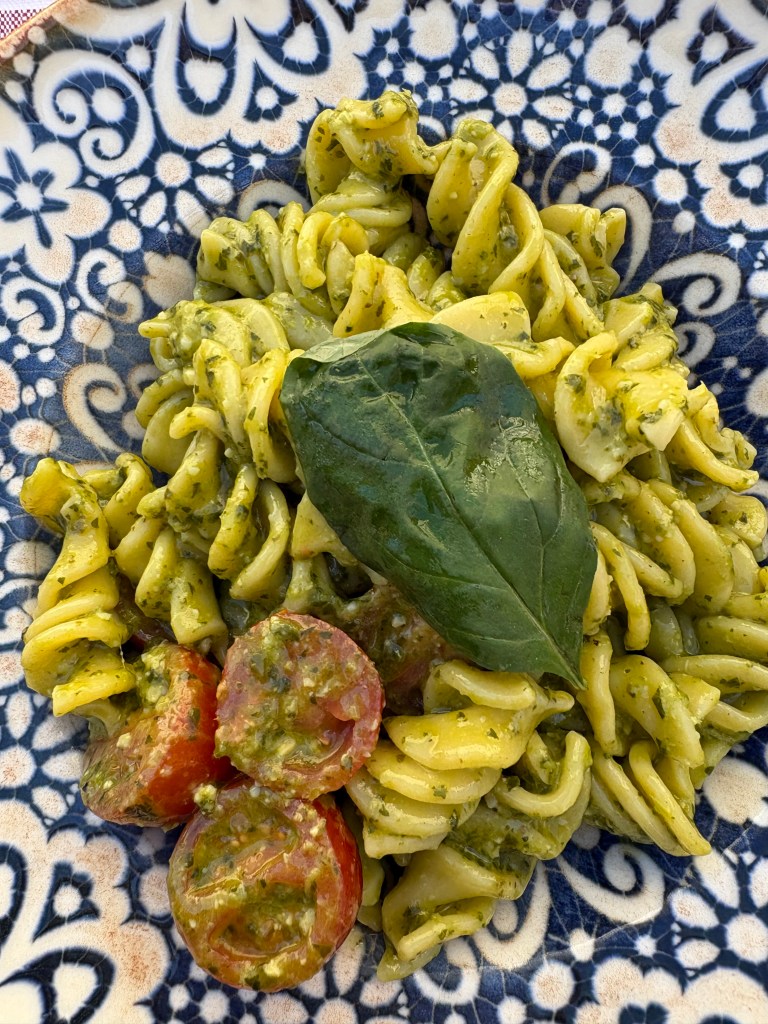
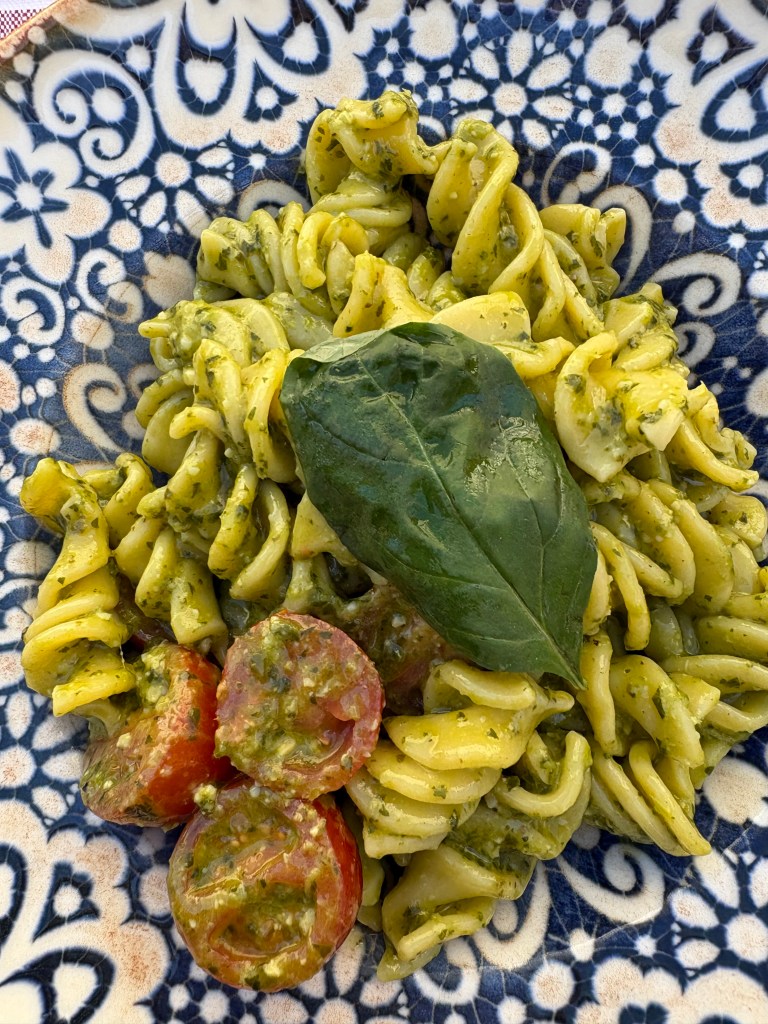
    An amazing pesto pasta dish in Florence, Italy.

    Many people outside of Italy looooovvvveee Italian food, including here at Italy Dreams. Our favorite food was pizza growing up–OK, so maybe it was Pizza Hut pizza, which would make real Italians shudder (hey, we were in the D.C. suburbs, not New York or New Jersey!). And pasta and risotto dishes are a regular part of the meal rotation at Casa di Italy Dreams.

    In any case, traveling to Italy is eye-opening when it comes to Italian food, as you start to learn what cibo Italiano (Italian food) actually is versus Italian-American food.

    We gleaned many of these tips during a 2025 visit to Italy, while others were discovered online. And we’d be happy to continue the food conversation in the future.

    You’re welcome for the yummy food pictures throughout. ๐Ÿ™‚

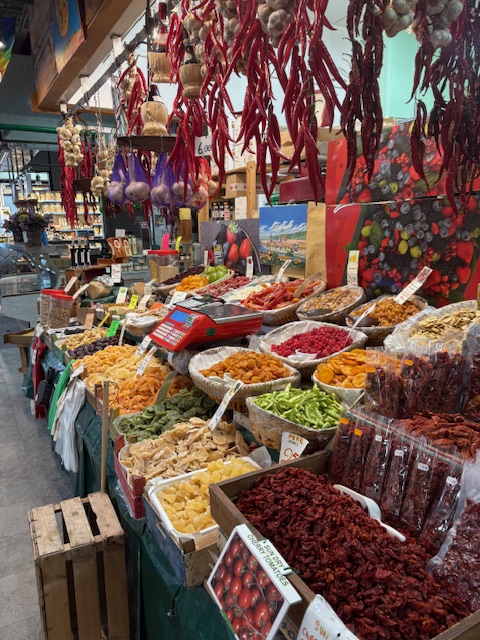
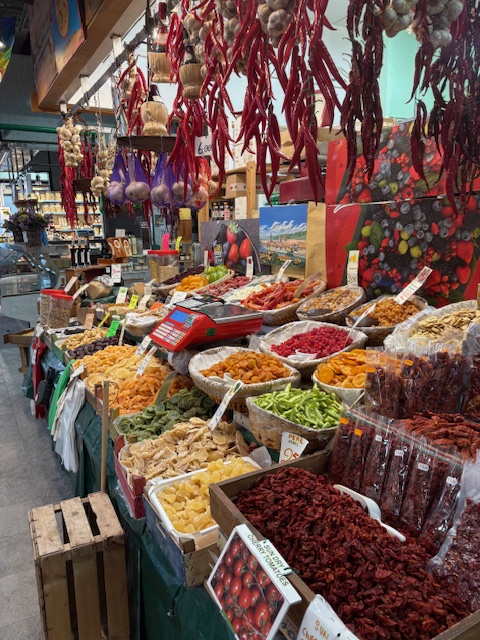
    Mercato Centrale (Central Market) in Florence, Italy.

    The Big Picture

    1. Italian food differs drastically by region.

    When we say “Italian food,” we’re making a huge generalization. That’s because Italian food can differ drastically by region. Italy has 20 different regions, each with its own distinct food, wine, cheese, bread and desserts. Heck, food can sometimes even differ by town. Pizza and pasta may be popular throughout the country, but there are even variations there. Risotto, for example, is an Arborio rice-based dish popular in northern Italy. Couscous is famous in the island region of Sicily (see tip 12).

    We’ve found the book “Rick Steves Italy for Food Lovers,” by Rick Steves and Fred Plotkin, to be particularly useful in understanding different regional foods. You’ll discover where cannoli originally are from (Sicily), where cinghiale (wild boar) is most common (Tuscany), and lots more.

    2. Eating local is a way of life.

    In the U.S., we like to tout that we’re eating local if we’re eating a dish with produce grown within our state or region. In Italy, eating local takes on a whole different meaning. The whole meal may come from the town where you’re eating the meal. The person preparing the meal may have even picked the produce or helped raise the chickens. It’s no wonder that Italian cuisine is known to be so yummy, with such fresh and in-season ingredients.
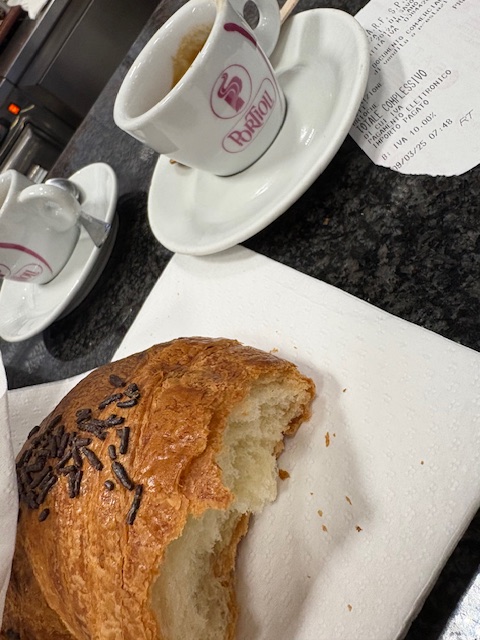
    A crossaint and an espresso is a typical Italian breakfast option.

    Eating Breakfast/Colazione

    3. Breakfast is light.

    Let’s face it, Italians as a whole stay slim for all the food that they eat. One secret may be that they keep their breakfast, or colazione, light. Un cornetto e un espresso–or a crossiant and an espresso–is a common Italian breakfast. Some may add yogurt or fruit as well.

    4. A latte will get you milk, not coffee.

    The word latte means milk in Italian. For Starbucks fans like us, latte means something different, right? It’s what you order when you want a coffee-and-milk combo. So, don’t walk into an Italian food establishment or bar and ask for a latte unless you want just milk. And you may want to study other phrases for ordering coffee, as saying the wrong phrase could lead you to an alcohol-infused drink (which, hey, you may still enjoy).

    Breakfast pastries at a shop in one of Milan’s train stations.

    5. Italians don’t nurse a coffee all day.

    Like many Americans, we at Italy Dreams find it comforting to nurse our coffee for awhile, like it’s a baby that needs affection. Italians–not so much. Those espressos are small and meant to be consumed rapidly. Keep in mind that they also pack a caffeine punch. So, what they lose in “coffee nursing” time, they still make up for with a caffeine jolt.
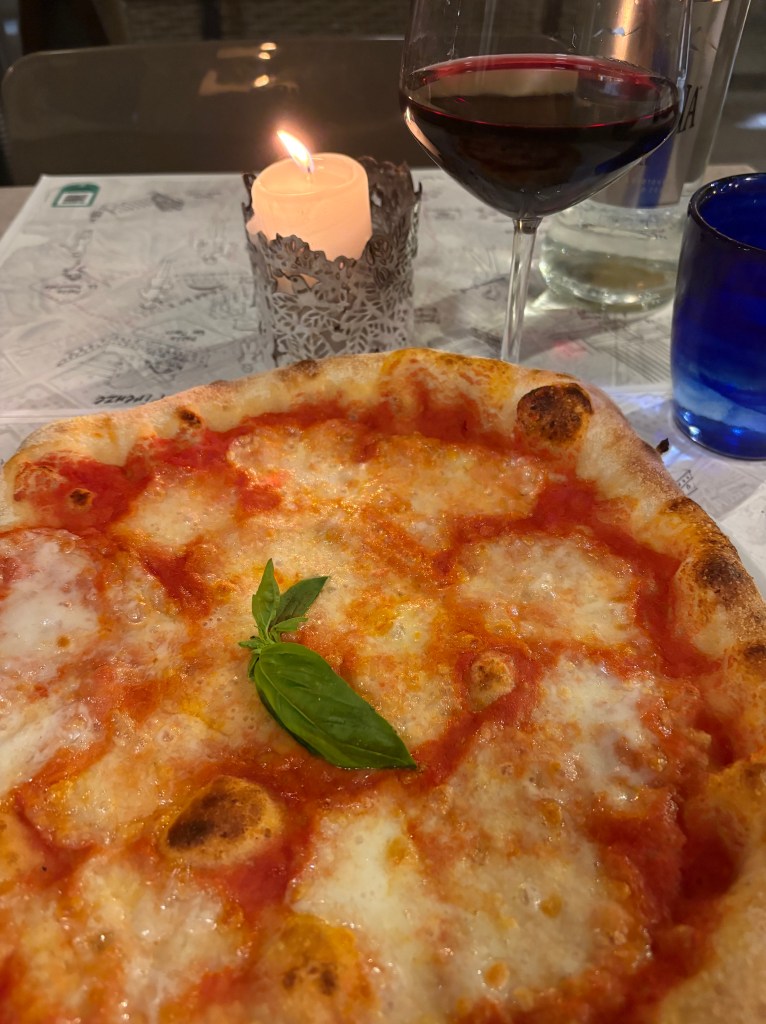
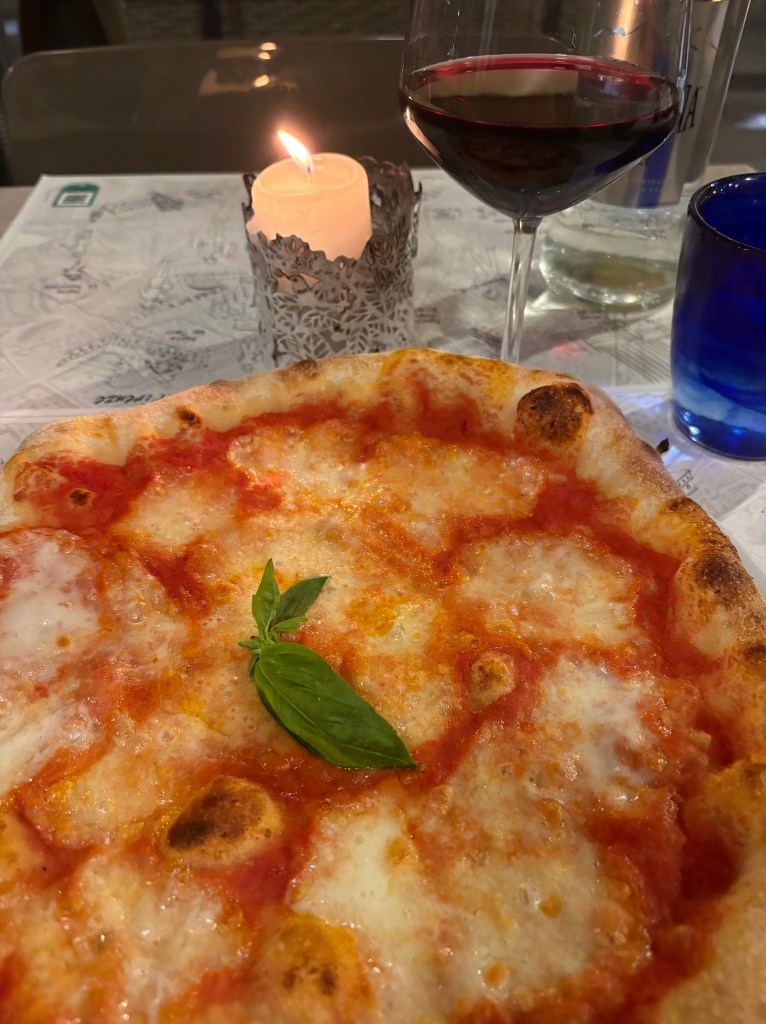
    We hear that Italians drink beer when they have pizza–but this combo of pizza and vino was still a delight.

    Pizza & Pasta

    6. Italians eat a lot of pasta.

    This fact may not be too surprising. After all, pasta is perhaps Italy’s best-known food. However, did you know that the average Italian eats 50 pounds of pasta (23 kilograms) a year? That compares to 20 pounds a year in the U.S. on average per person–which is still a heck of a lot of pasta.

    The cool thing is that Italians have so many different ways to prepare pasta–and so many different types. Just go to a supermarket or other market of choice while you’re there to see what we mean.

    7. Italians like their pasta al dente–and they eat it with a fork.

    Al dente means “to the tooth.” The end result is pasta that’s still a little firm when eaten. Overcooked pasta is not common. And don’t cut your pasta with a fork and knife! They will use a fork to eat their pasta, thankyouverymuch.

    One quick kind-of-related story: We once taught English to a group of Italians here in the U.S. and mentioned that we put olive oil in the water as we cooked pasta. The look of horror on their faces could have stopped a ghost. We learned that day that salt goes in the water to cook pasta, and the olive oil goes on the pasta afterwards.

    8. Don’t look for pepperoni pizza or Hawaiian pizza in Italy.

    Italians in Italy aren’t seeking out pineapple on their pizza. They also aren’t fans of pepperoni pizza like we are here in the U.S. However, you can get peperoni pizza (notice only one “p”), which will get you a pizza with bell peppers. You also can get pizza diavola, or Devil’s Pizza, which uses spicy salami that resembles pepperoni as we know it.

    9. You’re not at Olive Garden anymore, Toto, so there’s no dipping bread in oil and vinegar.

    You may get bread with your Italian meal, but Italians commonly use it to dip into the sauce and oil leftover from the pasta or other dish they’ve eaten. This practice is called fare la scarpetta, which means to make a little shoe. Cute.

    There’s not usually garlic bread either. Sorry.

    A pasta dish in Florence, Italy.

    10. You also won’t find spaghetti with meatballs.

    However, you can order meatballs as a separate dish called polpette.
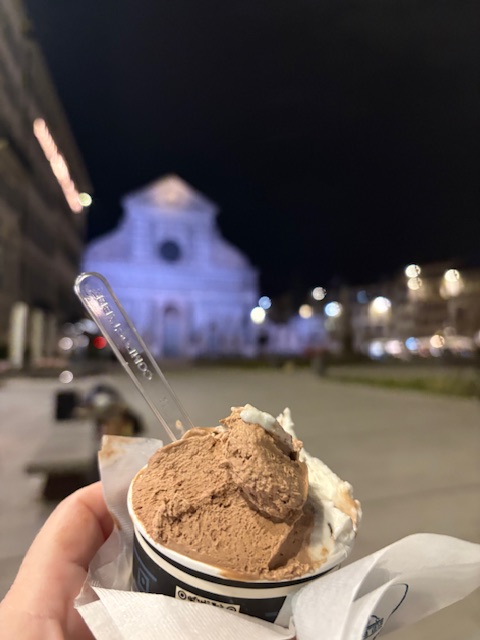
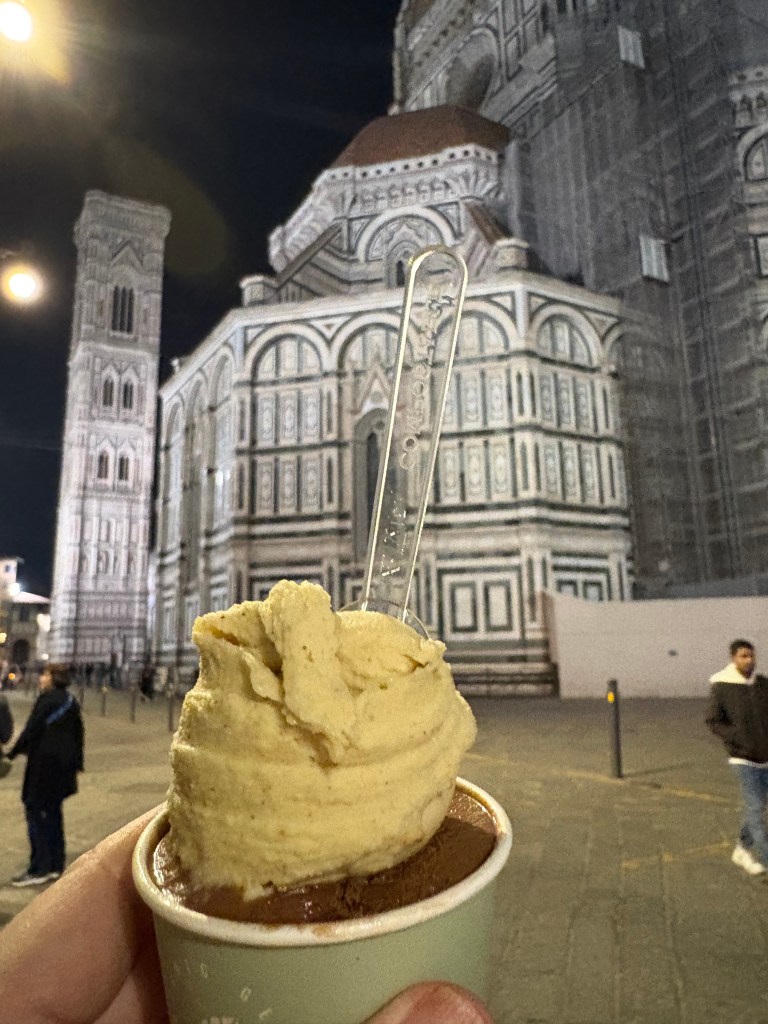
    Gelato outside Santa Maria Novella in Florence. Yummm……

    Miscellaneous

    11. Gelato isn’t the same as ice cream.

    There’s a lot of gelato around Italy, and for good reason. It’s soooooo good. But it’s not the same as ice cream. Gelato is actually made with more milk than regular ice cream and doesn’t include eggs. It’s also denser. Make sure to look for gelato that has more natural colors versus bright colors (which could mean that the gelato was dyed).

    12. There’s a Couscous Fest in Italy that you might want to attend.

    When you think of couscous, you think of the Middle East, right? Yet couscous is actually a specialty in Sicily (among its many food specialties). There’s a Cous Cous Fest each year in Palermo, Sicily, each year attracting more than 200,000 visitors. It also brings in musical guests and has become a huge celebration.

    Hungry yet?
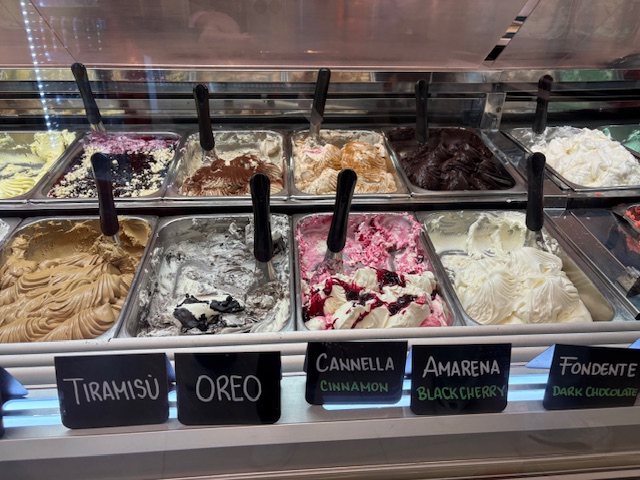
    Gelato as seen in a shop in Florence, Italy.

  • What’s It Like to Tour in Tuscany? A Tour Leader Gives Us the Details!

    Beautiful Florence, Italy. All pictures with this article taken by tour leader Renata De Masi.

    Tour guides and tour leaders in Italy have a pretty sweet deal. They spend their time surrounded by Italian art, history, and food, and they get to share it with others (sign us up, please!).

    Tour guides and tour leaders in Italy also have the scoop on best ways to prep for your Italian adventure. Italy Dreams interviewed Tuscany-based tour leader Renata De Masi, and we definitely learned a lot based on her experiences. If you’re with a tourism agency and you’d like to work with her, you can find her contact information at the end of this article.

    Tour leader Renata De Masi in San Gimignano, Italy.

    Italy Dreams: So, how did you become a tour leader?

    Renata D.: I think I was born a traveller! Since I was a teenager, when my parents said that we were to take a trip, I was filled with joy! Packing, visiting new places, meeting new people, new foodsโ€ฆeverything seemed fascinating.


    Growing up I continued to travel in Brazil (I was born in Brazil from an Italian family) and abroad but strangely enough, I did not decide to work in the tourism industry.

    I was working in an office for years and years. Then, I decided to change everything and take a sabbatical from work and move to Italy. My life changed for realโ€”I married a Florentine and got into the Italian mindset of tourism!

    In this wonderful country where art and beauty are everywhere, it enticed me to become a tour leader. And I’m so glad I did. It’s just the job for me, both the beauty and being in contact with people.
    I love seeing the joyful faces of my tourists when we arrive in Tuscan cities!

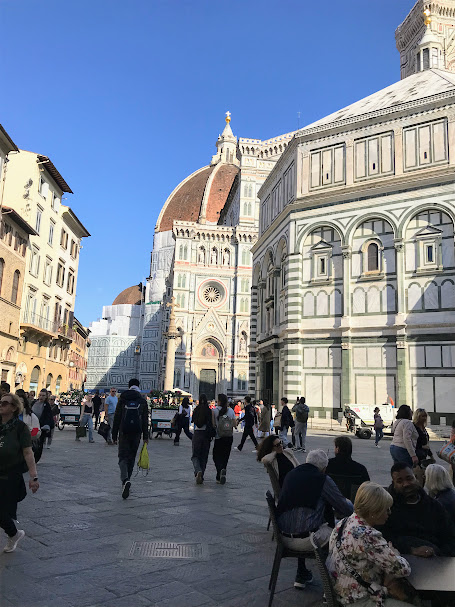
    Florence, Italy, where you can see part of the Duomo (cathedral).

    Italy Dreams: For how long have you been a tour guide in Tuscany?

    Renata D.: I’d like to specify that I’m a tour leader. In Italy, there are differences between a  tour leader and a tour guide, and we must respect the differences.

    To become a tour leader, you have to pass a licensing exam at a regional or provincial office to obtain a license. After that, you also have to obtain a license issued by your municipality of residence, and then youโ€™ll be registered in the regional register of tour leaders.

    To become a tour guide, you must take a National Licensing Examination for the profession. After passing the Licensing Examination, candidates will be enrolled in the National List of Tourist Guides established at the Ministry of Tourism.

    So, back to me. I have been a tour leader since 2016 after passing the licensing exam. I started the Tour Leader course in 2015 and it took almost 9 months of study. I did 450 hours of practice with an agency. When I got my license, I started to work for that agency.

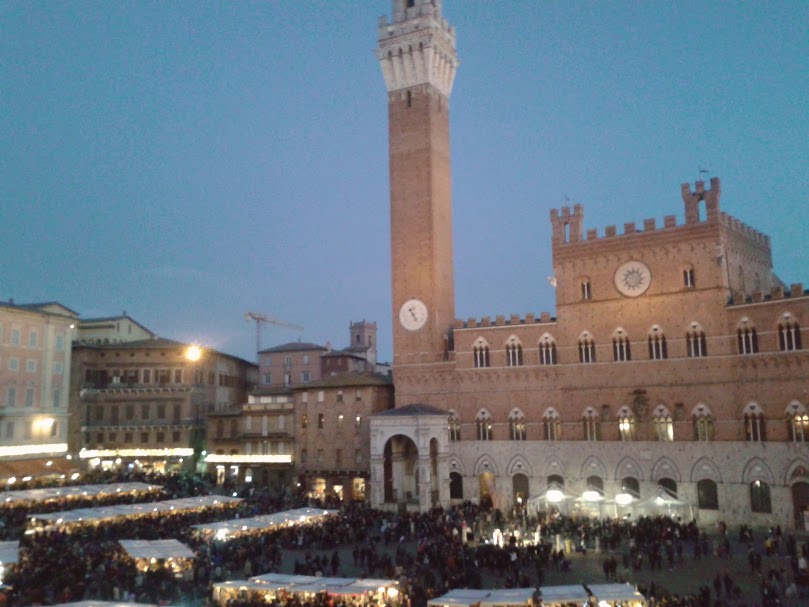
    Siena, Italy.

    Italy Dreams: Where are some of the places that you take tour groups? Which places are most popular?

    Renata D.: Tuscany is a wonderful region of Italy and even if you live here, there is always a place to discover. Sunday is the famous day for the ‘giratina fuori porta‘ (Sunday outside tour). Every Italian likes to do that.

    Florence is an open-air museum and should be visited with a tour guide who will tell the story of the Medici family and how they loved this city.

    Basically, we do daily tours from Florence to Siena, San Gimignano, Monteriggioni, the Chianti area, Pisa, Lucca, Montalcino, Pienza and Montepulciano.

    Every day we take tourists to these cities, and people end the day with so much beauty inside that no photo can ever express the reality!

    As a first approach, these tours are very good for those who do not want to plan the trip themselves and donโ€™t want to worry about transportation and various logistics.

    One special city I’d like to mention is Volterra. Volterra is a city founded by the Etruscans and is famous for alabaster working. There is so much to see in this town and its historic center is very beautiful! (Note from Italy Dreams: Volterra is the city that appears in the movie โ€œTwilight: New Moon.โ€ )

    Certaldo, the upper part of Volterra, is a walled Medieval Village and the lower part is modern. It is famous in the summer for its Mercantia Festival where you will find art, dance, theater, music and juggling throughout the streets of the town.

    There is so much to see and so many other cities to discover!

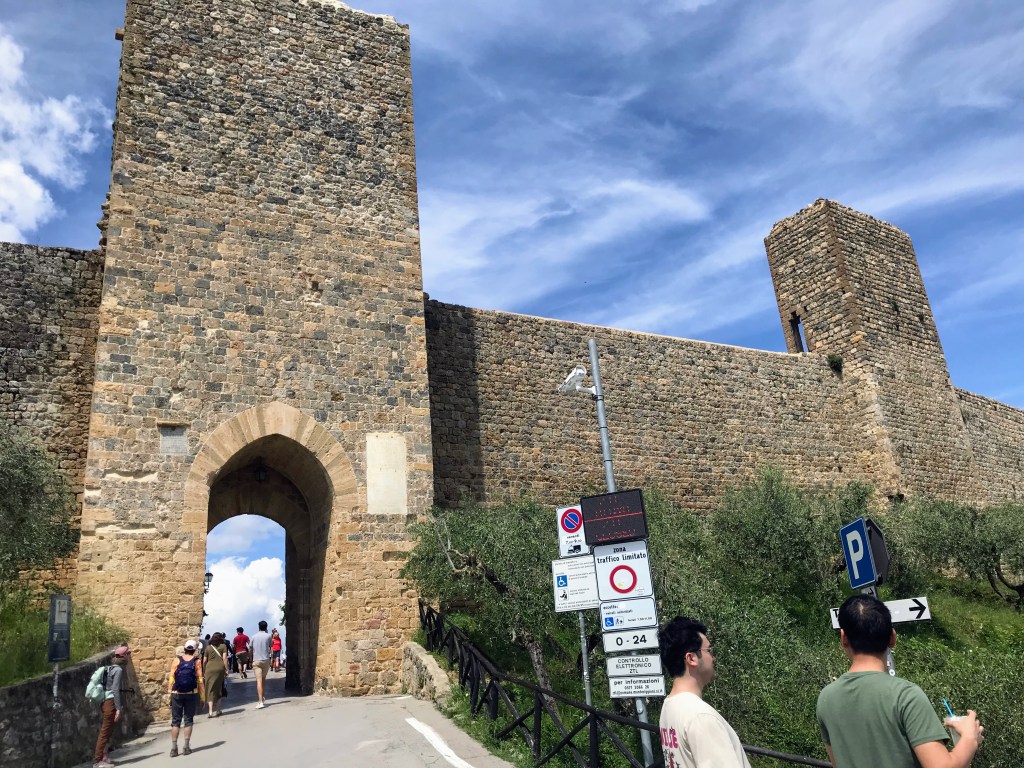
    Monteriggioni, Italy.

    Italy Dreams: What are some questions you commonly get from visitors about places you visit?

    Renata D.: Some tourists are very interested in Italian art and history. For example, there are unique places in Italy, such as the towers of San Gimignano or the Leaning Tower of Pisa, so these places normally have a lot of curiosity.


    People also ask a lot about the food and wine of each Italian region. They ask me about when it’s OK to drink a cappuccino. Let’s dispel the myth: It is not forbidden to drink a cappuccino after 12 o’clock. Sometimes, you can even snack on a cappuccino. But we don’t drink cappuccino with pasta. Noooooo! Pasta should be paired with a nice wine.

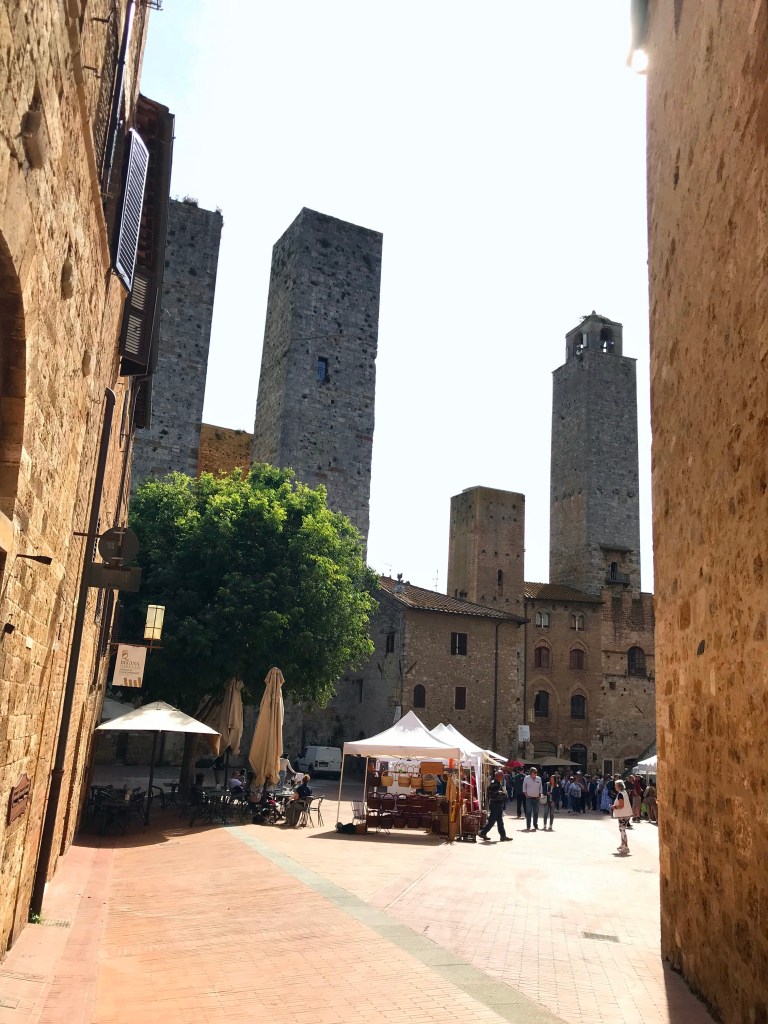
    San Gimiignano, Italy.

    Italy Dreams: What are a couple of things that you think visitors should know before visiting Tuscany or Florence?

    Renata D.: A lot of the cities in Tuscany are UNESCO Heritage Sites, and the buses can’t enter inside the city center. They have a parking lot made especially for them, and we walk with the group to the destination.

    My advice is to wear comfortable shoes in order to enjoy the tour.

    Prepare your trip in advance and obtain information about the cities you want to visit.

    Know that most of the sites in Tuscany were populated by the Etruscans and they began their settlement high in the hills as a matter of defense.

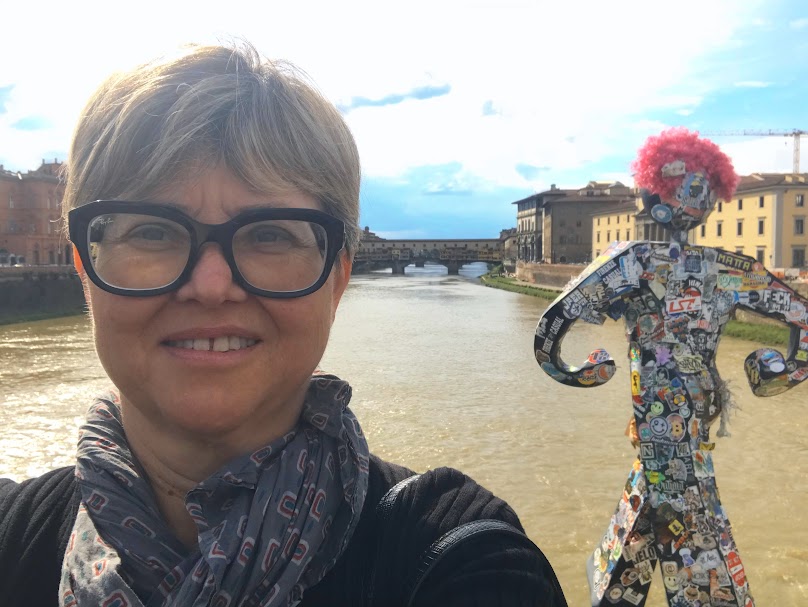
    Renata De Masi in Florence, Italy.


    Italy Dreams: What advice do you have for someone visiting Italy for the first time?

    Renata D.: Here are a few suggestions:

    1. Book tickets in advance. Italy is sought after, and tickets for attractions run out quickly. To avoid being disappointed, it is best to book tickets in advance.

    2. Carry some cash. It’s better to be safe than sorry!

    3. On regional and local trains throughout Italy, itโ€™s important to validate your ticket before getting on board. Once youโ€™re at the rail station, look for a green machine in which you can place your ticket to have the date and time stamped. Anyone who forgets is liable to pay a fine, which ranges depending on if you pay the controller on the spot.

    4. If you go on a tour with a tour guide or tour leader, they should have a license prominently displayed, so you are sure it is a professional in good standing and not a bogus one.

    5. In Italy, food is serious business, and table etiquette is always highly valued. Dress appropriately and be patient if the service is slower than you are used to. A few words in Italian like grazie and prego are very welcome!

    6. Pay attention to the calendar of village festivals where you are visiting. It is a lot of fun to be able to participate in events with Italians!

    7. Prior to booking a tour, read carefully all the activities that are included or if something is optional. Sometimes, you can lose a good chance to do a guided tour or enter inside a wonderful cathredal.

    8. A large number of artworks and tours are done inside the churches. Dress appropriately or otherwise, you will not be able to enter.

    Italy Dreams: How can people get in touch with you for tours?

    Renata D.: Certainly. We tour leaders are freelancers, and we can work with any travel agency in the world; we cannot work with individuals. If any tourism agency is interested in my work, please email me at demasire@hotmail.com.

    We will wait for you here in Italy!

  • Florence, Italy, for Foodies: Where to Go and What to Eat

    Read our article for a few tips on finding a great meal in Florence, Italy.

    Florence, Italy, is beloved for its history and culture. Michelangelo’s David? Right over here. Boticelli’s artwork? It’s got that, too. Tons and tons of history dating back to 52 B.C.? Check!

    Yet if you’re visiting Florence, you probably also want to know some great ways to enjoy its food. Because after all, there’s no going hungry in Tuscany.

    Here are four food recommendations for your visit to Florence.

    Molto buono! Gelato from Edoardo, an organic gelato place.

    Edoardo il Gelato Biologico

    Piazza del Duomo, 45/R, 50122 Firenze FI, Italy

    You’ve got your share of gelato places around the Duomo (Cathedral)–why not pick one that’s highly rated and organic?

    Edoardo’s gelato is made without chemicals or artificial colors. Enjoy flavors like pistachio and hazelnut among other choices(including some seasonal changes). Remember what European travel guru Rick Steves says–if gelato comes in neon-bright colors, you probably want to avoid it. Edoardo’s gelato has muted colors, adding to its authenticity.

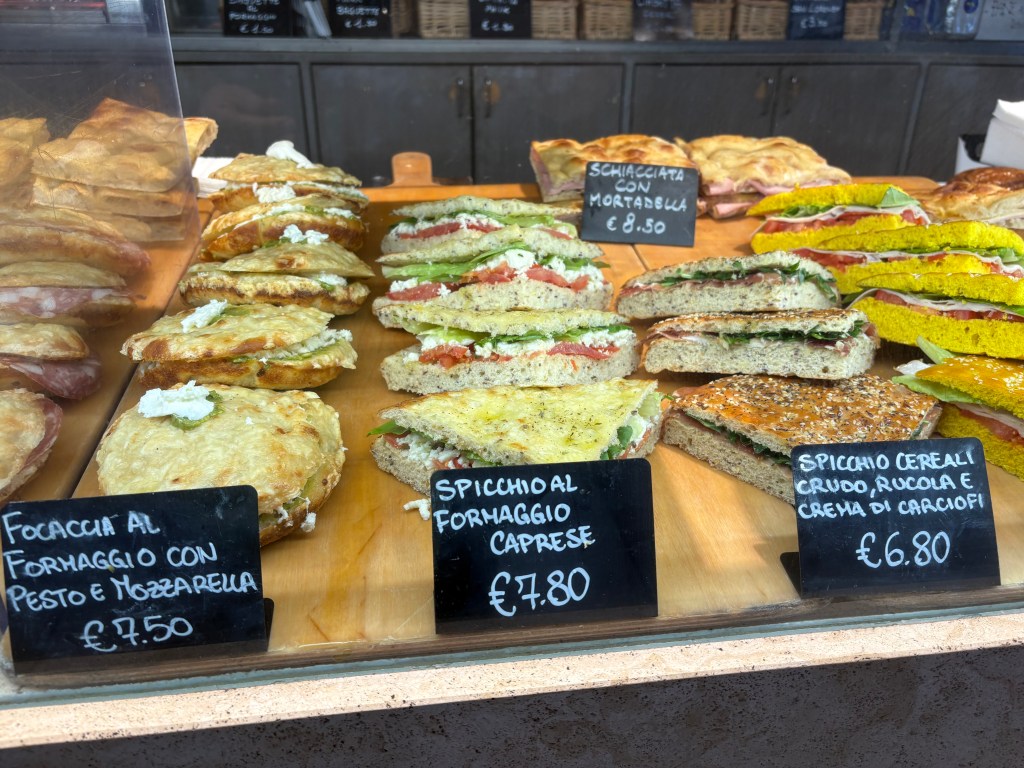
    Sandwiches found on the second floor of Mercato Centrale in Florence.

    Mercato Centrale Firenze

    Via Generale dalla Chiesa, 13 50136 Firenze

    When we arrived in Florence, we made an early-morning beeline toward the Duomo so we could see it before big crowds arrived (which is a great tip for just about anywhere you’re traveling in Italy). But really, we were just killing time until Mercato Centrale opened.

    Mercato Centrale has food stalls on its first floor, with a colorful mix of food and products that could keep you busy all morning. If you like taking pictures, definitely take your time to find good pics.

    One of the first stalls we saw featured the lampredotto sandwich, a Tuscan specialty that uses the fourth stomach from a cow.  Further down, we saw pigs’ heads, massive containers of sundried tomatoes, and plenty of vino. There were a few places to buy pastries, like the famous cornetto (croissant) that Italians often have for breakfast.

    One of the food stalls at Mercato Centrale in Florence.

    Some of the vendors were tourist-geared and gave samples of items like truffle cream, cheeses, vinegar, and olive oil.

    In an amusing twist, we saw two stands that displayed the Peruvian flag, reflecting the small but mighty Peruvian community in Florence, Much like Italy, Peru is famous for its cuisine, and the stalls included some of the produce and spices better known by its natives.

    Upstairs at Mercato Centrale, there’s a food hall with a ton of ready-made food items that you can order–from hamburgers to pizza to American barbecue and more. We tried a caprese sandwich that was perfect for an early lunch. Use this handy guide for the layout of the Mercato Centrale’s second floor.

    Bravo! Pesto pasta from Osteria del Fiore.

    Osteria del Fiore

    Piazza del Duomo, 57r, 50122 Firenze

    We realize that there are many great places to eat in Florence. There are hidden gems away from the tourist crowds, but there also are some tourist-friendly restaurants that come with fantastic food and a stunning view. That’s what you’ll find at Osteria del Fiore, where we enjoyed a pesto pasta with tomatoes while watching the world go by beside the Duomo.

    Our pasta was served with a side of bread, perfect for sopping up extra pesto sauce. On the menu here, our order was Fusilli al Pesto con Pomodorini (fusilli pasta with pesto and tomatoes).

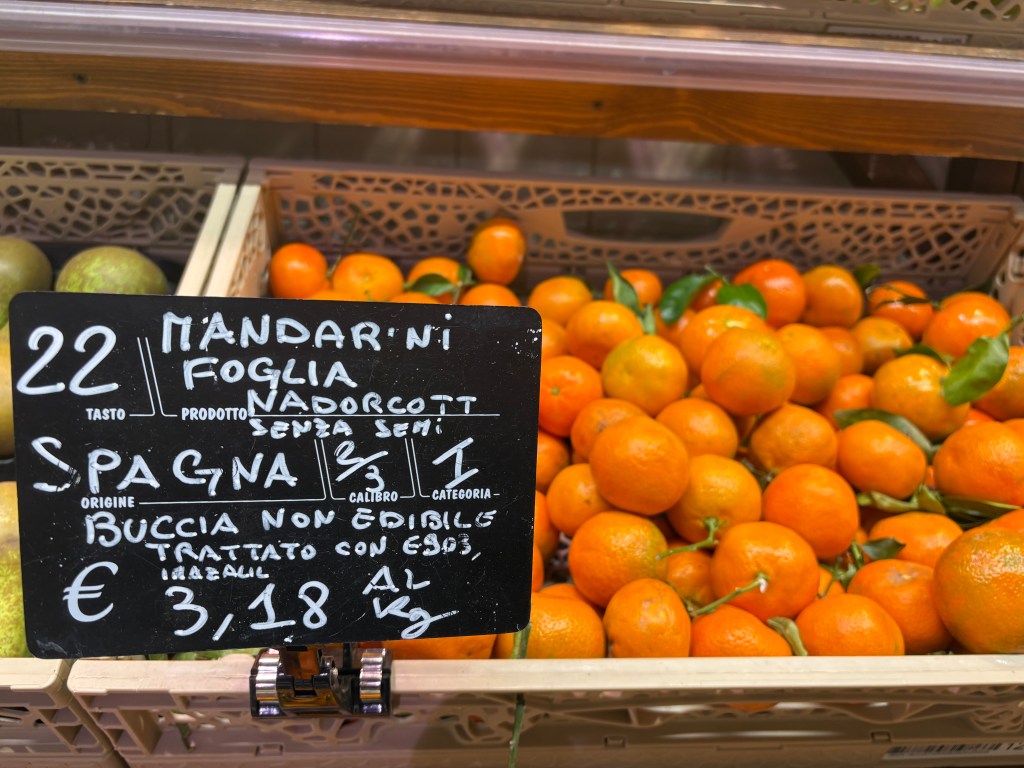
    This sign in a Florence supermarket tells the name of the fruit (mandarins) and where they are from (Spain).

    Local Supermarkets

    Various locations

    After checking into the hotel, the first thing we did was find a supermarket. After all, it was our first time in Italy in a very long time, and we were too tired and impatient for a sit-down meal.

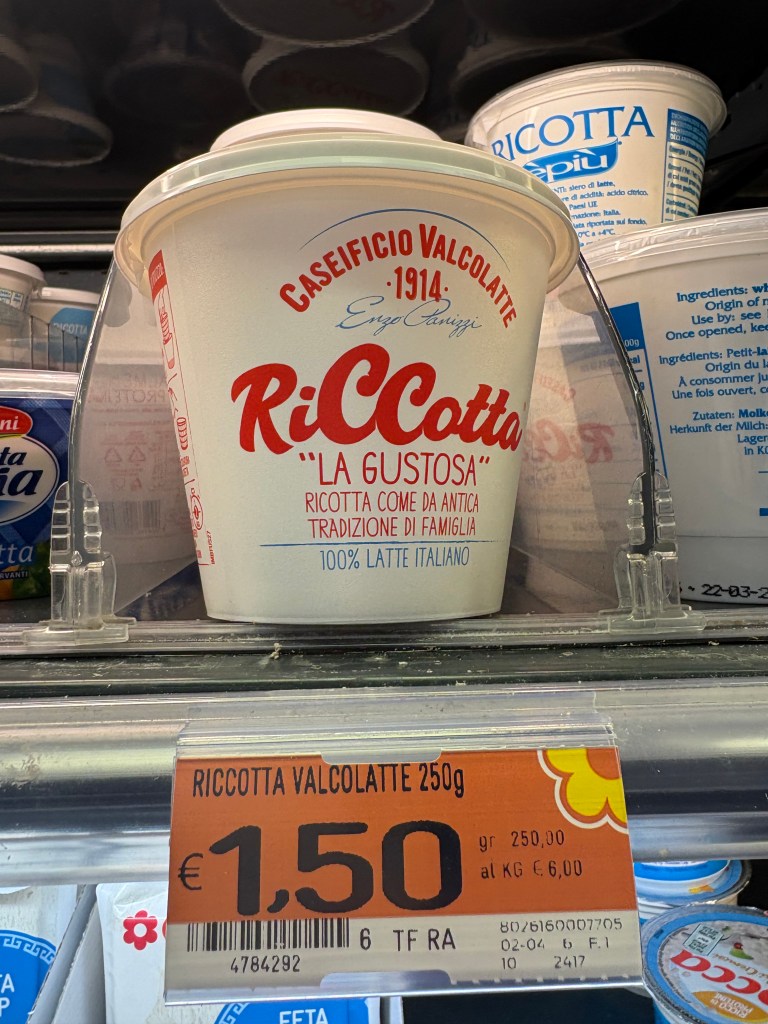
    Interesting ricotto cheese at a Florence supermarket.

    Going to a supermarket was a fascinating way to see how people shop, how pasta and sauce prices (and selection) compared to the U.S., and what other snacks would be good for our trip. In fact, we bought a pre-made flatbread for dinner that night along with some European Ritter Sport chocolate. A few days later, we also ended up buying food gifts there, like pesto and pasta.

    It’s hard to go wrong with Italian pizza and vino….

    4 Tips for Choosing a Better Meal in Tuscany

    Don’t be afraid to eat near the Duomo. Yes, you’ll be there with hundreds of new friends, but as mentioned, one of our best meals in Italy was the pesto pasta enjoyed while staring at the Duomo.

    Take a cooking class. Sadly, this is something we didn’t have a chance to do. It could be a great way to learn about local cuisine and meet others. Here are a few recommendations for Florence cooking classes from a Rick Steves forum.

    Try an Italian breakfast. Italians put a lot of effort into their lunches and dinners. So, it may not be surprising that their breakfast is more simple. The most common breakfast is coffee and a croissant, or “un espresso e un cornetto.” Espresso, of course, is the shorter coffee. If you want more coffee to drink, American style, then specify that you want “un caffe Americano.”

    Use those meal encounters to practice Italian, if you’re learning the language! If not,it still can’t hurt to trhow in the occasional “per favore” and “grazie.” ๐Ÿ™‚

    A cornetto and espresso….