Tag: Florence Italy

  • Byways of Italy Brings You Closer to the Good Life in Italy

    Enjoy views of the Coliseum in Rome or any other sights you wish with a Byways of Italy tour. Picture shared by Jessica Caceres.

    If you’ve ever dreamed of getting to know Italy up close and personal but you’re not sure where to start, then the Rome-based company Byways of Italy is a great place to start.

    Byways of Italy is a tour operator and destination marketing company (DMC) that creates customized travel itineraries and provides experiences at Italy’s iconic destinations as well as lesser-known gems, says founder Manuela Mocci.

    The company began in 2021 in response to a growing demand from travelers looking to rediscover Italy after the COVID-19 pandemic. It focuses most frequently on cultural and food and wine experiences along with a commitment to conscious, responsible travel, Mocci says.
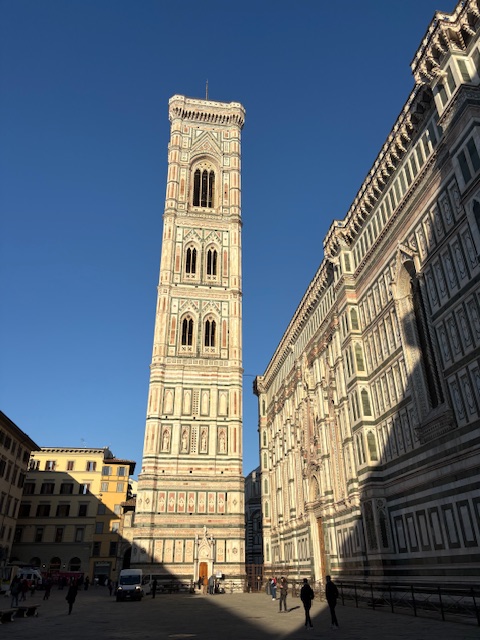
    Florence, Italy.

    What Makes Byways of Italy Different?

    Byways of Italy’s travel advisors work closely with clients to create a customized travel experience.

    “I would say that clients choose us because of the balanced mix in our proposals, combining the most well-known spots with off-the-radar day trips offered at the right pace, and the dedication we bring from the start,” Mocci says.

    The company’s typical client will be a couple or family that’s from Australia, the U.S., Canada, or Latin America. Although Byways doesn’t usually work with large groups, they make an exception for multigenerational families.

    “Our correspondence with clients sometimes lasts months or even over a year, allowing us to get to know their preferences, build trust, and carefully curate every detail of their journey,” Mocci explains.
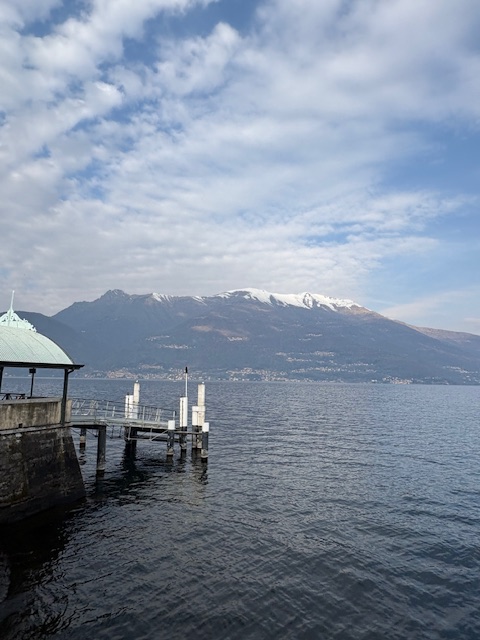
    A view of Lake Como in northern Italy.

    Although travel options abound online, many people still want the value of working with local experts.

    “Younger travelers often want unique experiences that are hard to find online, and they donโ€™t have much time to dedicate to planning,” Mocci says. “Older travelers can feel overwhelmed by the amount of information available on the web and are looking for someone they can trust to provide guidance and support when needed.”
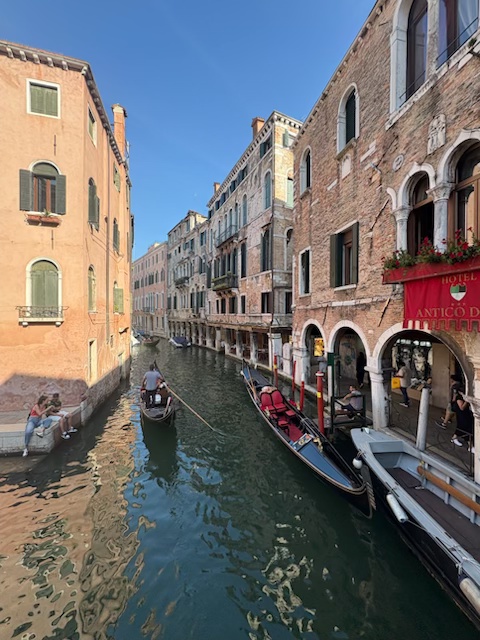
    A classic view of Venice, Italy. Picture shared by Jessica Caceres.

    Where Can You Go With Byways of Italy?

    Instead of asking, “Where can you go with Byways of Italy?”, perhaps the better question to ask is, “Where do you want to go?”

    Do you want to take a relaxing bike ride along Lake Garda? Live the luxe life on a yacht cruise on Sardinia’s coastline and enjoy an onboard fish lunch? Or, do you just want to meander in the countryside of the region of Marche and sample authentic food and wine while you stay at a local agriturismo (a farm-based home that usually offers activities like tours or cooking classes)?

    All of this and more are possible with the help of Byways of Italy. That’s because it specializes in customized tours.

    “We add special touches to make each trip one-of-a-kind, especially for occasions such as honeymoons and anniversaries,” Mocci says.
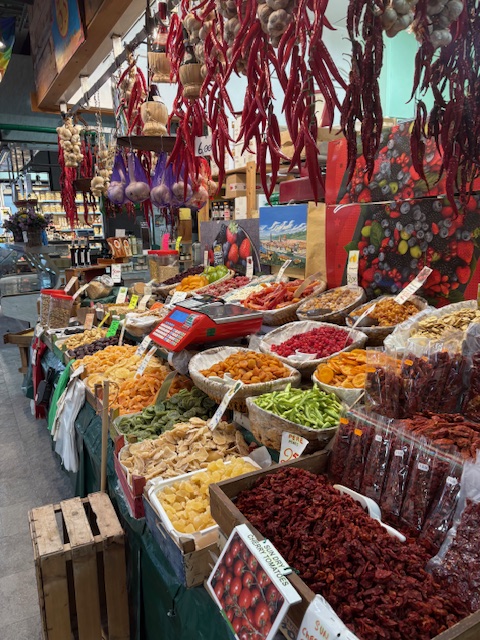
    Mercato Centrale in Florence, italy.

    However, Byways also offers classic tours to help you get to know Italy better. Here are a few popular highlights:

    The 10-Day Italy Tour features Milan, Venice, Florence, and Rome. Activities you can enjoy include a guided tour of Milan’s Duomo (cathedral), a private boat tour on famous Lake Como, a sightseeing tour of Venice with a Venetian apertif, a visit to a glass factory in Murano, a guided tour of Florence’s famous art museums, and a walking tour of Rome’s main monuments. Of course, no classic Italy tour is complete without wine tasting in the Tuscan countryside!

    A Journey of Self-Discovering in Tuscia. Get off the beaten path for this 7-night/8-day tour in Tuscia, located in the Lazio region near the border with Umbria and Tuscany. This remote area helps you enjoy less crowded ancient Italian towns and connect with yourself and your loved ones. Take a guided tour of Tuscania, relish in the thermal baths in the town of Viterbo, spend a day at a family-run winery, and visit the Palazzo Farnese to take in its awe-inspiring frescoes.

    Northwest Sardinia. For something truly different, book yourself a Byways of Italy tour to Northwest Sardinia. Sardinia is an island off of Italy’s western coast and is one of Italy’s 20 regions. It has famous beaches but still has many parts that are less discovered compared with Italy’s bigger cites. This 10-day/9-night tour includes a visit to Alghero, which has a strong Catalan influence; a panoramic road trip to the colorful and historica town of Bosa, featuring the area’s vineyards; and a visit to the small village of Castelsardo.

    Some of the other tours via Byways of Italy include:

    –Milan and the lakes of North Italy

    –Sorrento and the Amalfi Coast

    –3 Days in the Tuscany Countryside

    –Procida, a fishing island in the Gulf of Naples
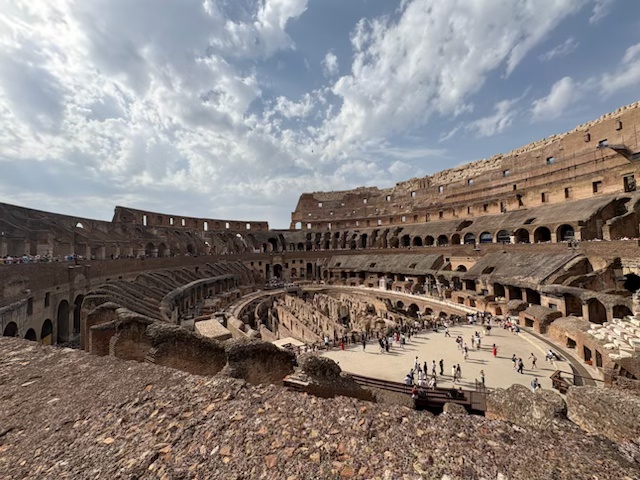
    Rome’s Coliseum. Picture shared by Jessica Caceres.

    Tips for Planning Your Trip to Italy

    As you plan your trip to Italy, there are some general travel tips you should follow, Mocci recommends:

    Begin to plan your trip 6 to 8 months in advance so you have more options and better prices.

    Keep a running list of useful information and points of interest about your destination, such as attractions, museums, bars/restaurants, streets, etc.

    Buy those museum tickets ahead of time. “During high season, tickets for the most famous museums sell out quickly and need
    to be booked in advance. This will help you save some time,” Mocci says.

    Double check schedules in advance. Some museums and cultural sites may be closed when you least expect it, especially in small towns or outside of peak season.

    Don’t overplan. “Leave space for unexpected discoveries and improvisation, and make sure to leave time to rest, enjoy a coffee in a nice bar, or take a leisurely walk through the center,” Mocci says.

    Mocci shares some final wise thoughts: “Travel isnโ€™t about ticking
    boxes, itโ€™s about finding experiences that feel meaningful to you,” Mocci says. “What one traveler enjoys might not suit another, and thatโ€™s what makes every trip personal.”

    To contact Byways of Italy about your Italian trip, find them online at BywaysofItaly.com. You can also message them through the following contact form on their website.
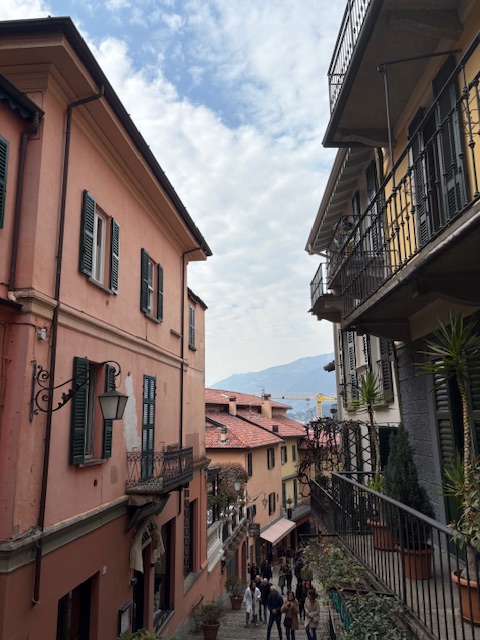
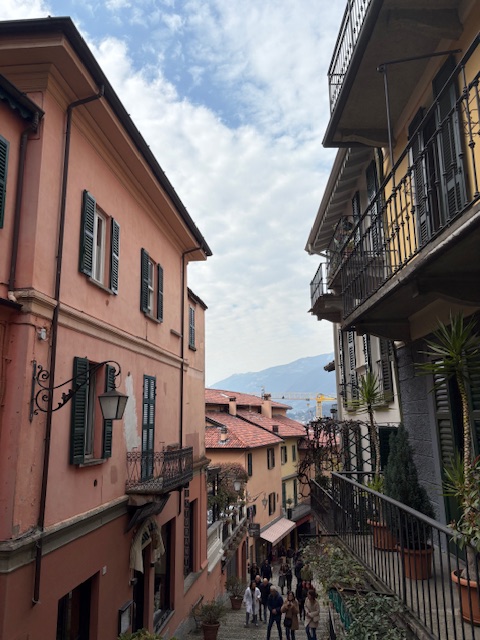
    Beautiful Bellagio in Lake Como, Italy.

  • 12 Facts About Italian Food in Italy That May Surprise You

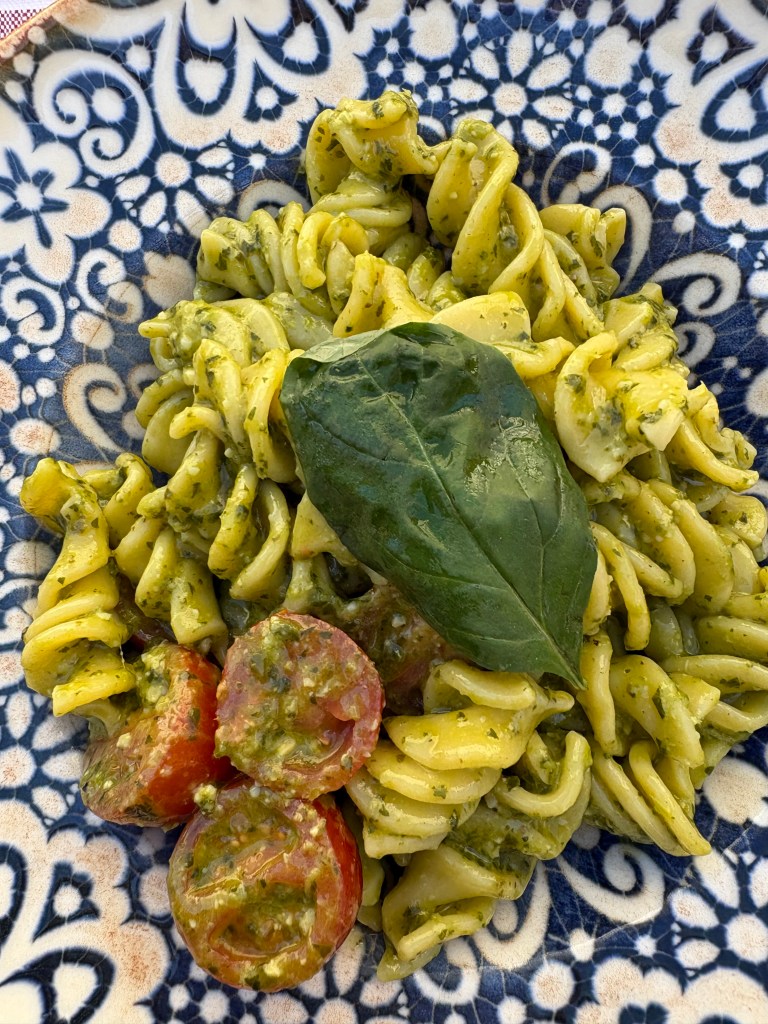
    An amazing pesto pasta dish in Florence, Italy.

    Many people outside of Italy looooovvvveee Italian food, including here at Italy Dreams. Our favorite food was pizza growing up–OK, so maybe it was Pizza Hut pizza, which would make real Italians shudder (hey, we were in the D.C. suburbs, not New York or New Jersey!). And pasta and risotto dishes are a regular part of the meal rotation at Casa di Italy Dreams.

    In any case, traveling to Italy is eye-opening when it comes to Italian food, as you start to learn what cibo Italiano (Italian food) actually is versus Italian-American food.

    We gleaned many of these tips during a 2025 visit to Italy, while others were discovered online. And we’d be happy to continue the food conversation in the future.

    You’re welcome for the yummy food pictures throughout. ๐Ÿ™‚

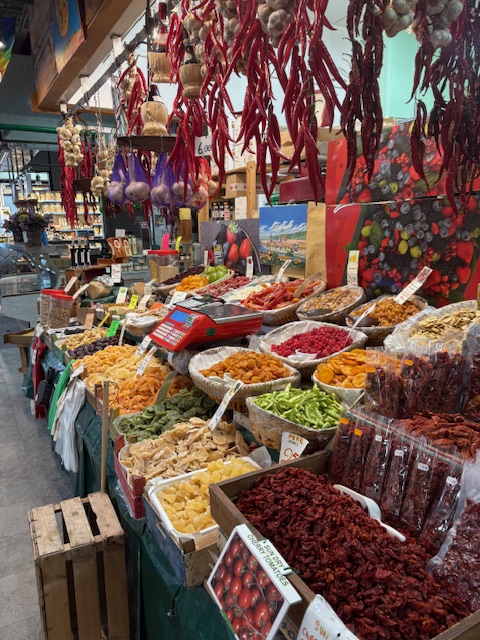
    Mercato Centrale (Central Market) in Florence, Italy.

    The Big Picture

    1. Italian food differs drastically by region.

    When we say “Italian food,” we’re making a huge generalization. That’s because Italian food can differ drastically by region. Italy has 20 different regions, each with its own distinct food, wine, cheese, bread and desserts. Heck, food can sometimes even differ by town. Pizza and pasta may be popular throughout the country, but there are even variations there. Risotto, for example, is an Arborio rice-based dish popular in northern Italy. Couscous is famous in the island region of Sicily (see tip 12).

    We’ve found the book “Rick Steves Italy for Food Lovers,” by Rick Steves and Fred Plotkin, to be particularly useful in understanding different regional foods. You’ll discover where cannoli originally are from (Sicily), where cinghiale (wild boar) is most common (Tuscany), and lots more.

    2. Eating local is a way of life.

    In the U.S., we like to tout that we’re eating local if we’re eating a dish with produce grown within our state or region. In Italy, eating local takes on a whole different meaning. The whole meal may come from the town where you’re eating the meal. The person preparing the meal may have even picked the produce or helped raise the chickens. It’s no wonder that Italian cuisine is known to be so yummy, with such fresh and in-season ingredients.

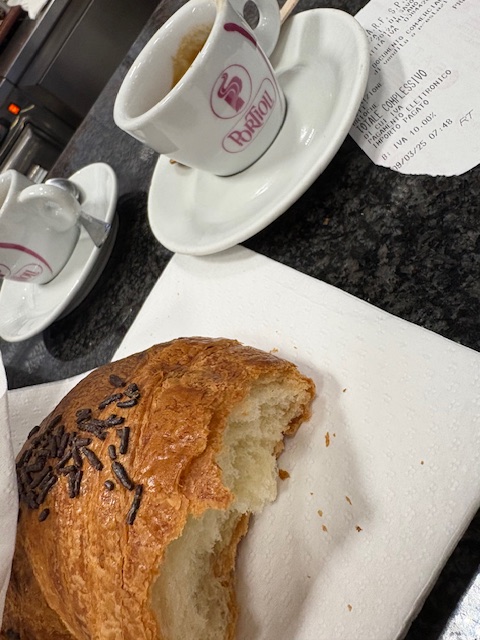
    A crossaint and an espresso is a typical Italian breakfast option.

    Eating Breakfast/Colazione

    3. Breakfast is light.

    Let’s face it, Italians as a whole stay slim for all the food that they eat. One secret may be that they keep their breakfast, or colazione, light. Un cornetto e un espresso–or a crossiant and an espresso–is a common Italian breakfast. Some may add yogurt or fruit as well.

    4. A latte will get you milk, not coffee.

    The word latte means milk in Italian. For Starbucks fans like us, latte means something different, right? It’s what you order when you want a coffee-and-milk combo. So, don’t walk into an Italian food establishment or bar and ask for a latte unless you want just milk. And you may want to study other phrases for ordering coffee, as saying the wrong phrase could lead you to an alcohol-infused drink (which, hey, you may still enjoy).

    Breakfast pastries at a shop in one of Milan’s train stations.

    5. Italians don’t nurse a coffee all day.

    Like many Americans, we at Italy Dreams find it comforting to nurse our coffee for awhile, like it’s a baby that needs affection. Italians–not so much. Those espressos are small and meant to be consumed rapidly. Keep in mind that they also pack a caffeine punch. So, what they lose in “coffee nursing” time, they still make up for with a caffeine jolt.

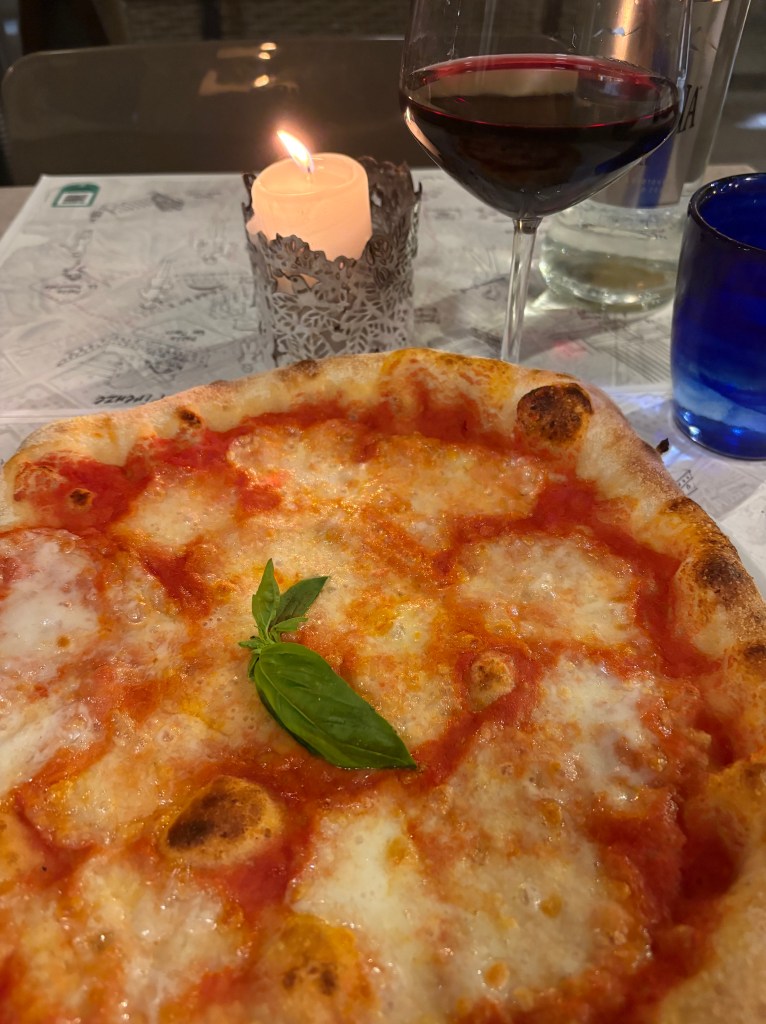
    We hear that Italians drink beer when they have pizza–but this combo of pizza and vino was still a delight.

    Pizza & Pasta

    6. Italians eat a lot of pasta.

    This fact may not be too surprising. After all, pasta is perhaps Italy’s best-known food. However, did you know that the average Italian eats 50 pounds of pasta (23 kilograms) a year? That compares to 20 pounds a year in the U.S. on average per person–which is still a heck of a lot of pasta.

    The cool thing is that Italians have so many different ways to prepare pasta–and so many different types. Just go to a supermarket or other market of choice while you’re there to see what we mean.

    7. Italians like their pasta al dente–and they eat it with a fork.

    Al dente means “to the tooth.” The end result is pasta that’s still a little firm when eaten. Overcooked pasta is not common. And don’t cut your pasta with a fork and knife! They will use a fork to eat their pasta, thankyouverymuch.

    One quick kind-of-related story: We once taught English to a group of Italians here in the U.S. and mentioned that we put olive oil in the water as we cooked pasta. The look of horror on their faces could have stopped a ghost. We learned that day that salt goes in the water to cook pasta, and the olive oil goes on the pasta afterwards.

    8. Don’t look for pepperoni pizza or Hawaiian pizza in Italy.

    Italians in Italy aren’t seeking out pineapple on their pizza. They also aren’t fans of pepperoni pizza like we are here in the U.S. However, you can get peperoni pizza (notice only one “p”), which will get you a pizza with bell peppers. You also can get pizza diavola, or Devil’s Pizza, which uses spicy salami that resembles pepperoni as we know it.

    9. You’re not at Olive Garden anymore, Toto, so there’s no dipping bread in oil and vinegar.

    You may get bread with your Italian meal, but Italians commonly use it to dip into the sauce and oil leftover from the pasta or other dish they’ve eaten. This practice is called fare la scarpetta, which means to make a little shoe. Cute.

    There’s not usually garlic bread either. Sorry.

    A pasta dish in Florence, Italy.

    10. You also won’t find spaghetti with meatballs.

    However, you can order meatballs as a separate dish called polpette.

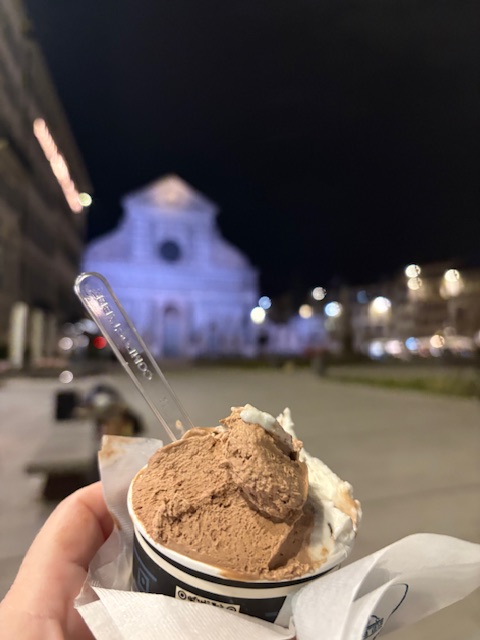
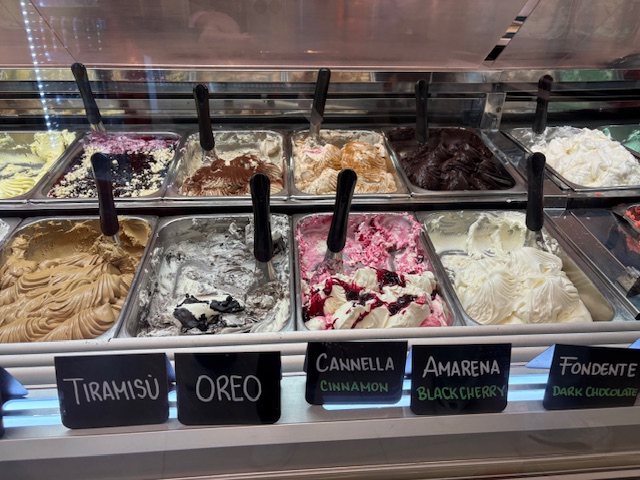
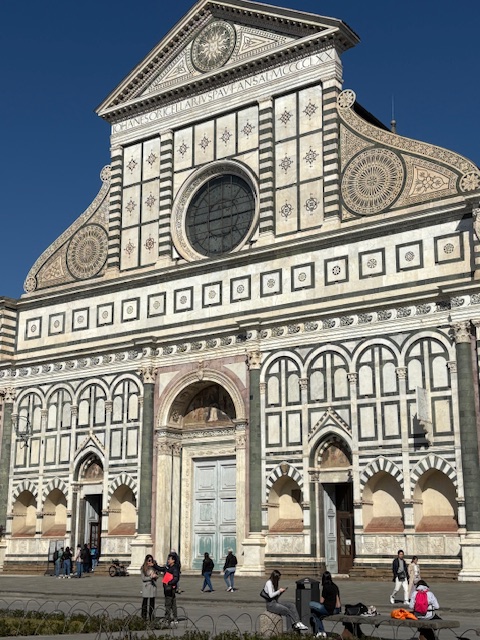
    Gelato outside Santa Maria Novella in Florence. Yummm……

    Miscellaneous

    11. Gelato isn’t the same as ice cream.

    There’s a lot of gelato around Italy, and for good reason. It’s soooooo good. But it’s not the same as ice cream. Gelato is actually made with more milk than regular ice cream and doesn’t include eggs. It’s also denser. Make sure to look for gelato that has more natural colors versus bright colors (which could mean that the gelato was dyed).

    12. There’s a Couscous Fest in Italy that you might want to attend.

    When you think of couscous, you think of the Middle East, right? Yet couscous is actually a specialty in Sicily (among its many food specialties). There’s a Cous Cous Fest each year in Palermo, Sicily, each year attracting more than 200,000 visitors. It also brings in musical guests and has become a huge celebration.

    Hungry yet?

    Gelato as seen in a shop in Florence, Italy.

  • 8 Tips to Be a Respectful Tourist in Italy and the Rest of Europe

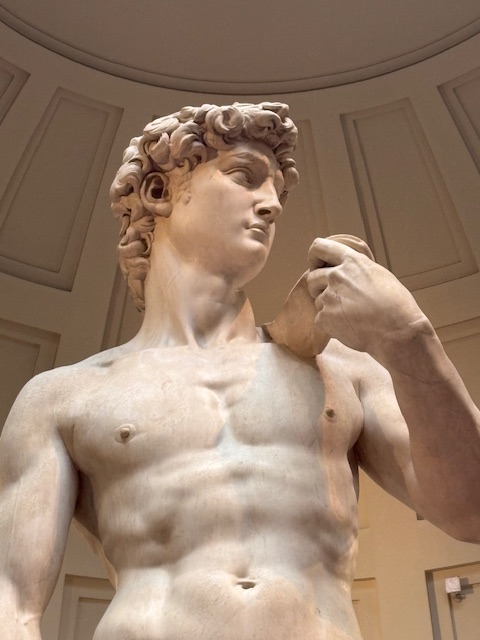
    Michelangelo’s David at the Accademia Gallery in Florence is one of the most popular art sights in Italy. It also may be where you see visitors become disrespectful tourists. Our article shares how you can be respecful when visiting Italy.

    It hit us when we were at the Accademia Gallery in Florence, viewing the famous 500-year-old David sculpture by Michelangelo.

    There was a throng of people around the sculpture, and several of them were taking selfies. Now, all of us (or most of us) do selfies from time to time. Yet there was a casualness to their attitude, as if they were taking a picture of themselves outside their hometown donut shop before continuing on with their day. They would take their selfie and be on their way to the next priceless art piece in the museum, with little thought or care to the history or detail of this famous piece of art.

    It’s partly that attitude–a seeming lack of respect–that’s led several cities in Italy and around Europe to revolt against overtourism in recent years. In June 2025, locals in Italy, Portugal, and Spain targeted tourists with water guns to bring attention to their large numbers. Protesters in Venice spoke out against overtourism and the lavish wedding of Amazon founder Jeff Bezos. Tourists bombarded the small town of Sirmione along Lake Garda in north Italy in May 2025, with videos of that overtourism going viral.

    A whopping 70% of tourists to Italy visit only 1% of the country–namely, Rome, Florence, and Venice.

    With that background in mind, let’s break down what you can do to be a more respectful tourist in Italy. The locals will say grazie!

    Tourists make their way through the hilly streets of Bellagio on Lake Como, in north Italy.

    8 Tips to Be a More Respectful Tourist in Italy and Europe

    1. Learn a little Italian. Italians are tickled when you try to speak a little Italian, even it’s as simple as buongiorno, ciao, or grazie. (Pasta seems to be part of the universal language, hahaha.) Even if they speak English back to you, which definitely might happen, speaking a few words of Italian shows that you are making an effort to be respectful of the country’s culture.
    2. Think historically. Italy is not Disney World or Epcot. The history in Italy, just like in many parts of Europe, is very real and delicate. As you walk on the cobblestone streets (hopefully in comfortable shoes) or tour through old buildings or churches, aim to preserve that history by keeping your hands to yourself, throwing away garbage in garbage cans, and following any other rules shared by signs or tour guides.
    Small groups of tourists seen outside Santa Maria Novella Church in Florence.

    3. Watch what you wear. Many churches in Italy will want your shoulders and knees to be covered upon entering. Plus, some will enforce no sandals. Tour leader Renata De Masi of Tuscany observes that many young people don’t dress appropriately when touring around Italy’s more delicate sites. Solutions: Even in Italy’s hot summer, always have a sweater with you to cover up when needed. Wear closed-toed shoes, or at least have a pair with you for days that you’re visiting churches.

    4. DON’T take a selfie. “Italy has an immense artistic heritage,” De Masi says. “There are several occasions when taking a selfie has cost the integrity of artworks and museum displays.” This doesn’t mean you can’t ever take a selfie in Italy. Just be mindful in historical areas of any rules that limit selfies and/or flash photography.

    A busy street in Milan.

    5. Stay out of the way of locals. If you’re from a big city, have you ever had your commute hampered by tourists? Maybe you’re driving through your city and there are tourists in the middle of the road trying to capture that perfect view. Or, they’re standing in the middle of the sidewalk to figure out where the ice cream shop is while you’re scurrying to work? We’ve all been there, and it’s the same in Europe’s big cities. Take up your tourist space when needed, but be super mindful of locals who are living their lives and don’t have the same leisure time that you do while traveling through their country.

    6. Go beyond the big cities. We can’t emphasize this tip enough. As we’ve learned more about Italy’s 20 regions, we’ve seen the allure that each area holds. And yet–we hear again and again about Rome, Florence, Venice, and Milan. Don’t get us wrong, those are all wonderful places to visit. Yet we also know Italian people visiting out-of-the-way locations in their country and encountering few to zero tourists while there. Have you thought about spending time in the region of Umbria? Or Sardinia? Le Marche? Abruzzo? They all have wonderful things to see. Our next article will cover several places where Italians like to visit in their own country–and they will be less tourist-focused then the other well-known destinations. Make sure to subscribeto our blog to check out that article, so you can plan your next less hectic trip to Italia.

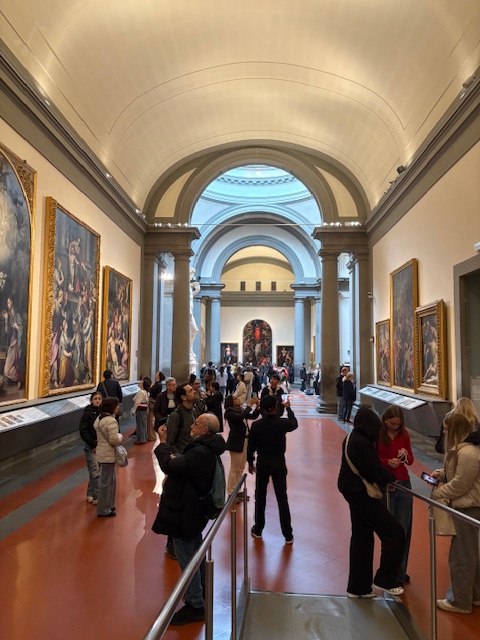
    Tourists inside the Accademia Gallery in Florence. Note that these were crowds in early March–not the summer, when tourism is especially crowded.

    7. Watch your manners–and your volume. We often hear that Europeans are more polite than Americans. Whether or not that’s always true, we can tell you that using please/per favore, thank you/grazie, and good morning/buongiorno can go a long way toward creating goodwill. While you’re at it, watch your volume when you’re speaking in public. Speaking at a softer volume will help you blend in better.

    8. Read up on local transportation rules. This may be a way that we tourists aren’t intentionally disrespectful, just uninformed. Yet knowing some local transportation rules can help make your time in Italy more efficient and easier. Here are a few tips shared by De Masi:

    a. Avoid a fine on public transportation by validating your paper ticket. This is something that many tourists don’t know so they don’t do it. Here’s a quick video to show you how to validate your train ticket.

    b. Consider using contactless payment methods for public transportation when available.

    c. If you plan to drive in Italy, make sure to get an International Driving Permit in advance of your trip. It’s required. Ifdriving, do some research on local traffic signs as they won’t always translate easily in English. For instance, “ZTL” indicates areas with limited traffic and usually are in city centers. This may limit these areas to only authorities or delivery drivers. Cities will track cars entering these areas by using camera technology and issue heavy fines to offenders.

    d. Know that tourist buses may not be allowed to park near historic destinations. If you’re on a tourist bus, you may need to walk 10 or 15 minutes to where you’re going. Wear good shoes, have water, and be ready to walk!

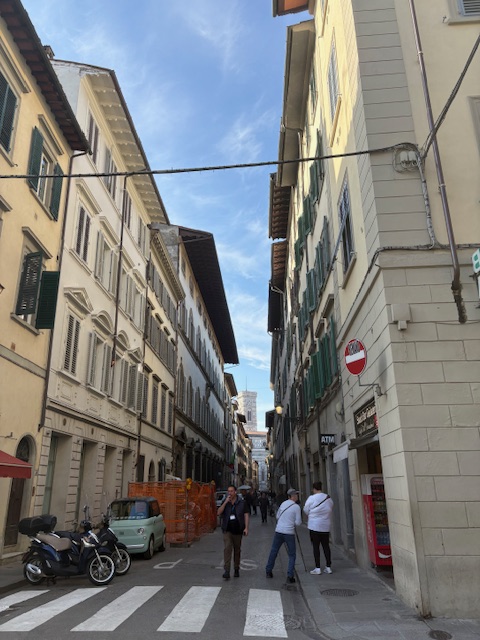
    The view along a Florence street.

      Want more info on how to be a respectful tourist in Italy? There are several videos on YouTube that you may find helpful. When in doubt, ask your local hotel representatives or tour guides for help. Buon viaggio!

    1. What’s It Like to Tour in Tuscany? A Tour Leader Gives Us the Details!

      Beautiful Florence, Italy. All pictures with this article taken by tour leader Renata De Masi.

      Tour guides and tour leaders in Italy have a pretty sweet deal. They spend their time surrounded by Italian art, history, and food, and they get to share it with others (sign us up, please!).

      Tour guides and tour leaders in Italy also have the scoop on best ways to prep for your Italian adventure. Italy Dreams interviewed Tuscany-based tour leader Renata De Masi, and we definitely learned a lot based on her experiences. If you’re with a tourism agency and you’d like to work with her, you can find her contact information at the end of this article.

      Tour leader Renata De Masi in San Gimignano, Italy.

      Italy Dreams: So, how did you become a tour leader?

      Renata D.: I think I was born a traveller! Since I was a teenager, when my parents said that we were to take a trip, I was filled with joy! Packing, visiting new places, meeting new people, new foodsโ€ฆeverything seemed fascinating.


      Growing up I continued to travel in Brazil (I was born in Brazil from an Italian family) and abroad but strangely enough, I did not decide to work in the tourism industry.

      I was working in an office for years and years. Then, I decided to change everything and take a sabbatical from work and move to Italy. My life changed for realโ€”I married a Florentine and got into the Italian mindset of tourism!

      In this wonderful country where art and beauty are everywhere, it enticed me to become a tour leader. And I’m so glad I did. It’s just the job for me, both the beauty and being in contact with people.
      I love seeing the joyful faces of my tourists when we arrive in Tuscan cities!

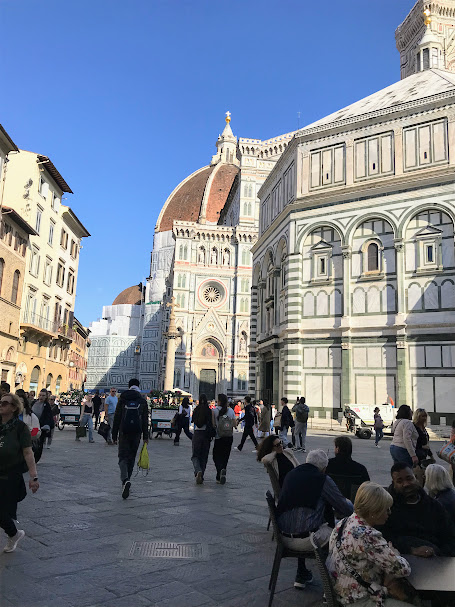
      Florence, Italy, where you can see part of the Duomo (cathedral).

      Italy Dreams: For how long have you been a tour guide in Tuscany?

      Renata D.: I’d like to specify that I’m a tour leader. In Italy, there are differences between a  tour leader and a tour guide, and we must respect the differences.

      To become a tour leader, you have to pass a licensing exam at a regional or provincial office to obtain a license. After that, you also have to obtain a license issued by your municipality of residence, and then youโ€™ll be registered in the regional register of tour leaders.

      To become a tour guide, you must take a National Licensing Examination for the profession. After passing the Licensing Examination, candidates will be enrolled in the National List of Tourist Guides established at the Ministry of Tourism.

      So, back to me. I have been a tour leader since 2016 after passing the licensing exam. I started the Tour Leader course in 2015 and it took almost 9 months of study. I did 450 hours of practice with an agency. When I got my license, I started to work for that agency.

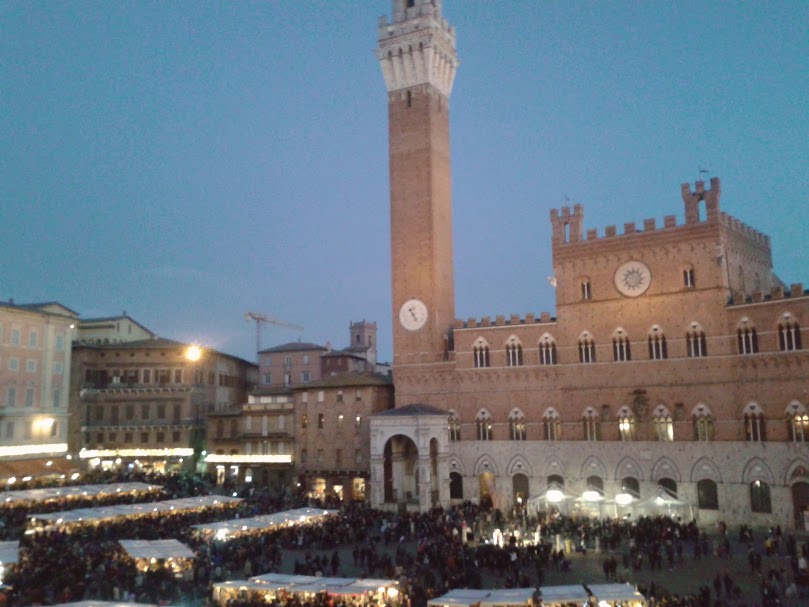
      Siena, Italy.

      Italy Dreams: Where are some of the places that you take tour groups? Which places are most popular?

      Renata D.: Tuscany is a wonderful region of Italy and even if you live here, there is always a place to discover. Sunday is the famous day for the ‘giratina fuori porta‘ (Sunday outside tour). Every Italian likes to do that.

      Florence is an open-air museum and should be visited with a tour guide who will tell the story of the Medici family and how they loved this city.

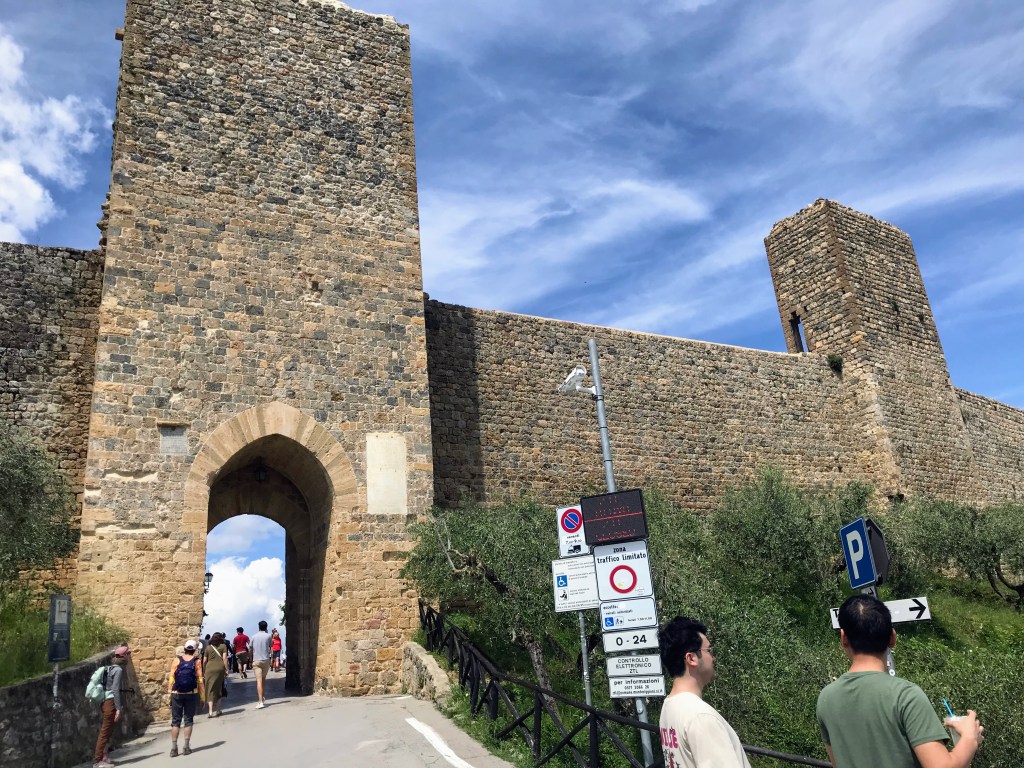
      Basically, we do daily tours from Florence to Siena, San Gimignano, Monteriggioni, the Chianti area, Pisa, Lucca, Montalcino, Pienza and Montepulciano.

      Every day we take tourists to these cities, and people end the day with so much beauty inside that no photo can ever express the reality!

      As a first approach, these tours are very good for those who do not want to plan the trip themselves and donโ€™t want to worry about transportation and various logistics.

      One special city I’d like to mention is Volterra. Volterra is a city founded by the Etruscans and is famous for alabaster working. There is so much to see in this town and its historic center is very beautiful! (Note from Italy Dreams: Volterra is the city that appears in the movie โ€œTwilight: New Moon.โ€ )

      Certaldo, the upper part of Volterra, is a walled Medieval Village and the lower part is modern. It is famous in the summer for its Mercantia Festival where you will find art, dance, theater, music and juggling throughout the streets of the town.

      There is so much to see and so many other cities to discover!

      Monteriggioni, Italy.

      Italy Dreams: What are some questions you commonly get from visitors about places you visit?

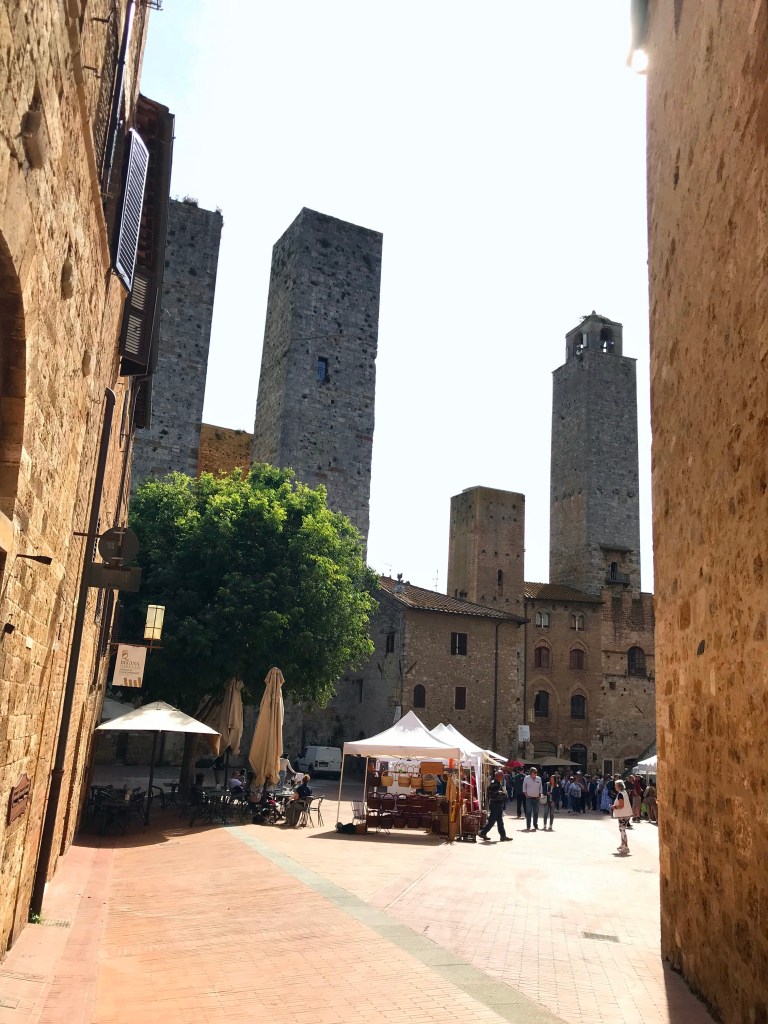
      Renata D.: Some tourists are very interested in Italian art and history. For example, there are unique places in Italy, such as the towers of San Gimignano or the Leaning Tower of Pisa, so these places normally have a lot of curiosity.


      People also ask a lot about the food and wine of each Italian region. They ask me about when it’s OK to drink a cappuccino. Let’s dispel the myth: It is not forbidden to drink a cappuccino after 12 o’clock. Sometimes, you can even snack on a cappuccino. But we don’t drink cappuccino with pasta. Noooooo! Pasta should be paired with a nice wine.

      San Gimiignano, Italy.

      Italy Dreams: What are a couple of things that you think visitors should know before visiting Tuscany or Florence?

      Renata D.: A lot of the cities in Tuscany are UNESCO Heritage Sites, and the buses can’t enter inside the city center. They have a parking lot made especially for them, and we walk with the group to the destination.

      My advice is to wear comfortable shoes in order to enjoy the tour.

      Prepare your trip in advance and obtain information about the cities you want to visit.

      Know that most of the sites in Tuscany were populated by the Etruscans and they began their settlement high in the hills as a matter of defense.

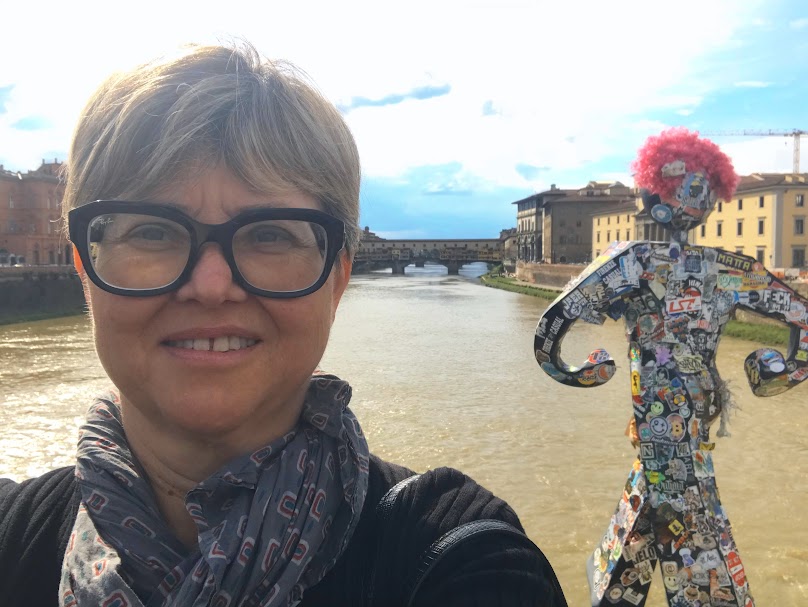
      Renata De Masi in Florence, Italy.


      Italy Dreams: What advice do you have for someone visiting Italy for the first time?

      Renata D.: Here are a few suggestions:

      1. Book tickets in advance. Italy is sought after, and tickets for attractions run out quickly. To avoid being disappointed, it is best to book tickets in advance.

      2. Carry some cash. It’s better to be safe than sorry!

      3. On regional and local trains throughout Italy, itโ€™s important to validate your ticket before getting on board. Once youโ€™re at the rail station, look for a green machine in which you can place your ticket to have the date and time stamped. Anyone who forgets is liable to pay a fine, which ranges depending on if you pay the controller on the spot.

      4. If you go on a tour with a tour guide or tour leader, they should have a license prominently displayed, so you are sure it is a professional in good standing and not a bogus one.

      5. In Italy, food is serious business, and table etiquette is always highly valued. Dress appropriately and be patient if the service is slower than you are used to. A few words in Italian like grazie and prego are very welcome!

      6. Pay attention to the calendar of village festivals where you are visiting. It is a lot of fun to be able to participate in events with Italians!

      7. Prior to booking a tour, read carefully all the activities that are included or if something is optional. Sometimes, you can lose a good chance to do a guided tour or enter inside a wonderful cathredal.

      8. A large number of artworks and tours are done inside the churches. Dress appropriately or otherwise, you will not be able to enter.

      Italy Dreams: How can people get in touch with you for tours?

      Renata D.: Certainly. We tour leaders are freelancers, and we can work with any travel agency in the world; we cannot work with individuals. If any tourism agency is interested in my work, please email me at demasire@hotmail.com.

      We will wait for you here in Italy!

    2. Florence, Italy, for Foodies: Where to Go and What to Eat

      Read our article for a few tips on finding a great meal in Florence, Italy.

      Florence, Italy, is beloved for its history and culture. Michelangelo’s David? Right over here. Boticelli’s artwork? It’s got that, too. Tons and tons of history dating back to 52 B.C.? Check!

      Yet if you’re visiting Florence, you probably also want to know some great ways to enjoy its food. Because after all, there’s no going hungry in Tuscany.

      Here are four food recommendations for your visit to Florence.

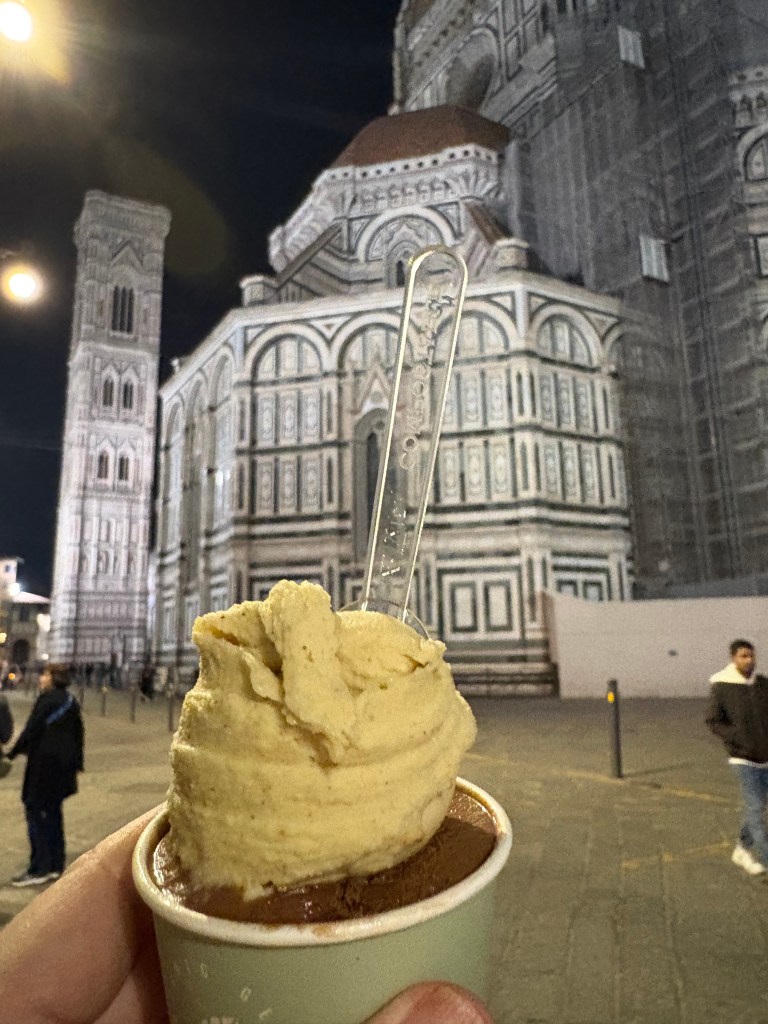
      Molto buono! Gelato from Edoardo, an organic gelato place.

      Edoardo il Gelato Biologico

      Piazza del Duomo, 45/R, 50122 Firenze FI, Italy

      You’ve got your share of gelato places around the Duomo (Cathedral)–why not pick one that’s highly rated and organic?

      Edoardo’s gelato is made without chemicals or artificial colors. Enjoy flavors like pistachio and hazelnut among other choices(including some seasonal changes). Remember what European travel guru Rick Steves says–if gelato comes in neon-bright colors, you probably want to avoid it. Edoardo’s gelato has muted colors, adding to its authenticity.

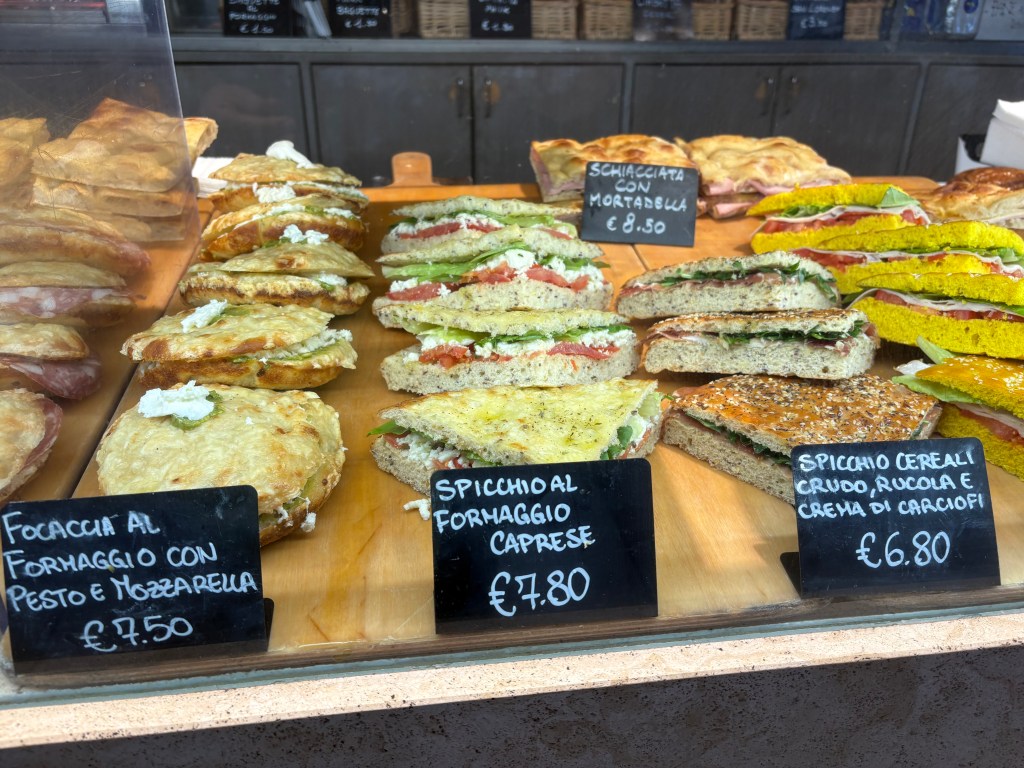
      Sandwiches found on the second floor of Mercato Centrale in Florence.

      Mercato Centrale Firenze

      Via Generale dalla Chiesa, 13 50136 Firenze

      When we arrived in Florence, we made an early-morning beeline toward the Duomo so we could see it before big crowds arrived (which is a great tip for just about anywhere you’re traveling in Italy). But really, we were just killing time until Mercato Centrale opened.

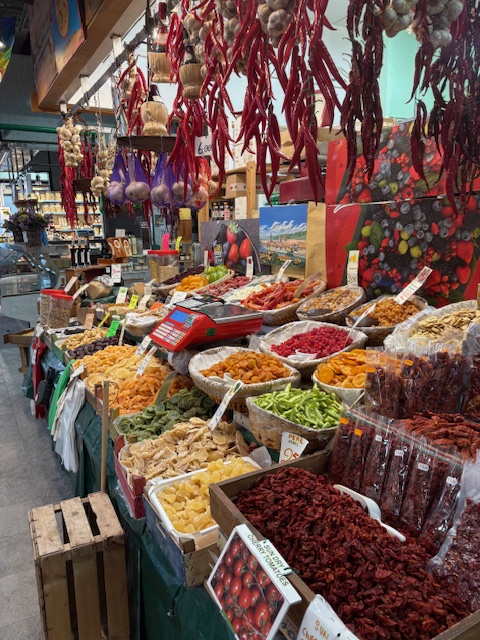
      Mercato Centrale has food stalls on its first floor, with a colorful mix of food and products that could keep you busy all morning. If you like taking pictures, definitely take your time to find good pics.

      One of the first stalls we saw featured the lampredotto sandwich, a Tuscan specialty that uses the fourth stomach from a cow.  Further down, we saw pigs’ heads, massive containers of sundried tomatoes, and plenty of vino. There were a few places to buy pastries, like the famous cornetto (croissant) that Italians often have for breakfast.

      One of the food stalls at Mercato Centrale in Florence.

      Some of the vendors were tourist-geared and gave samples of items like truffle cream, cheeses, vinegar, and olive oil.

      In an amusing twist, we saw two stands that displayed the Peruvian flag, reflecting the small but mighty Peruvian community in Florence, Much like Italy, Peru is famous for its cuisine, and the stalls included some of the produce and spices better known by its natives.

      Upstairs at Mercato Centrale, there’s a food hall with a ton of ready-made food items that you can order–from hamburgers to pizza to American barbecue and more. We tried a caprese sandwich that was perfect for an early lunch. Use this handy guide for the layout of the Mercato Centrale’s second floor.

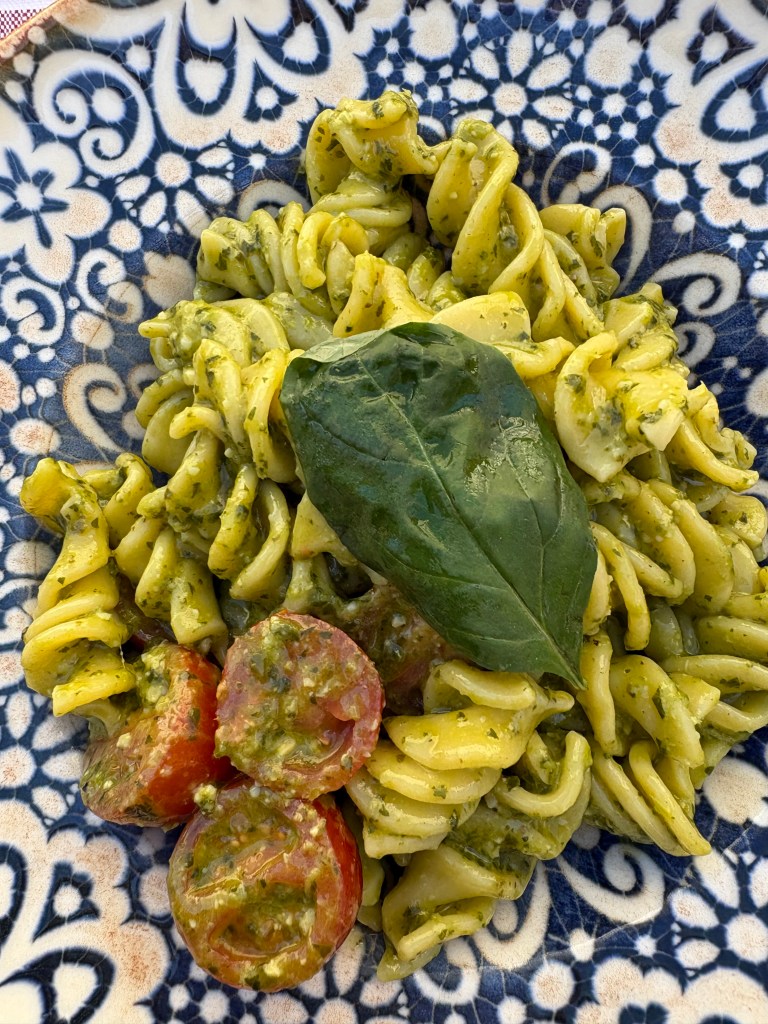
      Bravo! Pesto pasta from Osteria del Fiore.

      Osteria del Fiore

      Piazza del Duomo, 57r, 50122 Firenze

      We realize that there are many great places to eat in Florence. There are hidden gems away from the tourist crowds, but there also are some tourist-friendly restaurants that come with fantastic food and a stunning view. That’s what you’ll find at Osteria del Fiore, where we enjoyed a pesto pasta with tomatoes while watching the world go by beside the Duomo.

      Our pasta was served with a side of bread, perfect for sopping up extra pesto sauce. On the menu here, our order was Fusilli al Pesto con Pomodorini (fusilli pasta with pesto and tomatoes).

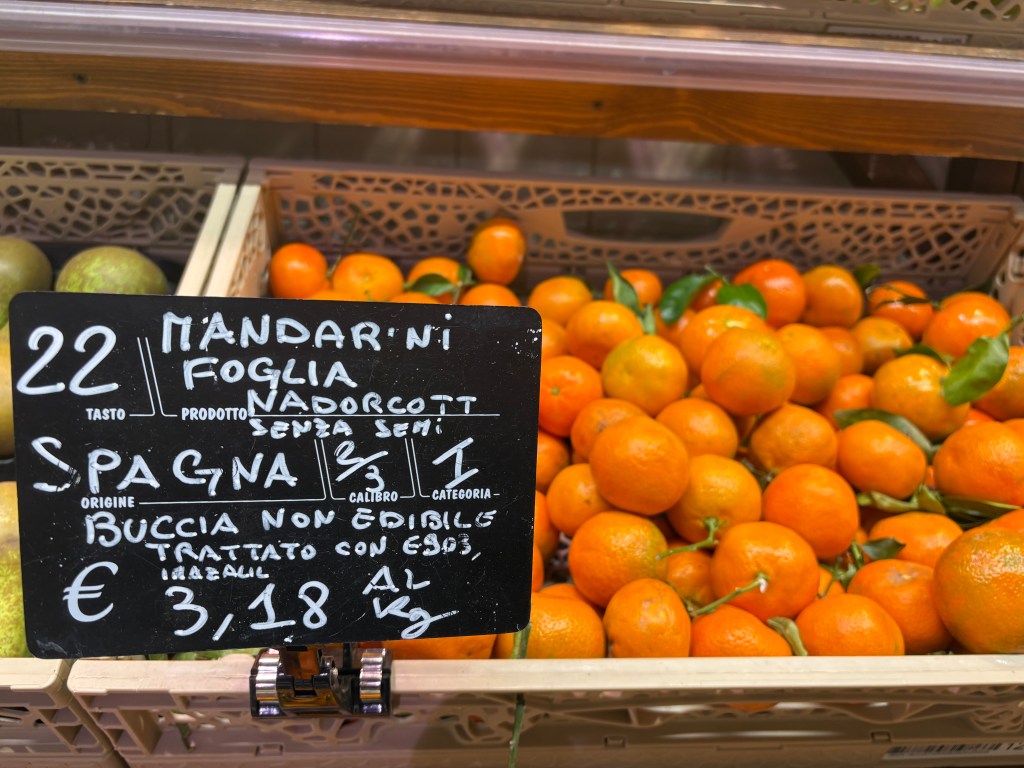
      This sign in a Florence supermarket tells the name of the fruit (mandarins) and where they are from (Spain).

      Local Supermarkets

      Various locations

      After checking into the hotel, the first thing we did was find a supermarket. After all, it was our first time in Italy in a very long time, and we were too tired and impatient for a sit-down meal.

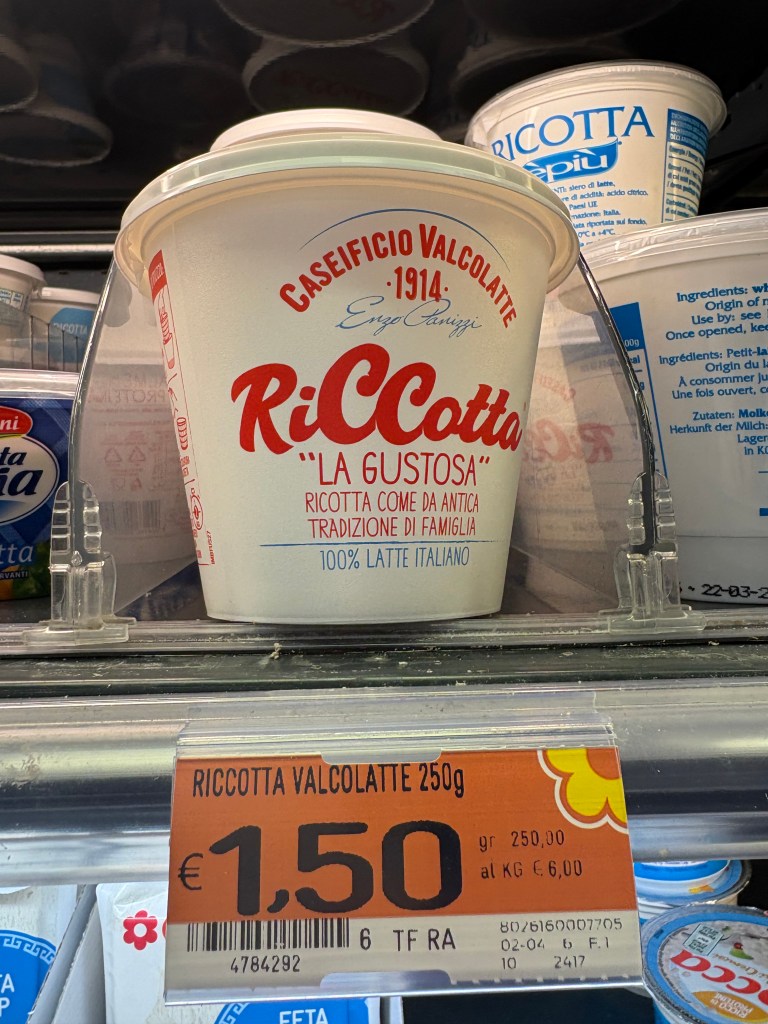
      Interesting ricotto cheese at a Florence supermarket.

      Going to a supermarket was a fascinating way to see how people shop, how pasta and sauce prices (and selection) compared to the U.S., and what other snacks would be good for our trip. In fact, we bought a pre-made flatbread for dinner that night along with some European Ritter Sport chocolate. A few days later, we also ended up buying food gifts there, like pesto and pasta.

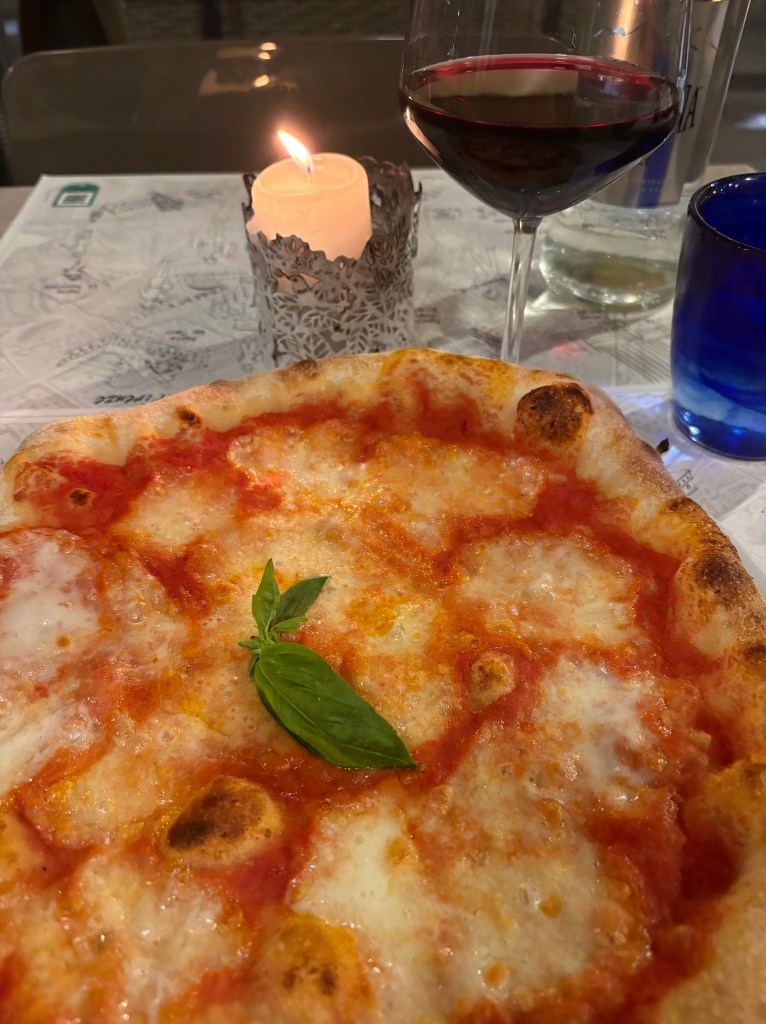
      It’s hard to go wrong with Italian pizza and vino….

      4 Tips for Choosing a Better Meal in Tuscany

      Don’t be afraid to eat near the Duomo. Yes, you’ll be there with hundreds of new friends, but as mentioned, one of our best meals in Italy was the pesto pasta enjoyed while staring at the Duomo.

      Take a cooking class. Sadly, this is something we didn’t have a chance to do. It could be a great way to learn about local cuisine and meet others. Here are a few recommendations for Florence cooking classes from a Rick Steves forum.

      Try an Italian breakfast. Italians put a lot of effort into their lunches and dinners. So, it may not be surprising that their breakfast is more simple. The most common breakfast is coffee and a croissant, or “un espresso e un cornetto.” Espresso, of course, is the shorter coffee. If you want more coffee to drink, American style, then specify that you want “un caffe Americano.”

      Use those meal encounters to practice Italian, if you’re learning the language! If not,it still can’t hurt to trhow in the occasional “per favore” and “grazie.” ๐Ÿ™‚

      A cornetto and espresso….