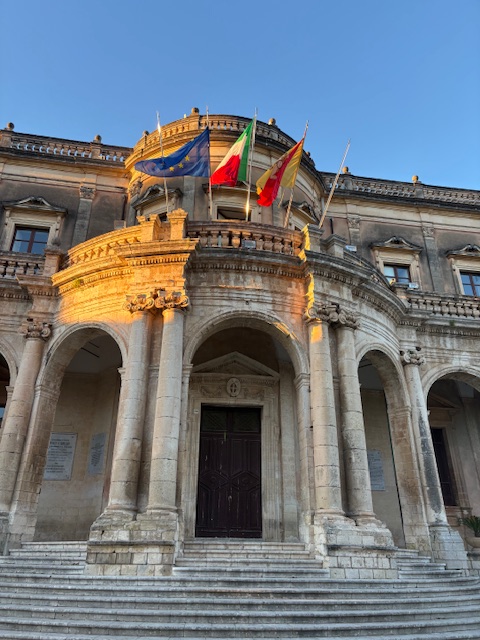
Outside of City Hall in Noto, SIcily. Notice the European Union, Italy, and Sicily flags.
If you’re traveling to eastern Sicily in Italy and plan to visit Noto, we’ve got you covered.
You can find our detailed Noto, Sicily, article here.
If you want to get a better idea of what Noto looks like as you plan your trip–or, you just want a virtual tour of Noto–read on!
This article tells a story of a journey around Noto in pictures.
I share some of my favorite pics during a week-long stay in beautiful Noto, famous for its Baroque architecture and its designation as a UNESCO World Heritage site. The visit was in late February, so it was off-season. Hence, you don’t see a ton of people in the pictures.
You can find more details about my trek through southeastern Sicily here. That article also shares some good tips for your eastern Sicily travels.
Noto was a great “basecamp” town to stay in and southeastern Sicily. However, you also can find great B&Bs/hotels to stay in Ortigia, near San Lorenzo Beach/Marzamemi, Modica, Ragusa, and other areas.
The fun pics and captions below share some more background to help you plan your trip. Andiamo/let’s go!
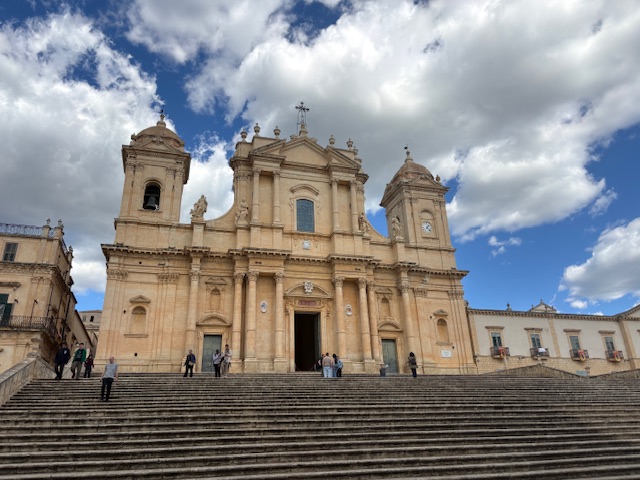
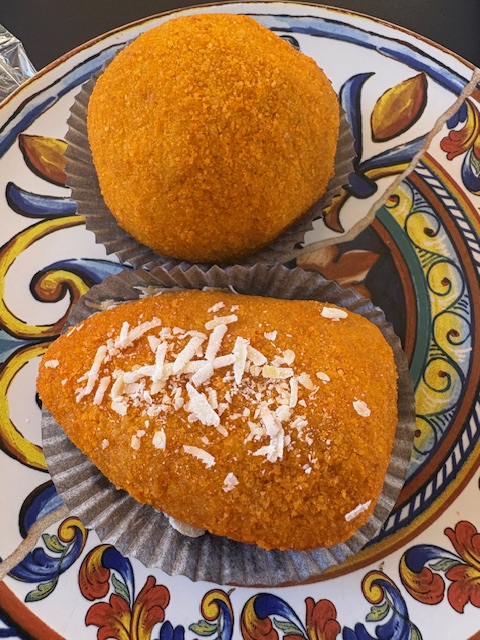
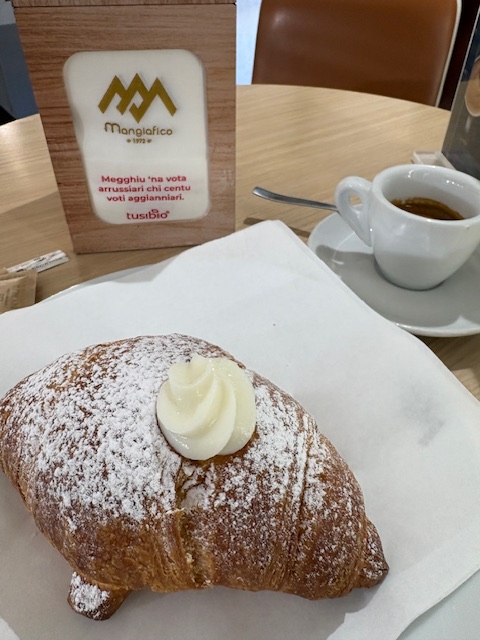
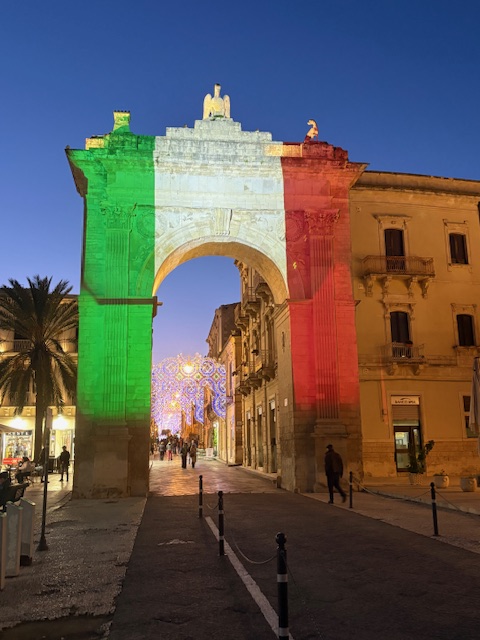
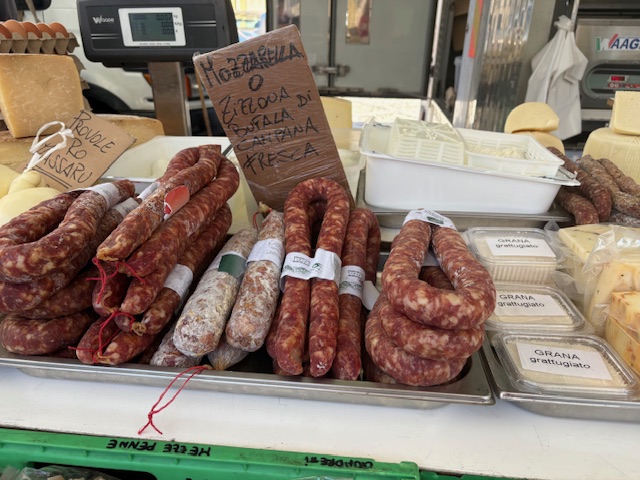
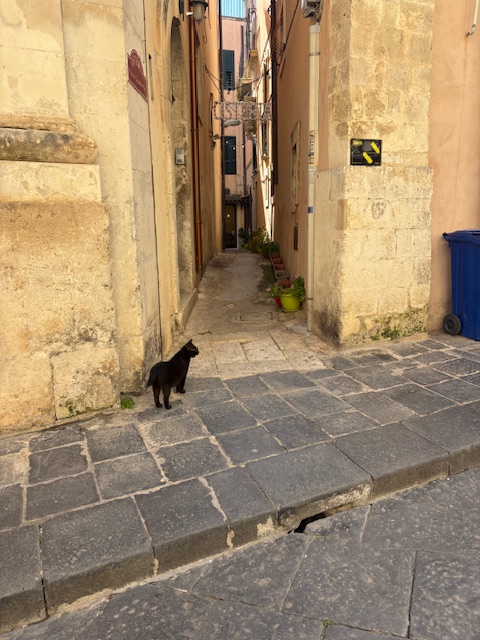
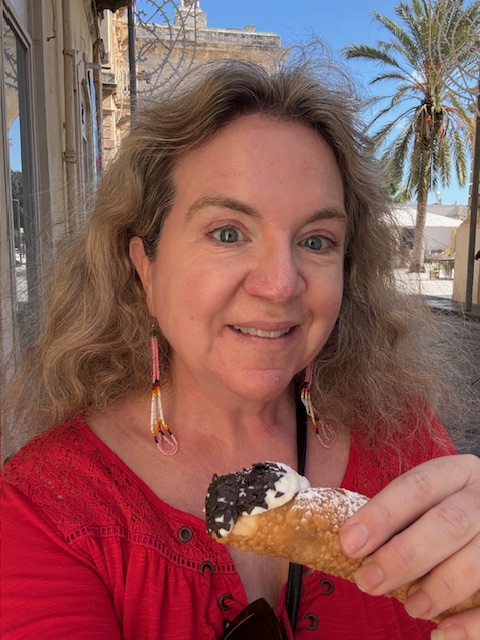
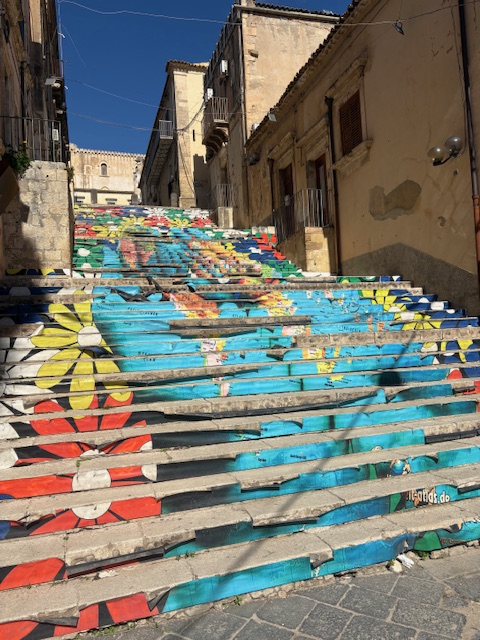
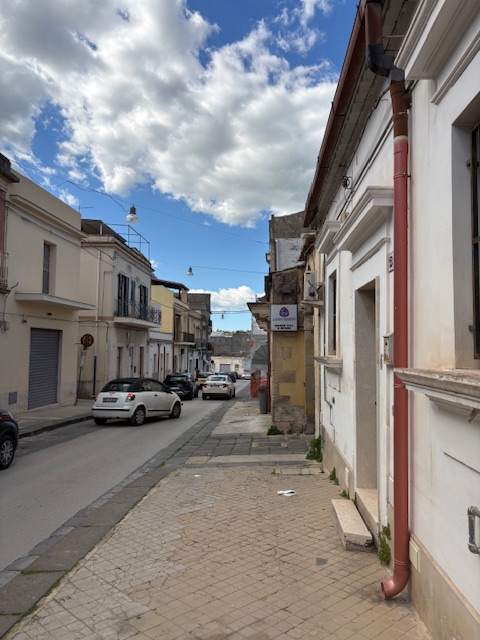
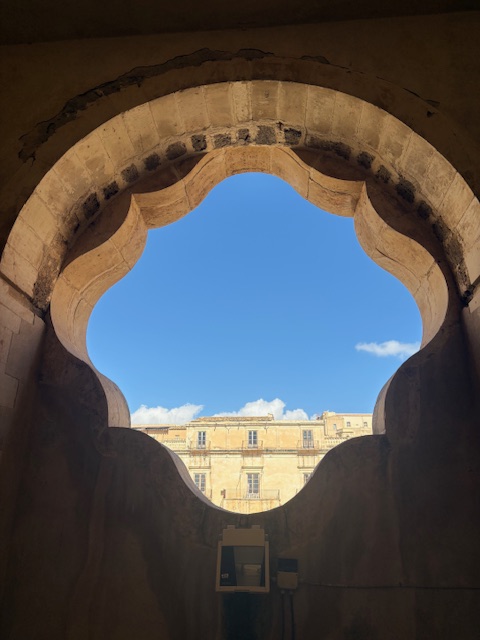
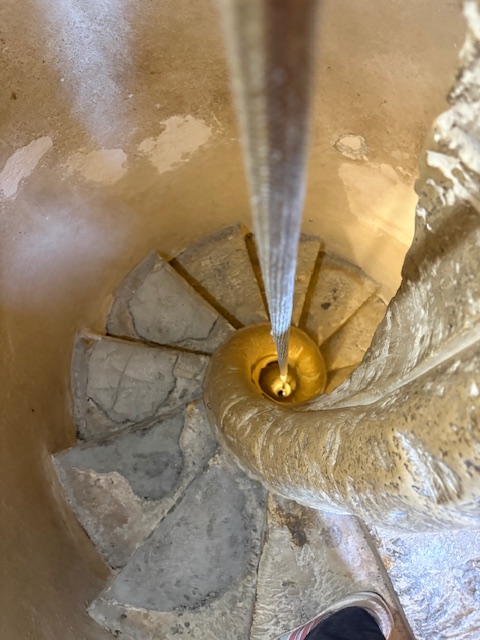
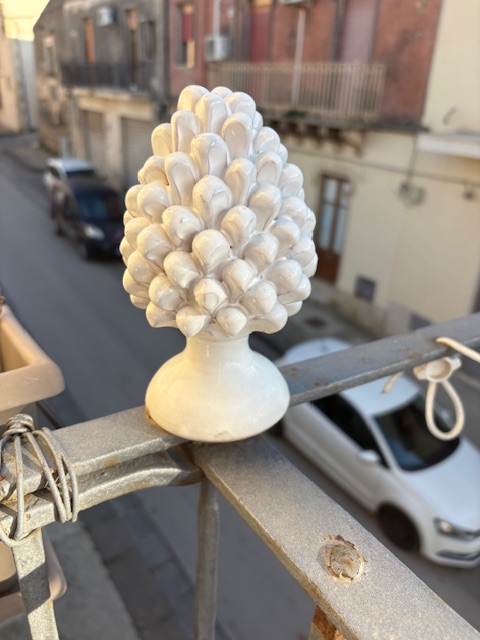
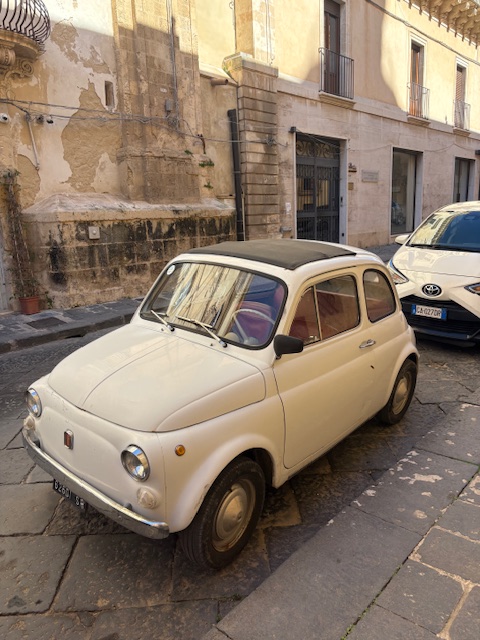
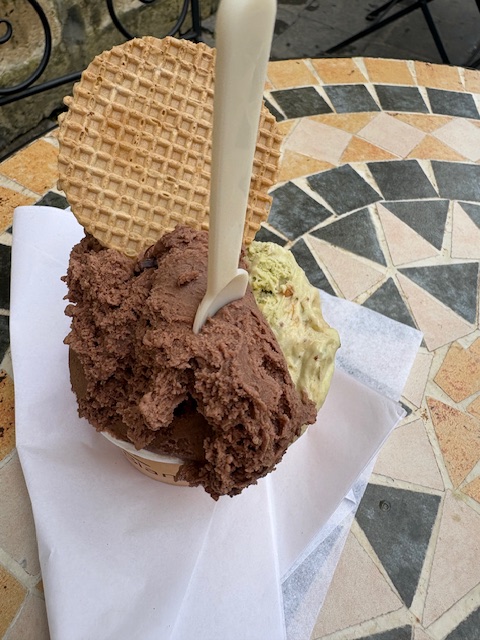
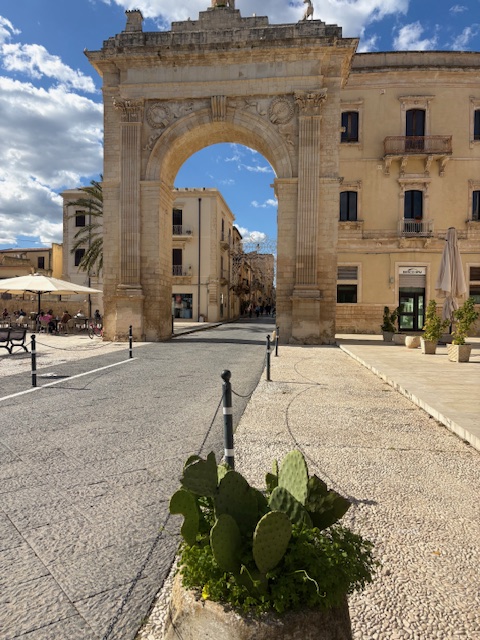
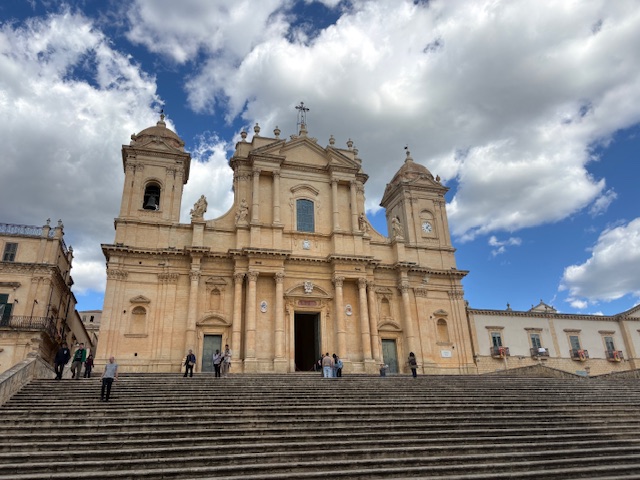
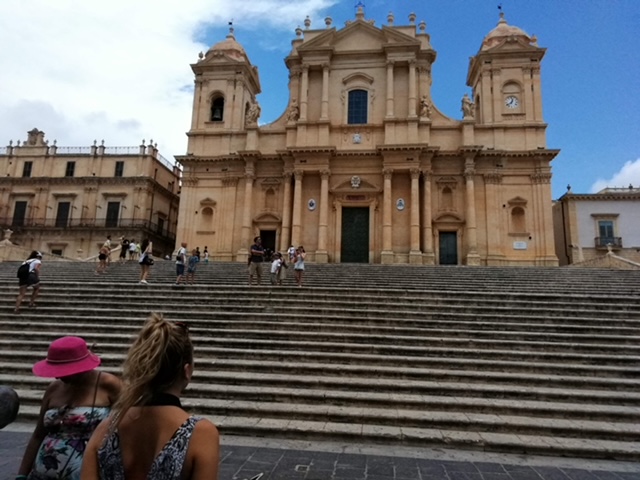
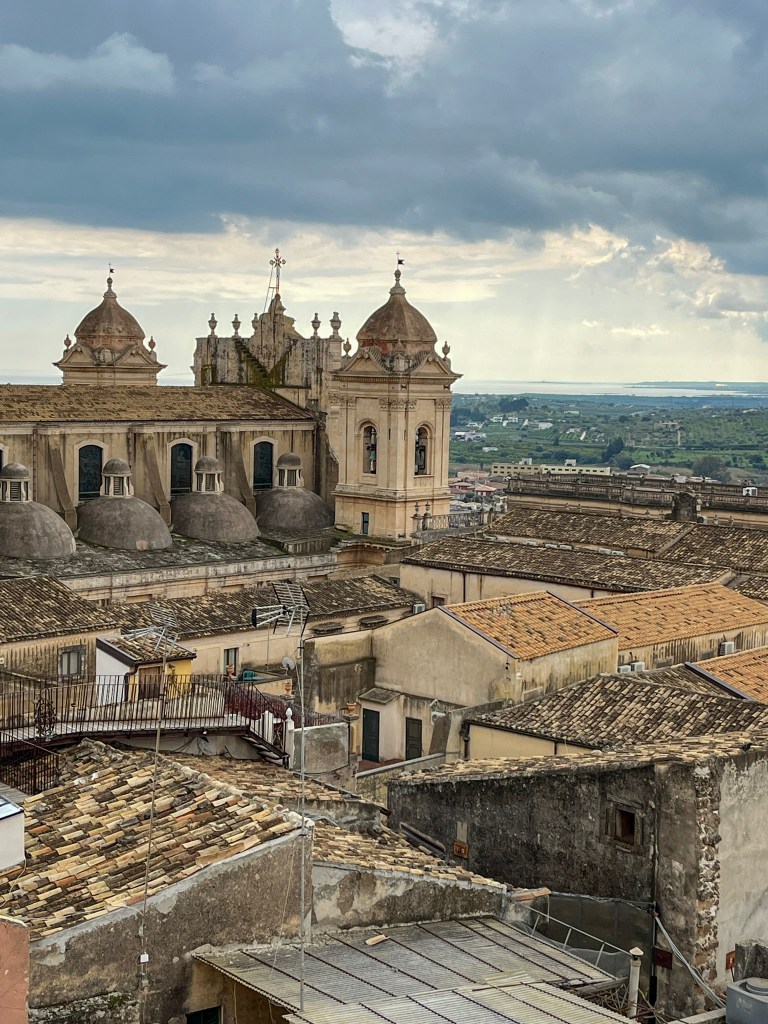
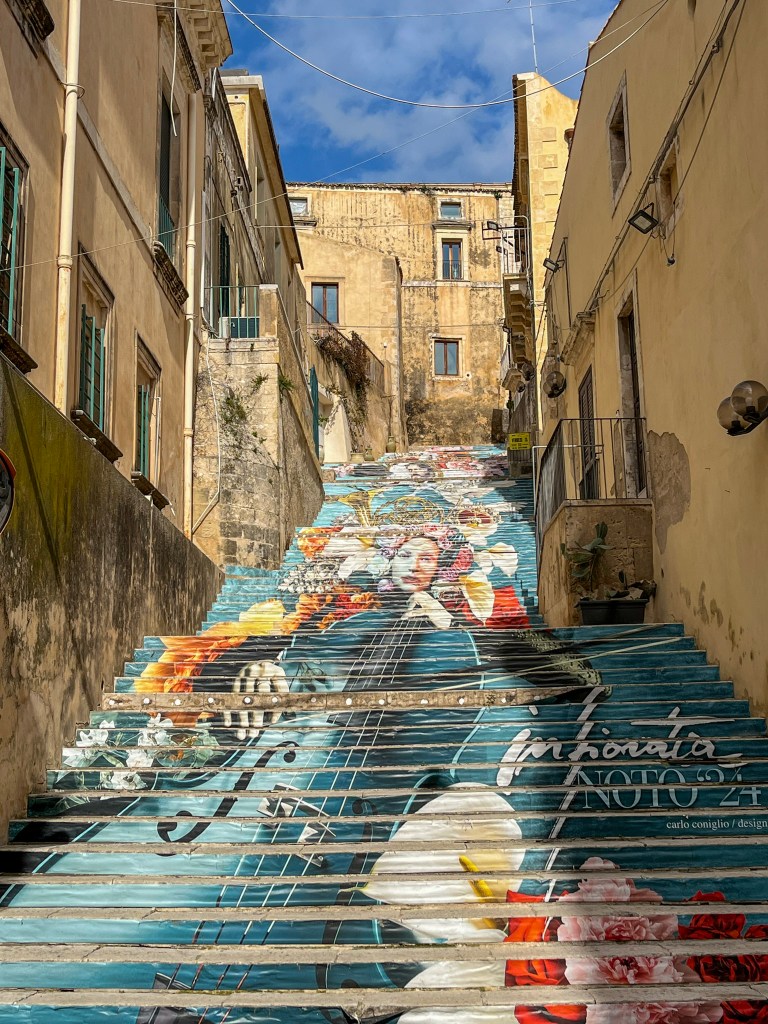
Here is Noto’s most famous site, its Cattedrale di San Nicolo, or Noto Cathedral. It was completed in the early 1700s, but its dome collapsed and was replaced in the mid-1990s. The cathedral has appeared in various movies and TV shows, including “White Lotus.” You’ll find a lot of activity around this centerpiece tourist site of downtown Noto. It’s beautiful on the inside as well.Yum, here are the arincini, or rice balls ordered at MammArincina in Noto’s small downtown area. Rice balls are filled with all types of ingredients, including rice (of course), cheese, meats, and sauces. You don’t have to limit yourself to their restaurant to try arincini. It’s a Sicilian specialty so they’re pretty common.“Un cornetto e un espresso, per favore.” Restaurant ordering gave me a chance to practice my beginning Italian. I did good with this phrase for my croissaint and espresso order at Mangiafico in Noto although I didn’t know the word for “vanilla cream.” It was interesting to get there as it first opened, sit and eat breakfast, and watch some locals trickle in. A few noticed that I was not a local!Look at the cool lighting on the Royal Gate (Porta Reale) in downtown Noto. In the evening, locals like to have a passaggiata, or walk, in the downtown area. If it’s in-season, you’ll surely find a lot more tourists doing the same. You can also shop at souvenir stores and people watch while you stroll around the downtown.Noto has a mercatino, or outdoor market, on Sunday and Wednesday. I was thrilled when my B&B host at Cuore Barocco took me there to pick up some local cheese, and I returned that Wednesday for some Sicilian cookies and more cheese. Make sure to also ask any locals you meet for grocery store and bakery (panificio) recommendations. Cheap, fresh bread always makes things better.A random cat from my Noto stay. I have so many cat pics from my Sicily trip; they should become their own separate article!Holding a chocolate chip cannolo from Cannoliamo in downtown Noto. Sicily is the birthplace of cannoli so you must try one! They are calorie-free while you’re in Sicily!Every May, Noto has a flower festival called Infiorata. Here’s a staircase with some art that remained after the festival.One view of the streets of Noto. Make sure to wander around to different streets to look for good photo angles. For some reason, the sidewalk looks wider here than usual. The sidewalks were quite narrow, so walk carefully, look out for cars zipping by, and monitor your children if traveling with them. Also, be careful driving. I was fortunate to have a parking space that was not right on the street for my rental car (ask your B&B host if there’s anywhere nearby where you can park comfortably). Otherwise, you’ll have to deal regularly with a tight parking situation. My B&B was thankfully located near the end of the street and in walking distance to everything.A lovely view from the cut-out window at Saint Carlo Church. You can climb to the top of the church and check out a stunning view of the Valley of Noto and downtown Noto. However, be prepared for some stairs (see pic below).Here’s what the staircase looks like at Chiesa di San Carlo/Saint Carlo Church in Noto. They are quite steep and old! Only one person can fit on a stair at a time so listen out for others who may be coming. Still, the view at the top is a nice payoff. You’ve probably seen the man-and-woman statues that are symbolic of Sicily, but did you know that the pigna, or ceramic pinecone, is another symbol of hospitality and prosperity in Sicily? This one was on the balcony of where I stayed.Obligatory pic of a small car on an Italian street. 🙂Gelato from Gelati Bianca in downtown Noto. This was Nutella (I think) and the Sicilia, which blended together locally-grown items like raisins and almonds. Molto buono!Another view of the arch in beautiful downtown Noto.
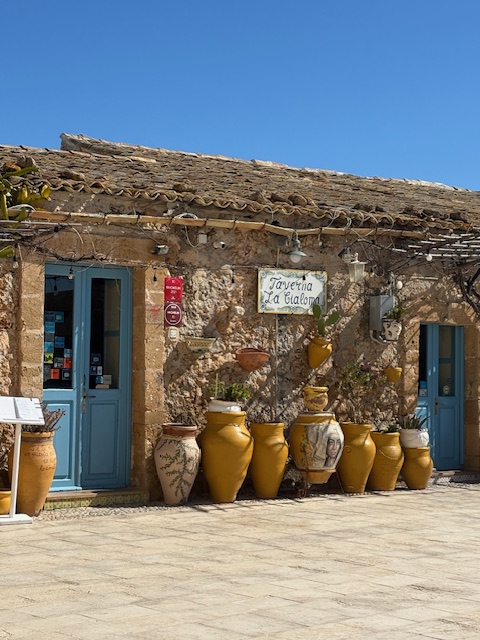
Lovely sun, colors, and decor in Marzamemi, Sicily, located south of Noto in Italy.
If you’re interested in Italy’s island region of Sicily, you’ve probably heard a ton about Catania, Palermo, and Taormina.
Yet it’s even more interesting to dig into smaller (but still popular) areas around the island, which is how I’d categorize Marzamemi and Vendicari Nature Reserve.
Both are located in southeastern Sicily, south of Catania and south of the famous Baroque town of Noto. If you’re renting a car (which you will have to do to reach these areas without a local driver), you’re 20 to 30 minutes or so from Noto to each location.
Yet they both offer an intriguing glimpse of life in this tucked-in corner of traditional Sicily–Marzamemi revealing history related to commercial tuna fishing and Vendicari Nature Reserve offering a quiet retreat, bird watching, and also some tuna fishing history.
Here’s what we experienced during our visit in early 2026–and some tips for your own trip planning. Note that I was traveling solo but I use “we” in my article to avoid saying “I” constantly.
Marzamemi, Sicily.
Marveling at the Sea and Sicilian Food at Marzamemi
If you want to see the sea (pun intended), feel a breeze, and try Sicilan seafood in a colorful setting, then head on over to Marzamemi. Although not as large or flashy as Ortigia, it was a picturesque afternoon diversion.
Although the visit was short, I’d say it was one of my favorite parts of my southeastern Sicily trip.
Much of today’s Marzamemi is what remains of an old tonnara, or tuna processing plant. Yet the full fishing village has roots dating back to the 1000s when Sicily was under Arab rule (Sicily has been conquered by many different groups, which is why you find a mix of Arab, Spanish, Norman, Greek, and other cultures in its architecture and food). The name Marzamemi is thought to be linked to the Arabic “marsa al hamem,” meaning Turtle Dove Cove.
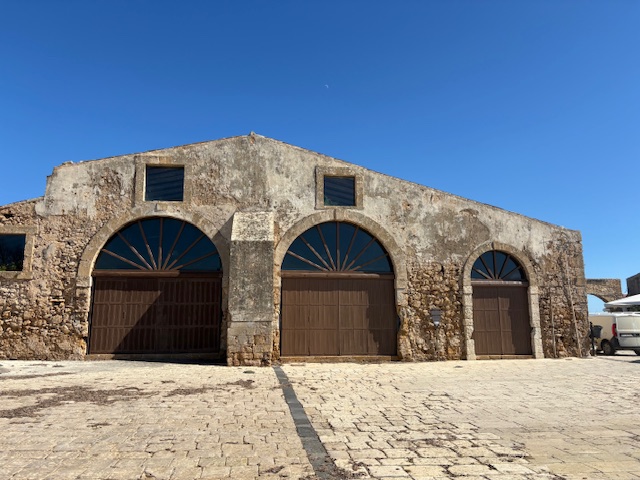
The present-day view of Marzamemi is said to date back to the mid-16th to mid-18th centuries and includes San Francesco di Paola Church, the old fishermens’ homes, the tuna manufacturing plant, along with a courtyard. The brownish rustic buildings have turquoise and yellow splashes of color, giving them their authenic Mediterranean-by-the-sea look.
Living in southwest Florida, I couldn’t resist comparing Marzamemi to our local commercial fishing village of Cortez right on the Gulf. Both have completely different looks but share some similar history, and both welcome visitors to try local fish and seafood.
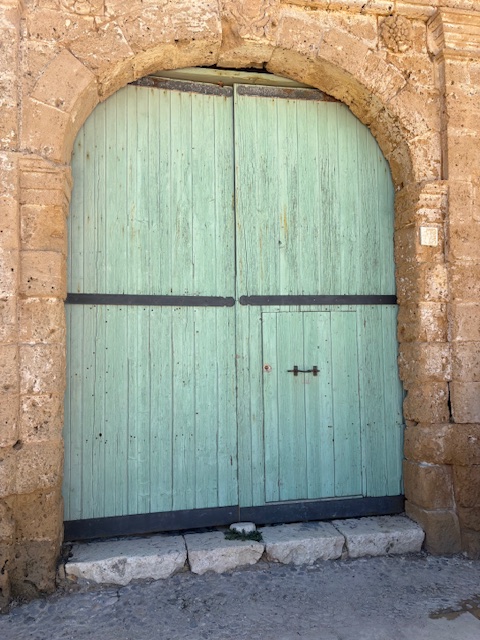
Love this colorful door in Marzamemi.
The GPS first took me to a large parking area that looked nothing like the Marzamemi I follow on Instagram (@Marzememi_Sicily). To avoid the same problem, use “Tonnara di Marzamemi” in your GPS as that should take you much closer to the main village area.
After parking, I began to stroll, at first along the Ionian Sea (it was windy!) and then closer to the restaurants and shops. I wandered aimlessly for my first stroll, noticing the cats and the colors. I have so many pics of stray cats in Sicily.
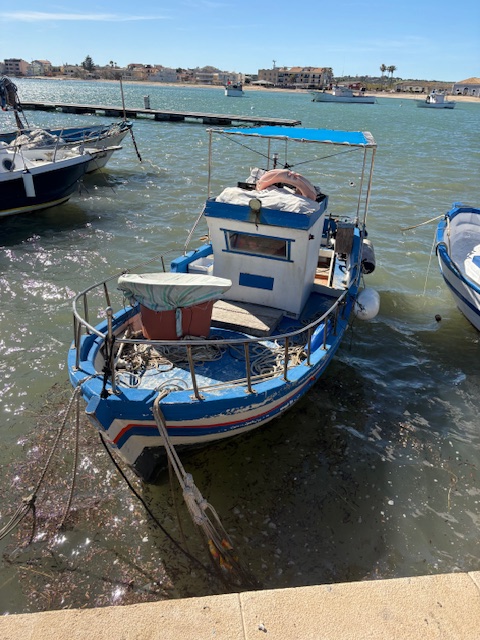
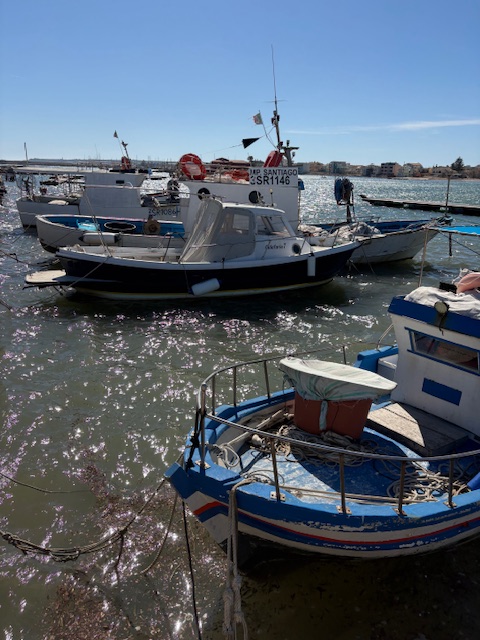
Enjoy some boat watching in Marzamemi in southeastern Sicily, Italy.
I then strolled out onto a pier that had a metal cross toward the end. This provided a great view of the beautiful Ionian Sea and some colorful boats. On one side of the pier toward the land, I could see a group of workers. When Cyclone Harry hit Sicily in January 2026 and caused more than $1 billion (USD) in damage, Marzamemi received some water damage. I’m not sure if they were repairing post-storm damage.
A breezy day at Calamaro Portodimare Ristorante/Calamaro Restaurant in Marzamemi.
As I was there during lunchtime on a weekday, the gift shops were closed. If you really want to shop till you drop, you may want to save your visit for a Friday, Saturday, or Sunday, when Marzamemi gets even more visitors and gift shops are likely to be open.
Instead, I was more focused on the food. I chose Calamaro Portodimare Ristorante for its scenic view, and I sat beside a few other tourists taking their time with their meals. The overall restaurant pace to get the meal and the check was pretty laidback.
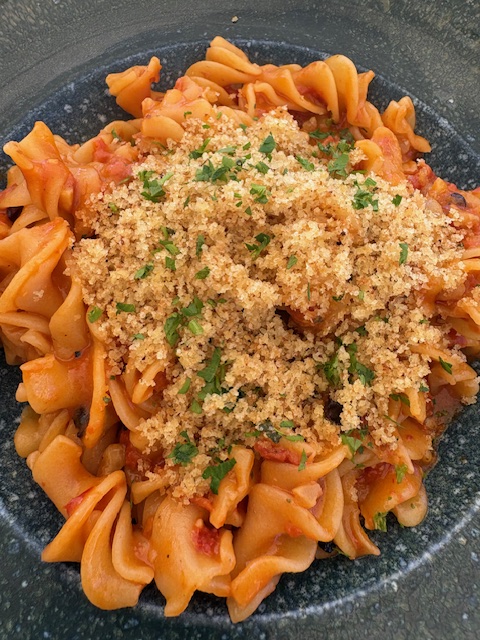
For lunch I chose the Sapori Siculi, a vegetarian pasta dish with Sicilian pesto (yum), sun dried tomatoes, garlic, basil, pine nuts, raisins and almonds, and something called muddica atturrata. That’s apparently a Sicilian version of toasted breadcrumbs.
Sapori Siculi at our chosen restaurant in Marzamemi. Yum or should we say molto buono?!
There are mixed reviews online of the restaurant but I must say, it was perhaps my favorite pasta dish of the whole trip. The combination of a scenic view on a breezy day while watching the cats and the sea definitely helped.
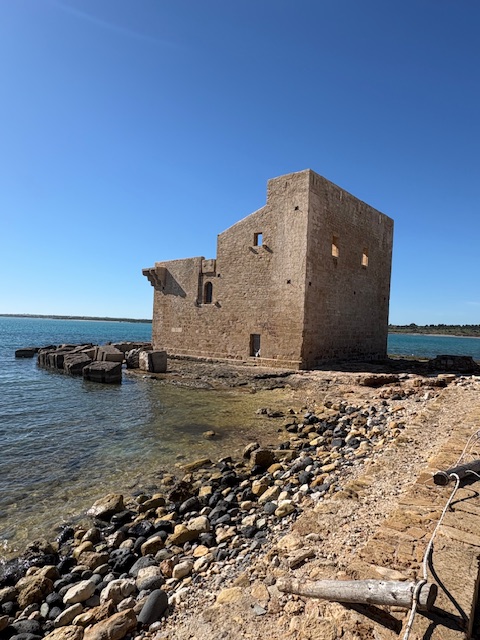
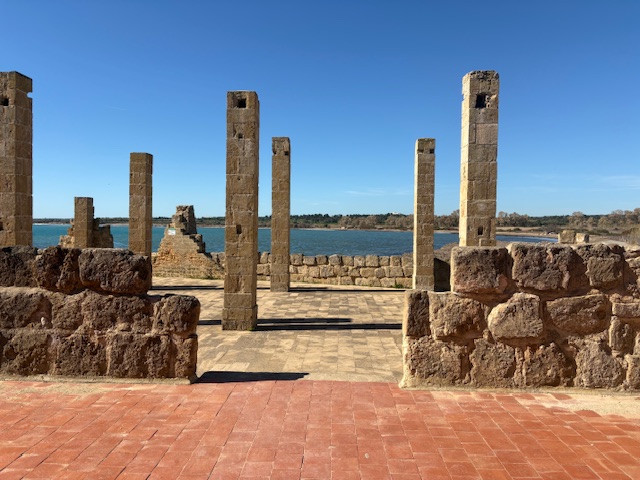
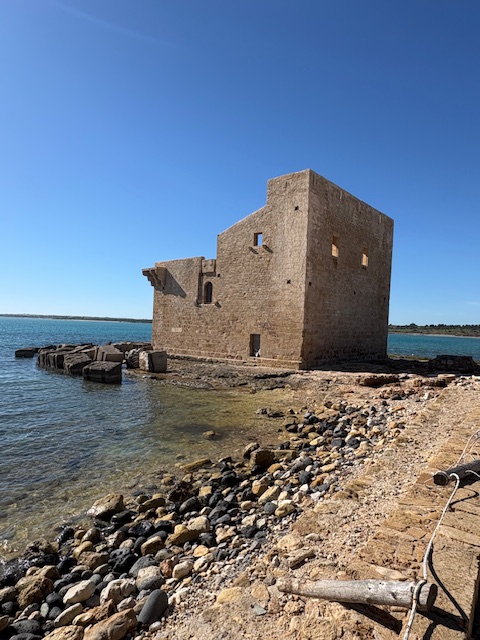
Part of the tonnara (tuna processing plant) left at Vendicari Nature Reserve in southeastern Sicily.
Finding Peace at Vendicari Nature Reserve
If you like nature photography, an outdoor stroll, or perhaps just a quiet place to reflect, then consider visiting Vendicari Nature Reserve just minutes away from Marzamemi. In Italian, it’s called Riserva Naturale Orientata Oasi Faunistica di Vendicara.
The reserve has more than 3,700 acres of beach area and protected wetlands as well as five separate entrances. This website from Trails of Sicily has some interesting history about Vendicari, from its B.C. origins to the presence of its Greek ruins to the tuna processing plant to plans in the not-so-distance past to build an oil refinery or turn it into a tourist complex (!). Thankfully, it became a protected reserve in the 1980s.
If you’re looking to just wander, no worries. Choose the first entrance you find on your GPS and enjoy.
If you want a more specific experience, research in advance where you want to go and find the entrance that’s closest.
For my visit, I chose the main entrance called the Vendicari entrance. It took me down a dirt-and-rock road, but there were signs that assured me I was going the right way.
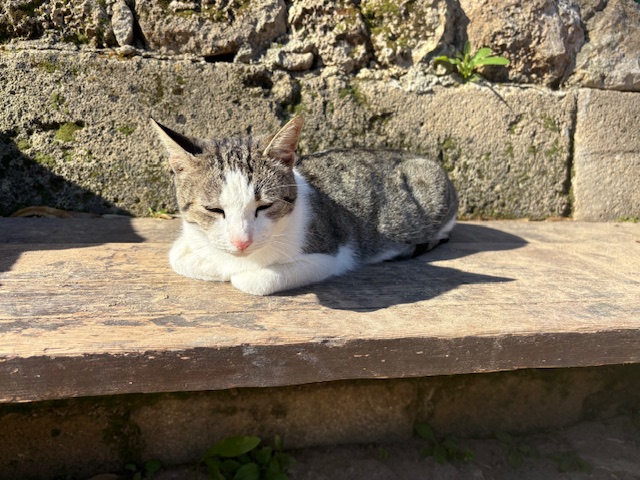
One of the lovely cats seen during the visit to Vendicari and Marzamemi.
I paid the admission fee and asked the friendly man working there about the stray cats that were hanging out near the entrance. He told me how he helped keep watch over them and in fact, the two that I saw were actually mother and daughter. I took pics of the cats and of him with the cats, using my beginning Italian to chat with him.
I decided to wander a bit, which led me to a bird watching area where you can see flamingoes from afar (flamingoes! we have those in Florida, too). There’s plenty of other bird watching there, including herons and black cormorants.
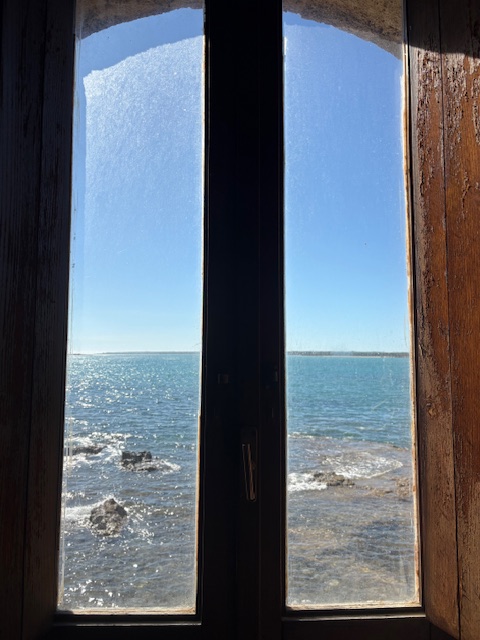
Sea view from the small museum at Vendicari Nature Reserve.
Then, I walked along a boardwalk area that took me on a trail beside the sea and eventually ended up in the ruins of an old tuna processing plant (Tonnara of Vendicari, which was open from 1655 to 1944).
There’s also a small museum area where you can learn more about the tuna processing plant and some of the other happenings at Vendicari.
FYI, the restrooms are right beside the museum.
More of the tonnara area at Vendicari.
Vendicari Nature Reserve has several beach areas, including Eloro Beach and Calamosche Beach. Since my visit took place in February and not summer, I can’t give you much tea on the beaches.
From what I read online, the beaches are somewhat less crowded than nearby Lido di Noto or San Lorenzo. However, being in a park area, Vendicari’s beaches don’t have chairs or other beach amenities you’d find elsewhere.
I actually felt right at home in Vendicari as it reminded me of some of Florida’s state parks, particularly Fort De Soto Park in St. Petersburg. Fort De Soto also combines history (an old fort), nature, and a beach area.
With more time or repeat visits, I would have explored other trails.
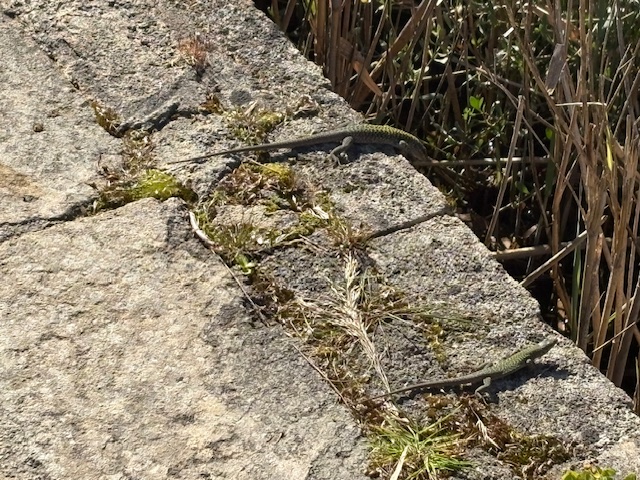
One more similarity with the Florida vibe–this little guy! (See picture above.) He was similar to the geckos we often see in the Sunshine State.
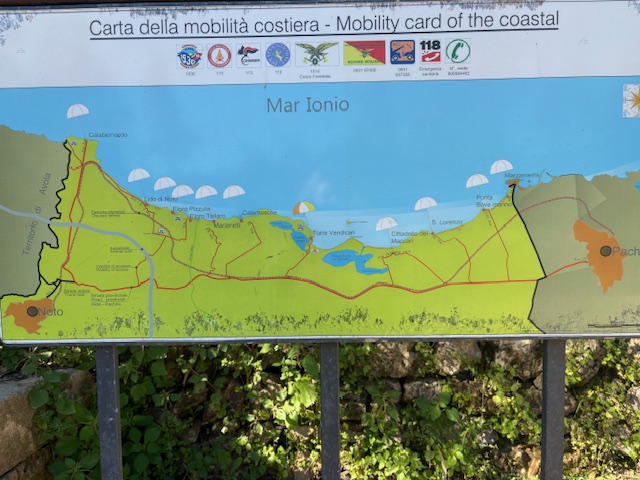
Coastal map at Vendicari Nature Reserve. Some of the English translations on their signs are clunky so you may have to do some decoding. “Mar Ionio” on the sign above means Ioanian Sea.
Tips for Your Visit to Marzamemi and Vendicari
—Make a half-day or a full-day trip out of your visit to Marzamemi and Vendicari. These two are close to each other, so it would be easy to take your nature walk at Vendicari and then enjoy a meal at Marzamemi, or vice versa. If you really like to take your time strolling, you could probably turn these two destinations into a full-day experience. If you’re going to Vendicari for beach time, then you could do a beach day there followed by an evening meal at Marzamemi.
—Plan what time of the day you want to go. Because it’s a park, Vendicari is open during the daytime but closed in the evening. Marzamemi is open during the day and into the evening so you can choose when to visit. We think an evening visit is a great idea as it’s surely more lively, but you may not feel as open to that if you’re a little nervous driving in the dark in a foreign country. If you’re stayiing in a nearby beach area–say, San Lorenzo–this is less of a concern as you’re just minutes away. If you’re staying in Noto, you may not feel confident about nighttime driving (or at least I didn’t), especially if you plan to have a glass of vino or two during your Marzamemi visit. If you’re staying in Noto and want to see a different town in the evening, consider checking out the nearby beach town of Avola.
–-Expect to pay a small entrance fee for Vendicari. At the time of our visit, it was 3.5 Euros, or about $4 U.S. For comparison, that’s the typical fee to enter a state park in our home state of Florida.
—Bring sunscreen, water, and maybe a hat to explore Vendicari. This is the same advice we dispense on our Florida travel blogs. Many parts of the walking trails are in the sun, and it can get hot at certain times of the year. If you’re going for a beach day, bring everything you need, including snacks and drinks as they aren’t for sale at the park. Pay attention to where you’re going so you know how to get back. Visit early if you’re going in the summer to avoid the midday heat.
Enjoy your visit to Marzamemi and Vendicari/buon viaggio! Got questions? Leave a comment and let us know.
(A quick note: If you’re learning English and want to see a video about our trip to Sicily, please click here! It’ll be a great way to practice English and discover more about Sicily.)
Ahhhhh…..la bella Sicilia/beautiful Sicily. Our interest in this southern Italian island is no secret, if you judge by the number of Sicily stories we’ve written over the past year or so.
Yet we (OK, well, just me, but I like to use “we” to avoid overusing “I”) finally had the chance to travel there in late February.
The 10-day trip included a first night and last night stay in Catania because of its proximity to the airport, along with renting a car and staying in Noto (the town that appears in a season 2 episode of “White Lotus”) the remainder of the trip.
If you’re thinking of visiting Sicily, you may wonder if it’s worth it to visit off-season. This blog even has an article on that exact topic.
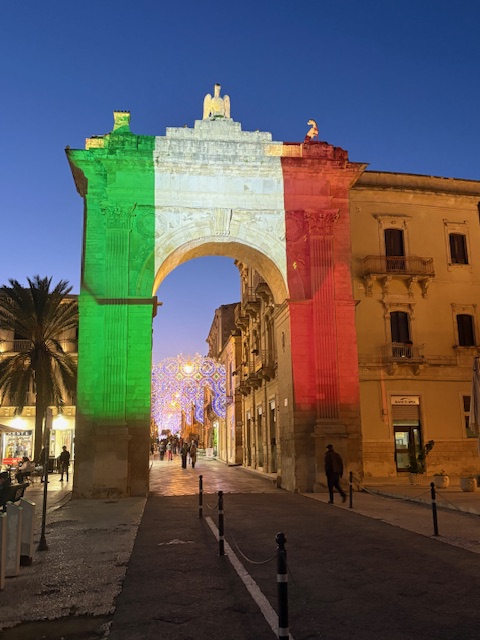
Italian lights on display in Noto, Sicily.
Now that we have the lived experience, we can confirm that yes, there are some real benefits. Here’s why:
—The weather is a lot nicer compared to the scorching summer. Locals reported summer temps that reach as high as 45 Celsius or about 113 Fahrenheit. Whew! Another local said the summer weather there is best for lizards, not humans.
During our February visit, morning temps were around 45 to 50 Fahrenheit and reached 65 to 70 by the afternoon….cold in the morning but great as the day went on. You’ll have occasional rainy or cloudy days, and temps may be a little colder at the start of winter.
—You don’t have the crowds. Sicily has become a hot tourist destination, and I wanted to avoid the throngs of people for this visit. Each town I visited had a few tourists but that’s it. Evening walks in downtown Noto had very few, if any, tourists beyond myself most nights.
—Prices are better but options are more limited. Many B&Bs (what the small hotels in Italy are often called) may be closed during the off-season. However, the ones that are available often are affordable.
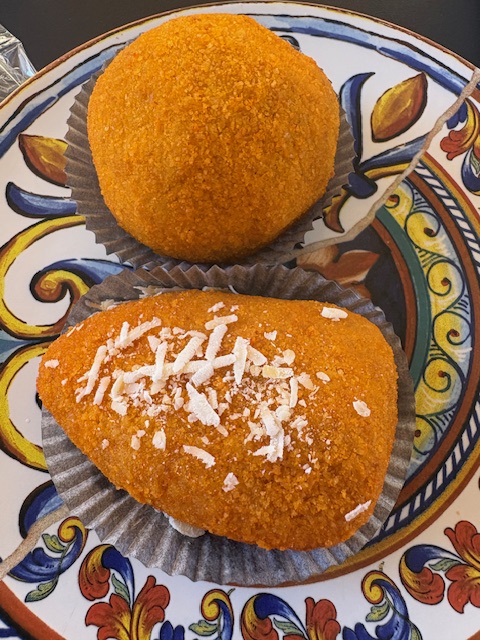
The famous arancini, or rice balls, from Sicily.
The Itinerary: A Journey Through Southeastern Sicily Off-Season
If you’re thinking about a trip to Sicily off-season–generally, from November through March or April–here’s a recap of the itinerary I followed, along with some helpful tips:
–Catania
–Noto
–Marzamemi/Vendicari
–Modica
–Ortygia/Siracusa
–Scicli
Sadly, I didn’t make it to Mount Etna this time but would suggest you try to get there, especially with a good guide. Also, since my trip focused on southeastern Sicily, I didn’t make it the well-known town of Taormina, located north of Catania.
You don’t need to follow this itinerary exactly. If you have a good “basecamp” city like Noto (see our tips section), you can visit each town when you want.
We’ve got a brief summary below of each town and will follow up here on Italy Dreams with a full article on each location.
Andiamo! From Catania to Marzamemi to Scicli and More
Here’s some basic info on each town.
Colorful umbrellas located near the fish market in Catania, Sicily.
Catania
Catania is home to about 300,000 residents, and they all seemed to be out and about on the two Saturdays I was there. Young people in particular were on the busy central streets of Catania on both Saturday evenings, ready to eat, drink, and meet.
Some Catania highlights included the morning fish market that happens until around 1 p.m. every day but Sunday along with a local flea market in the fish market area on Sunday morning (a very cool way to see Sicilian antiques and other knick-knacks). Of course, there’s the famous Saint Agatha Cathedral, too.
For both nights, I stayed at Opera Boutique, a four-room B&B that was just a block or two away from the main downtown action in Catania. Thumbs up to our Opera Boutique experience.
The famous Saint Nicholas Cathedral in Noto, Sicily.
Noto
The Baroque architecture of Noto makes it a popular place for visitors to Southeastern Sicily. It was a safe small town and an ideal location. You’ve got Saint Nicholas Cathedral along with several other churches (loved the view from the bell tower at Church of San Carlo, located close to Saint Nicholas Cathedral).
You’ll find several souvenir shops and restaurants, some of which were closed for off-season. Because Noto is popular, you may also find some of the souvenirs to be overpriced.
Still, it was a good choice for a week-long stay and I got to try several famous Sicilian foods in Noto, including gelato, cannoli, arancini (rice balls), and cheese and bread purchased at the Sunday/Wednesday mercatino (local market).
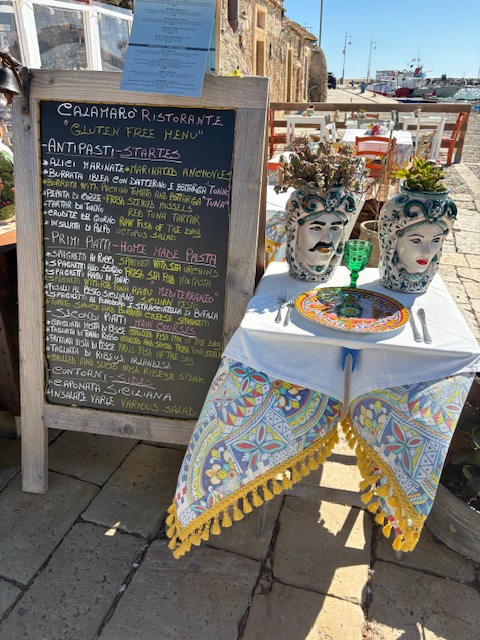
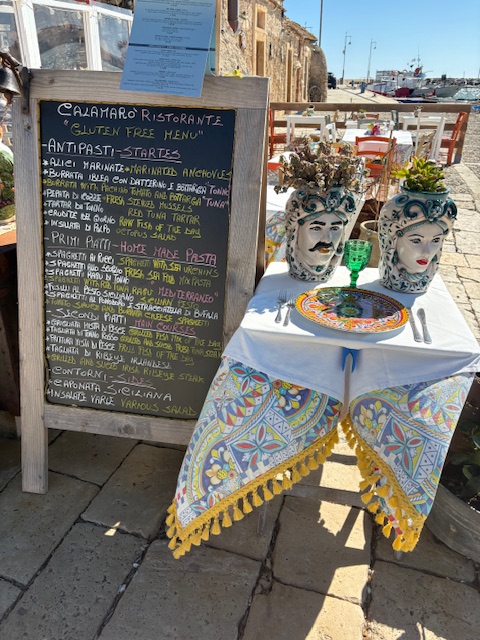
Menu seen outside of a tasty restaurant in Marzamemi, Sicily.
Marzamemi/Vendicari Nature Reserve
The fishing village of Marzamemi, a former tuna fishing and processing village, reminded me of Cortez, Florida, right here in our Southwest Florida area. Although the looks of the Sicilian village versus the Floridian village are completely different, both serve as a reminder of the commerical fishing business that influence each respective area.
Marzamemi maintains its historical buildings, with much of the space now serving as a home for restaurants and gift shops. There was a pleasant walk along the water with plenty of colorful boats. Sicily got hit with a cyclone in January 2026 (causing around $1 billion in damage), and it appeared that some of the area near the water still was undergoing repairs.
Still, that didn’t get in the way of taking in the lovely view or enjoying a pasta dish with Sicilian pesto, sun-dried tomatoes, raisins, almonds, and lemon peel. It was probably the best pasta dish of the whole trip.
One view at Vendicari Nature Reserve in southeastern Sicily.
The day near Marzamemi included some driving around the San Lorenzo Beach area and a visit to Vendicari Nature Reserve (in Italian: Riserva Naturale Orientata Oasi Funistica di Vendicari). For some reason, the reserve also gave me Florida vibes, with a friendly man who took my admission fee and told me in Italian about the stray cats at the reserve he helps to care for. Then, there were several choices of walking trails, many along the water. Don’t miss the birdwatching (including flamingoes!) and the old tuna processing plant.
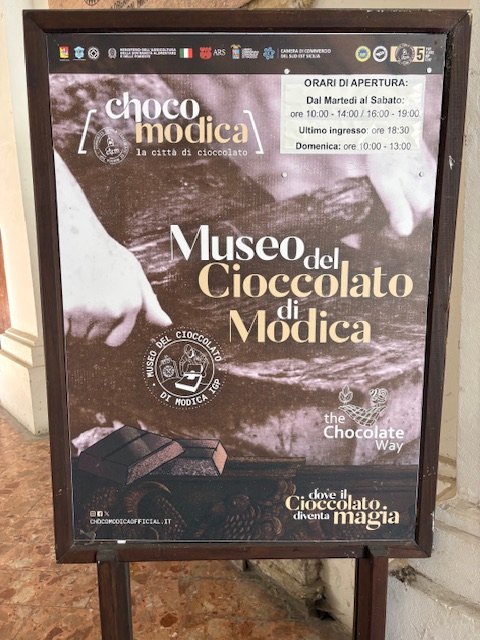
A sign advertising Modica’s Chocolate Museum, which was small but cute. Check it out if you have the time but definitely don’t miss chocolate tasting at the local chocolate stores.
Modica
When you think of Modica, think chocolate. The town still makes chocolate in the same way the Spanish and Aztecs made it, meaning the only thing that’s added is sugar–not cocoa butter. They flavor it with cinnamon, citrus, and other items.
Modica is a hilly town, so you’ll find some attractions on both the upper and lower “levels” of the town.
Many visitors to Modica also enjoy the nearby town of Ragusa Ibla, although I didn’t make it there.
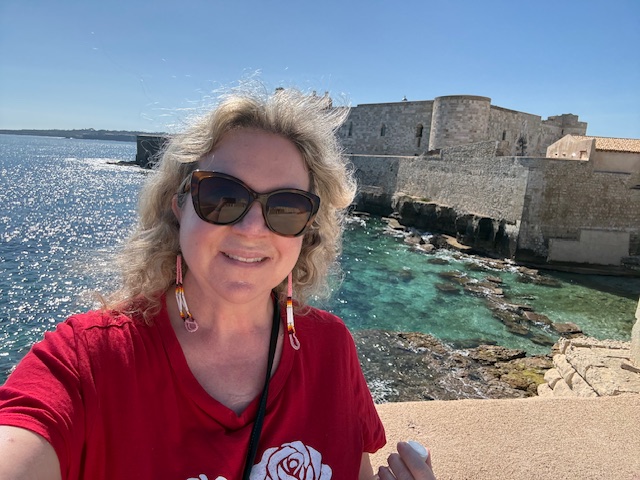
Outside of Ortigia’s Moniace Castle, built in the 1200s. As you walk around the castle, you can see the influence of the different civilizations that have conquered Sicily in the past.
Ortigia
Ortigia, an island that juts off of Siracusa/Syracuse, was a highlight of the week. It’s a popular destination with beautiful sea views, a castle (Castle Moniace) from the 1200s, coastal restaurants, a daily outdoors market (definitely try some local produce–loved the strawberries and bought some local oregano), and plenty of cats that made for good photography.
I could see how Ortigia would also be a good place to stay for a few days, although it would take a little longer to drive outside of the island to reach other day-trip destinations compared to Noto.
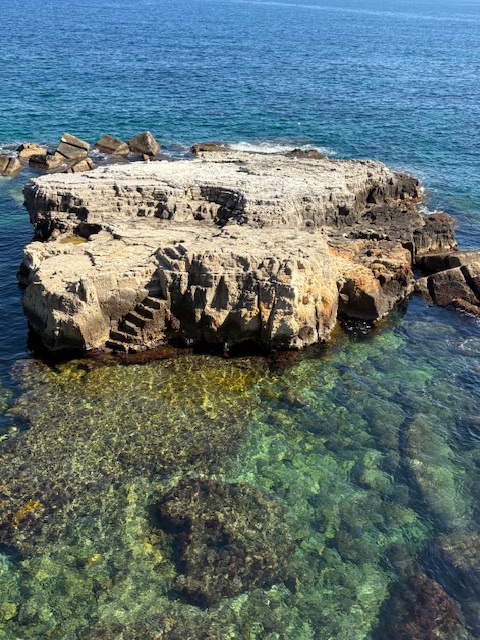
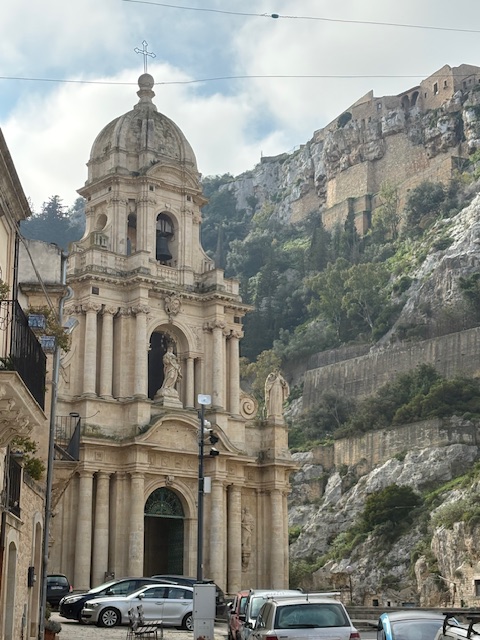
The beautiful Ionian Sea as seen in Ortigia, Sicily.Church of Saint Bartholomew in Scicli, Sicily.
Scicli
Pronounced sheek-li, Scicli was probably my other favorite destination in addition to Ortigia. Tucked in a rocky, hilly area (it reminded me of West Virginia), it’s a town made famous by the famous Italian show “Inspector Montalbano,” which named the town Vigata in the show. You can tour the town hall that’s featured prominently in “Inspector Montalbano.”
The real highlight of Scicli was a visit to A Rutta ri Ron Carmelu, tucked inside a housing neighborhood among the hills where Mr. Carmelo–a charming, inventive local man who speaks no English–gives tours that show how his grandparents lived in a cave with their six children. Even with no English, there are enough visuals that you can still understand most of what he says.
He then showed off dozens of inventions and creations that he’s made, all of which are for sale. Some are as simple as soap or home decorations; others are unknown contraptions that Mr. Carmelo will reveal to be a child’s potty or something else offbeat.
A small black ceramic vase made by Mr. Carmelo now sits in our dining room.
Expect some hairpin turns as you drive into or as you leave Scicli. Go slow!
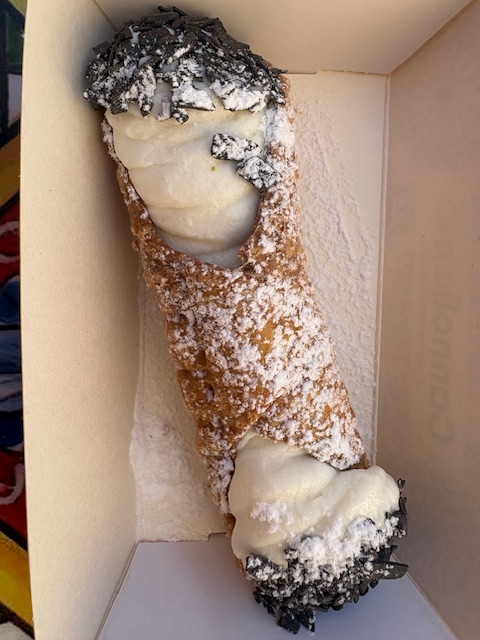
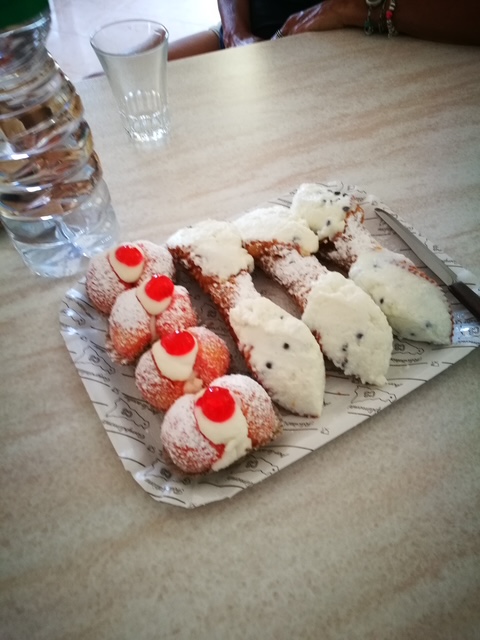
Obligatory cannolo shot from Sicily….this famous dessert is originally from Sicily!
6 Tips for Your Visit to Sicily Off-Season
Although my visit concentrated on southeastern Sicily, some of the tips below may help no matter where you visit on the island.
–-Be prepared for the car rental process. You’re required to have an international driver’s permit (we got one easily from a local AAA office for about $20). You’ll also be asked in the booking process if you want insurance. Make sure to say “Si” to that as the insurance from your home country likely won’t cover accidents or damage.
—Be prepared for driving around Sicily. So, how was it driving in Sicily? The autostrade (one of the main highways) was good and had some pretty views of the farm land. Road construction and blockages came up much more quickly than in the U.S.–God bless American roads and their big signs–but other than that, zero issues. Still, it’s a good idea to learn some road signs/driving terms in Italian before your visit.
The GPS on my phone was overall helpful during the Sicily journey although some of the rural roads were bumpy and felt a little nerve-wracking in the rental car. One set of directions took me on a dirt road with long grass where I saw a man with a machete–to be clear, not a serial killer, but likely a farmer used to cutting his way around the weeds.
That said, I intentionally didn’t drive in city areas like Catania (yikes!) and felt more nervous driving along narrow streets in Noto and the other day-trip towns. In fact….the good ol’ Kia Sportage rental got some scrapes on one side when maneuvering through a narrow road in Modica. That’s what that insurance is for, although note that you may have to pay for the damage upfront and then apply to get reimbursed.
Bottom line: You really do need a car to get around Sicily beyond the bigger cities unless you have a guide handling that for you. Trains are present but some routes aren’t used as much as in northern or central Italy. Take a deep breath and drive smart. Or, have a trusted travel companion handle the driving if you’re too anxious to do it.
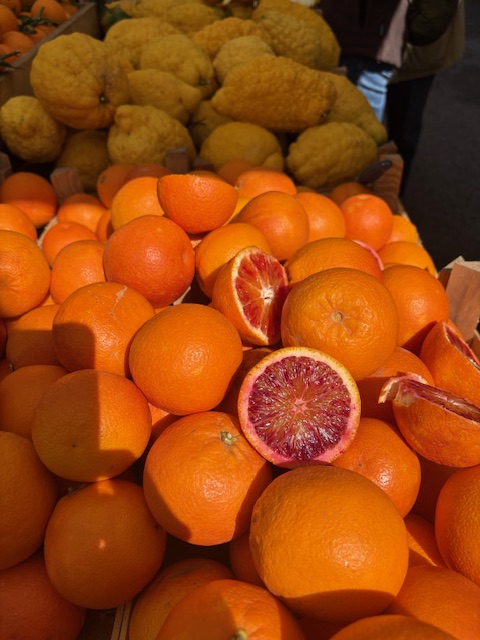
Make sure to sample Sicilian produce!
—Consider staying in Noto as your “basecamp” town. Noto was a great jumping-off point to reach destinations further south in Sicily. I enjoyed a week-long stay at Cuore Barocco, a studio apartment that was just a 10-minute walk or so from the downtown area but had a nearby small parking lot so I didn’t have to fit the Kia into tight on-street parking every day. Plus, Cuore Barocco had a balcony that made it great for watching daily Sicilian life.
—Brush up on basic Italian. If your only Italian consists of “ciao” and “gelato,”you’ll probably survive. Yet if you choose to travel off-season, there are fewer tourists, which means there are probably fewer people around who speak English or languages other than Italian who can help you. Most people at souvenir shops and restaurants would speak English to me, but there were some areas (supermarkets, smaller towns like Scicli) where there wasn’t that English back-up. It’s always useful to know some basic phrases in Italian, and the locals will appreciate it.
—Don’t set your heart on agricultural destinations or beaches during off-season. Unless I missed something, most vineyards and farms seemed to be closed for off-season–perhaps not completely closed, just closed to the public. I reached out to two farms to see if they were doing tours and heard back from one that told me no. Some places might open but for small or large groups. As for beaches, yes, you can visit them, but you may find differing quality off-season. My afternoon in Ortigia was warm enough that some people got comfortable on a stretch of sand and rocks near the water to sunbathe, with hardly anyone in the water. San Lorenzo Beach near Marzamemi was pretty but didn’t have anyone hanging out. Lido di Noto (Noto Beach) looked a bit worn-down on the cloudy morning I checked it out. However, it likely gets prettier as locals get it ready for season.
—Don’t be surprised if hours and schedules are different than what you find online. On our first day in Noto, there was a tourist shop where I bought a great pistachio cream liquor (yeah, that one never made it home) and some Sicilian cookies. I wanted to return toward the end of my week to look for olive oil and a few other goodies. I looked up the hours online but every time I went by the shop after my initial visit, it was closed. Just know that hours for different places may be unpredictable, and probably even moreso than in-season. Some places even favor evening hours more after an afternoon break.
Let us know what other questions you have about Sicily travel in the comments. We’ll be happy to help if we can!
Buon viaggio!
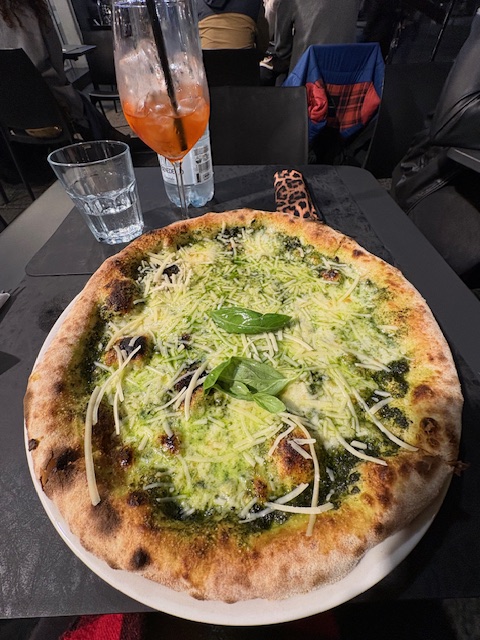
Obligatory pizza photo from Italy….this one a pesto pizza in Catania, yum….
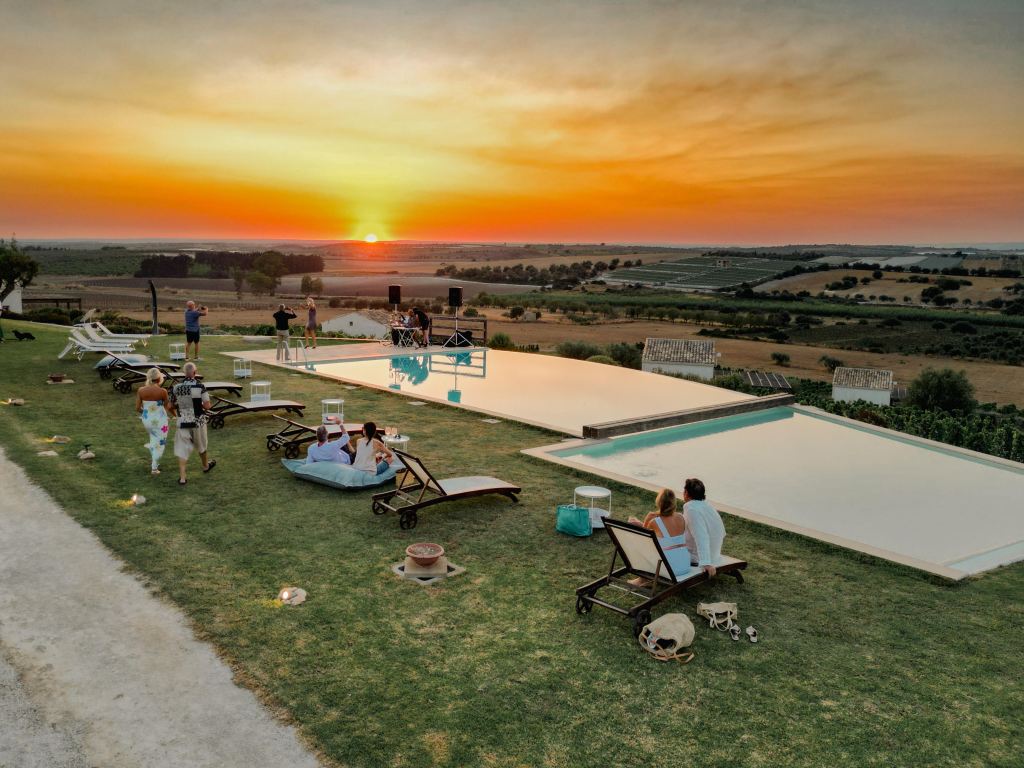
Drinks and a sunset view at Kapuhala Sicily, a resort near Noto. All pictures shared courtesy of Kapuhala Sicily.
If you’re dreaming of Sicily and want some wellness with your getaway, then look no further than Kapuhala Sicily, located near Noto and Marzamemi in the southeast corner of the Italian island.
Kapuhala Sicily was created as a sustainable, wellness-focused resort by chef Crystal Lee and her husband, Stefano Passarello, whose father is from the area. Crystal is originally from Hong Kong but trained in Milan to be a chef.
“We’d been going to Sicily for 20 years and absolutely love it,” Crystal says. “When the resources and land became available, we decided to build something there.”
Kapuhala Sicily debuted in June 2020, almost a year after the couple opened Kapuhala Koh Samui, an eco-friendly resort in Thailand. They divide their time between the two properties. Kapuhala means “holy tree” in Hawaiian.
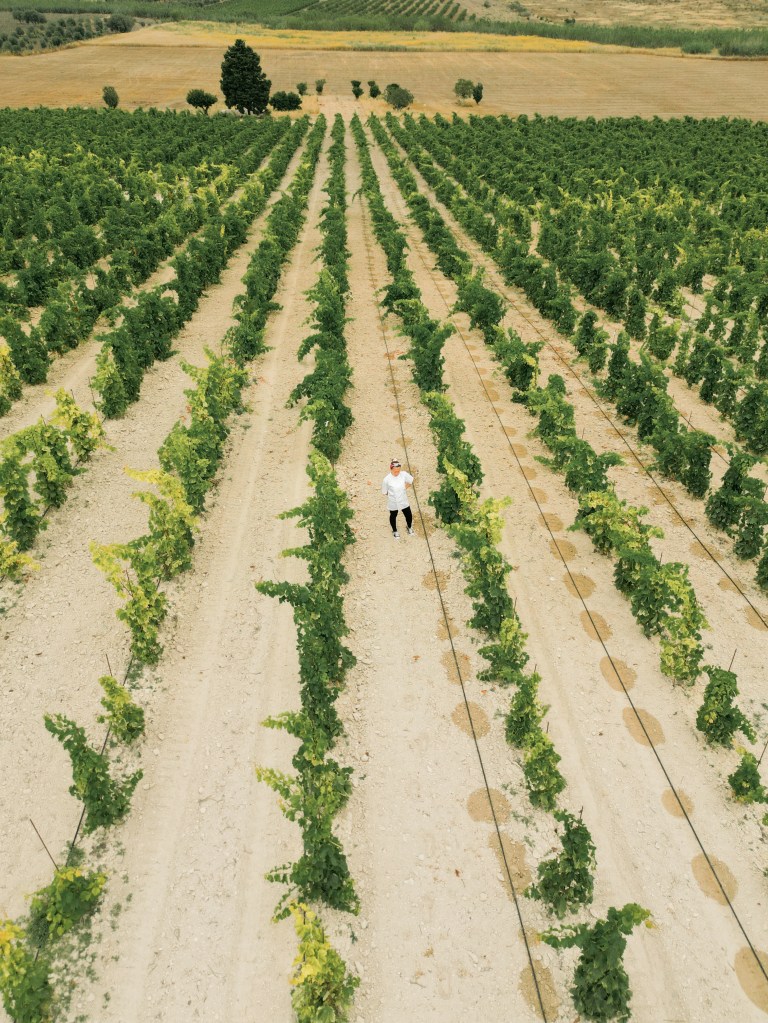
Relax among the vineyards at Kapuhala Sicily.
“Ahhhhhh”–What to Expect When You Visit Kapuhala Sicily
If you’re visiting Sicily for Kapuhala Sicily, you’ll make your way through the countryside of the Valle di Noto region–an area Crystal describes as famous for its natural beauty, olive groves, and traditional Sicilian heritage.
Upon driving up to the resort, you’ll find 60 acres of vineyards, olive groves, and organic gardens–with much of the food served at the resort grown onsite or sourced from local farmers. The owners of Kapuhala Sicily also were able to revitalize 300 trees that would have otherwise been uncultivated.
Kapuhala Sicily can accommodate up to 30 guests in total in small individual homes and in buildings once used for wine-making; most of the places to stay there can host up to four people at a time. Each unit has a private bathroom, and some units have kitchenettes.
Kapuhala Sicily focuses on sustainability, wellness, heritage architecture, and plant-based cuisine. It also follows many of the “blue zone” principles for living longer and staying healthy. Sardinia, another island in Italy, happens to be one of the world’s blue zones, and one area of Sicily is considered an emerging blue zone.
Chef Crystal Lee operates Kapuhala Sicily along with her partner, Stefano Passarello.
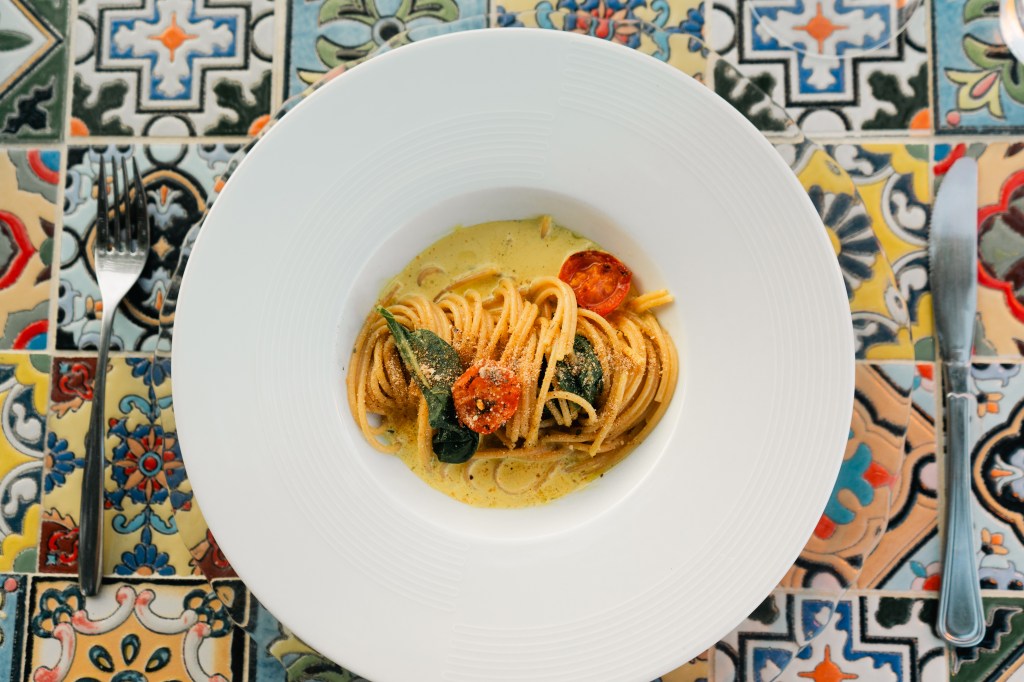
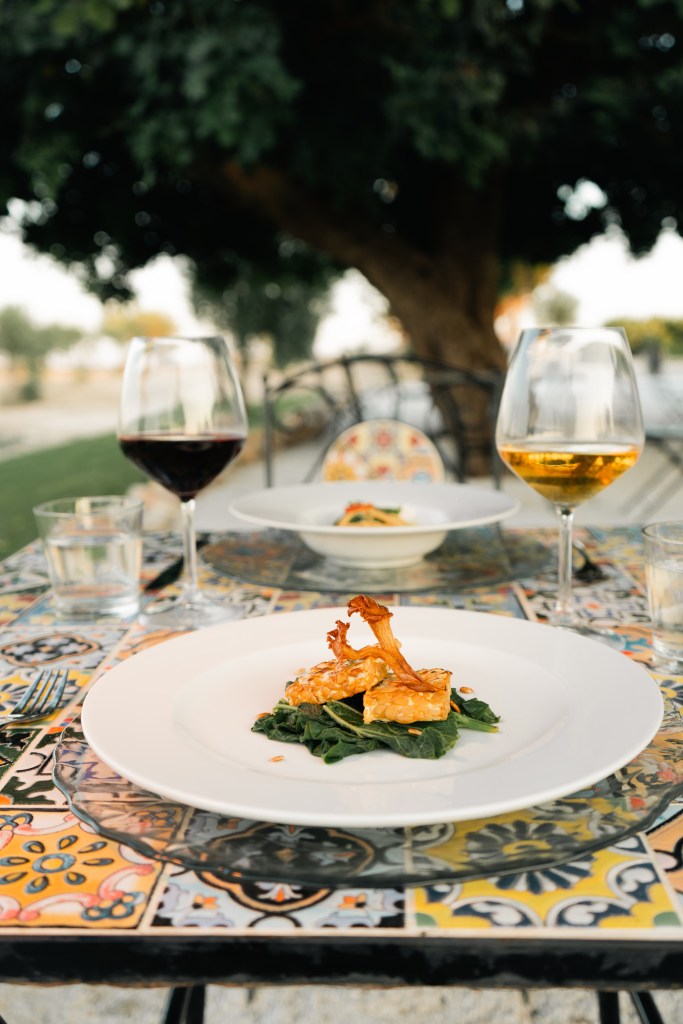
Italy is already famous for its cuisine–it was just recognized by UNESCO this December–yet Kapuhala Resort takes plant-based cuisine to another level. How about spaghetti with Sicilian curry, tenerumi (a summer squash-like vegetable in Sicily) and tomato confit? Si, per favore! With some of the dishes, you may be fooled into thinking you’re eating the traditional meat version, only to realize the vegan option is just as tasty.
Spaghetti with Sicilan curry served at Kapuhala Sicily resort, located in the southeastern corner of the island.
In addition to the great food, there’s lots more to enjoy at Kapuhala Sicily, including:
–Wine tastings
–A pool
–A botanic yoga studio
–Sunset views
–Nature walks
–Doing absolutely nothing!
–Day trips just a short drive away, like Noto (famous for its baroque architecture–see our article here), Marzamemi (a former fishing village that’s popular to visit), and nearby beaches
Yet there’s nothing wrong with just enjoying your time at Kapuhala.
“Kapuhala Sicily isn’t just a hotel but a lifestyle-oriented retreat. It’s a place designed for people who value sustainable living, plant-based food, mindful living, nature, and authentic local heritage,” Crystal says.
It’s also considered a “heritage farmstay” because guests have the chance to connect with the land and rural Sicilian traditions.
7 Tips to Plan Your Visit to Kapuhala Siciliy
If you’re hopping on your favorite travel website right now to book your stay at Kapuhala Sicily, here are a few tips to keep in mind:
—Plan to rent a car while you’re in the area. There’s not much public transportation.
—Slow wayyyyyyy down. Keep your type A side tucked away in your suitcase while you’re vacationing, both in SIcily in general but also specifically at Kapuhala. “It’s about relaxation, wellness, a connection with nature, and simplicity,” Crystal explains.
—Stay open to vegan cuisine. You may be surprised by how much you like it!
—Bring comfortable shoes. It’s hard to get around the countryside in high heels, Crystal says.
—Plan your local trips to include beach visits, local historical towns and the countryside. Crystal calls this a “balanced Sicily experience.” Staying for a few days in the area gives you a better chance to get to know the resort’s part of Sicily without feeling rushed.
—Check online to make sure the resort will be open before you book. Like many other accomodations in the area, Kapuhala Sicily is generally open from April to the end of September, which is the main tourism season for Sicily.
—Staying elsewhere in Sicily but still want to check out Kapuhala? You can visit their restaurant, Vivi Vinu, for an apertivo or dinner.
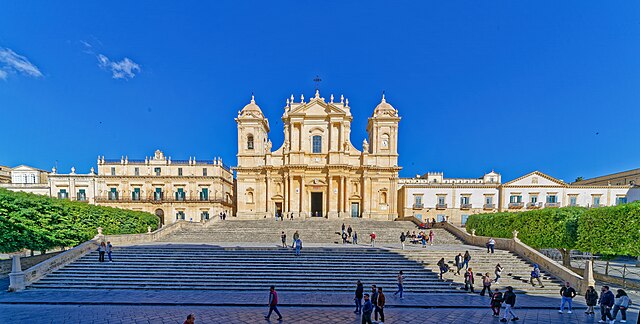
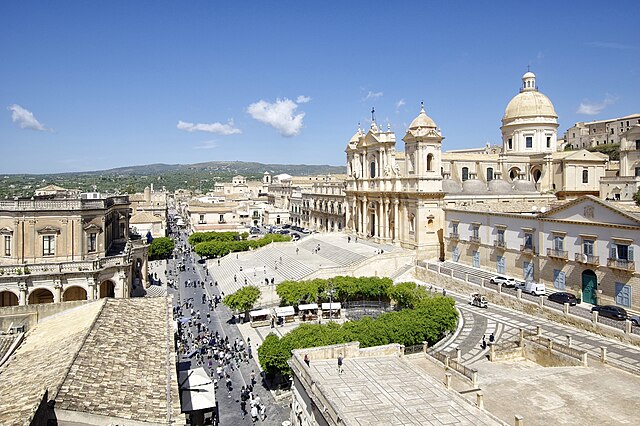
Beautiful Noto, Sicily, Italy, with its Baroque architecture. Picture from Wikimedia Commons.
Whether you’re lured to Noto, Sicily, Italy, by its Baroque architecture or its famous appearance in season 2 of “White Lotus,” there’s plenty to see and do in this charming town, located in southeastern Sicily.
In his Sicily travel guidebook, European travel guru Rick Steves says that Noto may well be “Sicily’s most pristine small city.”
Let’s quickly fill you in on Noto’s history and then guide you to things to see and do.
Like much of Sicily, Noto’s earlier influences came from a mish-mash of cultures, including the Muslims, Normans, and Romans. If you fast forward a few centuries–specifically to the year 1693–a major earthquake hit and destroyed the city, which at that time was called Netum.
In the 1700s, the city was rebuilt at a new site a few kilometers away and constructed in Sicilian Baroque style. That paved the way for the beautiful, classic Baroque look that defines Noto today. In fact, the Baroque background led Noto to become recognized as a UNESCO World Heritage site.
Now, the city is a growing destination for those visiting Sicily, whether they are spending more time in Catania (an hour away by car), Siracuse (Syracuse) or even coming from Palermo a couple of hours away. Noto can make for a beautiful day trip, or you might choose to stay there for a few days to explore and use the town as a “basecamp” to explore nearby cities like Siracusa, Ragusa, and Modica.
Here’s the scoop on things to see and do in Noto bello.
Picture shared by Stefania Lampedecchia. (@Slampe78).
Cattedrale di Noto
The most iconic sight in Noto is Cattedrale di Noto, often just called the Duomo or Chiesa Madre (Mother Church). The wide staircase outside of the Duomo is great for pictures. Find lots of frescoes and gold carvings on the inside.
Don’t forget to enjoy lots of food when you’re in Noto or anywhere in Sicily. Picture shared by Stefania Lampedecchia. (@Slampe78).
Eat
Sicily is known for an amazing food culture, just like the rest of Italy. So, it’s probably no surprise that one major item on your Noto to-do list is sampling lots of restaurants and types of food.
As you enjoy the places below, keep in mind that Sicily grows a ton of fresh produce as well as items like almonds. Your next plate may feature tomatoes from nearby Pachino or blood oranges or almonds fresh from Sicilia.
Here are some specific Noto food recommendations and remember–gelato is calorie-free in Italy :-).
—Ristorante Manna Noto, featuring Mediterranean food in a modern bistro style. “The dining experience was spectacular, from the service to the dishes,” says Brianna Buffo, who visited Noto in May 2025. She said one person in her group had celiac disease, and the restaurant was very accommodating.
—Trattoria Fontana d’Ercole, where visitor Azmi Anees had fresh pasta alla norma that featured fried egglant and ricotta.
—Caffe Sicilia, a well-known pastry shop in the area that’s been featured in an episode of “Chef’s Table” on Netflix. Enjoy almond pastries, cannoli, and much more, yum…
–If you’re staying local and want a unique experience, Buffo recommends Via Delle Palme, a husband-and-wife chef team that will prepare a meal where you are staying. Buffo says the meal she enjoyed included fresh and seasonally harvested ingredients perfectly paired with wine–and homemade limoncello for the finale. She also said that the chefs, Buccio Cappello and Giuliana Pucci, were “kind, lovely people.”
The view from Chiesa di Montevergine. Picture shared by Chris Cavanaugh.
Wander Around Noto
Of course, if you’re on vacation in any town in Italy, you’ll do yourself a favor by wandering a bit and soaking up in the atmosphere. Although Noto has gained more tourists in recent years, it doesn’t have the hustle and bustle of a Florence, Rome, or Venice. Take advantage of that calmer feel to check out some of Noto’s top sights, including:
–Porta Reale, or the Royal Gate
–Palazzo Nicolaci
–Street art. “I enjoyed wandering the city streets to look at the art on the stairs by artist Carlo Coniglio and others,” says Chris Cavanaugh, travel expert and founder of the online travel publication Spritzience.com. (Some of the pictures in this article were shared by Cavanaugh.)
–Corso Vittorio Emanuele
–Chiesa di Montevergine, where you can hike up a spiral staircase to the top of the bell tower for city views, Cavanaugh says.
–Shopping! We found these two interesting articles (here and here) with several shopping recommendations in Noto.
Street art on the stairs in Noto. Image shared by Chris Cavanaugh.
Infiorata di Noto/Flower Festival
If you’re in Noto in mid-May, you may be lucky enough to witness its annual flower festival with unique floral mosaics. Called the Infiorata, the festival takes place the third Sunday in May each year.
“It was a beautiful sight and added another layer of fun and conversation as we strolled the city,” Buffo says.
Noto Antica
Check out Noto Antica, or ancient Noto, to see the ruins of the original town demolished by the 1693 earthquake. It’s about 20 minutes away from downtown Noto.
Look at these cute boxes at Teatro Comunale Tina Di Lorenzo. Picture shared by Chris Cavanaugh.
Teatro Comunale Tina Di Lorenzo
Check out Teatro Comunale Tina Di Lorenzo for its marvelous boxes and a painted ceiling to admire, Cavanaugh of Spritzience recommends. The theater seats 308 and is used often for opera, concerts, ballet, and shows.
Cantina Marilina
Want to check out a local vineyard and winery? Cantina Marilina is a great, famiy-run option where you can enjoy lunch as well as vino.
Kapuhala, a farm-based resort near downtown Noto.
Kapuhala: A Unique Place to Stay
You’ve got many choices of places to stay if you’re in Noto or southeast Sicily. One place we were told about while researching this article is Kapuhala, a family-run, eco-conscious resort in Noto that has a farm-to-table restaurant, a yoga studio, two vineyards, and olive trees. It’s considered agri-turismo, or a farm stay. It’s close to both Noto and Marzamemi.
Noto views. Picture from Wikimedia Commons.
Nearby Places to Visit from Noto
OK, so you’re on the Noto train with us and ready to visit. Here are some other nearby destinations you may want to check out:
—Catania, which has lots to see and is home to a major airport (when you fly into Sicily, you’ll fly into Catania on its east coast or Palmero on its west coast)
—Marzamemi, a small village where you can grab a bite to eat, shop a little, and discover the area’s tuna processing heritage
—Vendicari Nature Reserve, for peaceful nature, bird watching, and a beach experience (bring your own towels, snacks and other supplies)
—Modica, a town also known for beautiful Baroque architecture and a chocolate museum (yum)
—Siracusa/Syracuse, popular for its history and scenery and includes the stunning island of Ortigia
—Ragusa, with more historical architecture and the Ragusa Archaeological Museum






 Italy Dreams