Are you thinking about a trip to Sicily, Italy, and need some guidance?
We’ve got you covered.
Our first article with Sicily Frequently Asked Questions (FAQs) focused on logistics, like geography, getting around, and and when to visit.
This article dives into the cultural questions–and food, of course!
Our answers come from research and first-hand experience visiting la Sicilia bedda (beautiful Sicily in Sicilian) in early 2026. We also have a new Italy travel consultation business, so we back our experience with other past and future trips around Italy.
If there’s something about traveling to Sicily that you still want to know, leave a comment or just get in touch!
OK, andiamo/let’s go.
What foods should I try in Sicily?
Try everything. Seriously.
What surprised me the most as I started to learn about Italy and Sicily specifically is how diverse the food is.
We always think of pasta and pizza with Italy and yes, those are big components of the food culture.
Yet each of Italy’s 20 regions has its own food culture, from cheeses to types of pasta to meats and desserts and more. Italy for Food Lovers, written by European travel guru Rick Steves and Fred Plotkin, was enlightening before we made that first trip.
Regarding Sicily, here are just some of the highlights. Keep in mind that you’ll even find food variations in different areas of Sicily:
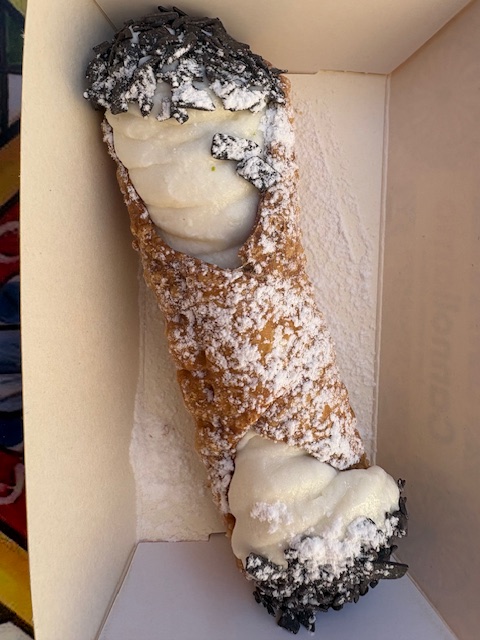
–Cannoli (cannoli originated in Sicily)
–Gelato
–Granita
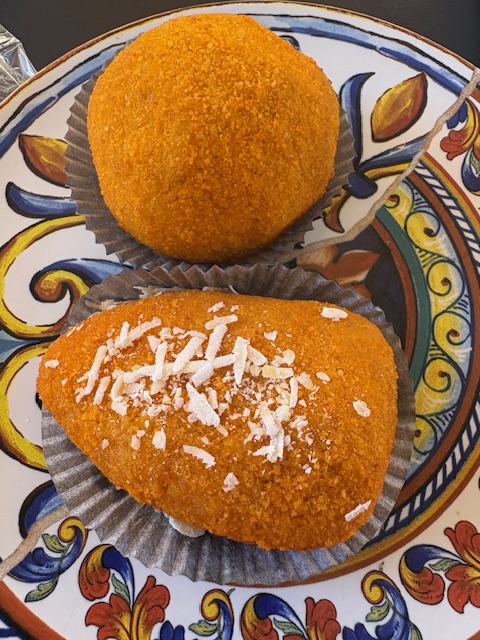
–Arancini (rice balls), also called arancine depending on where you are in Sicily
–Pasta alla Norma
–Horse meat (yes, you’ll find this there)
–Seafood dishes
–Couscous dishes
–Anything made with pistachio or almonds grown on the island (pistachio liqueur was purchased early during my trip and let’s just say, it never made it back to the U.S.)
–Of course, pizza and pasta
–Locally grown fruits and vegetables, which you’ll find for sale at local markets
–Vino, of course!!
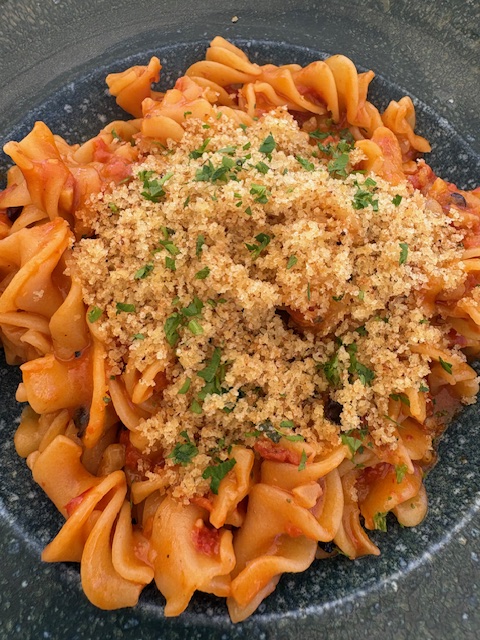
How is Sicilian food different from Italian food in other regions of Italy?
As mentioned, each region of Italy has a distinct food culture. So, that means you’ll find some natural variety if you’re eating in Sicily versus Lombardy (north Italy) versus Sardinia (Italy’s other Island region).
Yet Sicilian food is unique because of the many cultures that have conquered Sicily over time, including the Arab, Greek, Norman, and Spanish. That’s why you may find a couscous dish alongside gelato on a menu.
Will most people speak English?
If you’re in touristy areas, you should always be able to find people who speak English. Many–but not all–B&B/hotel hosts will speak English.
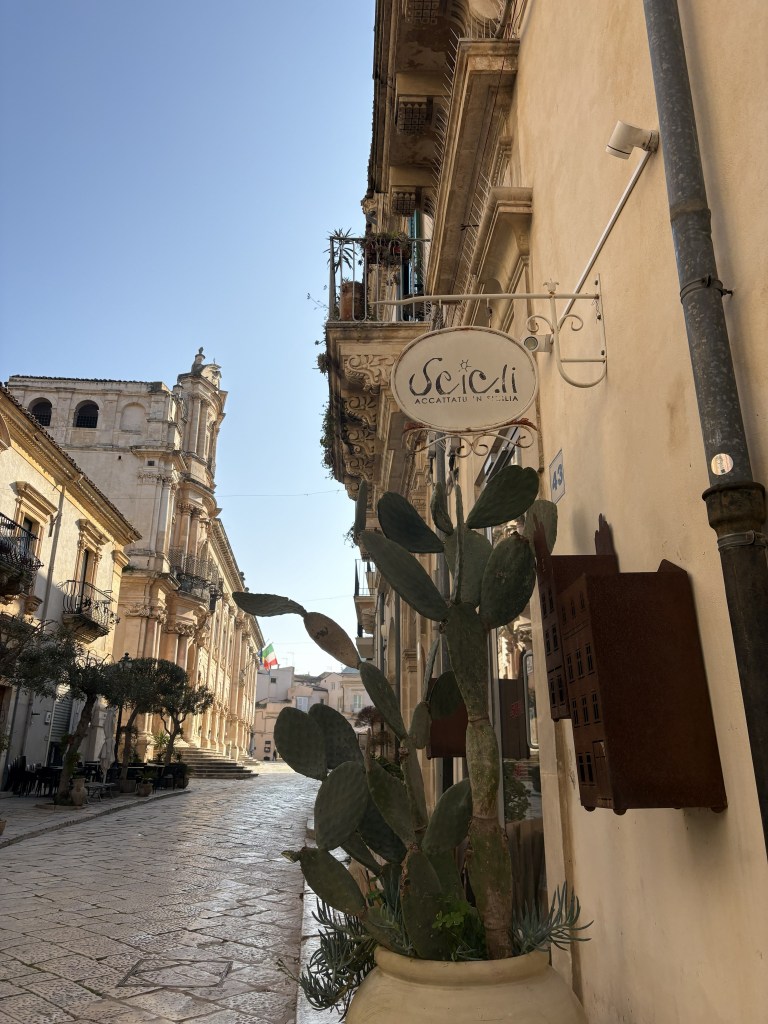
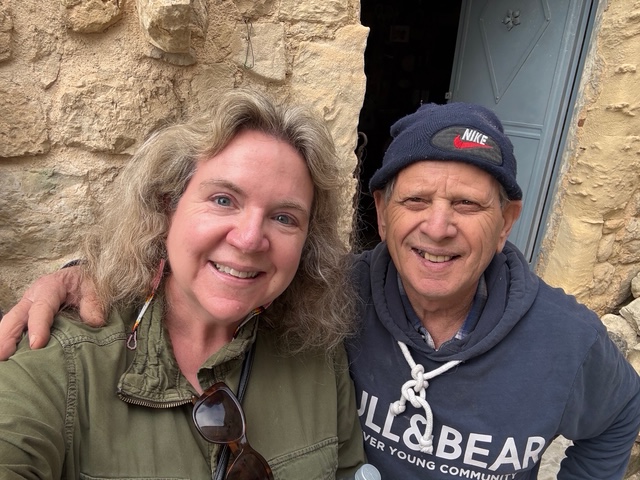
But, if you’re in a small town, it may be harder. I relied more on basic Italian during my visit to Scicli. Upon sharing a video of an older man in Scicli speaking Italian to explain something touristy to me, northern Italian friends told me Italian is probably the man’s second language–and Sicilian his first.
I don’t recall hearing conversations in Sicily and thinking, “Oh wow, they’re speaking Sicilian.” Italian is definitely the common language. I’m just saying, if you go outside the big cities, have your Google Translate or Italian skills at the ready.
Is Sicily culturally different from mainland Italy?
Yes, I think so–although perhaps it’s more of a southern Italy versus northern Italy difference.
My visit to Milan may as well have been a visit to New York City with the fast pace of life I encountered and the throngs of people in the city. And Florence was more city-like than I expected, too.
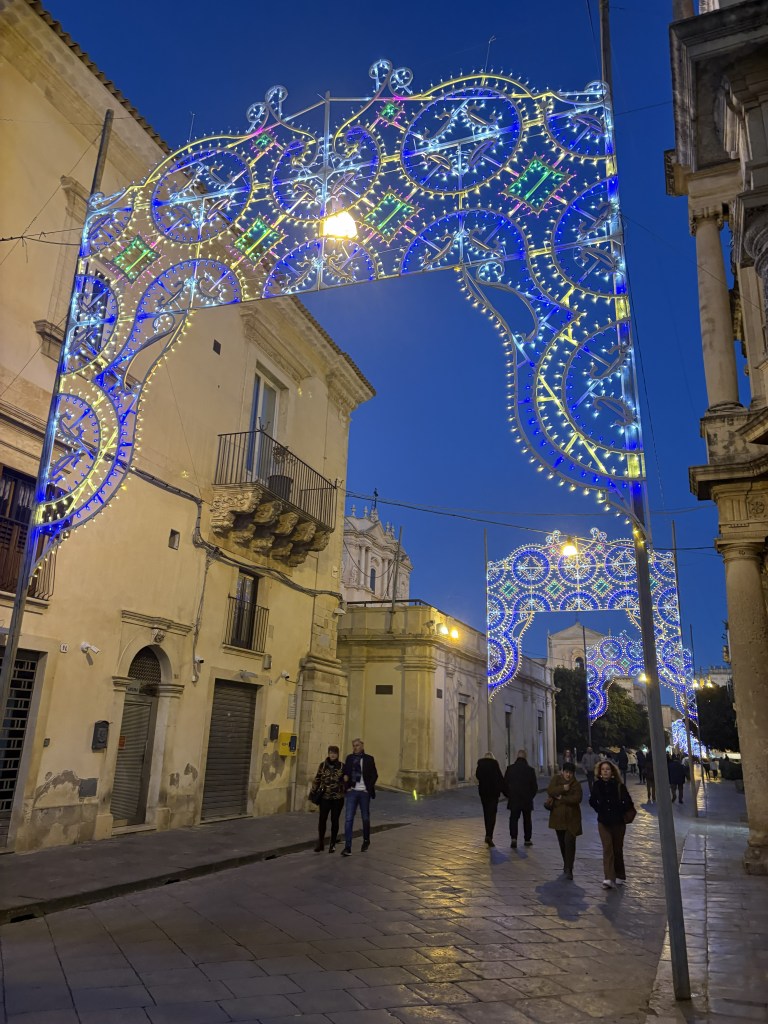
Visiting Sicily (at least, off -season) had a slower pace, with locals in Noto, Sicily, gathering on the town’s main street in the evening for a passeggiatta (evening stroll) and saying hello to each other.
Yet it may depend on location. Sicily’s city of Catania was bustling, while north Italy’s Bellagio along Lake Como was more laidback.
So, if we’re talking merely fast- versus slow-paced, it just may depend on country versus city life no matter where you go in Italy.
I do think Sicily (not sure about Catania or Palermo) is more traditional and there are even more family ties and obligations than in the bigger cities. There’s more of a “do the right thing by your family” feel from what I can gather in Sicily/Southern Italy versus those living in north Italy.
Are people in Sicily friendly?
They can be.
But not in the American, let’s-say-hi-to-everyone way. And not in the Italian stereotype, “Ciao bella!” kind of way either.
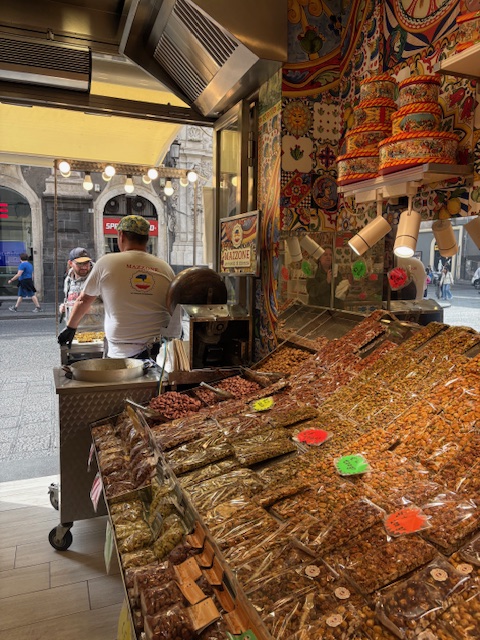
Traveling by myself off-season, I noticed that those working in tourism, like my B&B host or the gals at the souvenir shops, were friendly. My B&B host was very sincere (we later became friends); the souvenir shop gals felt more like they were doing their job, but I get that.
Yet maybe aside from the town of Scicli (see our story here) and the clerk at Vendicari Nature Reserve (a lovely man watching over some cats), I didn’t feel like they rolled out the red carpet for me.
I’ve since researched and reflected on it, and I think the fact that I was female, clearly not a local with my blonde hair and blue eyes, and traveling alone worked against me. Basically, “What’s this outsider doing her by herself out of season?”
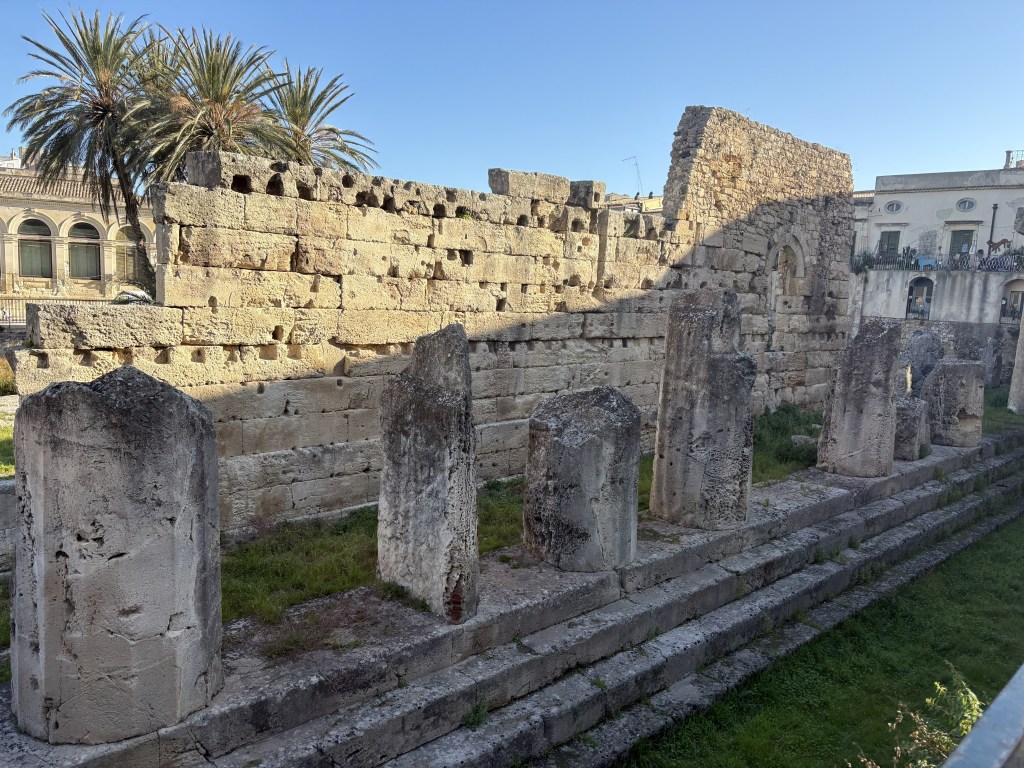
With Sicily’s many conquerors in the past, I think there’s some suspicion of outsiders.
Which is a very different experience than I’ve had meeting Italians via a language learning app, where people are friendly and welcoming. Yet the people on those apps also can see from my profile that I teach English to adults and I live in the well-known state of Florida, so I think there’s some innate respect or curiosity.
That all said, I experienced loneliness from time to time during my trip (long story best saved for another post). Yet my time spent with my B&B host one of my last nights of my trip opened my eyes. We bonded over a chat with her nonexistent English, my basic Italian, and Google translate and then shared a homecooked dinner with a local friend who played solitaire on his phone most of the time.
My conclusion from that night: Once you find an “in” with someone local, you’re “in.” And that person can introduce you to their friends and contacts, and you continue to meet others that way.
I later confirmed with some Italian friends that this pattern is typical in Italy…and even moreso in Sicily, perhaps.
If you’re a young person looking for fun in Sicily, don’t worry. You’ll find your people! Heck, these days, you’ll probably find them on a dating app and then meet in person.
But if you’re considering a deeper connection or friendship, I think what I wrote here is accurate. If I were to live in Sicily and become an English teacher there, I’d probably find another set of rules, perhaps more open friendliness.
Is Sicily safe for tourists or solo travelers?
Yes to both with the usual caveats.
Anywhere in Italy–or anywhere in the world–protect your valubles. Have a hidden wallet or purse where you can keep your money and passport. Don’t flash your money around haphazardly.
Watch for pickpockets.
I carried a small purse and since it was cooler most days, I was able to keep the purse and strap under my jacket.
I felt fine carrying my phone in my hands to take pictures.
The only time I felt something weird was in Catania on a quiet Sunday morning. A guy who was drunk or homeless came up to me and said something I didn’t understand. I thought he was going to try and start trouble, so I kept walking.
As a solo female traveler driving around Sicily by myself (go girl), I felt safe as well. Well, maybe I felt nervous about driving but that’s a different type of safety.
I never felt unsafe, but I also wasn’t getting slap drunk in the middle of the street. I stayed aware of my surroundings.
I did feel “noticed” as I wrote in my previous answer, especially by the groups of people (usually older men) gathered in Noto in the evening to chat. Not in a creepy way, just in the way of, “We know there’s an outsider around.”
If you’re concerned about safety, check with your B&B/hotel host or staff with additional questions. Like anywhere in the world, there may be specific areas to avoid or proceed with caution.
Yet overall, I say go for it. Don’t let personal safety concerns hold you back, so long as you keep your common sense.
What should I know about Sicilian etiquette and daily life?
My list here is completely based on personal experience. Some of these also apply to Italy travel in general:
—Say “buongiorno” or some basic greetings when entering a restaurant or small store. This is more important than in the U.S. Most Italians will use a somewhat formal greeting instead of just “ciao,” although this may differ online or with a younger population.
—Most places in Sicily take card payments but carry some Euros with you. If you’re in a small Sicilian town or buying from a farmers market vendor, that cash may come in handy.
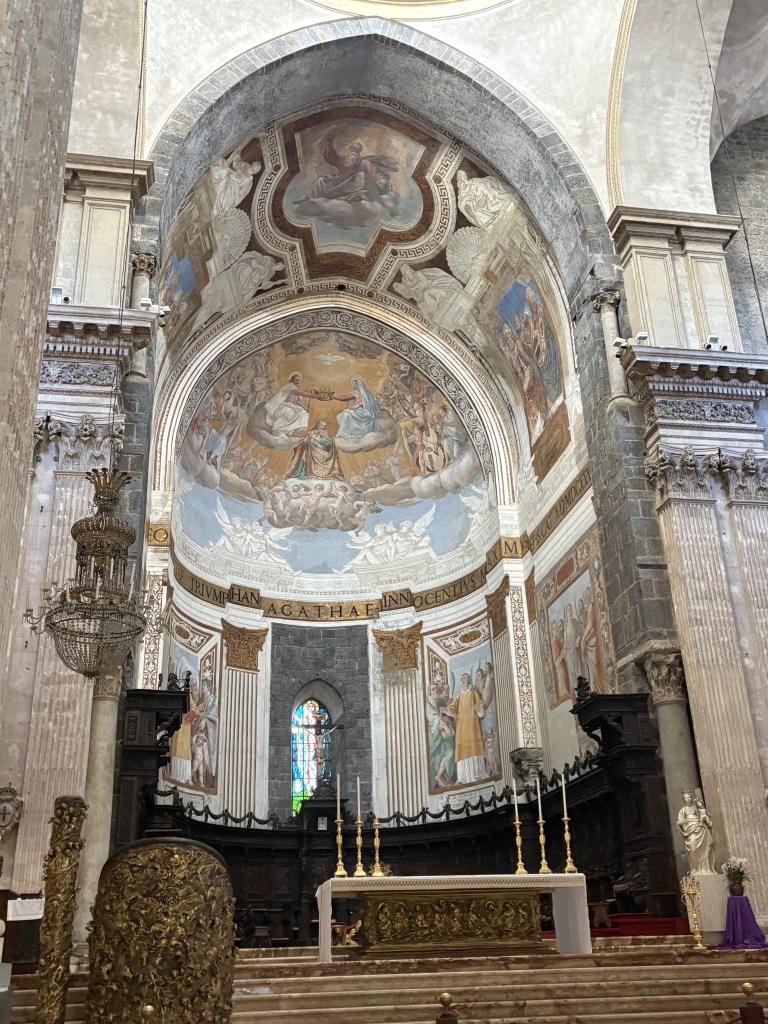
–-Dress respectfully when entering churches. Cover your shoulders and knees (regular shorts may be OK but short-shorts are a no-no). This is why it’s good to always have a jacket with you.
—Breakfast is usually a small meal, perhaps with a cornetto (croissant), espresso, and maybe yogurt or a granita in the summer. Lunch and dinner are bigger, and dinner is usually eaten late, as late as 9 p.m.
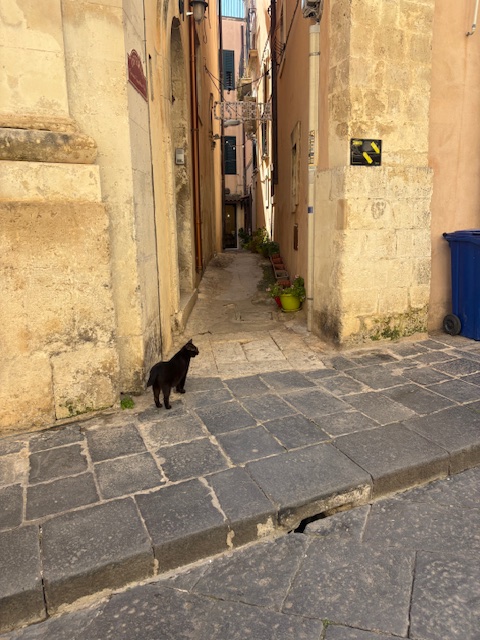
—Be kind to the many stray cats you’ll see around. OK, no one told me this custom, I’m just advising this. 🙂
—Don’t make a big deal about the Mafia originating in Sicily. Yes, you’ll find magnets and lighters featuring Don Corleone and you can take a “Godfather” tour. Yet don’t be that loud American yammering on to locals about “the Mafia.” It’s considered disrespectful.
—Expect many shops to take an afternoon break. Not sure how much this applies in Catania or Palermo, but you’ll definitely find these afternoon breaks in smaller towns. They could be from 1 pm to 4 pm (13:00 to 16:00 in European time) or 2 pm to 5 pm (14:00 to 17:00). Then, the places will reopen for Sicily’s more active evenings.
—Expect to find inconsistent information online. There was one souvenir shop in Noto (the place with the pistachio liqueur, hmmmm) that had its hours listed online. Yet the three times I tried to visit it again within those hours, it was never open. Then one evening, I magically saw its lights on–but I had already bought what I needed. You’ll find many other examples of this. Sicily just won’t be as consistent as Lombardy (where Milan is) or heck, Germany or Austria. It’s part of the go-with-the-flow charm.
What surprised you the most about Sicily?
Aside from some personal points I don’t want to discuss here?! 😉
The traditional life in the smaller towns.
It felt like another era. Yet I’m also from the U.S. suburban East Coast. Perhaps if I was from a small farming town, I’d identify with it more.
Yet seeing the traditional life and strong family ties there put some experiences I had in perspective.
The closed nature toward outsiders, unless you make a personal connection, also surprised me.
It’s not a criticism. It just is what it is, just like life and culture in the U.S. are what they are.
Yet there’s also so much beauty and nature and oh, the food.
So, there you have it!
If you need more Sicily advice, please reach out and take advantage of our new Italy travel consultation service.
Buon viaggio!