(A quick note: If you’re learning English and want to see a video about our trip to Sicily, please click here! It’ll be a great way to practice English and discover more about Sicily.)
Ahhhhh…..la bella Sicilia/beautiful Sicily. Our interest in this southern Italian island is no secret, if you judge by the number of Sicily stories we’ve written over the past year or so.
Yet we (OK, well, just me, but I like to use “we” to avoid overusing “I”) finally had the chance to travel there in late February.
The 10-day trip included a first night and last night stay in Catania because of its proximity to the airport, along with renting a car and staying in Noto (the town that appears in a season 2 episode of “White Lotus”) the remainder of the trip.
If you’re thinking of visiting Sicily, you may wonder if it’s worth it to visit off-season. This blog even has an article on that exact topic.
Now that we have the lived experience, we can confirm that yes, there are some real benefits. Here’s why:
—The weather is a lot nicer compared to the scorching summer. Locals reported summer temps that reach as high as 45 Celsius or about 113 Fahrenheit. Whew! Another local said the summer weather there is best for lizards, not humans.
During our February visit, morning temps were around 45 to 50 Fahrenheit and reached 65 to 70 by the afternoon….cold in the morning but great as the day went on. You’ll have occasional rainy or cloudy days, and temps may be a little colder at the start of winter.
—You don’t have the crowds. Sicily has become a hot tourist destination, and I wanted to avoid the throngs of people for this visit. Each town I visited had a few tourists but that’s it. Evening walks in downtown Noto had very few, if any, tourists beyond myself most nights.
—Prices are better but options are more limited. Many B&Bs (what the small hotels in Italy are often called) may be closed during the off-season. However, the ones that are available often are affordable.
The Itinerary: A Journey Through Southeastern Sicily Off-Season
If you’re thinking about a trip to Sicily off-season–generally, from November through March or April–here’s a recap of the itinerary I followed, along with some helpful tips:
–Catania
–Noto
–Marzamemi/Vendicari
–Modica
–Ortygia/Siracusa
–Scicli
Sadly, I didn’t make it to Mount Etna this time but would suggest you try to get there, especially with a good guide. Also, since my trip focused on southeastern Sicily, I didn’t make it the well-known town of Taormina, located north of Catania.
You don’t need to follow this itinerary exactly. If you have a good “basecamp” city like Noto (see our tips section), you can visit each town when you want.
We’ve got a brief summary below of each town and will follow up here on Italy Dreams with a full article on each location.
Andiamo! From Catania to Marzamemi to Scicli and More
Here’s some basic info on each town.

Catania
Catania is home to about 300,000 residents, and they all seemed to be out and about on the two Saturdays I was there. Young people in particular were on the busy central streets of Catania on both Saturday evenings, ready to eat, drink, and meet.
Some Catania highlights included the morning fish market that happens until around 1 p.m. every day but Sunday along with a local flea market in the fish market area on Sunday morning (a very cool way to see Sicilian antiques and other knick-knacks). Of course, there’s the famous Saint Agatha Cathedral, too.
For both nights, I stayed at Opera Boutique, a four-room B&B that was just a block or two away from the main downtown action in Catania. Thumbs up to our Opera Boutique experience.
Noto
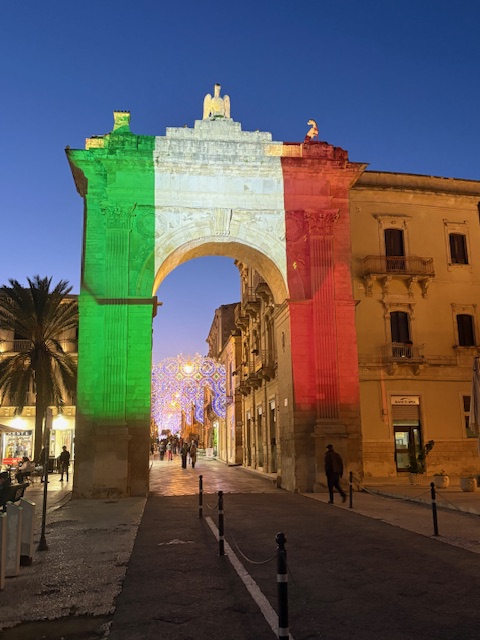
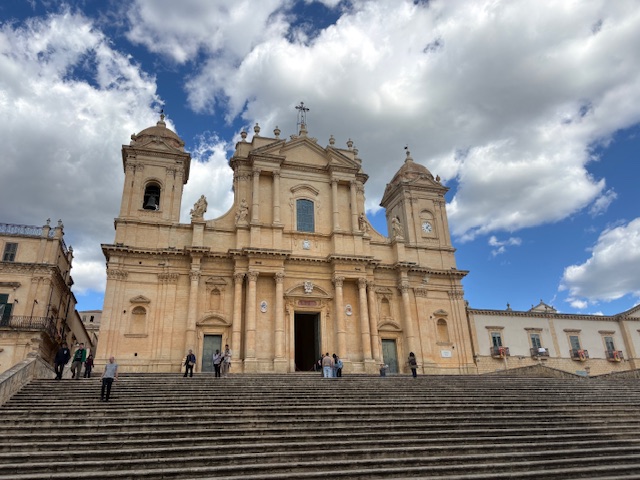
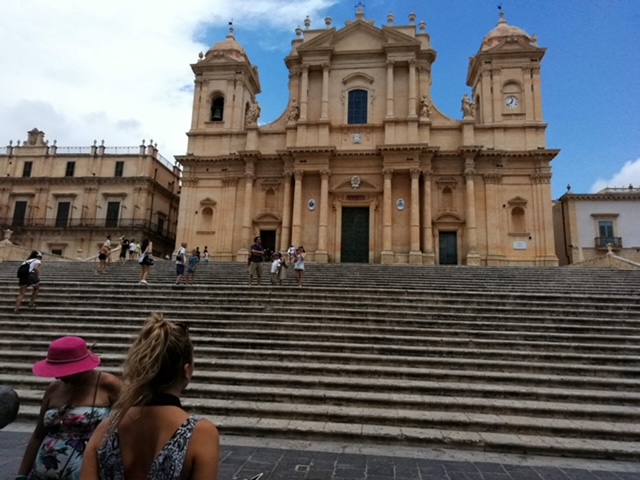
The Baroque architecture of Noto makes it a popular place for visitors to Southeastern Sicily. It was a safe small town and an ideal location. You’ve got Saint Nicholas Cathedral along with several other churches (loved the view from the bell tower at Church of San Carlo, located close to Saint Nicholas Cathedral).
You’ll find several souvenir shops and restaurants, some of which were closed for off-season. Because Noto is popular, you may also find some of the souvenirs to be overpriced.
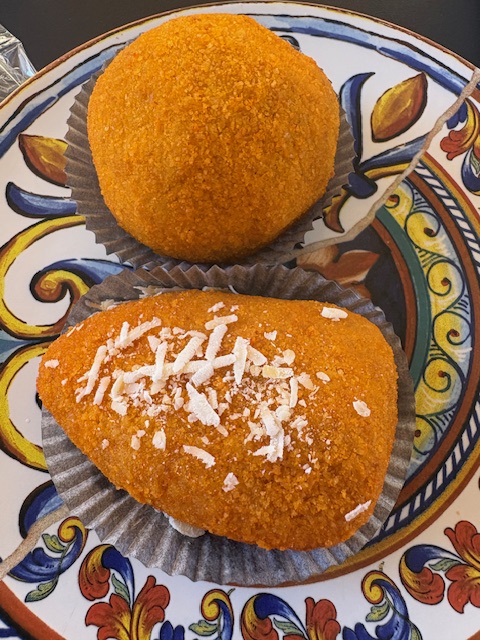
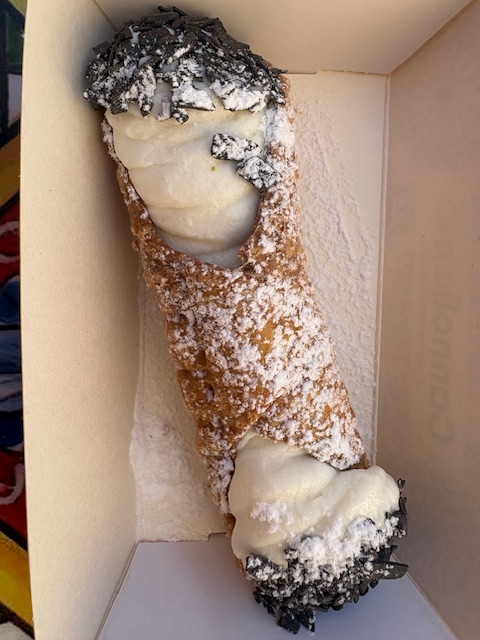
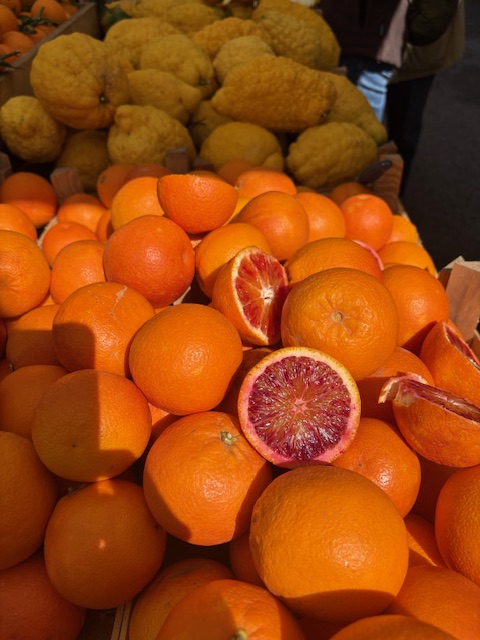
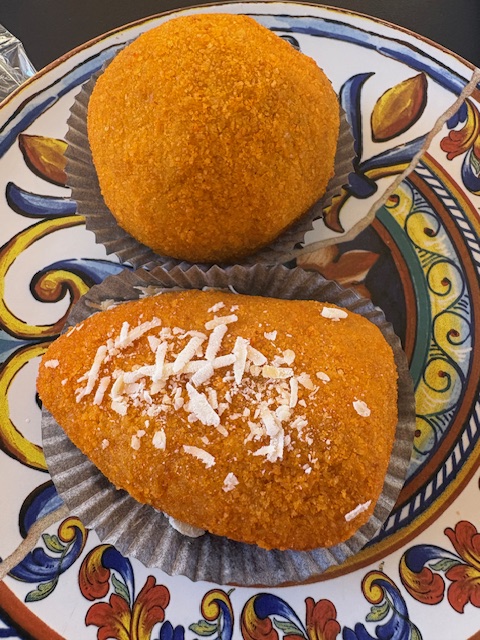
Still, it was a good choice for a week-long stay and I got to try several famous Sicilian foods in Noto, including gelato, cannoli, arancini (rice balls), and cheese and bread purchased at the Sunday/Wednesday mercatino (local market).
Marzamemi/Vendicari Nature Reserve
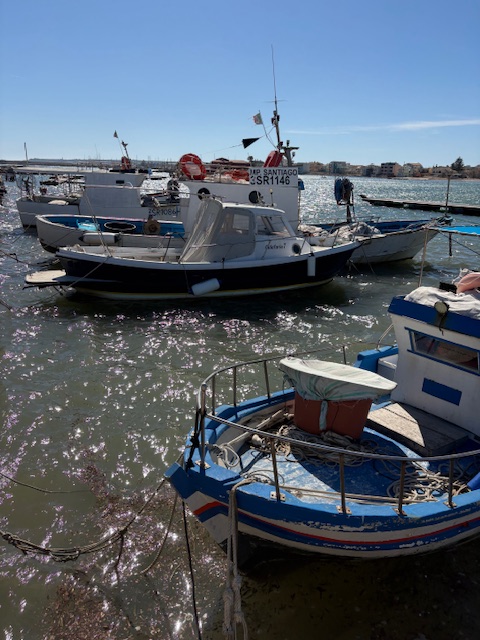
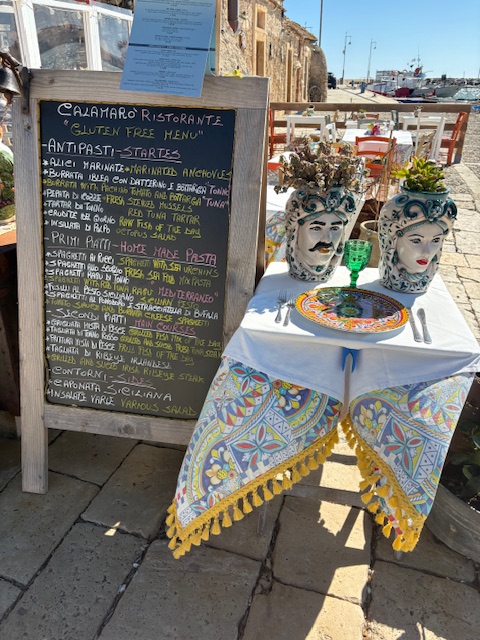
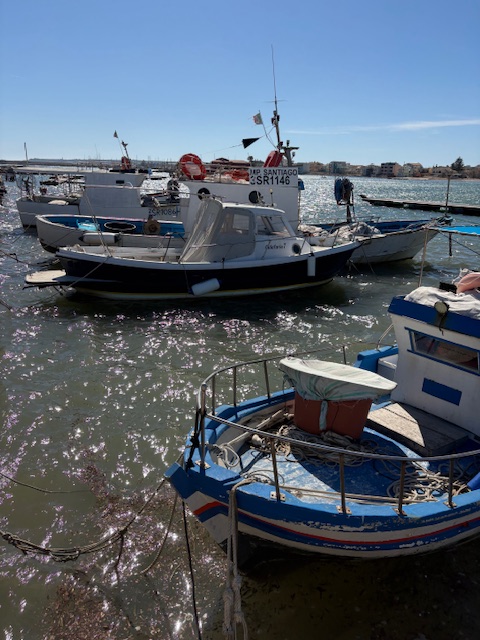
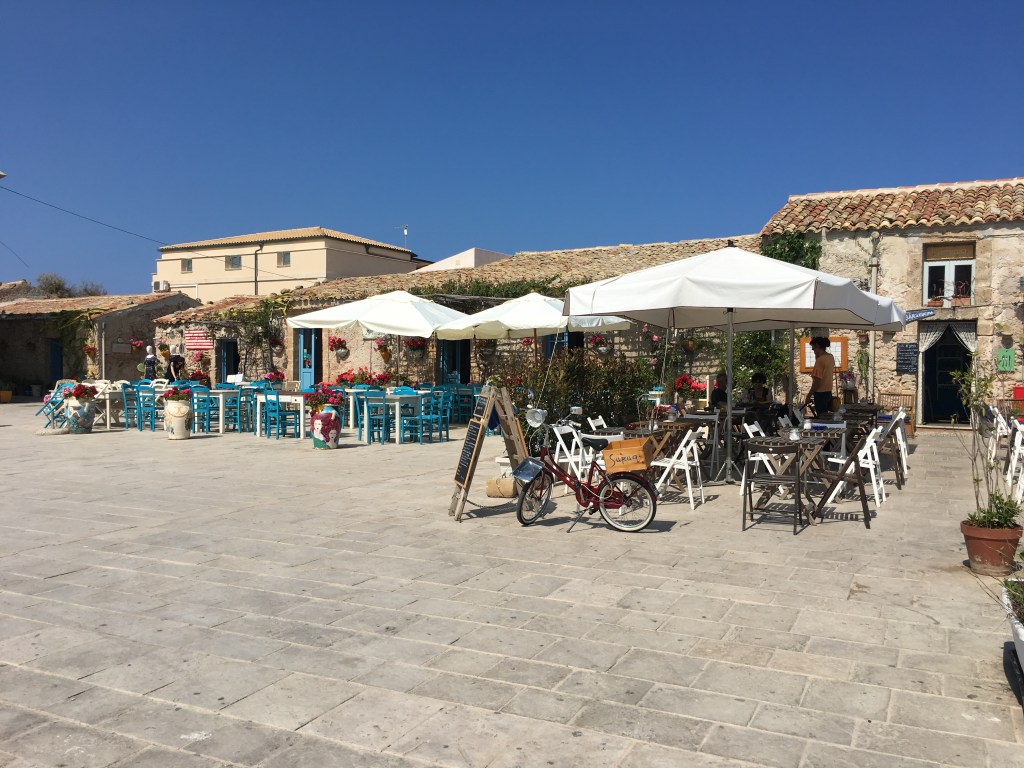
The fishing village of Marzamemi, a former tuna fishing and processing village, reminded me of Cortez, Florida, right here in our Southwest Florida area. Although the looks of the Sicilian village versus the Floridian village are completely different, both serve as a reminder of the commerical fishing business that influence each respective area.
Marzamemi maintains its historical buildings, with much of the space now serving as a home for restaurants and gift shops. There was a pleasant walk along the water with plenty of colorful boats. Sicily got hit with a cyclone in January 2026 (causing around $1 billion in damage), and it appeared that some of the area near the water still was undergoing repairs.
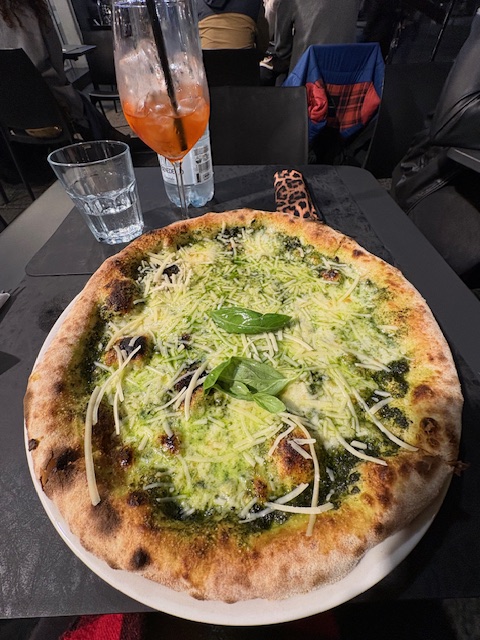
Still, that didn’t get in the way of taking in the lovely view or enjoying a pasta dish with Sicilian pesto, sun-dried tomatoes, raisins, almonds, and lemon peel. It was probably the best pasta dish of the whole trip.
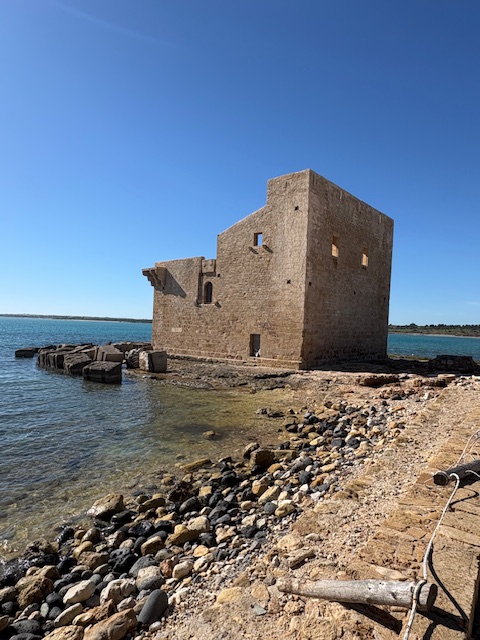
The day near Marzamemi included some driving around the San Lorenzo Beach area and a visit to Vendicari Nature Reserve (in Italian: Riserva Naturale Orientata Oasi Funistica di Vendicari). For some reason, the reserve also gave me Florida vibes, with a friendly man who took my admission fee and told me in Italian about the stray cats at the reserve he helps to care for. Then, there were several choices of walking trails, many along the water. Don’t miss the birdwatching (including flamingoes!) and the old tuna processing plant.
Modica
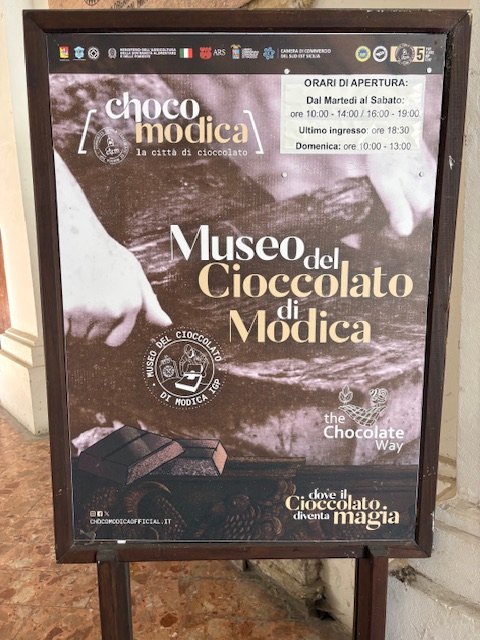
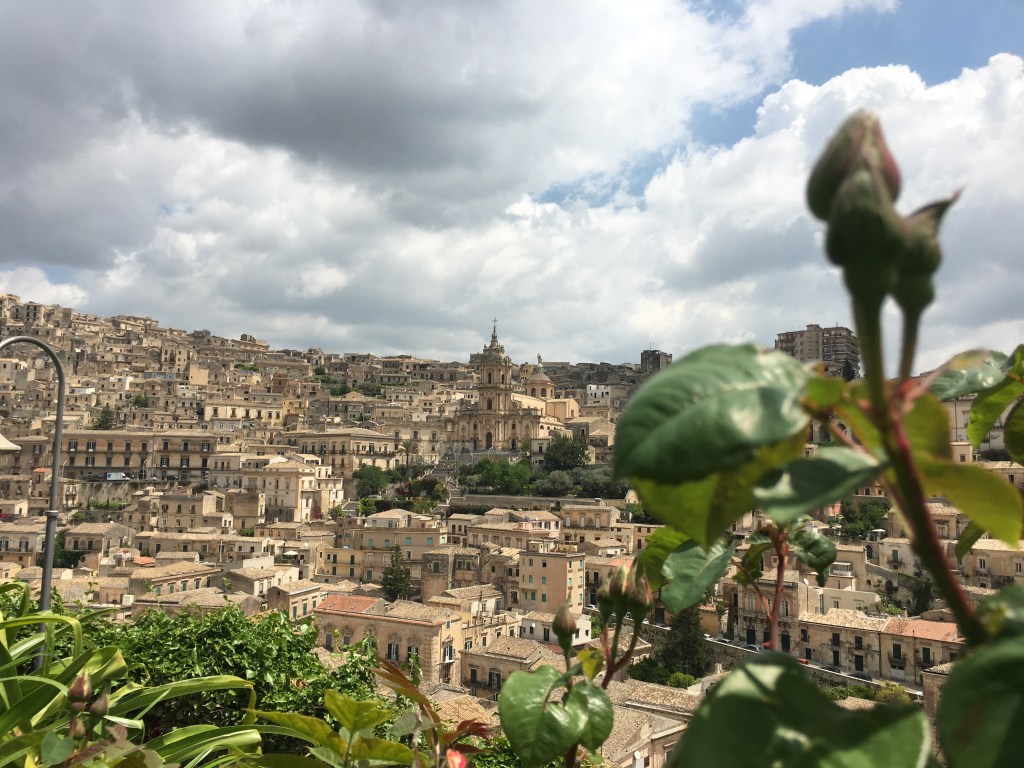
When you think of Modica, think chocolate. The town still makes chocolate in the same way the Spanish and Aztecs made it, meaning the only thing that’s added is sugar–not cocoa butter. They flavor it with cinnamon, citrus, and other items.
Modica is a hilly town, so you’ll find some attractions on both the upper and lower “levels” of the town.
Many visitors to Modica also enjoy the nearby town of Ragusa Ibla, although I didn’t make it there.
Ortigia
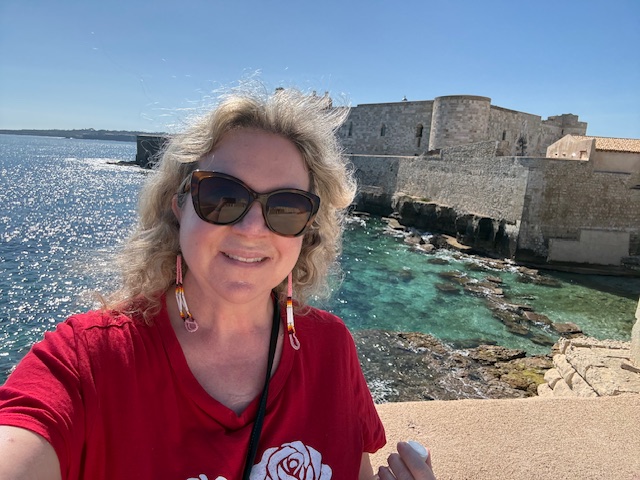
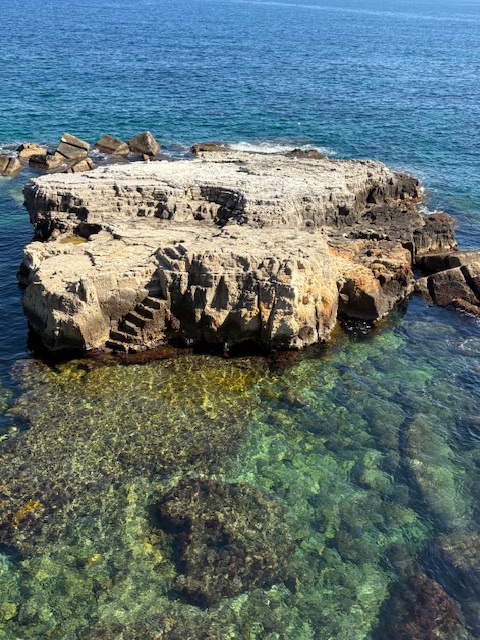
Ortigia, an island that juts off of Siracusa/Syracuse, was a highlight of the week. It’s a popular destination with beautiful sea views, a castle (Castle Moniace) from the 1200s, coastal restaurants, a daily outdoors market (definitely try some local produce–loved the strawberries and bought some local oregano), and plenty of cats that made for good photography.
I could see how Ortigia would also be a good place to stay for a few days, although it would take a little longer to drive outside of the island to reach other day-trip destinations compared to Noto.
Scicli
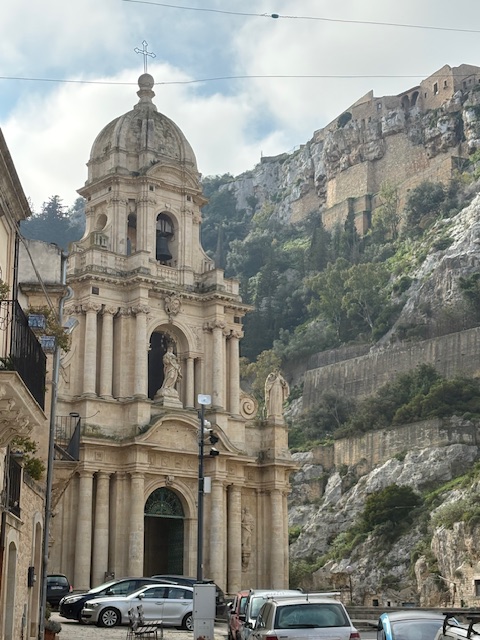
Pronounced sheek-li, Scicli was probably my other favorite destination in addition to Ortigia. Tucked in a rocky, hilly area (it reminded me of West Virginia), it’s a town made famous by the famous Italian show “Inspector Montalbano,” which named the town Vigata in the show. You can tour the town hall that’s featured prominently in “Inspector Montalbano.”
The real highlight of Scicli was a visit to A Rutta ri Ron Carmelu, tucked inside a housing neighborhood among the hills where Mr. Carmelo–a charming, inventive local man who speaks no English–gives tours that show how his grandparents lived in a cave with their six children. Even with no English, there are enough visuals that you can still understand most of what he says.
He then showed off dozens of inventions and creations that he’s made, all of which are for sale. Some are as simple as soap or home decorations; others are unknown contraptions that Mr. Carmelo will reveal to be a child’s potty or something else offbeat.
A small black ceramic vase made by Mr. Carmelo now sits in our dining room.
Expect some hairpin turns as you drive into or as you leave Scicli. Go slow!
6 Tips for Your Visit to Sicily Off-Season
Although my visit concentrated on southeastern Sicily, some of the tips below may help no matter where you visit on the island.
–-Be prepared for the car rental process. You’re required to have an international driver’s permit (we got one easily from a local AAA office for about $20). You’ll also be asked in the booking process if you want insurance. Make sure to say “Si” to that as the insurance from your home country likely won’t cover accidents or damage.
—Be prepared for driving around Sicily. So, how was it driving in Sicily? The autostrade (one of the main highways) was good and had some pretty views of the farm land. Road construction and blockages came up much more quickly than in the U.S.–God bless American roads and their big signs–but other than that, zero issues. Still, it’s a good idea to learn some road signs/driving terms in Italian before your visit.
The GPS on my phone was overall helpful during the Sicily journey although some of the rural roads were bumpy and felt a little nerve-wracking in the rental car. One set of directions took me on a dirt road with long grass where I saw a man with a machete–to be clear, not a serial killer, but likely a farmer used to cutting his way around the weeds.
That said, I intentionally didn’t drive in city areas like Catania (yikes!) and felt more nervous driving along narrow streets in Noto and the other day-trip towns. In fact….the good ol’ Kia Sportage rental got some scrapes on one side when maneuvering through a narrow road in Modica. That’s what that insurance is for, although note that you may have to pay for the damage upfront and then apply to get reimbursed.
Bottom line: You really do need a car to get around Sicily beyond the bigger cities unless you have a guide handling that for you. Trains are present but some routes aren’t used as much as in northern or central Italy. Take a deep breath and drive smart. Or, have a trusted travel companion handle the driving if you’re too anxious to do it.
—Consider staying in Noto as your “basecamp” town. Noto was a great jumping-off point to reach destinations further south in Sicily. I enjoyed a week-long stay at Cuore Barocco, a studio apartment that was just a 10-minute walk or so from the downtown area but had a nearby small parking lot so I didn’t have to fit the Kia into tight on-street parking every day. Plus, Cuore Barocco had a balcony that made it great for watching daily Sicilian life.
—Brush up on basic Italian. If your only Italian consists of “ciao” and “gelato,”you’ll probably survive. Yet if you choose to travel off-season, there are fewer tourists, which means there are probably fewer people around who speak English or languages other than Italian who can help you. Most people at souvenir shops and restaurants would speak English to me, but there were some areas (supermarkets, smaller towns like Scicli) where there wasn’t that English back-up. It’s always useful to know some basic phrases in Italian, and the locals will appreciate it.
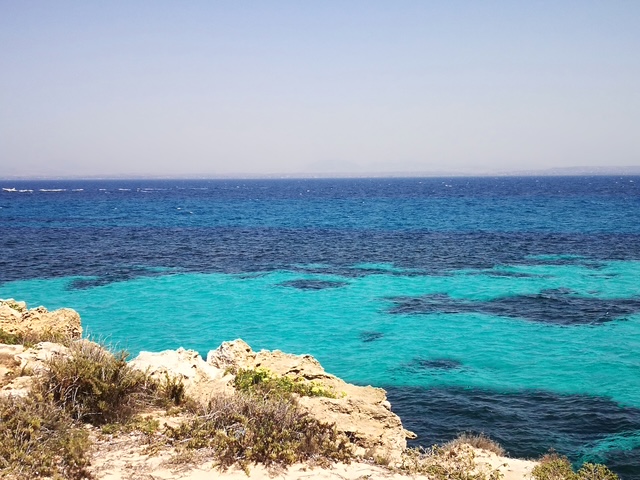
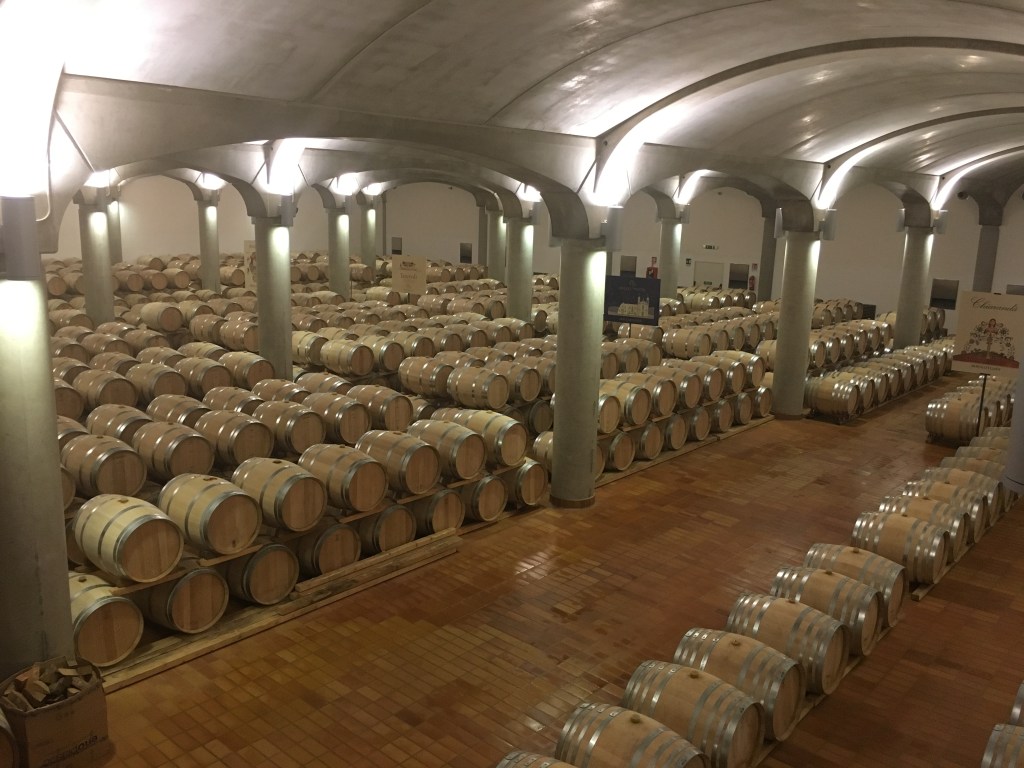
—Don’t set your heart on agricultural destinations or beaches during off-season. Unless I missed something, most vineyards and farms seemed to be closed for off-season–perhaps not completely closed, just closed to the public. I reached out to two farms to see if they were doing tours and heard back from one that told me no. Some places might open but for small or large groups. As for beaches, yes, you can visit them, but you may find differing quality off-season. My afternoon in Ortigia was warm enough that some people got comfortable on a stretch of sand and rocks near the water to sunbathe, with hardly anyone in the water. San Lorenzo Beach near Marzamemi was pretty but didn’t have anyone hanging out. Lido di Noto (Noto Beach) looked a bit worn-down on the cloudy morning I checked it out. However, it likely gets prettier as locals get it ready for season.
—Don’t be surprised if hours and schedules are different than what you find online. On our first day in Noto, there was a tourist shop where I bought a great pistachio cream liquor (yeah, that one never made it home) and some Sicilian cookies. I wanted to return toward the end of my week to look for olive oil and a few other goodies. I looked up the hours online but every time I went by the shop after my initial visit, it was closed. Just know that hours for different places may be unpredictable, and probably even moreso than in-season. Some places even favor evening hours more after an afternoon break.
Let us know what other questions you have about Sicily travel in the comments. We’ll be happy to help if we can!
Buon viaggio!


 Italy Dreams