Tag: Italy travel

  • 6 Common Mistakes to Avoid When Planning Your Trip to Italy

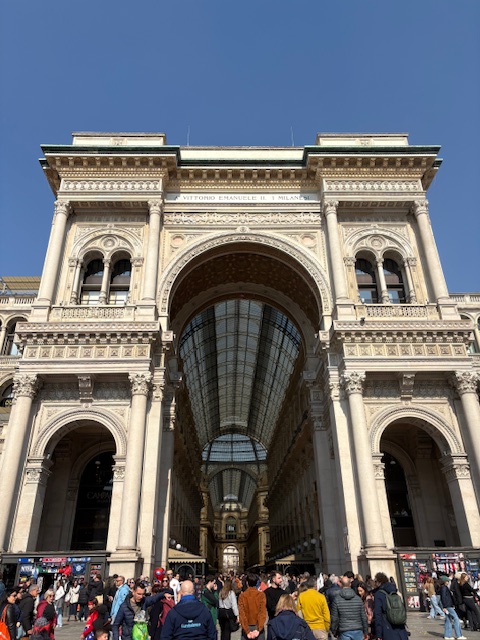
    Visitors outside of Milan’s Galleria Vittorio Emanuele II, a shopping area.

    There are certain mistakes that visitors often make when they plan a trip to Italy, especially as first-timers.

    If you want to hop on larger tour in Italy and take a, “If it’s Tuesday, it must be Venice,” approach, kudos to you. There’s nothing wrong with that, you’ll probably have a great time.

    If you’d rather arrange your visit around Italy independently—meaning, you and your travel companions decide where to go and what to do–this is the article you need.

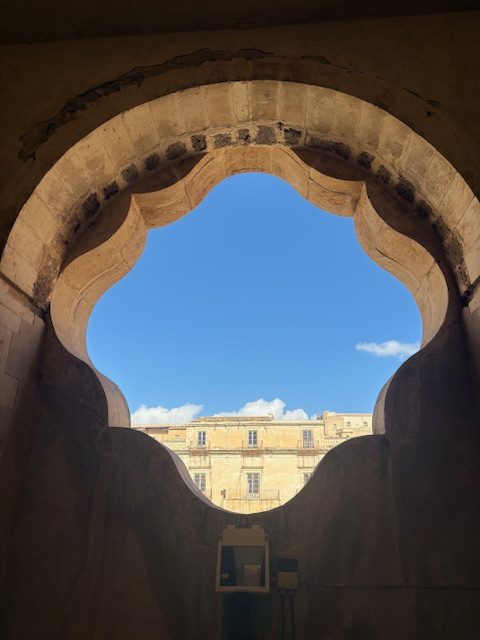
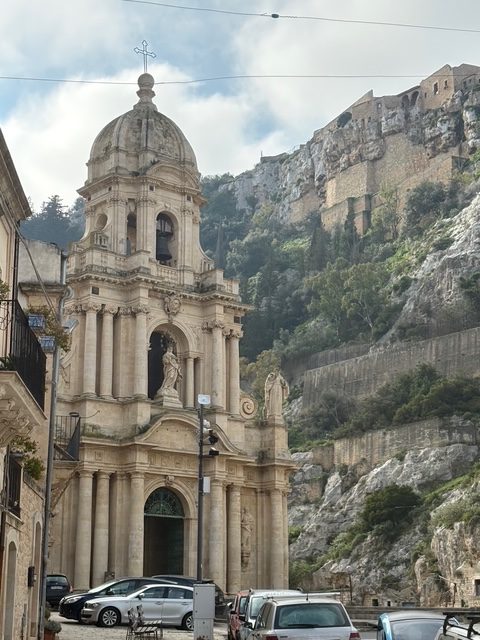
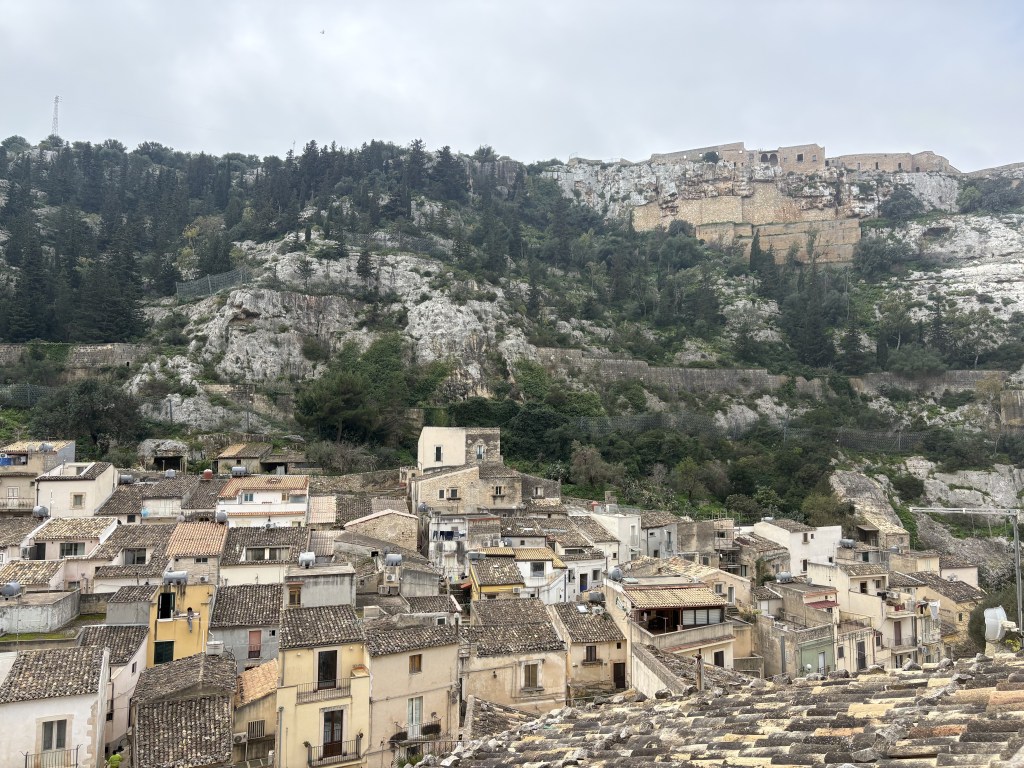
    Our visit to Scicli (sheek-LEE), Sicily, Italy, took us off the beaten path.

    Below, we share six travel mistakes to avoid when planning a trip to Italy.

    If you start to feel a little lost about your current or upcoming Italy plans as you read on, don’t worry. You can always contact us directly for Italy travel planning consultation. That’s a fancy way of saying that we’ll eye your itinerary and give feedback to help you plan a wonderful trip.

    See our link here for more details and to book an appointment.

    Andiamo/let’s go!

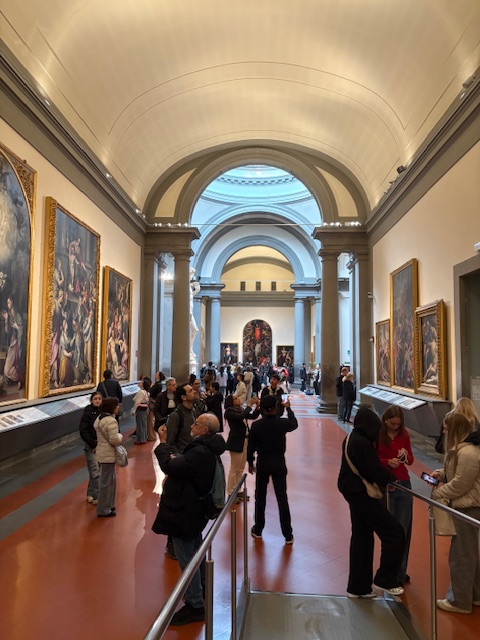
    Visitors at the Galleria dell’Accademia in Florence, Italy, home to Michelangelo’s David.

    1. DON’T plan to reach all of Italy’s major cities in just a week or two

    Cramming all of Italy’s highlights into a week or two is just an exercise in exhaustion. In fact, if you’re from the U.S. and you currently have an Italy itinerary, take a look at it right now. Next, cut it in half or by a third.

    Here’s why: You’ll get a much richer experience if you can slow down and spend more time in the places you plan to visit.

    Can you hit the high spots of Rome in 3 days followed by Florence for 2 to 3 days, etc., and continue that way until you check them all off your list?

    Sure—but you’ll spend a lot of time running around to get places, hopping on trains and feeling like your brain is generally spinning as you try to adjust to a new language/time/culture, etc.

    Let’s face it, we Americans like to keep things moving. Your Italy trip should be a time to slow down and really absorb another culture and pace of life.

    Try to choose the one—or if needed, two—destinations that are reasonably close and that you really want to see. Plan to spend your trip just in those two places. Less hassle, more time for relaxing and soaking in the Italian culture.

    Should you rent a car in Italy? See what our article says.

    2. DON’T assume you should rent a car while you’re there

    This is especially true if your trip focuses on the big cities and coastal areas. Michael Kovnick, founder and CEO of Culture Discovery Vacations, sums it up while describing a typical bucket-list trip to the Amalfi Coast, Rome, Florence, and Venice:

    “Aside from how nervous Americans get driving in Italy, people end up parking in all four places. On the Amalfi Coast, parking is extremely difficult, and it’s easier to get around by boat. In Rome, they are likely to drive through multiple ZTL areas (restricted traffic areas in historic city centers) and have a stack of fines waiting when they get home – plus, it’s easier to get around by metro,” Kovnick notes. “In Florence, they will end up parking outside of the city and walking everywhere. And Venice? Well, no cars in Venice, so they park outside and walk everywhere.”

    Instead, use high-speed rail to travel to or from these bigger cities. During our trip to Florence and Milan in 2025, we mostly used our own two feet and a few Ubers/taxis to get around. For Florence to Milan, we hopped on a train and then did the same thing for a day trip for Milan to Lake Como. The train was once again the best option to go from Milan to one of the city’s airports upon the return home.

    The train was easy to use and the only issue was a very crowded train returning from Lake Como, thanks to everyone else taking a day trip there.

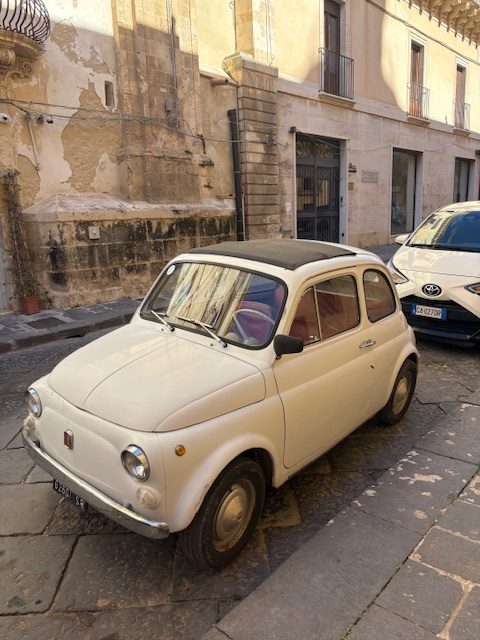
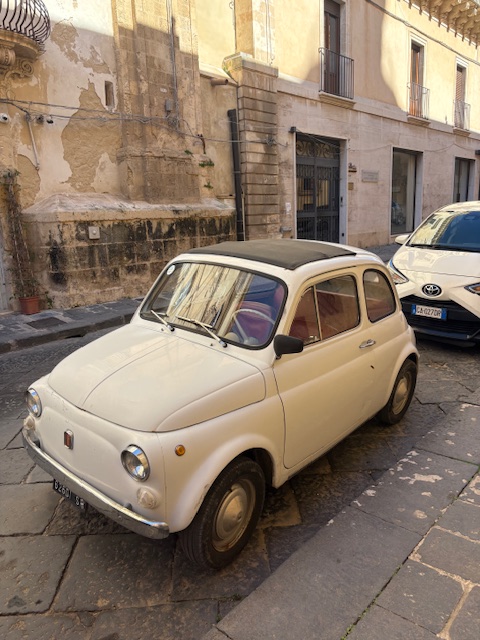
    Having a car did make it easy to get to cities like Modica in southeastern Sicily.

    That said, there may be some destinations where renting a car would work for you, if you feel up to driving. For our trip to southeastern Sicily this year (2026), we rented a car. It was the right decision as a local recommended it, and public transportation is not as common there.

    There were some nerve-wracking moments while driving on more narrow streets (the highway was fine and similar enough to the U.S.). Plus, there was that scrape on the side of a car we got along a narrow street. Oops! That’s where the insurance policy we purchased came in handy.

    You can read all about our driving experience and find more tips here.

    Bottom line: Generally speaking, you won’t need a car if you’re staying in or traveling to or from bigger cities. If you’ll be somewhere more rural, do a little research before deciding yes or no on car rental.

    If your budget allows, you could hire a driver or use tour guides who offer day tours and will take you around.

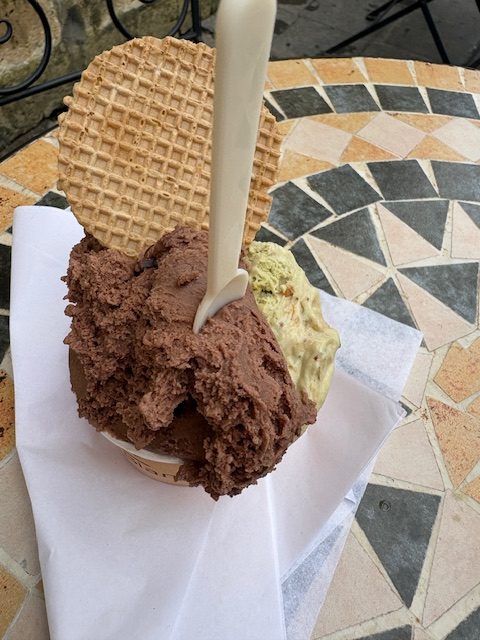
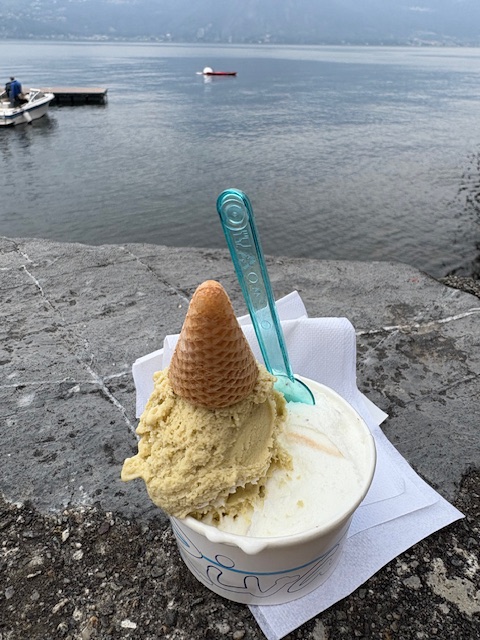
    Remember, gelato is calorie-free in Italy. You heard it here first on our blog!

    3. DON’T rely on blogs (or social media posts) as your only information source

    Logistics change quickly in Italy. The information you read on travel blogs may be outdated.

    “Major cities keep changing rules, ZTL zones change all the time, and scheduled events are rarely reliable for future dates,” Kovnick notes.

    One example of how quickly things change: Kovnick has to pick up passengers outside of Rome’s Fuicimino Airport regularly and finds that arrival instructions change all of the time.

    Of course, we want you to use blogs like ours to plan your Italy trip. 😊 Yet a blog may be best to give you a bigger picture sense of where you want to go and what you want to do.

    When it comes time to buy tickets and truly make your plans, check directly with business websites or social media for more information.

    Even then, expect a little deviation from what you might see or read. It’s Italy, after all!

    Although Sicily is a hot tourist destination, our visit to smaller towns like Scicli in March made us feel like we were in places lesser known to those outside of Italy.

    4. DON’T stick just to tourist spots

    This is a big no-no we’ve seen often, and we want more people to consider this trap when planning their Italy trip. Yes, Rome, the Cinque Terre, the Amalfi Coast, etc., are amazing…but if you’re traveling in-season, you’re going to share that amazing view with quite literally thousands of other people.

    In summer 2025, we wrote about a group of local cyclists going through parts of southern Italy that had practically zero tourists. Their spring 2026 trip through parts of northeast Italy was a similar experience with sparse crowds.

    A few quick examples of alternatives to consider:

    –If you like Tuscany’s rolling hills, consider Umbria.

    –If you like Tuscany and Umbria, look into Le Marche.

    –If you like nature and rural or even coastal views, visit Abruzzo (our Italian friends mention Abruzzo A LOT).

    –If you want to visit a beloved city that gets less attention, go to Torino/Turin in Piedmont.

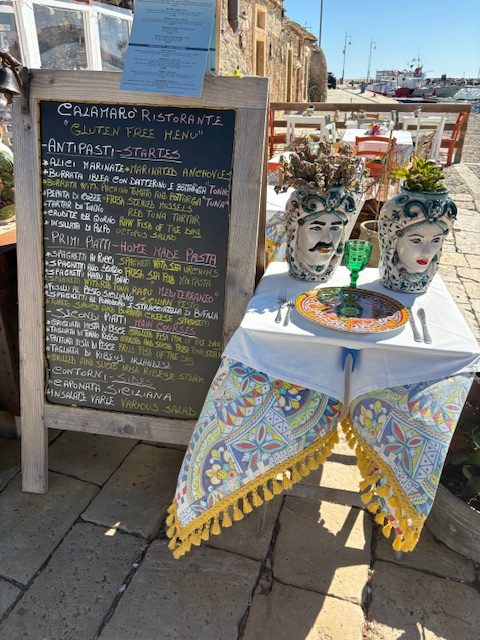
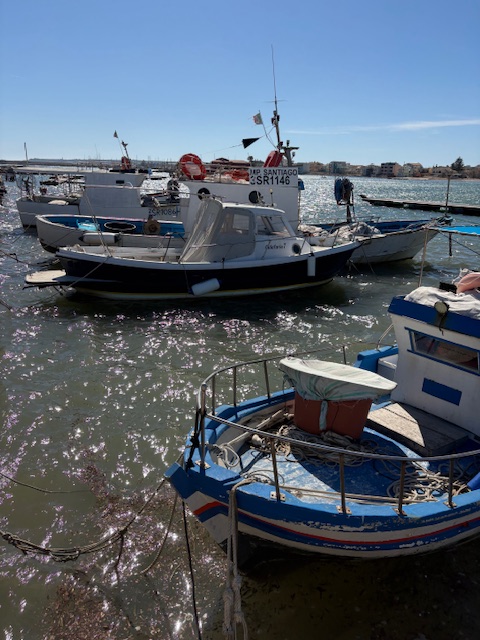
    Sicily’s Marzamemi was pretty even in February, with many of the stores closed for off-season. If beach time is less important to you, then an off-season trip to Italy could be a great option.

    5. DON’T stick only to tourist season

    If you can only make a trip to Italy when everyone else visits, then fine. You just have to put up with the crowds.

    If you have any scheduling flexibility, consider visiting when crowds die down and you have a better chance of truly connecting with your destinations.

    July and August have the hottest weather and biggest crowds, according to European travel guru Rick Steves. This is true of Italy but probably all of Europe.

    May and June or September and October are potentially good times to visit as the crowds are down (maybe just slightly in some places) and the weather will be more pleasant. Depending on where you go, it’ll probably still err on the side of being hot.

    Yet don’t neglect November to April! Would you like Christmas in Italy? Buon Natale e si! Those European Christmas markets you see on the Hallmark Channel sure would look cute in person.

    Christmas aside, if you’re willing to put up with some cooler weather and a few potential closures due to off-season, November to April can still be a terrific time to visit Italy.

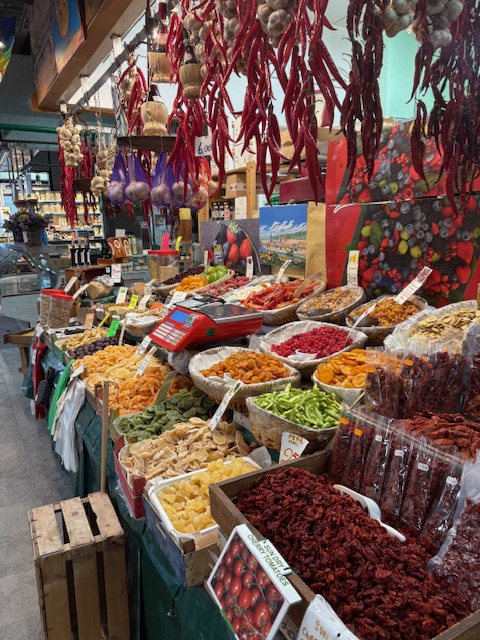
    An indoor market view in Florence, March 2025.

    Both our 2025 and 2026 trips to Italy were in February and March. The cold was a relief from the Florida heat, and traveling there was definitely cheaper compared to peak season.

    There were still a reasonable amount of tourists, especially during the March visit to Florence, Milan, and Lake Como. Yet it wasn’t the craziness you find in the summer.

    In southeastern Sicily (FYI, not Taormina but areas south of there), we had places (almost) to ourselves, with a smattering of tourists mostly not from the U.S. There were several businesses closed for off-season that would have been nice to see, but we 100% got an authentic feel for the region that may have been harder to achieve in full-swing tourist season.

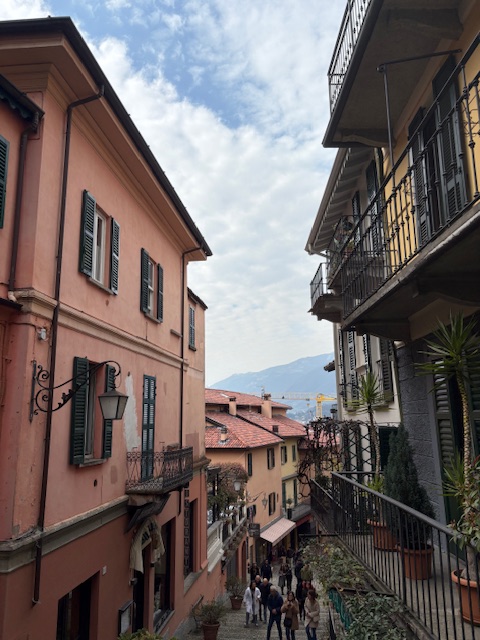
    Visitors in Bellagio, one of the towns on Lake Como.

    6. DON’T ignore basic research on local customs and the language

    Generally speaking, Italians are a welcoming bunch.

    Yet the culture is surprisingly more nuanced than we expected from movies and pop culture.

    Depending on where you go, the culture might be a lot more traditional than you expected (we’re looking at you, southeastern Sicily).

    In other places, you’ll almost think you’re in New York (hello, Milano).

    And to say all of the customs, cultures, and politeness in Italy are the same in all parts of the country would be like saying people from New York City have the same customs, cultures, and politeness as people from rural Alabama.

    Do a little research on local customs—both local Italian customs and customs specific to the region you’ll visit. Rick Steves is always our top choice for European knowledge, but there are etiquette experts who can help, like Nick Leighton, co-host of the podcast, “Were You Raised by Wolves?”

    “Knowing a little bit about the local customs can really help make things easier, especially for first-timers. It gives you more confidence and it also gets you significantly better customer service, meals, and experiences,” Leighton says.

    Two examples he shares: “If you walk into a coffee bar and say ‘Ciao,’ that’s way too informal for many Italians. It’s truly better to lead with a ‘Buongiorno’ with strangers instead. The greeting you use can really set the whole tone for the entire encounter, for better or for worse,” Leighton says.

    You don’t need to do a crash course in Italian, but learning some basic greetings and words can definitely make a difference. We’ve enjoyed online videos from Italy Made Easy and Italian Teacher Valentina to help.

    Another example from Leighton relates to planning meals. The message: Plan to eat later than you might eat at home.

    “I love a good 9 p.m. reservation, which gives me plenty of time to enjoy aperitivo before dinner. If you book a 6 p.m. reservation, chances are it’s catering to tourists and it also means you’re missing out on aperitivo,” Leighton says.

    And who wants to miss out on an aperitivo?!

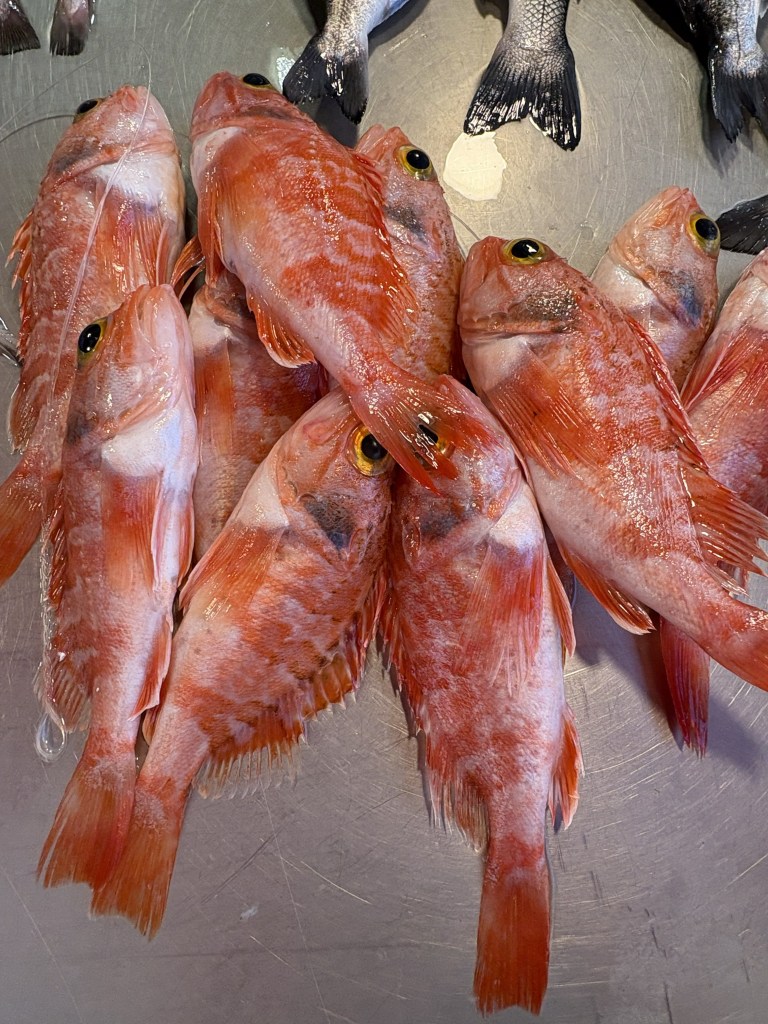
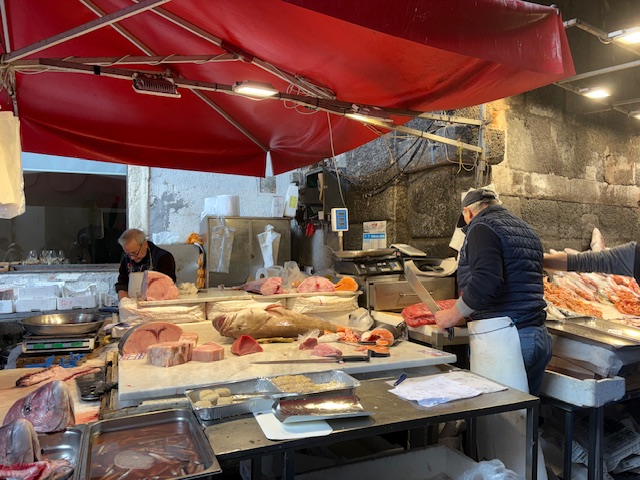
    Fish market in Catania, Sicily.

    DO plan your trip well

    We hope our suggestions help you to be more thoughtful about your Italy trip.

    If you have an upcoming trip that’s not yet locked in and you’d like us to review your itinerary, this link tells you a little more about our new Italy travel planning consulting work, available at an affordable rate.

    If you’re considering a trip to Italia and want to speak with us before you start to make reservations, we also can help you with that.

    We’ll share more travel mistakes and travel wins in future articles.

    Buon viaggio!

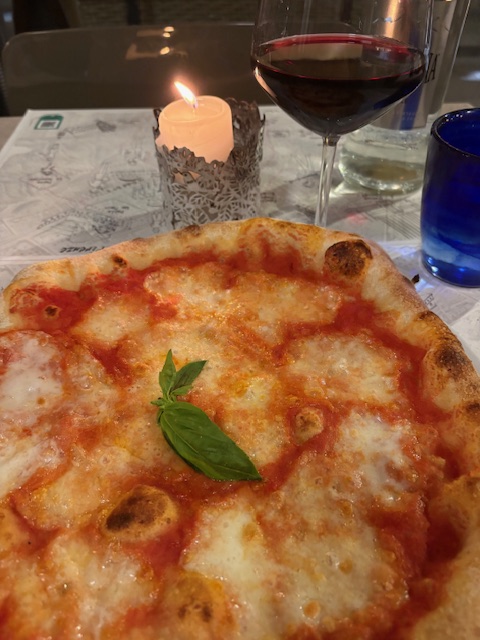
    Yes, you can still come to Italy for the pizza. Yum…..

  • 7 Things to Do When You Visit Scicli, Sicily

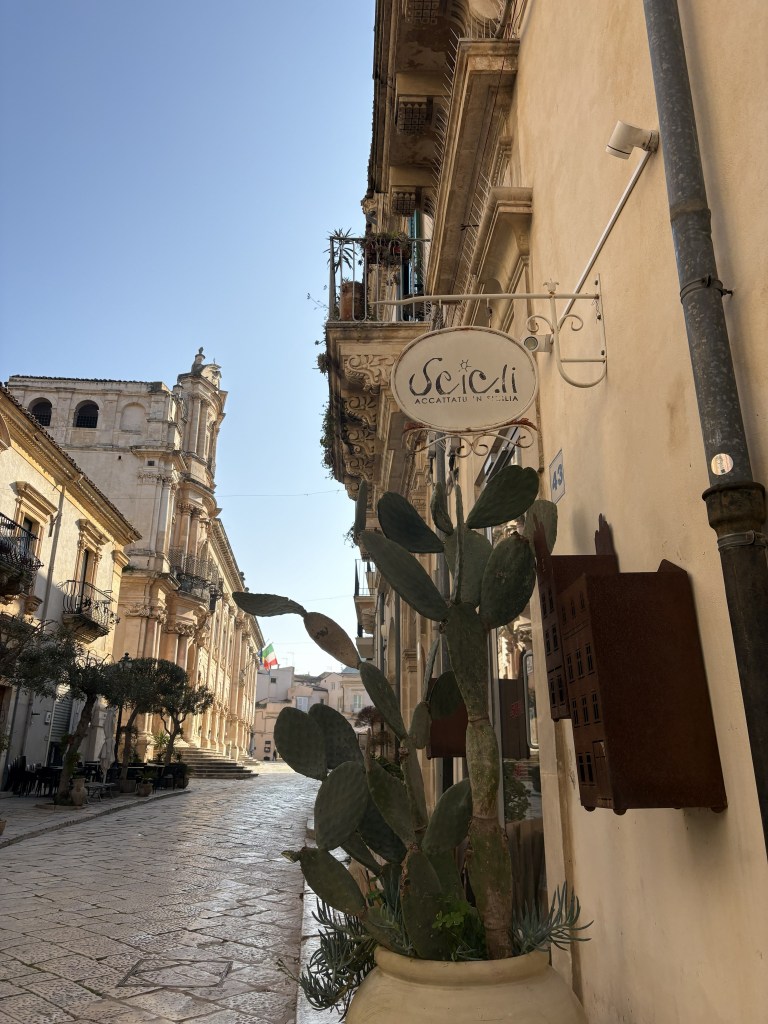
    Scicli, Sicily, Italy.

    Are you thinking about a visit to Scicli, Sicily–or heck, you just want to learn how to pronounce the name correctly? (It’s SHEEK-lee, by the way.)

    Let our article help you.

    Scicli is a charming small town in the Val di Noto in southeastern Sicily, Italy. It’s an ideal day trip if you want a real slice of Sicilian life with some tourism mixed in.

    We wrote an earlier article about Scicli’s A Rutta Ri Ron Carmelu (The Cave Home of Don Carmelo), and we’ll briefly recap A Rutta in this article, too. Yet there’s even more to see and do in Scicli.

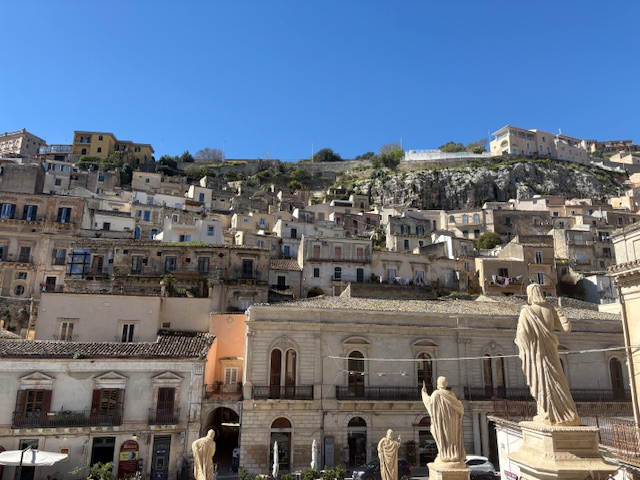
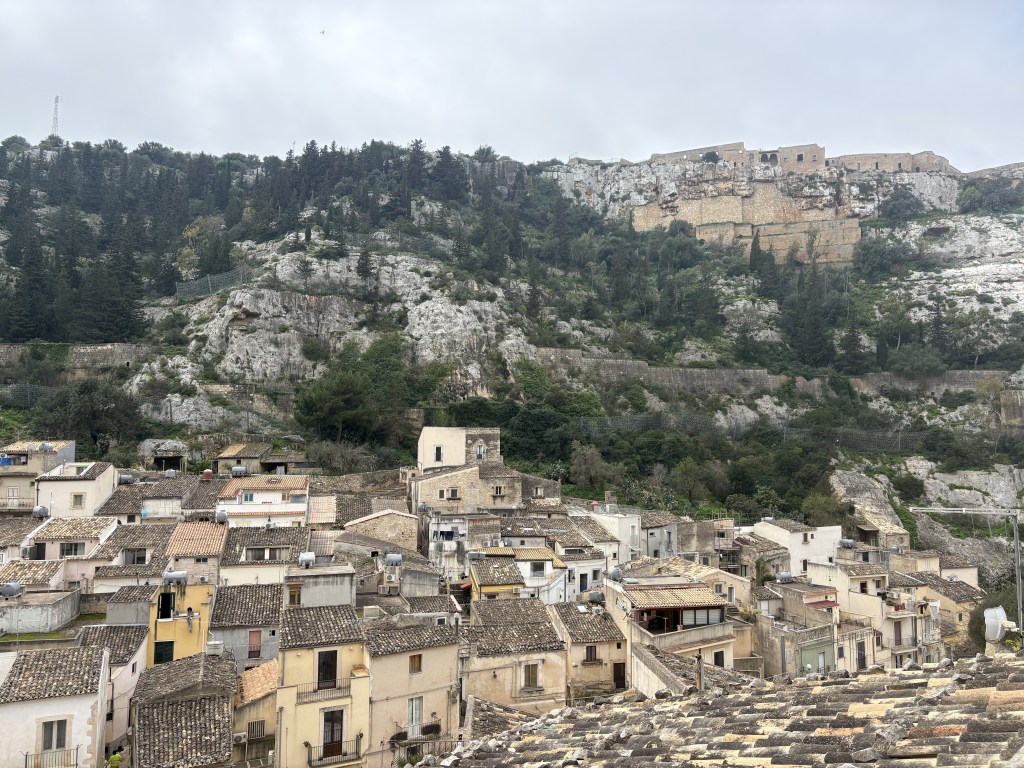
    A view from the hills in Scicli, Sicily.

    Before we dive in further, here are a few fun facts about Scicli:

    –The population of Scicli is about 27,000 people.

    –Scicli is a 40- to 45-minute drive from the popular destination of Noto, Sicily.

    –The town was hit badly by a 1693 earthquake, which also destroyed much of the Val di Noto (Noto Valley). The upside, however, is that the whole area rebuilt itself over the following century in the Sicilian Baroque style that makes Val di Noto so famous today.

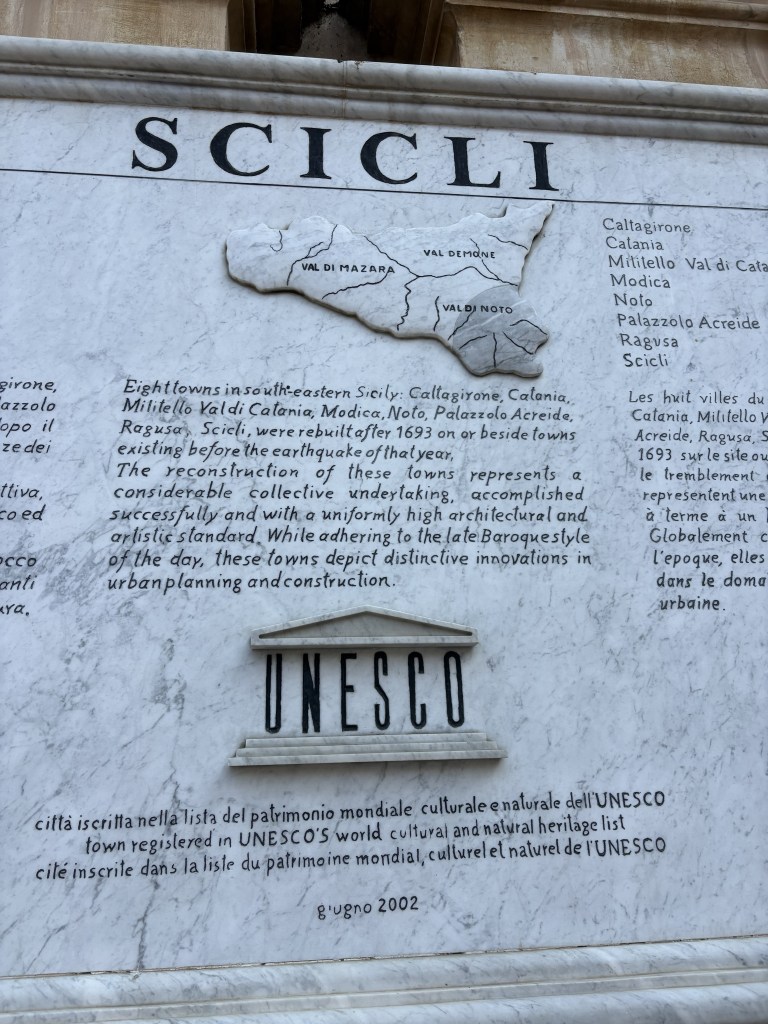
    –It’s one of eight towns in the Val di Noto that’s been named a UNESCO World Heritage Site.

    –Amazingly, the town dates back to the year 300 BCE.

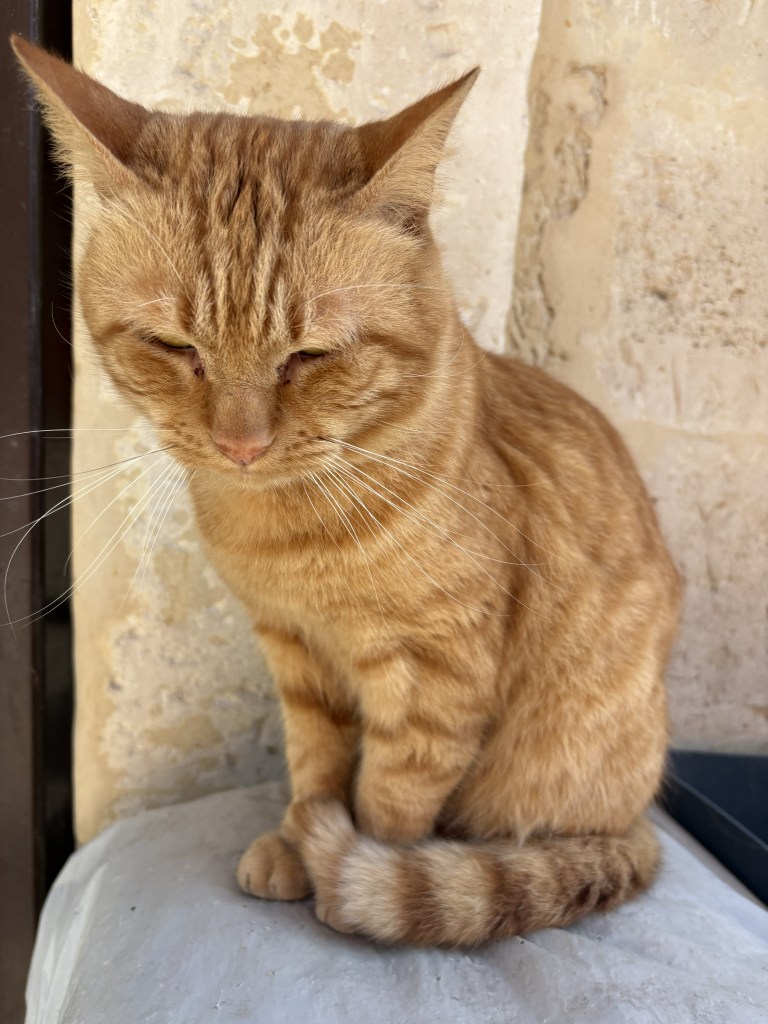
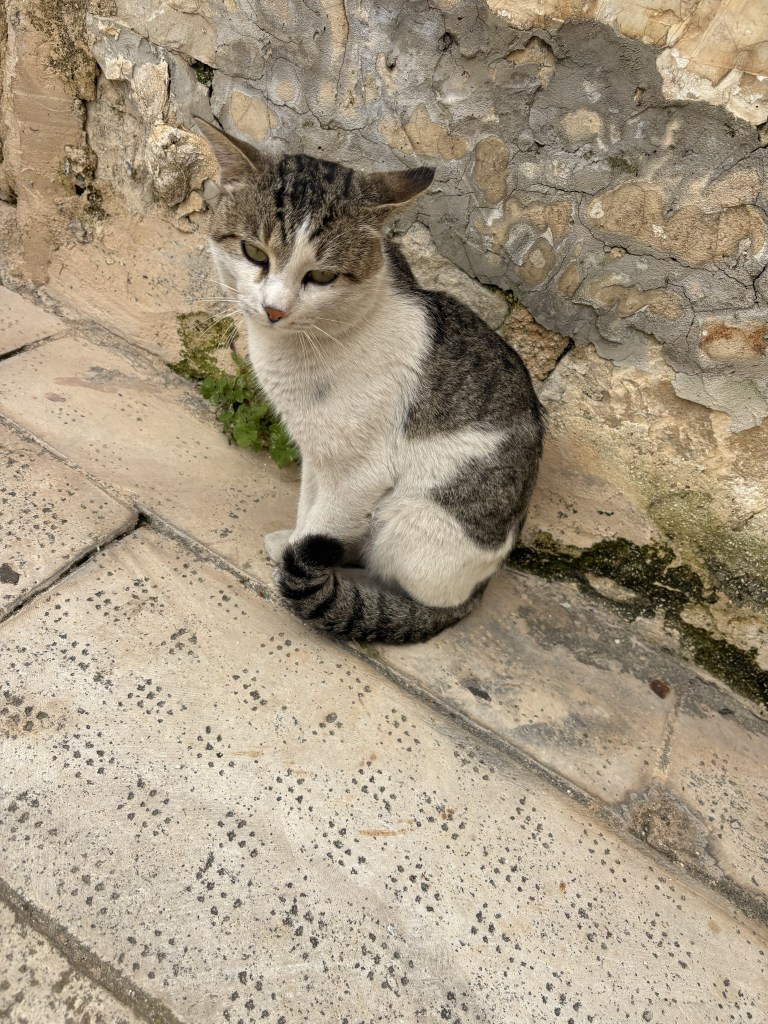
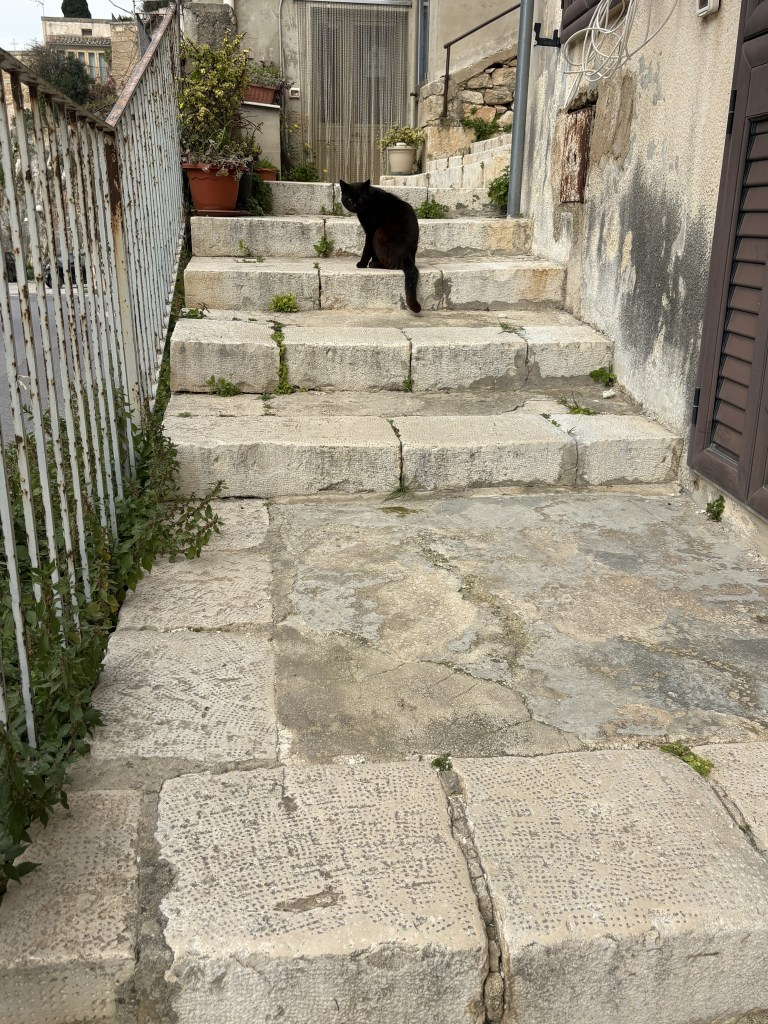
    Un gatto dolce/a sweet cat spotted in Scicli.

    I visited Scicli in early 2026 as part of travels around southeastern Sicily and found it be one of my favorite towns during the trip. It has the same beautiful Baroque architecture as Noto, which is more famous, but the town had a different feel.

    Its rockiness reminded me of the state of West Virginia in the U.S.

    Plus, people seemed….friendlier. I was happy that the people I met in Scicli were a chatty crowd, even with my just-emerging Italian language skills.

    Note that I was traveling solo but sometimes use “we” in my writing just to avoid overusing the pronoun “I”.

    Let’s go to Scicli!

    7 Things to Enjoy in Scicli, Sicily, Italy

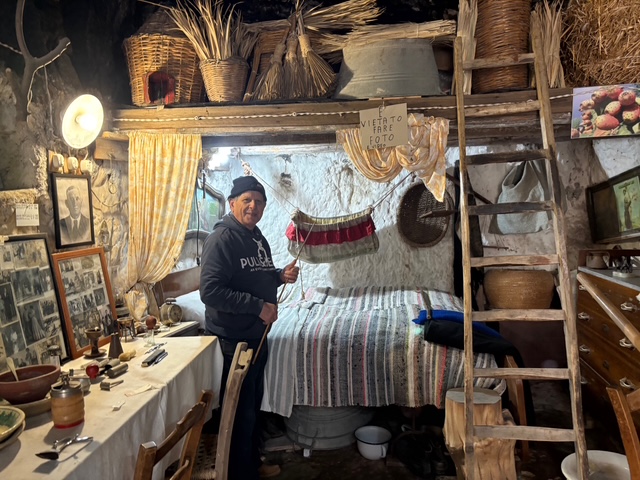
    Mr. Carmelo shows the cave home where his grandparents lived with six children.

    A Rutta Ri Ron Carmelu

    We covered A Rutta Ri Ron Carmelu in a previous article but to recap this unique attraction: Signore (Mr.) Carmelo gives you a tour of the cave home where his grandparents raised his father and five other siblings. The cave home is set up with all of the “comforts” that came with their crowded cave life.

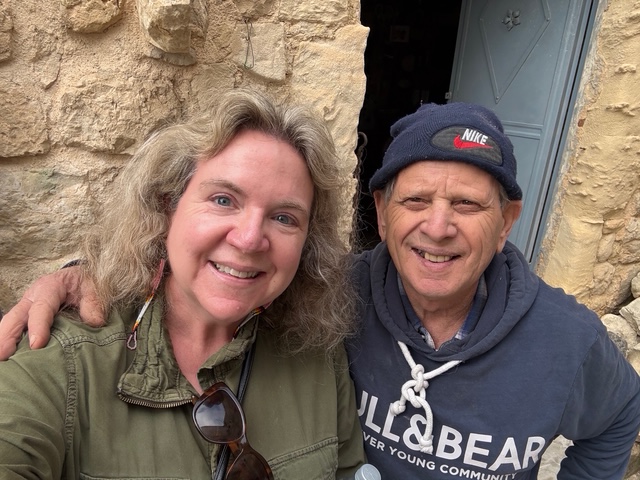
    After the cave tour, Mr. Carmelo proceeds to show you his many, many creations, from soaps to ceramics to other souvenirs you may want to buy. During our visit, he demonstrates his spinning-top skills with a child-like enthusiasm.

    All of this is done in Italian as Mr. Carmelo doesn’t speak English. Yet somehow, you still understand most of what he shares.

    I’d rank A Rutta Ri Ron Carmelu toward the top of your list for a Scicli visit. Just double check hours in advance to make sure Mr. Carmelo will be available, and be ready for some uphill walking toward the Chiafura cave district. If you have a car, you should be able to drive most of the way there.

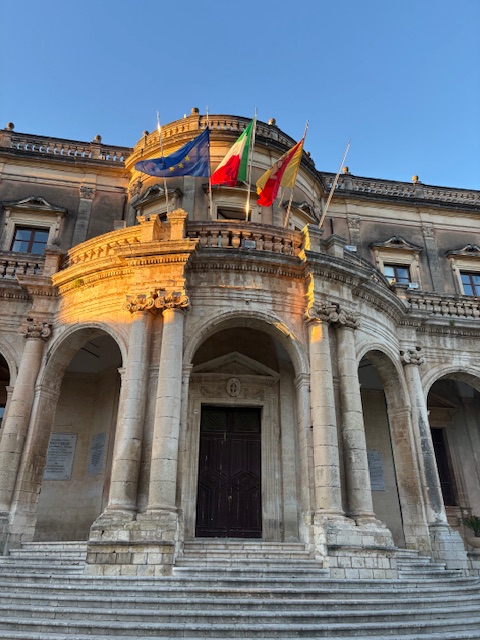
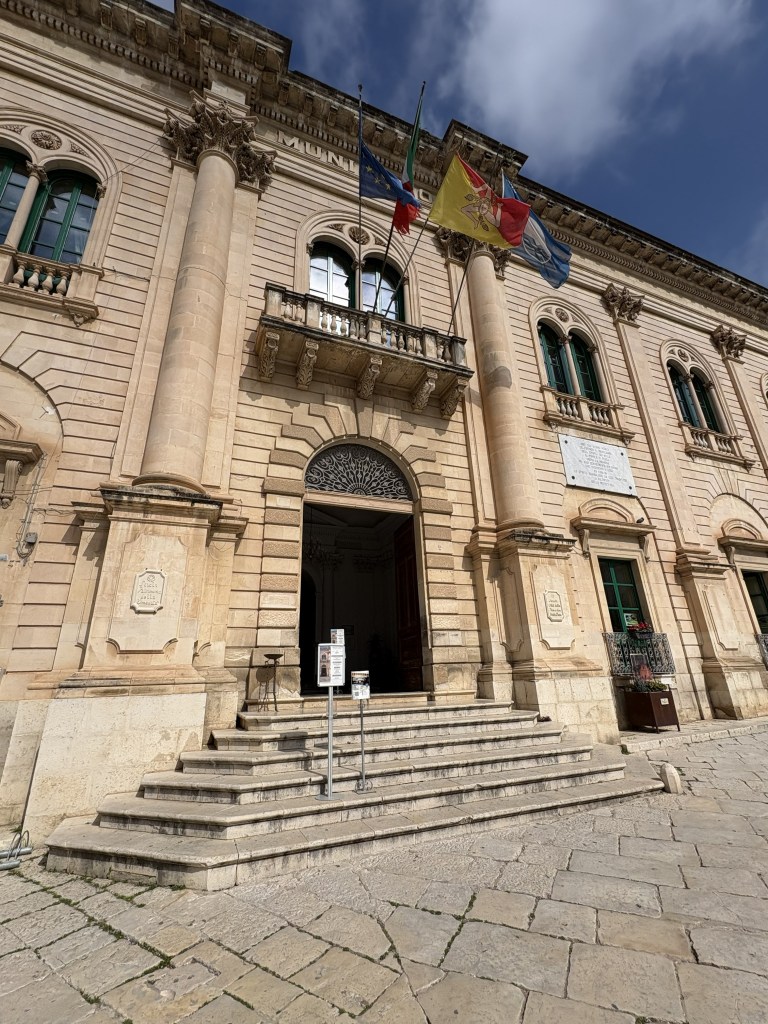
    The Scicli Town Hall entrance seen often on the show “Inspector Montalbano,” which was set in the fictional Sicilian town of Vigata.

    See Places from the Famous Italian Show “Inspector Montalbano”

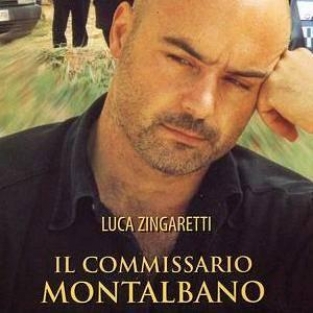
    As an American newly learning Italian language and culture, I’m a recent fan of “Il Commissario Montalbano”/”Inspector Montalbano”, a detective show set in Sicily that became a hit all around Italy.

    I subscribe to MHZ TV through Amazon Prime to watch the series and the subsequent show, “Il Giovane Montalbano”/”Young Montalbano.”

    “Inspector Montalbano” reached as many as 11.3 million viewers for an episode in 2017 and 1 billion viewers cumulatively during all of its 37 episodes, which spanned from 1999 to 2021. Each show is like a film, lasting almost two hours. The same is true of “Il Giovane Montalbano.”

    Actor Luca Zingaretti plays the grumpy, seafood- and sea-loving inspector in the main show, and Michele Riondino plays the younger version of the inspector.

    The show is based on a series of books by the late Sicilian author Andrea Camilleri that he began to publish at age 70. The books were in Italian but sprinkled with the Sicilian dialect, and the same is true of the show.

    With my interest in Italian language and Sicilian scenery (because clearly I have a past life connection to Sicily, LOL), the two Montalbano shows have become fun weekend watching.

    The shows are set in a fictional Sicilian town called Vigata, located in a fictional province called Montelusa.

    Here’s the Scicli connection: Scenes from “Inspector Montalbano” were filmed around southeastern Sicily, and the fictional police station is Scicli’s actual town hall. It’s seen a lot in the show.

    Another view of Scicli’s town hall.

    I saw the exterior of the town hall when I visited Scicli and snapped a few pics. Sadly, I hadn’t yet watched the show so I didn’t have the foresight to go inside and see the fictional set-up the town hall still has in honor of Montalbano. Next time!

    Even if you don’t know the show, it’s worth a look if you want to appreciate something from Italian/Sicilian pop culture.

    If you are indeed a Montalbano fan, there are day tours you can take to see various sites from the filming of the show.

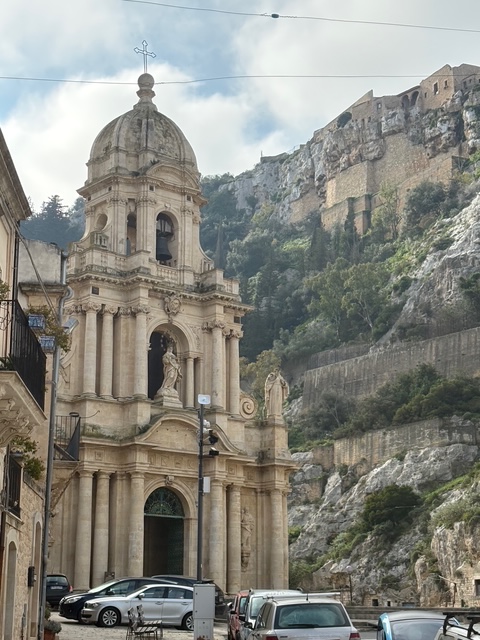
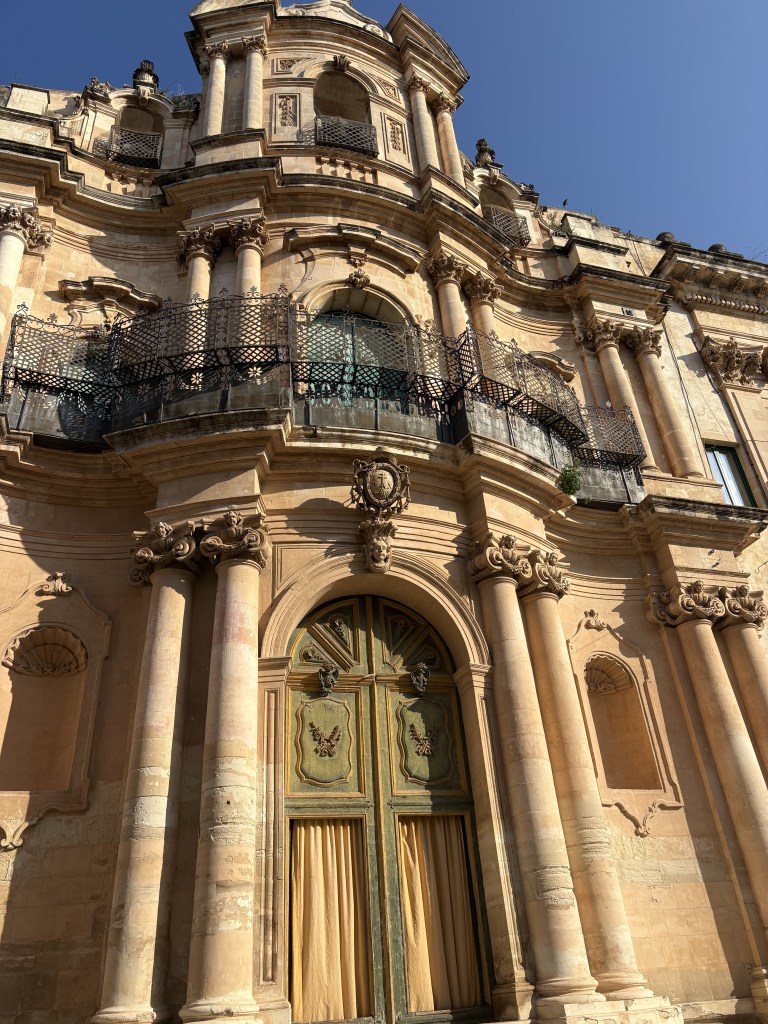
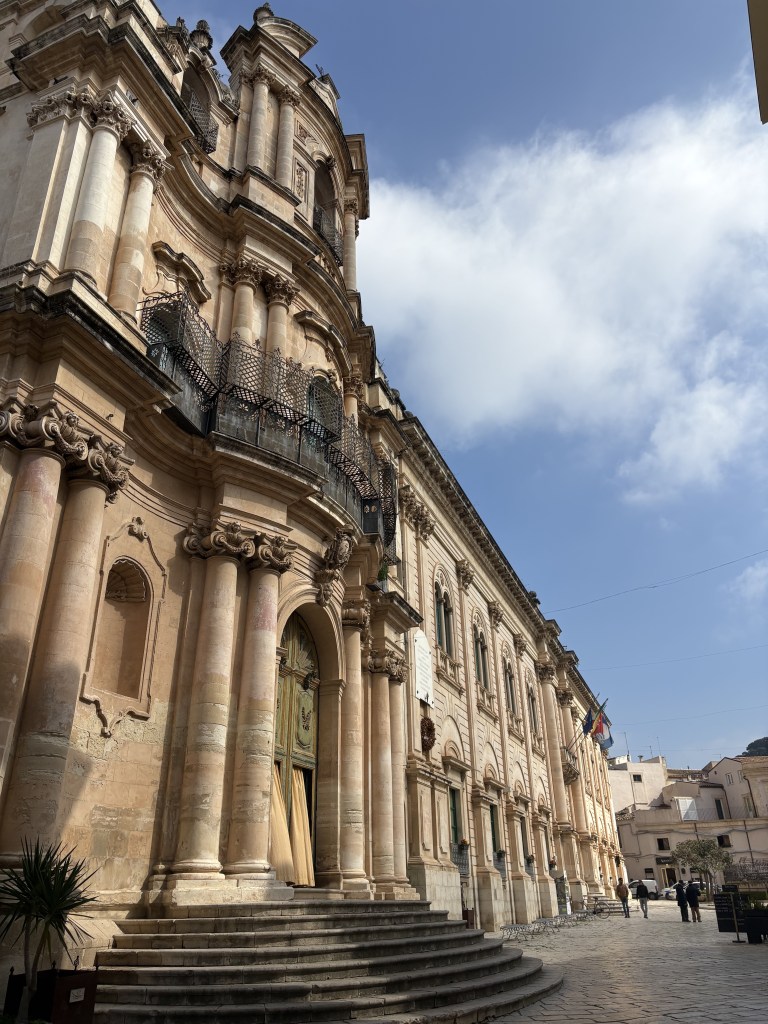
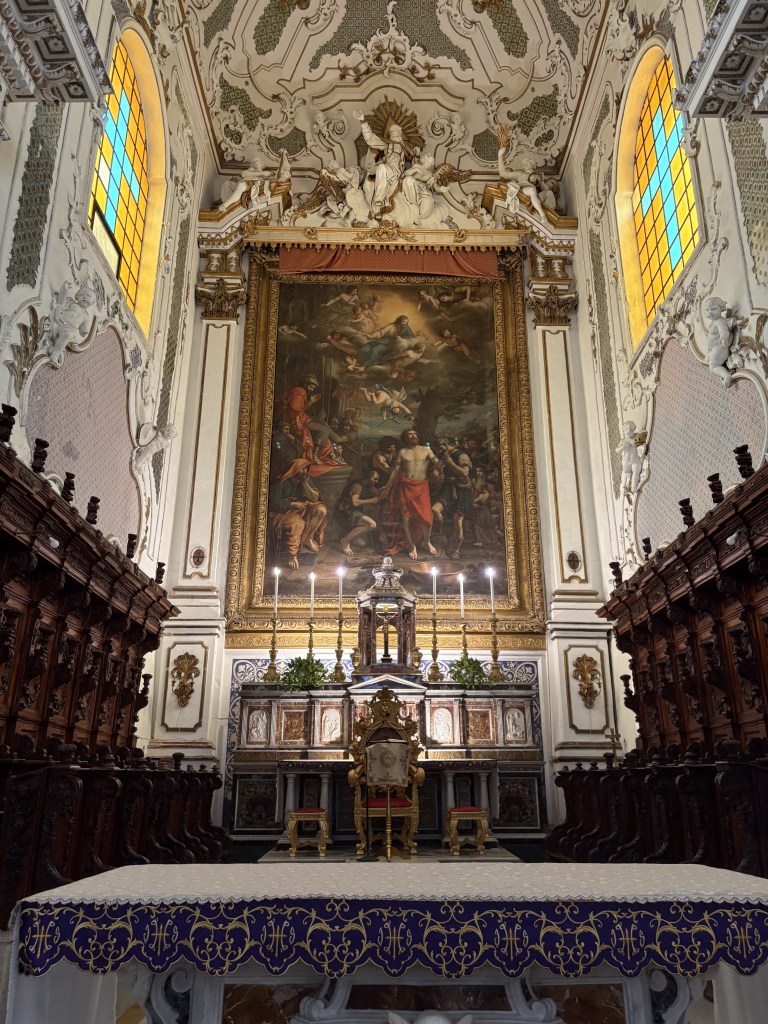
    Inside the beautiful Church of San Bartolomeo in Scicli.

    Enjoy Baroque Architecture and Churches

    As stated earlier, Scicli is one of eight towns in the Val di Noto famous for its beautiful Baroque architecture.

    Some of the Baroque highlights in Scicli include:

    Church of San Bartolomeo (not far from La Rutta Ri Ron Carmelu), a quiet wonder during our short visit

    –Palazzo Beneventano

    –Church of San Matteo

    –Church of Santa Maria La Nova

    You’ll find other examples, including some sites that occasionally appear on the Montalbano shows.

    The more well-known Baroque examples often have signs beside them in Italian and English to help you better understand their history and significance.

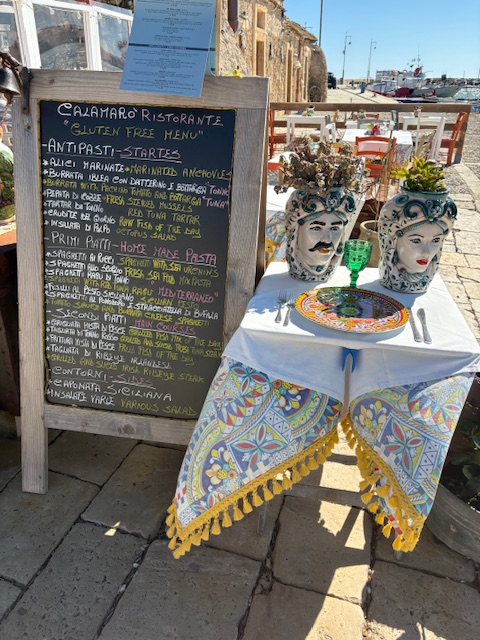
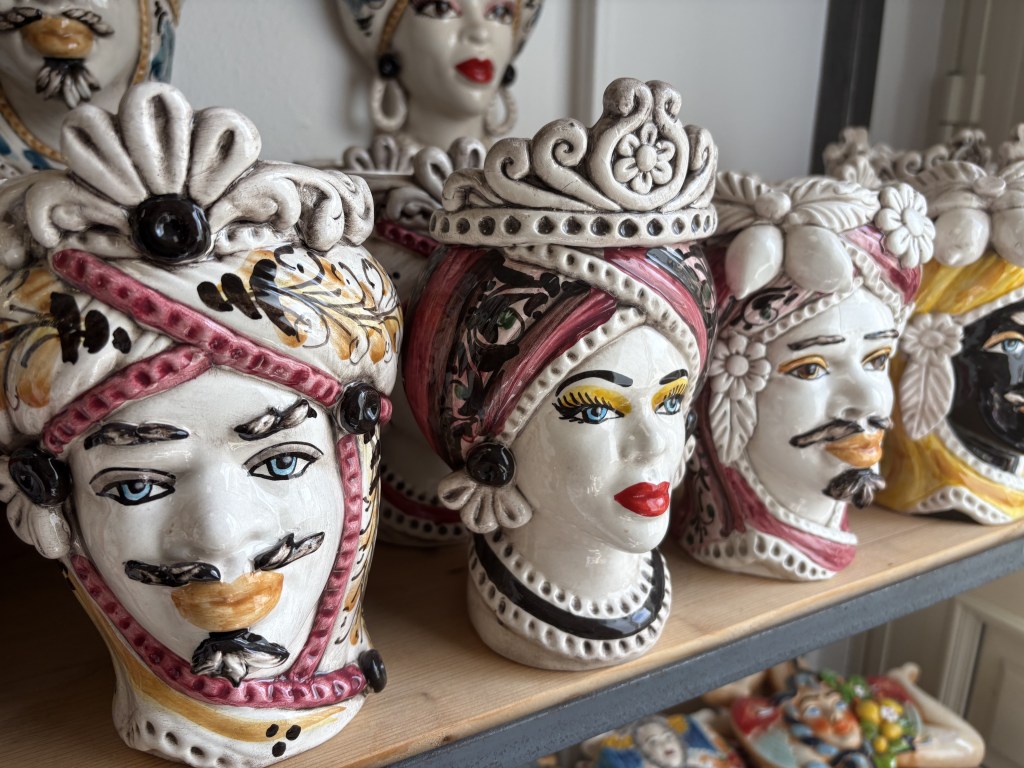
    The famous Teste di Moro (Moor’s Heads) statues, seen here in Scicli.

    Eat and Shop, Shop and Eat

    If you’re anywhere in Italy, you gotta eat, right?

    If you’re in Sicily, famous for So.Much.Good.Food., this rule applies double.

    Why not enjoy some of that famous food in Scicli?

    We only grabbed breakfast while there, so we don’t have any Italy Dreams-approved restaurants to recommend.

    However, folks online praise places like Baqqala, My Name Is Tannino and Prosit Sicilian Bistrot. If you’re looking for dessert, remember that gelato is calorie-free while you’re in Italy. 🙂

    As for shopping, we made our way to several souvenir shops in Scicli, some of the higher-end variety with beautiful handmade items and others a little more generic. We had already purchased a small black vase at A Rutta Ri Ron Carmelu, so we didn’t make another purchase beyond some olive oil.

    Yet we appreciated that shop workers were friendlier…not that they were unfriendly in other towns we visited. Perhaps in Scicli, they appreciated the business as it was still off-season.

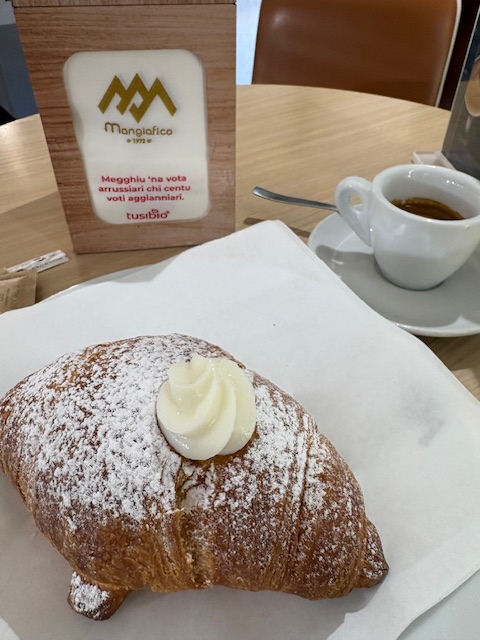
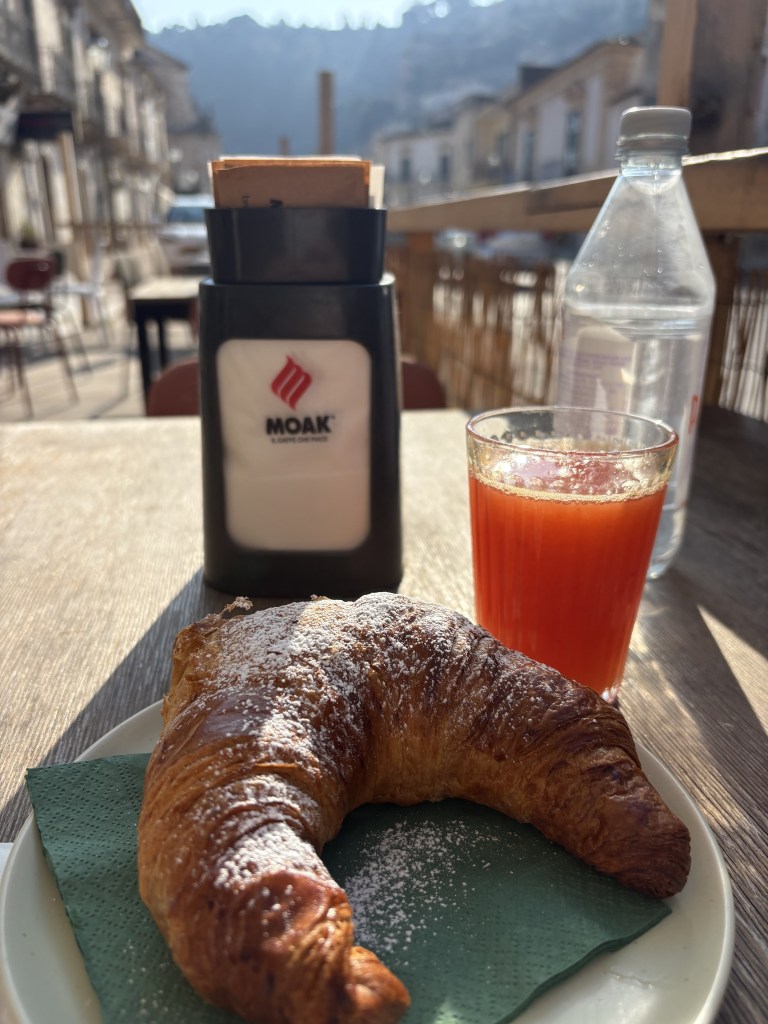
    Our croissaint and orange juice in Scicli.

    Absorb Daily Life in Scicli

    There was something about Scicli that made it easier to get a sense of daily life there.

    There was the encounter we had with a local female police officer who got annoyed that we initially parked in the lot for the train station/police office (oops!).

    There was the young couple arguing near the Church of San Bartolomeo, seemingly unaware of others listening.

    There was the shopkeeper who swapped stories with me about his dog, after I pointed out (in Italian!) that a picture he had in the shop looked like my own dog.

    There was the aforementioned encounter with Mr. Carmelo, who’s a real character.

    A black cat spotted in the Chiafura cave district in Scicli.

    There was the time spent in a small but maze-like supermarket where we compared prices for pasta, bread, produce and other items against our U.S. prices.

    Could you have these types of encounters in another southeastern Sicilian town? Sure. Yet there was something in Scicli that made them more accessible, friendly, and easier to observe.

    You can also find that kind of life interaction in Catania, for example, but there’s so much happening at once there, I found it harder to take in. That’s why Scicli was perhaps more appealing.

    Enjoy Nearby Beaches

    As we visited Scicli in the winter, we never made it to nearby beaches. Yet even with the hill-like feel of Scicli, you’re not too far from a dip in the sea on beaches like:

    –Spiaggia di Sampieri

    –Spiaggia di Mannara

    –Spiaggia Pantano Arizza

    Double check online or with locals about these or other beaches before you visit.

    If you’re driving back towards Noto or Marzamemi, you have many other coastal options, including San Lorenzo or the beaches at Vendicari Nature Reserve.

    And in case you were wondering: There are beach scenes from “Inspector Montalbano” filmed in Punta Secca, east of the beach destinations mentioned here.

    A morning view in Noto, Sicily.

    Visit Other Nearby Baroque Towns

    Whether you’re staying in Scicli during your time in southeastern Sicily or visiting for a day trip, you can absolutely take the time to take day trips to other nearby towns. This will be easier to do if you rent a car or hire a driver.

    As mentioned before, there are eight towns in the Val di Noto that are considered UNESCO World Heritage sites for their Baroque architecture. They include:

    –Caltagirone

    –Militello Val di Catania

    –Catania

    –Modica

    –Noto

    –Palazzolo

    –Ragusa

    They’re all relatively close to each other (Catania’s a bigger city, of course). Between our experience and that of others, we favor Modica, Noto, and Ragusa.

    Although it’s not a Baroque area, we enjoyed nearby Marzamemi as well.

    Drive safe–here are our lessons from driving around Sicily–and enjoy your visit to Scicli and the surrounding area.

    Buon viaggio!

    Some more information about the UNESCO towns in Val di Noto.

  • Italy Dreams’ Visit to Eastern Sicily–Details Coming Soon!
    Beautiful Marzamemi in southeastern Sicily.

    Buongiorno! Italy Dreams shares stories and inspiration from all across Italy, but don’t be surprised if we focus more on Sicily for awhile. After all, we just returned from a 10-day trip to southeastern Sicily, and we have a lot to share.

    Going off-season (late February) made the trip especially interesting. It was easier to enjoy some popular spots, but it also meant getting some skeptical glances in smaller areas–especially as a woman traveling solo.

    Stay tuned for a story later this week about one of our favorite small towns in southeastern Sicily, followed by more tidbits and tips to help you on your own Sicily adventure, particularly if you visit places like Noto and Ortygia in southeastern Sicily.

    Subscribe to our blog so you don’t miss a story! And if you can’t wait to read our articles, check out the video we made here about our trip. It’s geared toward students learning English.

    Arrivederci!

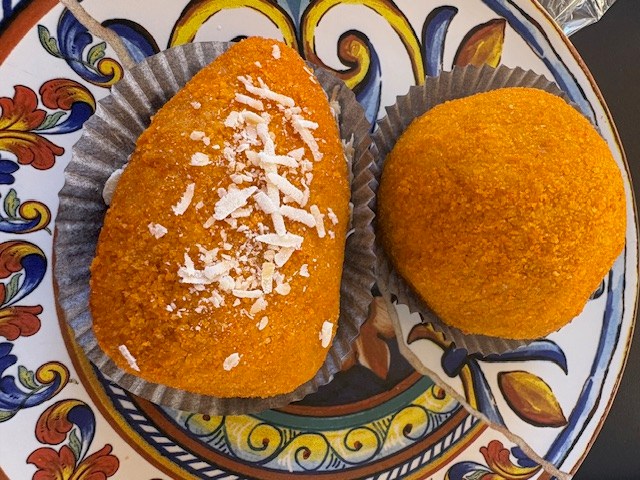
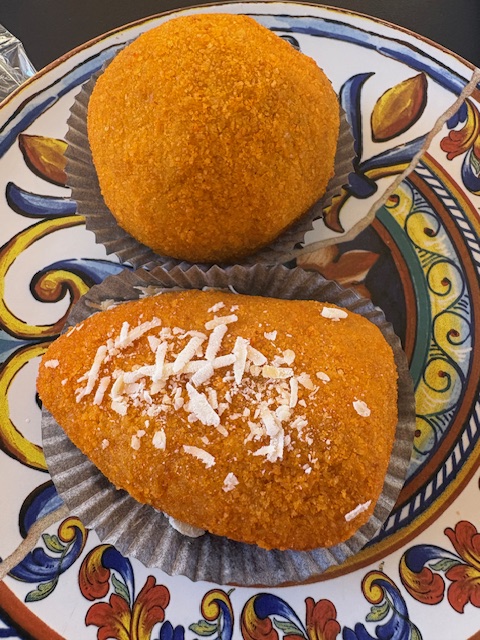
    Arancini, or rice balls, in Sicily.

  • Access Italy Welcomes Visitors to Experience Italia With Passion

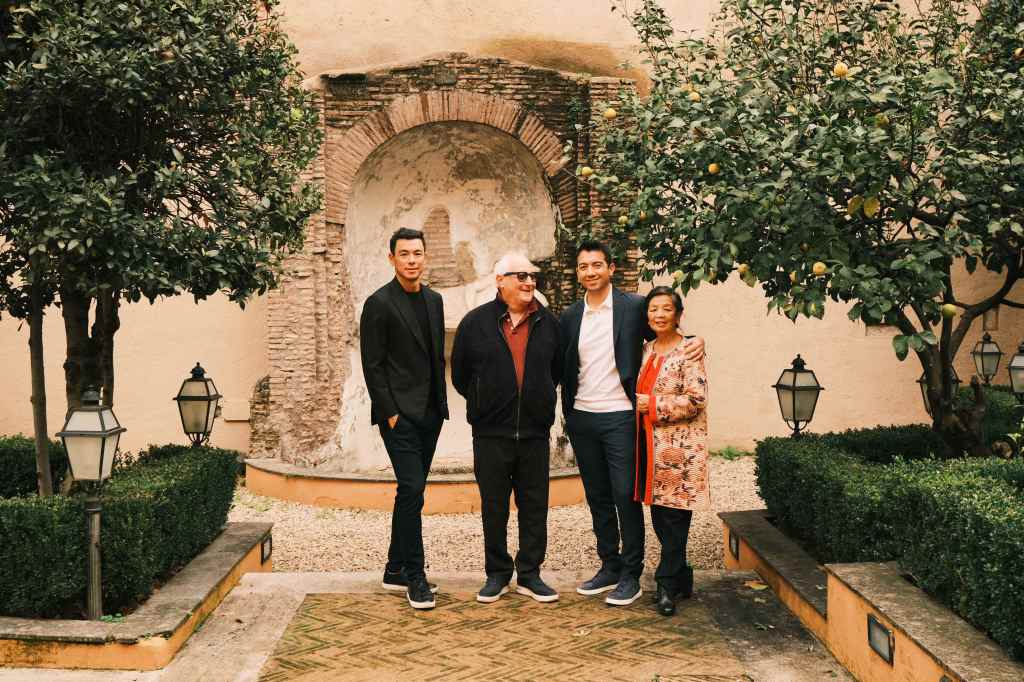
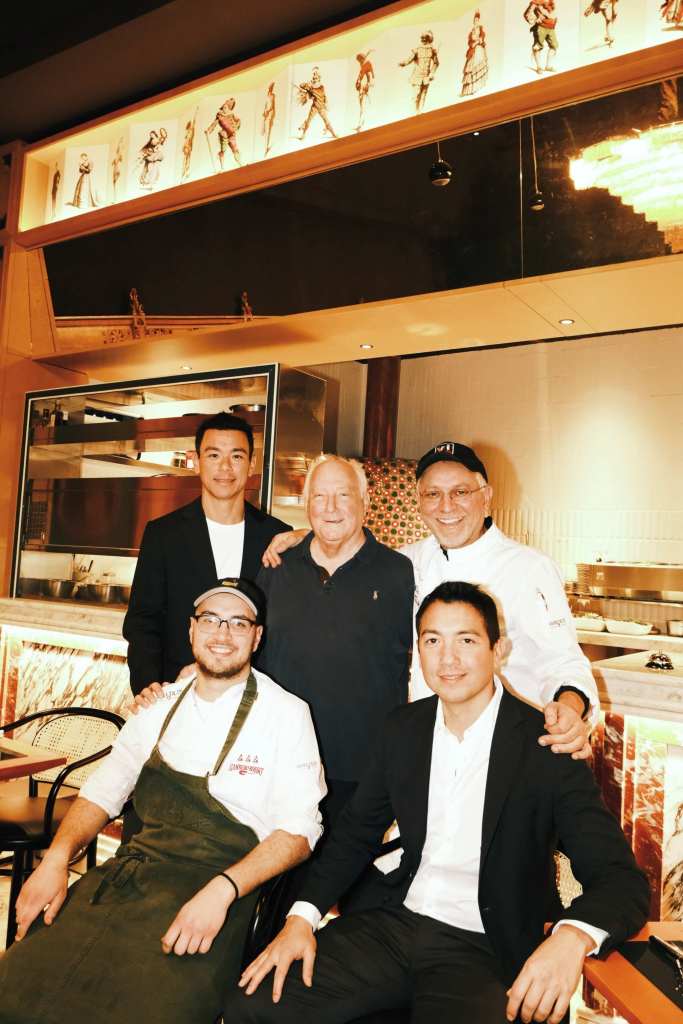
    The Amorico family of Access Italy. All photos used in this article are courtesy of Access Italy.

    “Italy isn’t a destination you conquer. It’s one you’re welcomed into,” says Simone Amorico, co-founder of the Rome-based Access Italy, a destination management company.

    “At Access Italy, we’re here to make that welcome feel warm, personal, and unforgettable.”

    He must be on to something when you consider that Oprah Winfrey trusts Simone and his brother/co-founder Marco as well as their father Angelo to plan her Italy trips.

    So do Sylvester Stallone, Stanley Tucci (Mr. Italy himself), Emily Blunt, Jessica Alba, and several other well-known celebs.

    Although Simone discreetly declines to answer questions about his celebrity clients, you can tell they must be happy with the results from the smiling photos these famous folks have posted on social media.

    “What we can say is that what people are really searching for is connection: with the place, with the people they meet, and with the moment they’re living,” Simone explains about his company’s clientele.

    Courtesy of Access Italy.

    What Access Italy Offers

    For Access Italy and its staff of 40, their sweet spot is an itinerary designed exactly around the client’s wishes.

    “Every viaggio (trip) is tailor-made, seamless, and designed around the people traveling, never around a template,” Simone explains.

    The company began in 2009 by Angelo Amorico; Simone and Marco now lead the firm along with their father. The 40 team members are destination experts, travel designers, and local insiders.

    Simone says that their personal relationships with artisans, historians, winemakers, families, and hotels across the country bridge together thoughtful travelers with these locals.

    The vast majority of the guests working with Access Italy are American.

    “They share the same mindset. They don’t want to just see Italy, they want to live it,” Simone says. “They travel with intention, preferring quality over quantity and meaningful moments over rushed checklists.”

    Team members usually work with 2 to 8 guests when designing a trip and sometimes groups of 10 to 14, including extended family. Travel groups may be couples, families, or small groups of friends.

    With a focus on tailored, luxury travel, the travel designers at Access Italy will speak with guests about their exact needs and desires for the trip. This could mean coordinating a completely private visit to a famous museum, choosing upscale Italian hotels and villas, or organizing a Michelin-star dinner with your travel partners.

    Courtesy of Access Italy.

    Of course, don’t forget other classic Italian experiences like:

    –Cooking classes or even a home cooking class with the Amorico family

    –Early-morning visits to famous sites

    –Personalized shopping tours

    –Yacht excursions

    –Private events

    Access Italy also can lead you to fewer crowds at the busiest destinations. Again, just ask Oprah. Here’s a testimonial from her shared on the Access Italy website:

    “If you’re ever in Italy, call these guys! Angelo has been showing me the best of Italy for 30 years now. His sons were toddlers and now Simone and Marco have joined the business. We were in and out of the Coliseum in an hour! Same for the Vatican. Their company is aptly named, cause they have real ACCESS!”

    (Find pics of Oprah and bestie Gayle King’s time in Italy, along with some pics of Angelo, at the link here from Oprah Daily.)

    Another fun way to discover just how a trip with Access Italy might work is a description on the company website of the Anderson family experience. The Andersons collaborated with the company to plan their southern Italian trip in 2023.

    The top areas that Access Italy visits with clients include Rome, Tuscany, the Amalfi Coast/Capri, Venice, Lake Como, Puglia, and Sicily.

    For places a little more off-the-beaten path, their travel designers will direct guests to places like Piedmont (in northeastern Italy), the Dolomites (where the recent Winter Olympics were held), Umbria in central Italy, and the island region of Sardinia.

    “We often combine iconic destinations with lesser-known regions to create balance and surprise,” Simone says.

    Courtesy of Access Italy.

    5 Tips to Plan Your Trip to Italy, Courtesy of Access Italy

    If you’re dreaming of Prosecco and pasta after reading this article, then Simone has a few tips to help you with your Italy plans:

    1. Don’t cram everything into one trip. “Italy is about depth, not checklists,” Simone says.
    2. Balance cities with countryside. “It changes the rhythm of the trip,” he explains.
    3. Take to heart recommendations on when to go to specific destinations. Timing matters as much as where you’re going.
    4. Leave room in your trip for the unexpected.
    5. Contact Access Italy to set up your trip. “Save time and energy. We plan, you Prosecco,” Simone says.

    Find Access Italy online here and their contact page here. You can also find them on Instagram here and on Facebook with the name Access Italy.

    Buon viaggio!

    Courtesy of Access Italy.

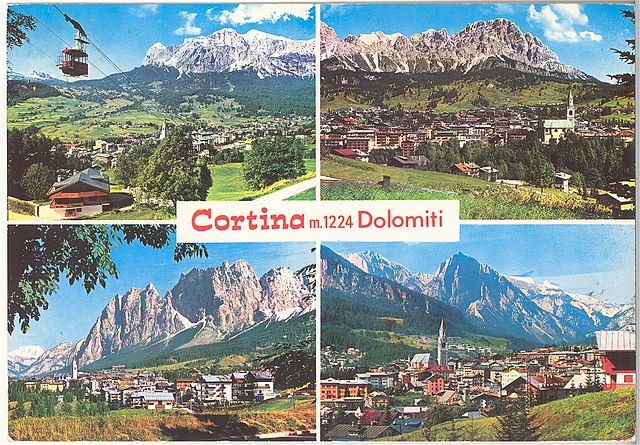
  • 10 Fun Facts About Cortina and the Dolomites in Italy

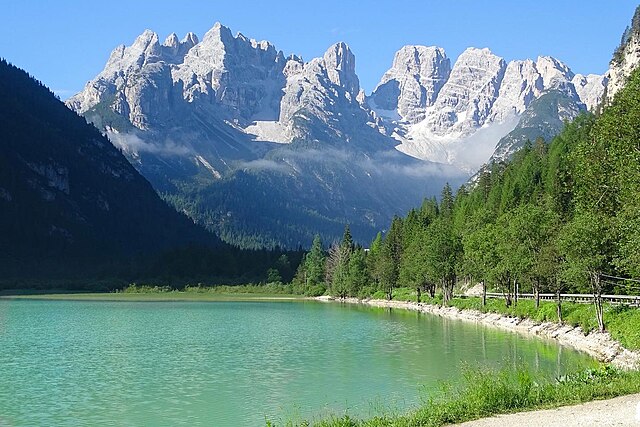
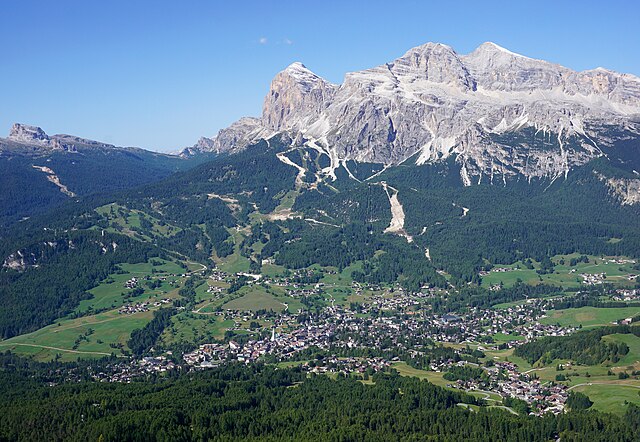
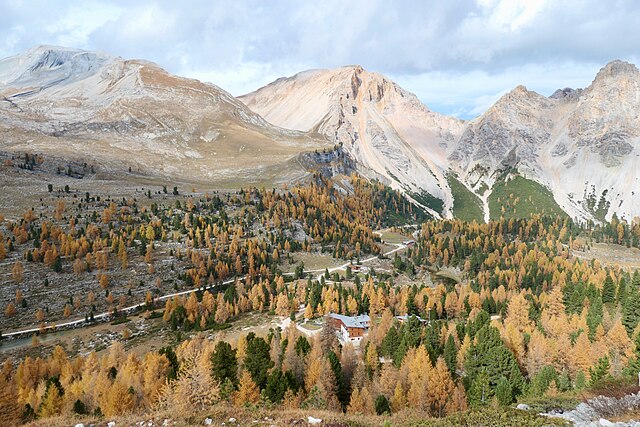
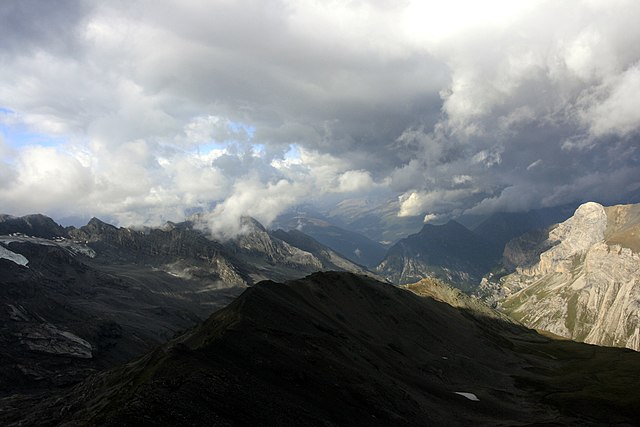
    The beautiful Dolomites in northeastern Italy. All pictures in this story taken from Wikimedia Commons.

    With the Winter 2026 Olympics around the corner, the world turns its eyes to Milan and Cortina, Italy. Although the name “Milan Cortina 2026 Olympic Winter Games” makes it sound like these two areas are close to each other, they are actually more than 255 miles apart—basically, an almost five-hour drive. In fact, this year’s Winter Games will be the most geographically widespread of any prior Olympics.

    We shared some fun facts about Milan in a previous post, so we wanted to give some equal exposure to Cortina d’Ampezzo (called Cortina for short) and the beautiful Dolomite Mountains, where Cortina is located.

    Andiamo!/let’s go

    1. Cortina is called “Queen of the Dolomites” and “Pearl of the Dolomites.” It’s famous as a luxury ski resort area.
    2. Cortina previous hosted the Olympics Winter Games in 1956.
    3. The movies “For Your Eyes Only” and “The Pink Panther” were filmed in Cortina.
    4. Olympics events that will be held in Cortina include Alpine skiing, the biathalon, bobsledding, curling, and luge. In addition to Milan and Cortina, some Olympics events will take place in the towns of Valtellina and Val di Fiemme in northern Italy, along with a closing ceremony in Verona.

    5. There’s a lot to do in Cortina. In addition to those famous winter activities, there’s golfing, mountain biking, horseback riding, and kayaking. If you’re a little less adventurous, you can browse more than 250 shops.

    6. The Dolomites (called Dolomiti in Italian) are part of the Italian Alps. Just like you’ve heard of the Swiss Alps, the Italian Alps are famous and include the Dolomites, the Aosta Valley, South Tyrol (a German-speaking region) and Piedmont. In addition to Switzerland and Italy, the Alps also span Austria, Germany, France, Liechtenstein, Monaco, and Slovenia.

    7, The Dolomites are part of the UNESCO World Heritage sites because of beautiful rock cathedrals and natural beauty. One nearby resident said when you climb to the top of a peak in the Dolomites, you can see the world from a completely new perspective.

    8. The Dolomites stay busy! Do some research online, and you’ll see that many recommend that visiting from June to August is an ideal time for spectacular hiking views. However, this is also peak season, when you’ll explore there along with many other visitors. You also will face higher prices. Of course, winter is the best time to visit if you’re into skiing and other winter sports. Perhaps a visit in the fall or spring is best to enjoy some of the views without the full impact of crowds.

    9. It’s not all pasta, all the time in Cortina and the Dolomites. Much of the famous local cuisine features German influences and includes knödel (a type of bread dumpling with herbs), Schlutzkrapfen (a ravioli dish), Spinatspatspazlen mit Schinken-Käsesauce, which is spinach spaetzle with ham and cheese sauce. We’ll let you google the pronunciation of that one as we’re not sure how to say it! Another famous dish in the Dolomites is Spaghetti Bolognese mit Speck, or bolognese spaghetti with a type of local ham. Another dish recommended to us? Turtres, a type of fried dough filled with spinach and ricotta. Find a recipe for them here. And don’t forget to try any local cheeses!

    10. The locals are multilingual. There’s more than just Italian spoken in the Dolomites. German and Italian are spoken by most people from the Dolomites, in addition to the ancient romance language of Ladin. Still, if you’re visiting a local tourist area and speak English, you should be in good shape to communicate with others.

      Buon viaggio!

    1. Kapuhala Sicily Amazes Guests With Tranquility, Sicilian Heritage, and Vegan Meals

      Drinks and a sunset view at Kapuhala Sicily, a resort near Noto. All pictures shared courtesy of Kapuhala Sicily.

      If you’re dreaming of Sicily and want some wellness with your getaway, then look no further than Kapuhala Sicily, located near Noto and Marzamemi in the southeast corner of the Italian island.

      Kapuhala Sicily was created as a sustainable, wellness-focused resort by chef Crystal Lee and her husband, Stefano Passarello, whose father is from the area. Crystal is originally from Hong Kong but trained in Milan to be a chef.

      “We’d been going to Sicily for 20 years and absolutely love it,” Crystal says. “When the resources and land became available, we decided to build something there.”

      Kapuhala Sicily debuted in June 2020, almost a year after the couple opened Kapuhala Koh Samui, an eco-friendly resort in Thailand. They divide their time between the two properties. Kapuhala means “holy tree” in Hawaiian.

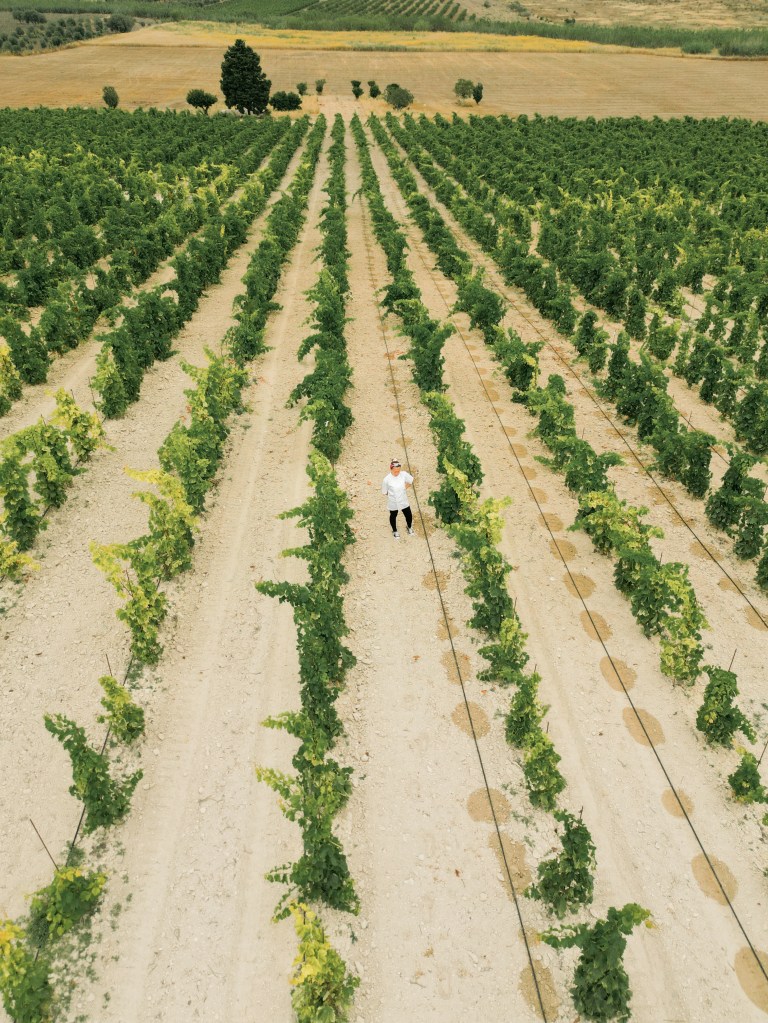
      Relax among the vineyards at Kapuhala Sicily.

      “Ahhhhhh”–What to Expect When You Visit Kapuhala Sicily

      If you’re visiting Sicily for Kapuhala Sicily, you’ll make your way through the countryside of the Valle di Noto region–an area Crystal describes as famous for its natural beauty, olive groves, and traditional Sicilian heritage.

      Upon driving up to the resort, you’ll find 60 acres of vineyards, olive groves, and organic gardens–with much of the food served at the resort grown onsite or sourced from local farmers. The owners of Kapuhala Sicily also were able to revitalize 300 trees that would have otherwise been uncultivated.

      Kapuhala Sicily can accommodate up to 30 guests in total in small individual homes and in buildings once used for wine-making; most of the places to stay there can host up to four people at a time. Each unit has a private bathroom, and some units have kitchenettes.

      Kapuhala Sicily focuses on sustainability, wellness, heritage architecture, and plant-based cuisine. It also follows many of the “blue zone” principles for living longer and staying healthy. Sardinia, another island in Italy, happens to be one of the world’s blue zones, and one area of Sicily is considered an emerging blue zone.

      Chef Crystal Lee operates Kapuhala Sicily along with her partner, Stefano Passarello.

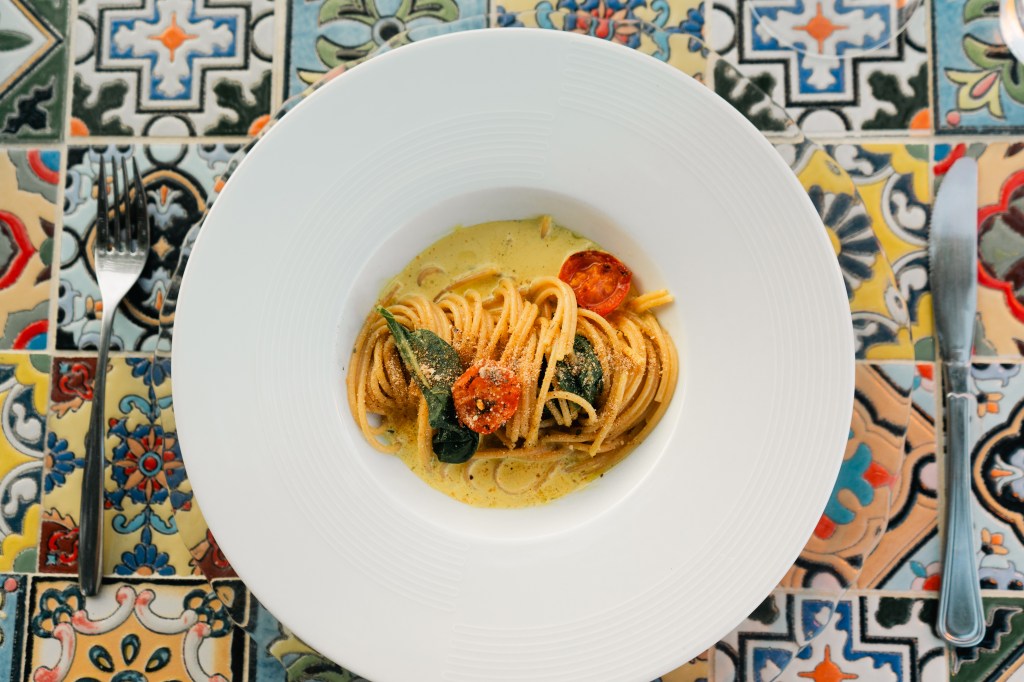
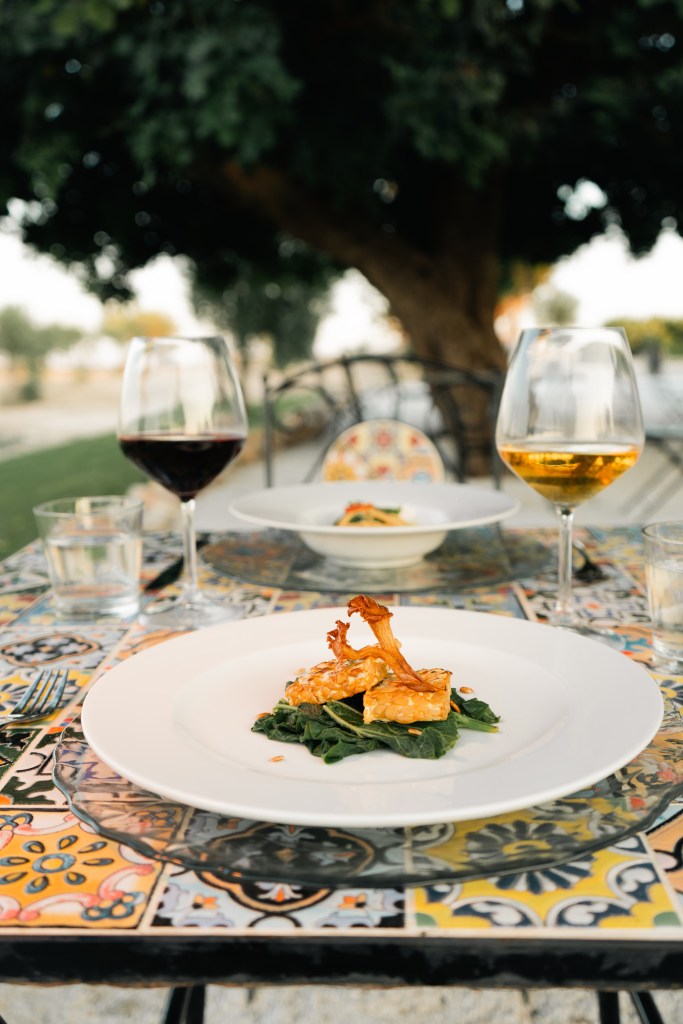
      Italy is already famous for its cuisine–it was just recognized by UNESCO this December–yet Kapuhala Resort takes plant-based cuisine to another level. How about spaghetti with Sicilian curry, tenerumi (a summer squash-like vegetable in Sicily) and tomato confit? Si, per favore! With some of the dishes, you may be fooled into thinking you’re eating the traditional meat version, only to realize the vegan option is just as tasty.

      Spaghetti with Sicilan curry served at Kapuhala Sicily resort, located in the southeastern corner of the island.

      In addition to the great food, there’s lots more to enjoy at Kapuhala Sicily, including:

      –Wine tastings

      –A pool

      –A botanic yoga studio

      –Sunset views

      –Nature walks

      –Doing absolutely nothing!

      –Day trips just a short drive away, like Noto (famous for its baroque architecture–see our article here), Marzamemi (a former fishing village that’s popular to visit), and nearby beaches

      Yet there’s nothing wrong with just enjoying your time at Kapuhala.

      “Kapuhala Sicily isn’t just a hotel but a lifestyle-oriented retreat. It’s a place designed for people who value sustainable living, plant-based food, mindful living, nature, and authentic local heritage,” Crystal says.

      It’s also considered a “heritage farmstay” because guests have the chance to connect with the land and rural Sicilian traditions.

      7 Tips to Plan Your Visit to Kapuhala Siciliy

      If you’re hopping on your favorite travel website right now to book your stay at Kapuhala Sicily, here are a few tips to keep in mind:

      Plan to rent a car while you’re in the area. There’s not much public transportation.

      Slow wayyyyyyy down. Keep your type A side tucked away in your suitcase while you’re vacationing, both in SIcily in general but also specifically at Kapuhala. “It’s about relaxation, wellness, a connection with nature, and simplicity,” Crystal explains.

      Stay open to vegan cuisine. You may be surprised by how much you like it!

      Bring comfortable shoes. It’s hard to get around the countryside in high heels, Crystal says.

      Plan your local trips to include beach visits, local historical towns and the countryside. Crystal calls this a “balanced Sicily experience.” Staying for a few days in the area gives you a better chance to get to know the resort’s part of Sicily without feeling rushed.

      Check online to make sure the resort will be open before you book. Like many other accomodations in the area, Kapuhala Sicily is generally open from April to the end of September, which is the main tourism season for Sicily.

      Staying elsewhere in Sicily but still want to check out Kapuhala? You can visit their restaurant, Vivi Vinu, for an apertivo or dinner.

      Buon viaggio!

    2. Find the Sweet Scent of Italy With These Two New Perfumes

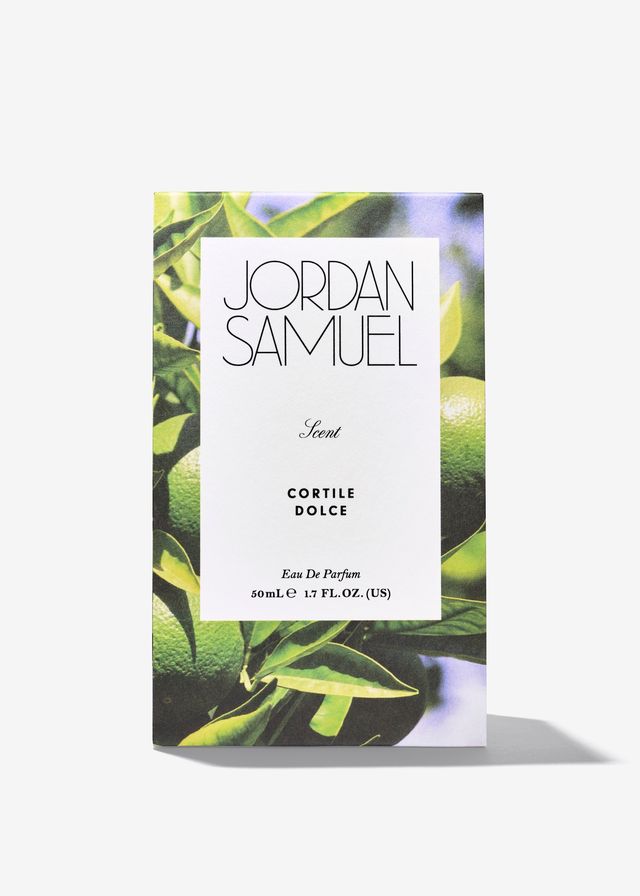
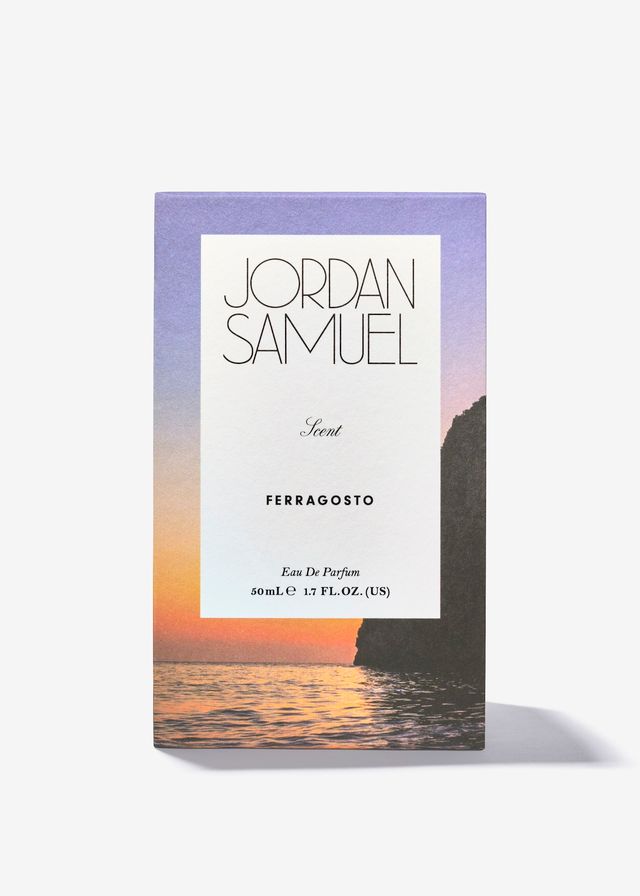
      Cortile Dolce and Ferragosto, two perfumes that will transport you to Italy.

      If you’re looking for a permanent vacation to Italy, we’ve got some sweet-smelling suggestions for you.

      Two new perfumes from Jordan Samuel Scent will transport you to Sicily and Capri in Italy without ever leaving your living room sofa.

      The unisex scents are sold by New York City’s Jordan Samuel Pacitti and his eponymous Jordan Samuel Skin. Pacitti, a former professional ballet dancer and esthetician, worked with famous Italian perfumer Luca Maffei to create the scents (more on their collaboration below).

      So, just what do the perfumes smell like? Once we describe them, we’ll have you booking your flight to southern Italy in no time–and spraying on the scents.

      “Our fragrances really are a transportive vacation in a bottle,” Pacitti says.

      Cortile Dolce and Ferragosto

      Cortile Dolce, which means Sweet Courtyard in English, brings together sweet, soft, and citrusy scents that define Sicily–a region that Pacitti has gotten to know through several visits all around the island.

      Cortile Dolce’s scent notes include:

      –Lime leaf (Sicily is famous for its citrus)

      –Jasmine, which fluorishes on the island

      –Cedarwood, a grounding scent you may experience along seaside cliffs

      –A touch of sweetness, which promotional info for Cortile Dolce describes as “a taste of la dolce vita” and “silk-spun notes of almond granita and brioche buns”

      –White amber, which “hints at the spirit of the Italian isle”


      Then, there’s Ferragosto, named for the Italian national holiday on August 15 that leads many Italians to their famous beaches. The fragrance is inspired by the island of Capri near Italy’s Amalfi Coast.

      With Jordan Samuel Scent’s lovely Ferragosto, here’s your scent combination:

      –Fig skin and sap, just like those from the gardens of Villa San Michele in Capri

      –Apricot, famous on the island, and “juicy, sun-drenched, and just shy of too sweet”

      –Cardamom, the famous spice that adds structure to the fragrance without stealing the show

      –Cut grass accord, described as “the hum of heat rising from the terraced hillsides near Chiesa di San Michele with summer, like an anchor clinging to the air”

      –Sandalwood, wrapping it all up in a soft-focus haze

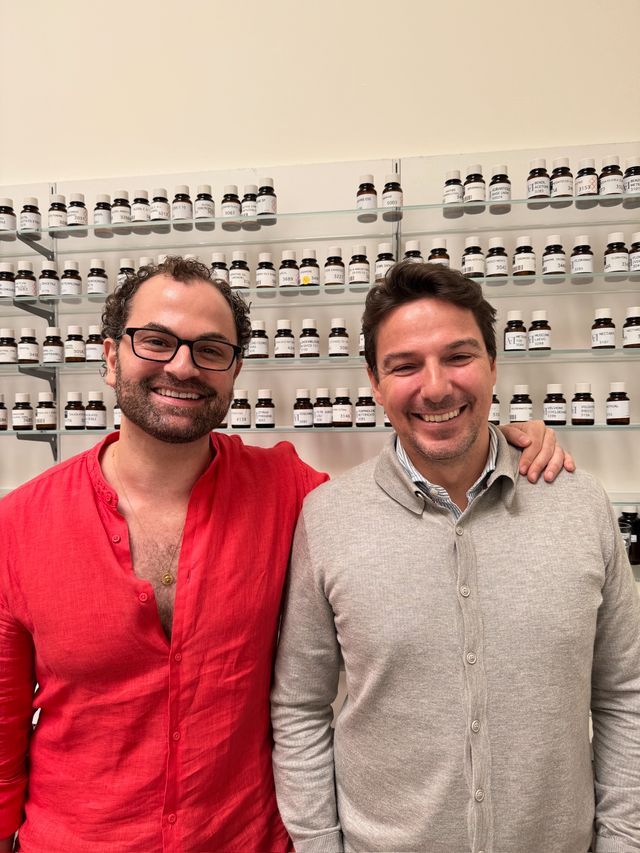
      Jordan Samuel Pacitti and master perfumer Luca Maffei.

      The Scent Story and the Italian Connection

      You can probably feel Pacitti’s passion for Italy just from the descriptions above. Yet what led him on his Italy scent journey?

      Pacitti had aIways been fascinated by fragrances. In his early adulthood, he was a ballet dancer living and traveling around the world for his career. After several years of dancing and putting on and removing makeup for shows, his skin became more sensitive.

      After two serious injuries, he realized that it was likely time to bow out of his dancing career and pivot to something new. He had always loved the beauty industry and its associated products, which led him toward skin care. He earned his aesthetic license and starting practicing hands-on within the skincare world.

      Pacitti decided to start his own skincare line, which led to the creation of Jordan Samuel Skin. His cleansers, serums, eye gels, and more often have names that give a nod to his ballet background, such as The Performance Eye Gel and The Matinee Gel Moisturizer.

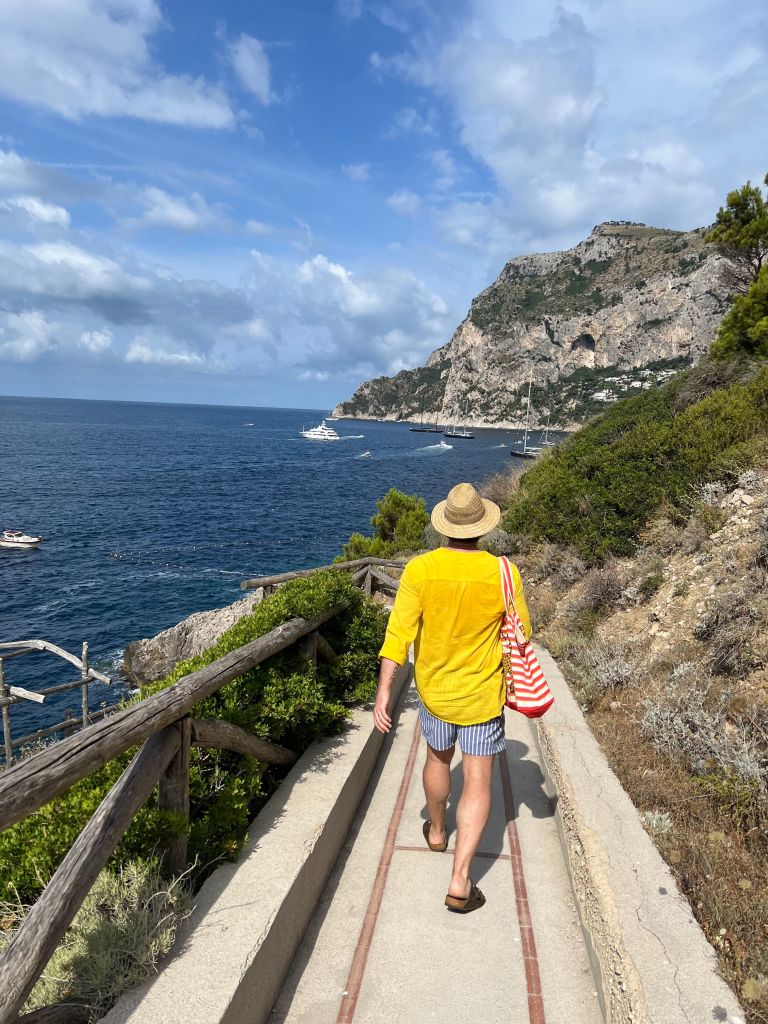
      Jordan in Capri, which serves as the inspiration for his Ferragosto fragrance.

      That inches us closer to the fragrance and Italy connection.

      “I used to make fragrances myself, but I always wanted to work with a perfumer,” Pacitti tells Italy Dreams. “I knew that in addition to the skincare line, we one day were going to have fragrance or fragrances.”

      Yet after several attempts, it wasn’t happening just yet.

      In 2022, after Pacitti and his partner returned to the U.S. from a trip to Italy, they brought with them several half-ounce fragrance samples that were, incidentally, mostly created by master perfumer Luca Maffei.

      Realizing that Maffei was the common demonitator for the favorite fragrances he had purchased, Pacitti reached out to him online to discuss a potential collaboration. He didn’t hear back.

      Meanwhile, with momentum still behind him, Pacitti worked with other Italian contacts to get his Italian-inspired fragrances off the ground. As an Italian-American himself, Pacitti has fallen hard for the country’s beauty and spirit, leading to many trips there.

      “I wanted the perfumer to add their essence and bring it to life with what I had said,” Pacitti says. He continued to work with his contacts to get the scent combinations just right, although he initially was not in contact with the perfumer.

      As the fragrances continued to evolve, Pacitti eventually realized who was working with his contacts to develop them–Luca Maffei.

      “It was truly a serendipitious-like moment,” Pacitti says. The two are now collaborators and friends.

      Cortile Dolce became available via the Jordan Samuel Skin website in December 2024, and Ferragosto became available in October of this year (2025). The fragrance is available for sale in the U.S.

      Jordan in Lipari, Sicily, Italy.

      A Love for Italy: Pacitti’s Picks

      As evident through this story, Jordan Samuel Skin’s Cortile Dolce and Ferragosto are both a testament to business expansion as well as love letters to Italy–a place he actually had not traveled to prior to 2012.

      “I’ve been all over Asia, to Turkey, Belgium, France, and Denmark, but it was so strange that for being Italian-American and wanting to go to Italy, I just thought, ‘We’ll get there one day.’”

      And that he did. Here’s how he describes the country now:

      “Something that’s always fascinated me with Italy is it’s such a small country, but then from top to bottom, you can experience so many different dialects and types of food cultures and other patterns…It’s just so wildly different and extreme and beautiful. That also is why outside of being personally obsessed with it, I feel like it’s the most beautiful muse because each area tells its own story through food, scent, and the people.

      With Pacitti’s extensive travels throughout the country, we asked him for a few of his favorite travel locations:

      Rome, which he calls his “absolute favorite place in the world.” He and his partner have vacationed there but also have worked there for several weeks at a time and know the city well.

      Sicily, where he had a great time in southeastern Sicily but then later visited Palermo on the west coast and realized that both areas of the island were amazing

      The Aeolian Islands off the coast of Sicily, which he visited with his partner and his parents. “We all want to go back,” he says. “It’s clean, beautiful, not busy, and affordable.” Plus, there was some terrific seafood.

      Torino/Turin, the northern city where his perfumes are manufactured

      Check out Jordan Samuel Skin’s product line here, and check out his fragrance shere.

      Follow Jordan Samuel Skin on Instagram (@jordansamuelskin) or TikTok (@jordansamuelskin).


    3. Here’s Why to Visit Italy in the Winter and Off-Season

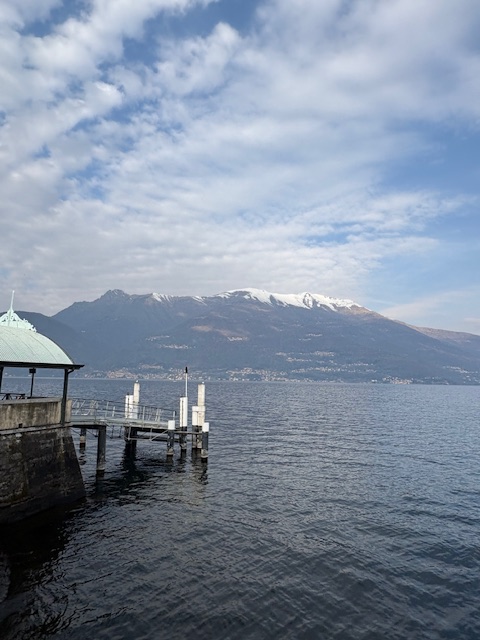
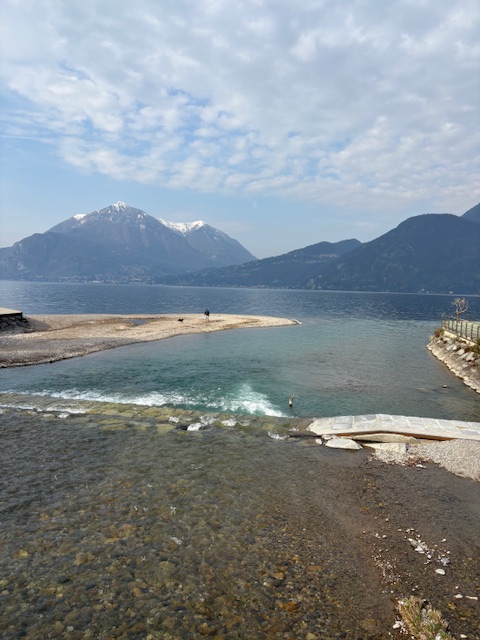
      Snowy mountains as seen from Lake Como, Italy, in early March. The winter can be a great time to visit Italy.

      Italy says “Buongiorno!” to about 70 million tourists this year (2025), with most arriving in the summer months. If you’ve been to Florence, Venice, or Rome that time of year, then you know what it feels like to have thousands of new friends who all want to visit the same places as you, right?

      If you’re an astute traveler, you may be asking yourself what it’s like to visit Italy other times of the year, such as in the winter or off-season. The good news: There are some real advantages if you’re willing to brave a little cold.

      Let’s take a look at why you should consider visiting Italy in the winter or off-season months. Then we’ll suggest a few choice destinations for those quieter months.

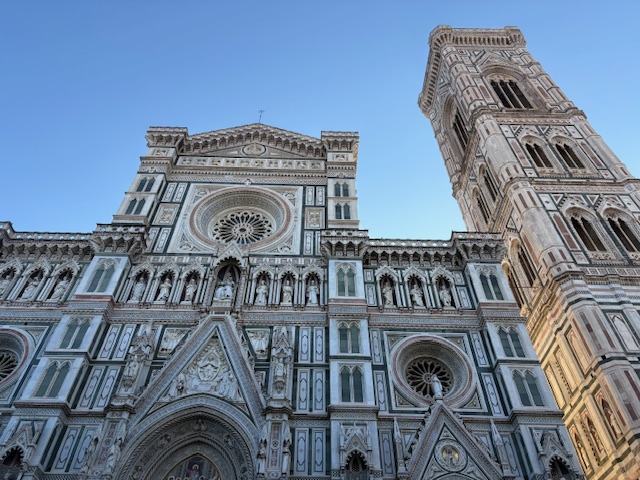
      Florence’s Duomo/Cathedral looks impressive any time of the year.

      Why to Visit Italy in the Winter or Off-Season

      You’ll have more destinations to yourself

      We’re not saying you’ll be the only tourist there, but most destinations will have fewer people. Enjoy the so-called la dolce vita with fewer visitors! It’ll make it a lot easier to book museums, hotels, etc.

      Enjoy cooler temps

      Let’s face it, Italy can get hot in the summer. Walking around Rome, Sicily, and even Milan in June, July, or August can get uncomfortable. Although many places have air conditioning, it’s not as chilly cold by default as in the U.S. The solution? Bring a coat, scarf, and gloves, and come in the winter!

      Plus, keep in mind that Italy has a diverse climate depending on where you go. For instance, Milan’s temps can average in the 40s (Fahrenheit) in the winter, compared with average temps in the 50s (Fahrenheit) in places like Puglia and Sicily.

      We visited Florence, Milan, and Lake Como in early March and got around most days with the requisite jacket and scarf. One day in Milan even reached near 70 and was sunny.

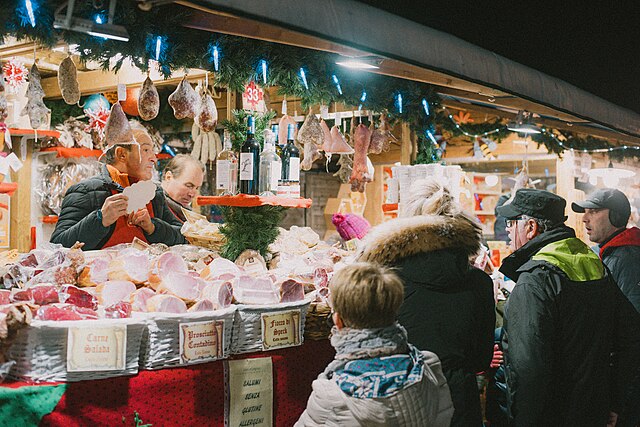
      A Christmas market in Trento, Italy. Picture from Wikimedia Commons.

      Christmas markets!

      Whether you’re familiar with European Christmas markets from previous in-person visits or just Hallmark movies, this shopping experience is a real pleasure. Find dozens of vendors with hand-crafted Christmas items that are perfect as unique gifts for others or souvenirs for yourself.

      Here are a few Italian areas famous for their Christmas markets, according to the tourism operator Discover Your Italy-FuorITinerario:

      –Trento in north Italy

      –the Dolomites, a chain of mountains in north Italy

      –Florence, which features a German-style market

      –Arezzo in Tuscany, which takes on the feel of a Tyrolean village

      –Rome, where you can find a festive market feel in Piazza Navona

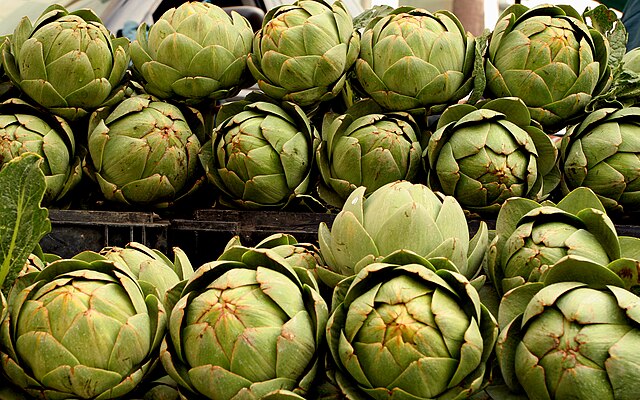
      Artichokes are one vegetable that some Italian residents enjoy more in the winter.

      You can try different types of foods

      It’s no secret that Italy is known for terrific food. With eating in Italy a hyper-local experience, it’s probably also not a surprise that food changes seasonally there based on what’s available at certain times of the year.

      So, the special dishes you may have in the summer could have a completely different feel in the winter or other times off-season. One Rome resident we spoke to sung the praises of artichoke dishes in the winter. Root vegetables like potatoes as well as greens are commonly in season in the winter, and citrus season in Sicily (like blood oranges and regular oranges) goes through the winter and spring–just like here in our home state of Florida.

      The Dolomites in northern Italy welcome visitors in the winter and year-round.

      Pursue winter sports

      If you’re into skiing, snoeshowing, ice skating, or other winter sports, then visiting Italy in the winter is an obvious choice. You’ve got your pick of mountainous destinations (see below). The Winter Olympics held in 2026 in and around Milan and the town of Cortina will further shine a spotlight on Italy as a winter destination.

      You’ll need to find different angles for pictures in the winter and off-season in Italy. This picture, taken in Sicily, is from Wikimedia Commons.

      Get new perspectives for pics

      A view of Italy in the summer, with historic buildings drenched with sun and everything colorful? That’s low-hanging fruit. Yet how do make those same buildings look interesting on a rainy, cold day? If you’re into photography, visiting Italy in the winter can become a fun photographic challenge. If you’re creative enough without using filters on your phone, you can still have blockbuster pics from your trip.

      Bellano, Italy, on Lake Como, in early March.

      6 Places to Visit in Italy in the Winter

      Here are six specific destinations to consider in Italy for the winter or off-season. Don’t be afraid to explore areas outside the typical big-city destinations.

      The Dolomites

      This mountain chain that spans several northern Italian regions can become your winter playground for sports or relaxing by a fire. With its close proximity to Austria, both Italian and German are commonly spoken here.

      Lake Como

      This famous destination in north Italy, just an hour by train from Milan, will lead you with charm through towns like Bellano and Bellagio. Hop on a train to traverse between towns. The ferry on the lake operates year-round although it’s on a reduced schedule in the winter. Find out more about day tripping around Lake Como with our articles here and here.

      Florence

      For the heart of Renaissance art and culture, you can’t go wrong with Florence. Find Christmas markets if you visit around the holidays, or find fewer crowds if you visit in the months thereafter. You’ve probably read enough about Florence elsewhere, so we’ll just share our article about eating in Florence, here.

      You also can find Christmas markets in Rome, Venice, and Naples. Naples is well-known for its living nativity scenes, or presepi.

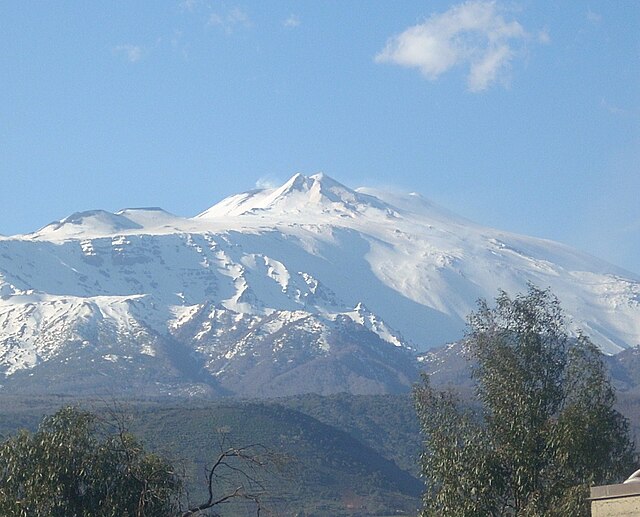
      Sicily’s Mount Etna in the winter.

      Sicily

      Sicilia in the winter? It’s definitely worth considering! Bigger cities like Palermo and Catania may have enough going on to keep you busy, but smaller resort towns like Cefalu may be pretty dead, according to the blog Adventurous Kate. Still, if you want some Sicilian culture and quieter views and don’t mind some potentially rainy weather, you still could have a great trip. Some people even go skiing on Mount Etna. Plus, you’ll find several winter festivals as well as Christmas markets.

      Cortona

      The town of Cortona in Tuscany (not to be confused with Cortina, the site of the Olympics) has medieval charm and wonderful artisan markets around Christmas, according to Discover Your Italy. You can even find a Floating Christmas Tree. “This area is perfect for travelers seeking a quieter, heartfelt experience rich in culture and tradition,” Discover Your Italy reports.

      Beautiful Bormio, Italy. Picture from Wikimedia Commons.

      Bormio and Vatellina

      Yet another recommendation from Discover Your Italy, find skiing and spas in the Alps-based towns of Bormio and Vatellina in Lombardy in north Italy. The towns combine famous ski slopes with Roman-era stone pools, hydrotherapy, salt rooms, and a UNESCO railway that takes you from Tirano into Switzerland.

      Buon viaggio!

    4. 11 Fun Facts About Milan, Italy

      The Galleria Mall in Milan.

      If you’re planning to visit Italy, will you spend some time in Milan? This cosmopolitan city often gets overlooked for Florence, Rome, Venice, and other destinations.

      Yet don’t rule out Milano just yet. This city of 1.3 million people (more than 3 million if you include the full surrounding area) has plenty of history and can serve as a great place to stay if you plan day trips to other destinations in northern Italy.

      The Milan Duomo/Cathedral is never too far away from your Milan view.

      To help gear you up for Milano, here are 11 fun facts about the city.

      –Milan will host the 2026 Winter Olympics. The games are formally called the 2026 Olympic Winter Games Milano-Cortina and will be held from Feb. 6 to 22, 2026. However, only a few of the activities will actually take part in Milan. Many of the sports will take place mountainous areas a couple of hours away from Milan, in northeast Italy.

      Milan is the second-largest city in Italy, second only to Rome. Rome has 2.7 million people within the city itself and more than 4 million people if you include surrounding areas.

      Milano is the capital city of Lombardy, which is one of Italy’s 20 regions (similar to states in the U.S.).

      Souvenirs for sale in Milan.

      Looking for some nearby day trips? Milan is only an hour by train from the famous Lake Como (read our article here for a guide on day tripping around the lake). It’s also under an hour from the charming city of Brescia as well as Verona (yes, as in Romeo and Juliet) and Bergamo.

      “The Last Supper” painting by Leonardo DaVinci is in Milan, located at the church of Santa Maria delle Grazie. It’s highly recommended to book in advance to see the popular artwork.

      Inside Milan’s Galleria Vittoria Emanuele II.

      If you like shopping, then you’ll be impressed to know that the oldest mall in Europe and perhaps the most continuously active mall in the world is Milan’s Galleria Vittorio Emanuele II. It was designed in 1861, but it took 12 years to finish building it. You’ll find very cool architecture and some expensive shops and restaurants.

      Want good luck? Here’s something to try when you’re at the Galleria. The mall has several mosaics on the floor, in honor of Italian nobility. One of the mosaics has a bull–and legend has it that if you spin around three times on the bull’s–hmmm, cojones–it will bring you good luck. We passed on that opportunity when we were in Milan, but maybe you’ll want to try it! If anything, it’s fun to watch tourists give it a whirl.

      Pasta dish made in Milan, but risotto is actually Milan’s specialty.

      Of course the Milanese (as people from Milan are called) enjoy pasta like all good Italians, but they also are known for some non-pasta dishes. These include risotto alla milanese (a rice dish with saffron) and ossobucco (braised veal shank with bone and marrow), among other classics.

      The Milan Duomo/Milan Cathedral on a busy day.

      The Milan Duomo (Cathedral), a central part of the city and its tourism, is the fifth largest Christian church in the world. It’s also said to have the most statues of any Christian church–3,400 in total, along with 135 gargoyles (that’s a lot of gargoyles!). It was built in 1386 and took a whopping five centuries to complete, with some final touches on its facade in the 1960s.

      Sforzesco Castle in Milan.

      Did you know that Milan has a castle? It’s called Sforzesco Castle, or Castello Sforzesco, that was constructed in the 15th century. The castle has several art collections, including antique art and musical instruments. On a recent Milan visit, we didn’t make it to the inside but we were able to walk around the exterior along with many other people who were strolling around the city that day.

      Fashion is never far away when you’re in Milan. Note the fashion ads behind the pastries for sale inside one of Milan’s train stations.

      Milan is considered the Fashion Capital of the World, but do you know which fashion businesses are located there? They include the likes of Dolce & Gabbana, Armani, Prada, Valentino, and Versace. Some of the major Italian fashion brands are now owned by global conglomerates, but they still have headquarters in Milan.

      Buon viaggio/happy travels, and enjoy your trip to Milan!
      Milan at night.

    5. Byways of Italy Brings You Closer to the Good Life in Italy

      Enjoy views of the Coliseum in Rome or any other sights you wish with a Byways of Italy tour. Picture shared by Jessica Caceres.

      If you’ve ever dreamed of getting to know Italy up close and personal but you’re not sure where to start, then the Rome-based company Byways of Italy is a great place to start.

      Byways of Italy is a tour operator and destination marketing company (DMC) that creates customized travel itineraries and provides experiences at Italy’s iconic destinations as well as lesser-known gems, says founder Manuela Mocci.

      The company began in 2021 in response to a growing demand from travelers looking to rediscover Italy after the COVID-19 pandemic. It focuses most frequently on cultural and food and wine experiences along with a commitment to conscious, responsible travel, Mocci says.

      Florence, Italy.

      What Makes Byways of Italy Different?

      Byways of Italy’s travel advisors work closely with clients to create a customized travel experience.

      “I would say that clients choose us because of the balanced mix in our proposals, combining the most well-known spots with off-the-radar day trips offered at the right pace, and the dedication we bring from the start,” Mocci says.

      The company’s typical client will be a couple or family that’s from Australia, the U.S., Canada, or Latin America. Although Byways doesn’t usually work with large groups, they make an exception for multigenerational families.

      “Our correspondence with clients sometimes lasts months or even over a year, allowing us to get to know their preferences, build trust, and carefully curate every detail of their journey,” Mocci explains.

      A view of Lake Como in northern Italy.

      Although travel options abound online, many people still want the value of working with local experts.

      “Younger travelers often want unique experiences that are hard to find online, and they don’t have much time to dedicate to planning,” Mocci says. “Older travelers can feel overwhelmed by the amount of information available on the web and are looking for someone they can trust to provide guidance and support when needed.”

      A classic view of Venice, Italy. Picture shared by Jessica Caceres.

      Where Can You Go With Byways of Italy?

      Instead of asking, “Where can you go with Byways of Italy?”, perhaps the better question to ask is, “Where do you want to go?”

      Do you want to take a relaxing bike ride along Lake Garda? Live the luxe life on a yacht cruise on Sardinia’s coastline and enjoy an onboard fish lunch? Or, do you just want to meander in the countryside of the region of Marche and sample authentic food and wine while you stay at a local agriturismo (a farm-based home that usually offers activities like tours or cooking classes)?

      All of this and more are possible with the help of Byways of Italy. That’s because it specializes in customized tours.

      “We add special touches to make each trip one-of-a-kind, especially for occasions such as honeymoons and anniversaries,” Mocci says.

      Mercato Centrale in Florence, italy.

      However, Byways also offers classic tours to help you get to know Italy better. Here are a few popular highlights:

      The 10-Day Italy Tour features Milan, Venice, Florence, and Rome. Activities you can enjoy include a guided tour of Milan’s Duomo (cathedral), a private boat tour on famous Lake Como, a sightseeing tour of Venice with a Venetian apertif, a visit to a glass factory in Murano, a guided tour of Florence’s famous art museums, and a walking tour of Rome’s main monuments. Of course, no classic Italy tour is complete without wine tasting in the Tuscan countryside!
      A Journey of Self-Discovering in Tuscia. Get off the beaten path for this 7-night/8-day tour in Tuscia, located in the Lazio region near the border with Umbria and Tuscany. This remote area helps you enjoy less crowded ancient Italian towns and connect with yourself and your loved ones. Take a guided tour of Tuscania, relish in the thermal baths in the town of Viterbo, spend a day at a family-run winery, and visit the Palazzo Farnese to take in its awe-inspiring frescoes.

      Northwest Sardinia. For something truly different, book yourself a Byways of Italy tour to Northwest Sardinia. Sardinia is an island off of Italy’s western coast and is one of Italy’s 20 regions. It has famous beaches but still has many parts that are less discovered compared with Italy’s bigger cites. This 10-day/9-night tour includes a visit to Alghero, which has a strong Catalan influence; a panoramic road trip to the colorful and historica town of Bosa, featuring the area’s vineyards; and a visit to the small village of Castelsardo.

      Some of the other tours via Byways of Italy include:

      –Milan and the lakes of North Italy

      –Sorrento and the Amalfi Coast

      –3 Days in the Tuscany Countryside

      –Procida, a fishing island in the Gulf of Naples

      Rome’s Coliseum. Picture shared by Jessica Caceres.

      Tips for Planning Your Trip to Italy

      As you plan your trip to Italy, there are some general travel tips you should follow, Mocci recommends:

      Begin to plan your trip 6 to 8 months in advance so you have more options and better prices.

      Keep a running list of useful information and points of interest about your destination, such as attractions, museums, bars/restaurants, streets, etc.

      Buy those museum tickets ahead of time. “During high season, tickets for the most famous museums sell out quickly and need
      to be booked in advance. This will help you save some time,” Mocci says.

      Double check schedules in advance. Some museums and cultural sites may be closed when you least expect it, especially in small towns or outside of peak season.

      Don’t overplan. “Leave space for unexpected discoveries and improvisation, and make sure to leave time to rest, enjoy a coffee in a nice bar, or take a leisurely walk through the center,” Mocci says.

      Mocci shares some final wise thoughts: “Travel isn’t about ticking
      boxes, it’s about finding experiences that feel meaningful to you,” Mocci says. “What one traveler enjoys might not suit another, and that’s what makes every trip personal.”

      To contact Byways of Italy about your Italian trip, find them online at BywaysofItaly.com. You can also message them through the following contact form on their website.

      Beautiful Bellagio in Lake Como, Italy.