Imagine gliding your way through Italy’s smaller, quieter towns by bike, avoiding the hustle and bustle of packed cities. You get to enjoy fresh air, bellissimi panorami (beautiful views), and local cuisine.
That’s exactly what two residents of northern Italy did in summer 2025. Read on to find out what type of planning this special trip took, what were some of the highlights, and how seeing Italy by bike made them appreciate their country even more.
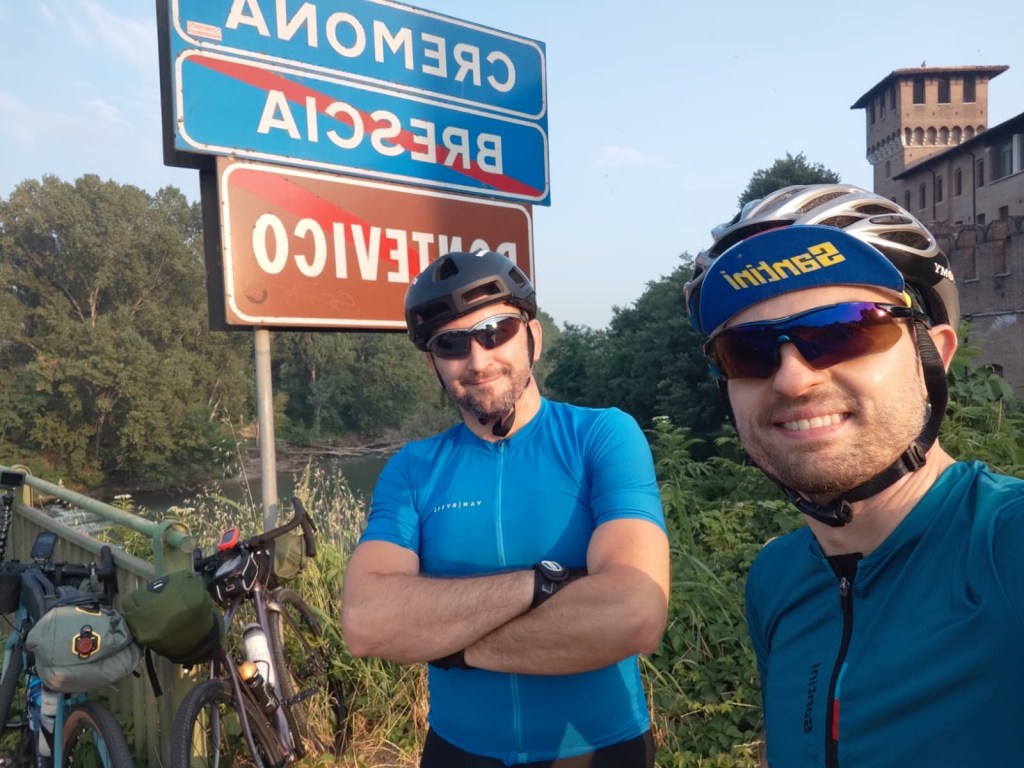
Ernesto G. and Fabio B., both of Brescia, Italy, are long-time bikers. After taking a successful long-distance bike trip in 2023 (843 miles/1,357 kilometers and 16,000 meters of elevation) throughout Italia, they enjoyed it so much that they set their sights on a new trip that covered 976 miles/1,571 kilometers and 18,000 meters of elevation.
These guys aren’t just weekend warriors. They brought athleticism to their trips, with Ernesto swimming competitively in the past and also doing trail running, ski mountaineering, and climbing as well as other long-distance bike trips in the past.
“Cycling is my favorite exercise,” Ernesto says. “I have a strong desire to explore new places, and doing it by bike makes me feel alive and happy.”
That sense of wanderlust is also what led him to pursue the recent long distance bike trips through his home country. He says he loves geography and wants to get to know as many places as possible.
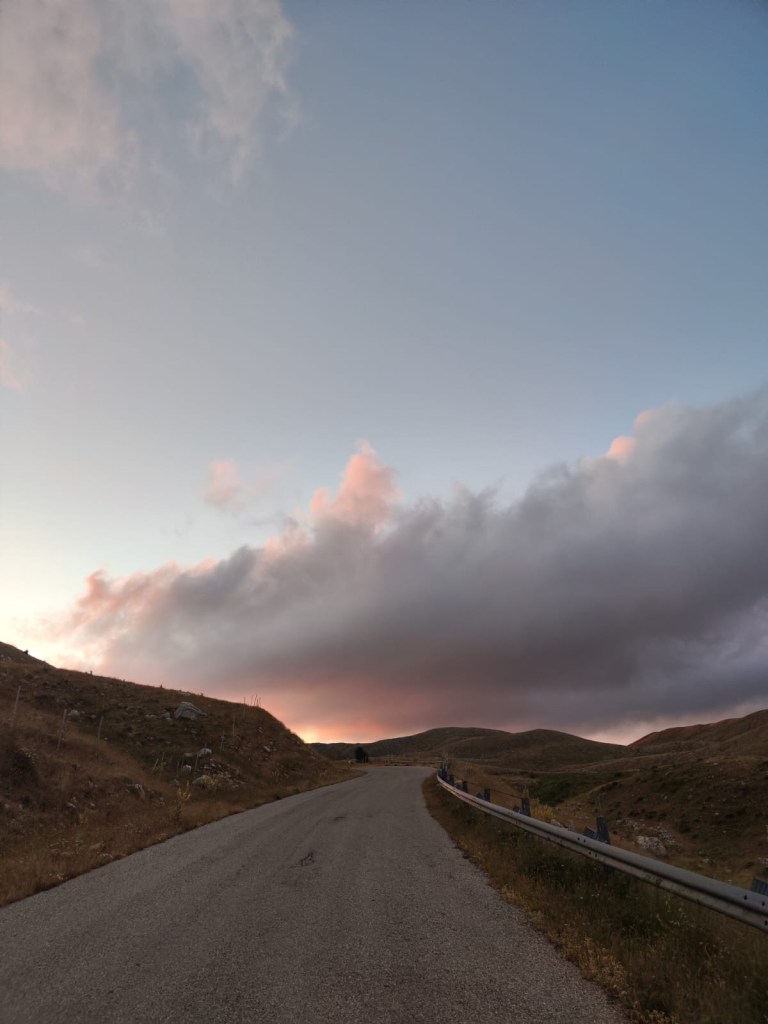
Of course, planning a bike trip that would take Ernesto and Fabio from the town of Bagnolo Mella near their hometown of Brescia all the way to Lecce in south Italy is not something they could just wake up and do spontaneously. Ernesto says that trip planning involved the use of Google Maps, Google Street View, Basecamp, and various other online tools to create a route. Using those apps, he could target roads that are better and safer for bikers.
The pair planned in advance to leave nothing to chance and to enjoy overnight stays with showers and comfortable beds. “Cycle tourism is also practiced by those who don’t plan anything in advance, sleeping in tents without a daily destination but only a route to follow,” he says. That wasn’t their plan, but it may work for others. “You have to experience cycle tourism according to your own personality,” he says.
In his newest trip, he and Fabio wanted to go straight toward south Italy and reach some specific destinations, including new cities, mountains, and valleys they did not visit before. Most of the time they planned to avoid big cities, although they weren’t completely off the planning table.

Starting the Trip
The trip took about two weeks, with an average of 104 kilometers/65 miles each day. Although they initially biked longer distances, they eventually reduced that amount due to elevation gains.
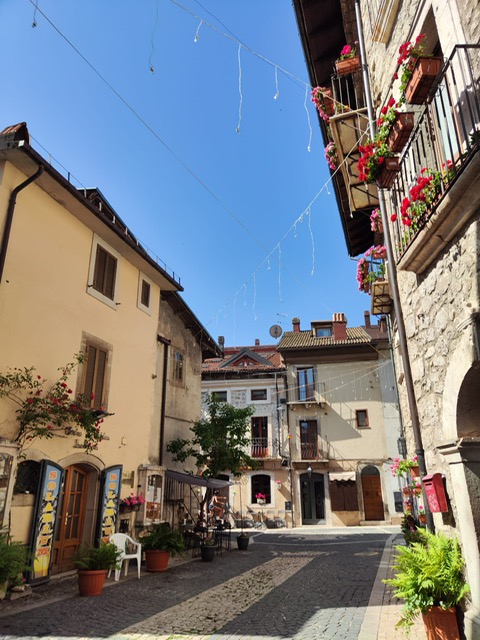
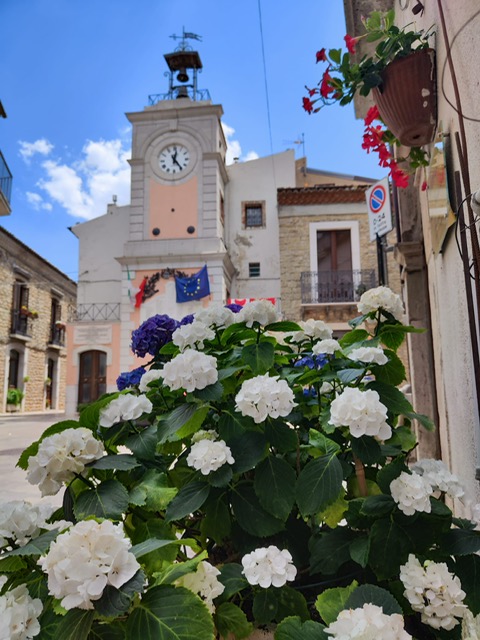
The bike ride took them through towns that were charming and quaint like much of Italy, but much less crowded.
Enjoying the scenery, usually at a relaxed pace, was a highlight of the bike ride.
“We stopped to enjoy the views many times to photograph landscapes and towns,” Ernesto says.
Since the trip was during the summer, the heat was a challenge. Sometimes the temperature would reach the mid-30s Celsius or near 100 Fahrenheit. They would often leave their overnight stay in the wee hours of the morning to get ahead of the heat. “There was a strong heat in Italy during those days, but luckily it was too hot just the first day and on the coast,” he says.
On the type of route they followed, encounters with stray dogs also were a potential threat. However, they only saw them in two or three places.
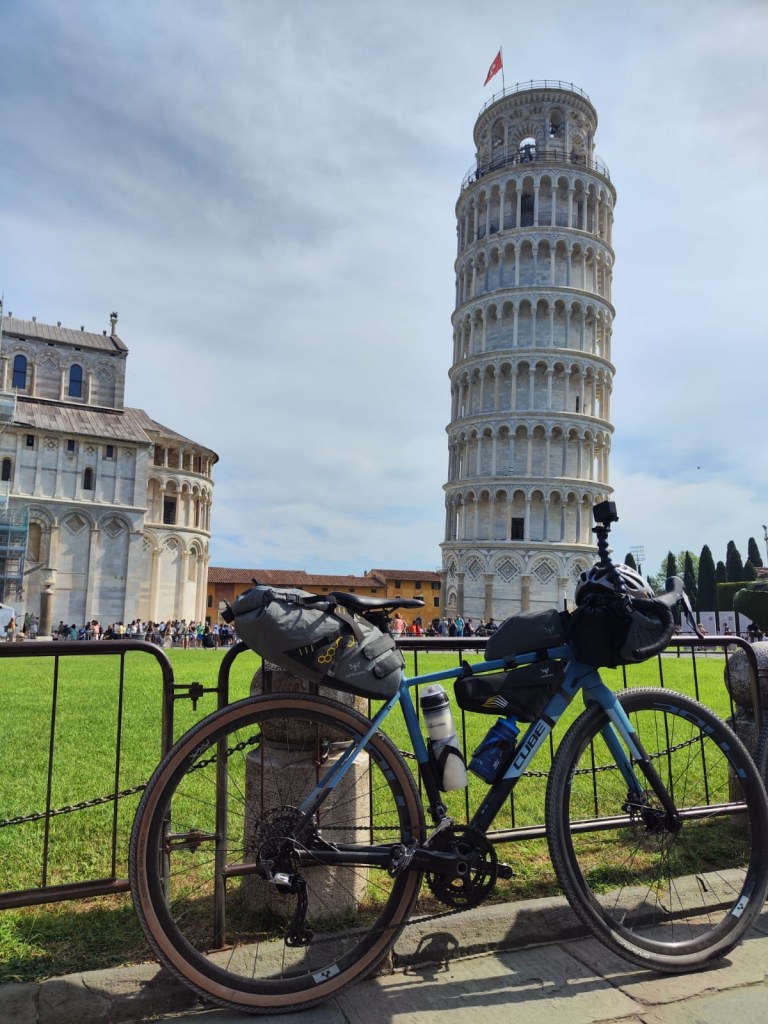
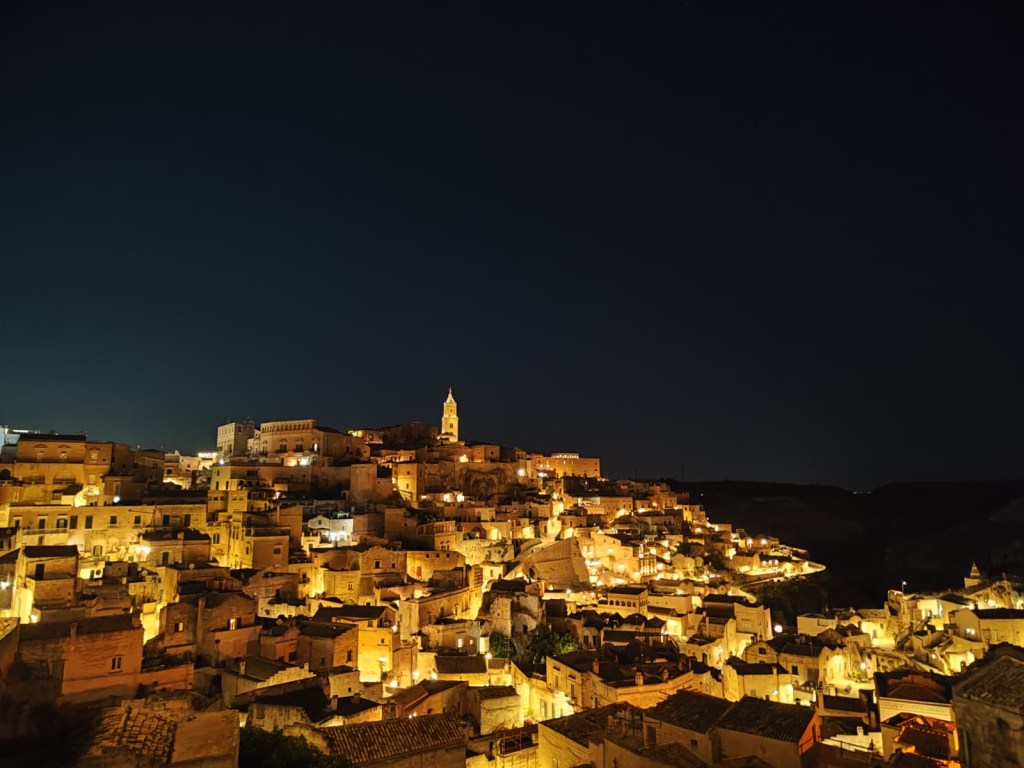
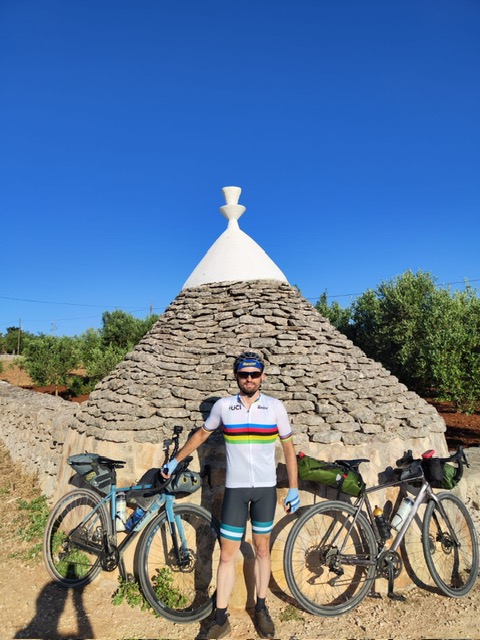
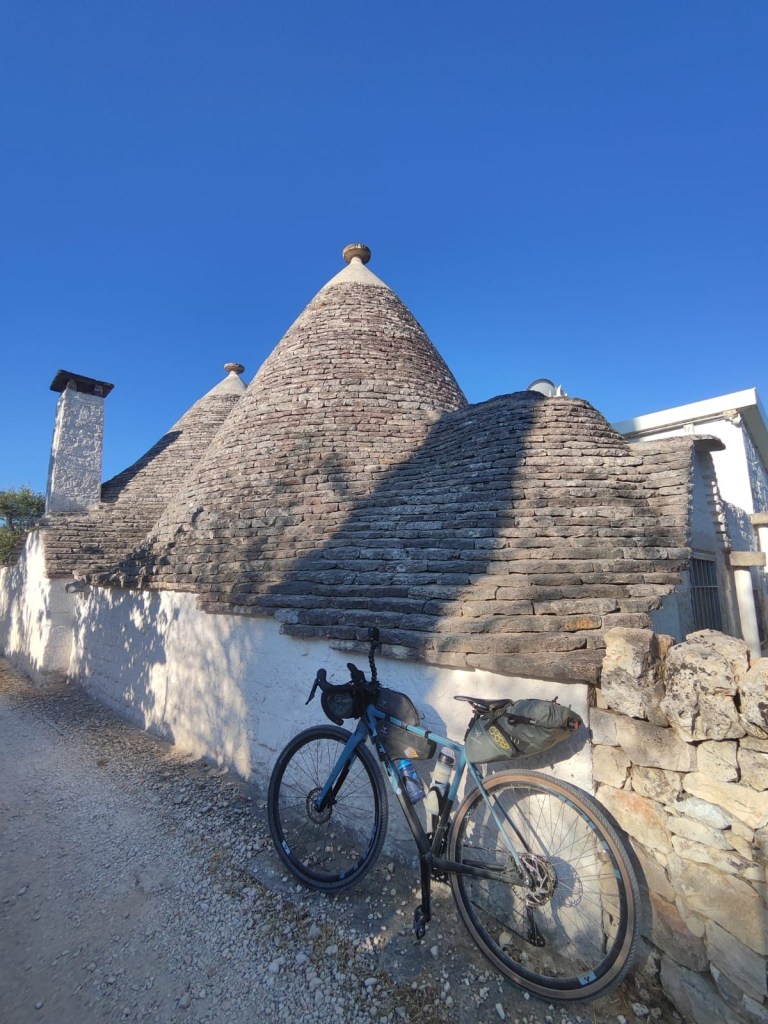
The bike trip took Ernesto and Fabio through some famous Italian destinations, including Pisa with its Leaning Tower of Pisa; Matera, known as the oldest city in Italy; and Alberobello, which has a series of homes called trulli, with domed roofs that date back to the mid-14th century. Both Matera and Alberobello are UNESCO World Heritage sites.
When the tiring but exhilarating trip was over, Fabio and Ernesto returned home by train.
Reflecting on the Journey
One surprising point for Ernesto was the diversity of dialects he found in their home country. “I was impressed at how dialects drastically change in just a few kilometers,” he says.
Although Italian is the main language of Italy, the country actually has several dozen recognized languages and dialects. Ask any Italian you meet, and they most likely know both Italian and another language or dialect (or at least a few words of it) they’ve used in their hometown and with family members.
There were also several towns among their favorites:
—Berceto, in the Emilia Romagna region, located in the Apennine Mountains. “It’s a little old town in the mountains with beautiful views and fresh, clean air,” Ernesto says.
—Castiglione della Pescaia, in the region of Tuscany on the coast. The town has a medieval castle to visit, narrow streets, and sea views.
—Lecce in the Puglia region, with its Baroque style, Roman Amphitheater, Cathedral, Bell Tower, and more. “All places definitely worth a visit,” Ernesto says.
—Pitigliano in the Tuscany region. This medieval-style town was built on volcanic tuff and has well-kept alleys and squares as well as a Roman aqueduct fountain.
—Barrea in the Abruzzo region, located on Lake Barrea. “Its mountains, old town, castle, and narrow streets make it a must-see,” Ernesto says
More long-distance bike trips are slated for the future, Ernesto says. The next trip is planned for Italy’s Dolomites region in north Italy, with future trips in south Italy, including the regions of Campania, Calabria, and Sicily.
“Traveling by bike makes me feel so good,” he says. “It gives me freedom. I think I’ll always travel by bike because I’m basically an explorer.”
Advice for Future Bikers
If you are thinking of a long-distance bike trip in Italy or elsewhere, Ernesto shares some advice:
- Start with shorter trips to get used to the pace of longer distance rides.
- Train for at least five to six months before your departure.
- Learn how to create routes and not just blindly rely on navigation apps. “Study maps and check roads on Google Street View,” he advises.
- Pack lightly.
- Invest in a good navigation advice; one pick he likes is the Garmin Edge 1040, which is a GPS created for biking.
 Italy Dreams
Leave a comment